By
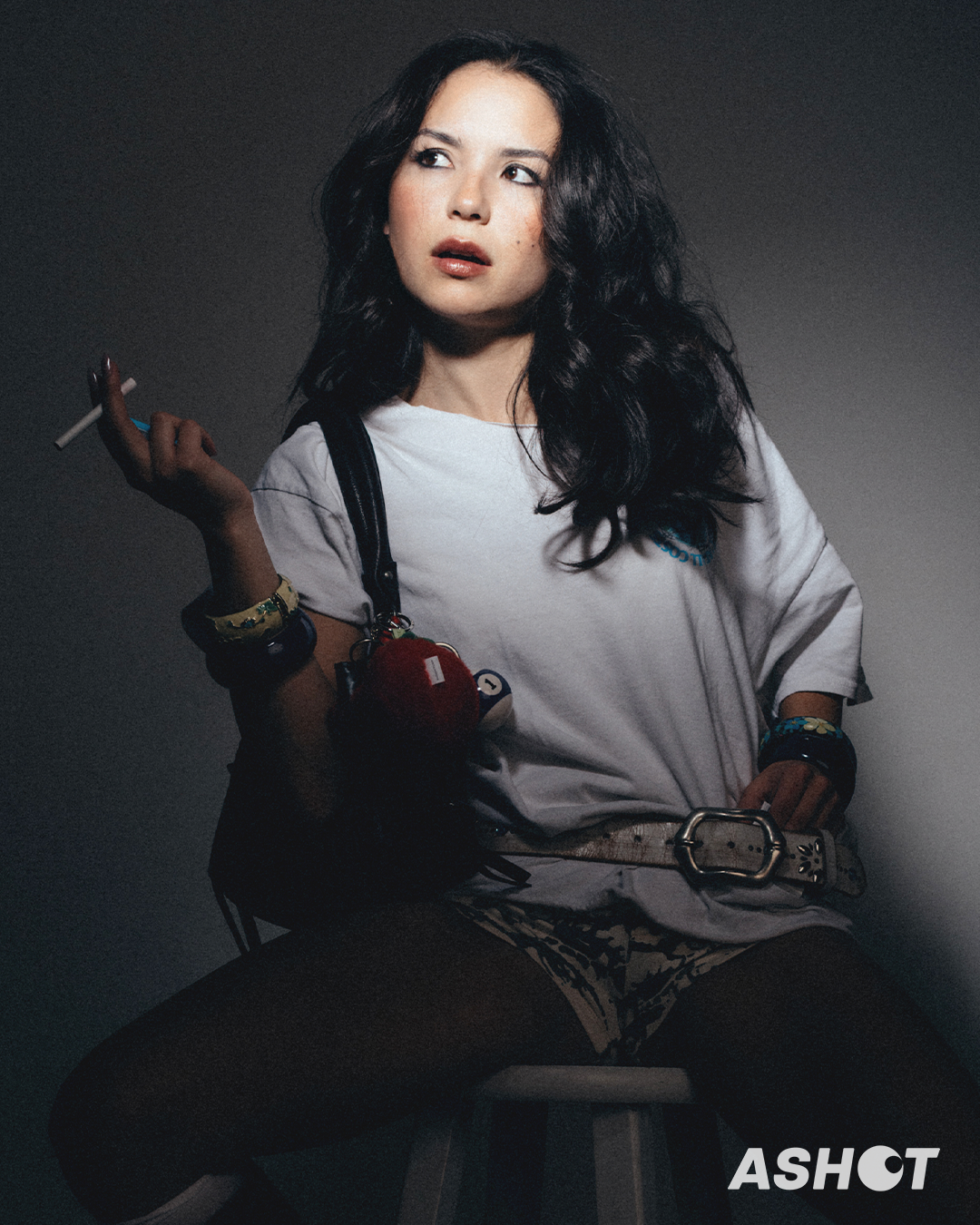
She finished an acting class, went for a run, and fit in yoga, all before noon. By the time we connect over Zoom, Lindsey Normington is relaxed but sharply present, the kind of person who seems to carry a great deal of thought just beneath the surface, and who chooses, carefully, what to let through.
She is an actress, a writer, and now, imminently, a director. Next month she shoots her first self-written, self-directed short film, a milestone she describes with quiet significance rather than performance. That same deliberateness runs through everything she does: the roles she takes, the ones she turns down, the words she uses when talking about work that most people still struggle to name without flinching.
Normington has built her career at the intersection of art and sex work, not as a provocation but as a position. She has thought about it longer, and more rigorously, than most. She has sat in strip club dressing rooms and on film sets, and she has watched the same conversation happen in each: who gets to call this art, who gets to call themselves an artist, and who quietly gets left out of both categories. She is done with that conversation. She would like to have a different one.
We start with the short film, and then we get into it, Euphoria, Anora, OnlyFans, the roles she has refused, and what it means to build a body of work that reflects the world as she actually knows it.
Q: You are writing a feature and shooting a short film next month — your first as both writer and director. What does that feel like?
It’s really exciting. I’ve had two features on the go for a while, but I’ve narrowed my focus to one. The short is the thing I’m most immediately thrilled about, it will be the first thing I’ve written and directed entirely by myself that’s actually been seen through to fruition. That feels significant.
Q: Do you genuinely believe sex work is art, not as a defence, not as a political statement, but as an aesthetic conviction?
I really do believe it. I’ll also say that it’s a privilege to look at it that way, a lot of people come to sex work for survival, so they’re not necessarily approaching it through that lens. But even so, I think there’s something in the act of crafting a fantasy for someone, of becoming almost like a siren or a goddess calling people to you — that is genuinely powerful.
When I say those words on screen, people assume I’m only talking about pole dancing or the kind of erotic art depicted in the show. But I mean all of it. You are touching somebody in a way that is increasingly rare — making a direct, real connection with a stranger, and transforming their day. That’s exactly what we try to do when we make art. We put something into the world hoping it connects with someone out there. Sex work, at its best, does that in real time, in real life.
Q: Have you ever been in a room where saying that out loud cost you something?
As for whether it has cost me — yes. And something that felt important to say in the show was that there are always hierarchical divisions within sex work itself. In Margo’s Got Money Troubles, there’s this moment where the character draws a line: I put on the makeup, I built the story, I showed this much of my body, but at the point where she shows her genitals, she says it stops being art.
I pushed back on that in the writing, because I wanted to challenge exactly that kind of internal judgment. I’ve sat in so many strip club dressing rooms with girls who refuse to call themselves sex workers — ‘I’m a dancer, I’m a performer’ — and it’s really just a way of looking down on what they do. You’re punching sideways. And we genuinely cannot afford to do that as a marginalised community. We need to stick together.
Q: Of everything you’ve worked on, which project got sex work most right — felt most real to you?
Personally? I’d say Anora, and also Margo’s Got Money Troubles in different ways. What I love about Anora is how quickly it captures that whiplash — the feeling of being in a fairy tale one moment and then completely swept up in something you can’t control the next. There’s this perfect example: she’s flying to Vegas on a private jet, and then at the end she’s flying home in coach. I know a lot of people criticise it for showing a sex worker in perilous situations, but I think it’s important not to glamorise the work to the point where everything looks fine, while also not making everything look desperate.
The ending of that film is, to me, genuinely hopeful — some people read it as tragic, but I think she’s going to get up and go back to work the next day. That is the world I know. This work has taken me to incredible places, and it has taken me to places I probably shouldn’t have been. That whiplash is real, and it’s fascinating as a character study.
Margo’s Got Money Troubles is tamer and more relatable in a different way, the family estrangement, looking for love in the wrong places, the consequences of that. I think anyone watching the moment where she creates her account is quietly rooting for her, because it genuinely is the most realistic option for her at that point. And it ends up saving her and teaching her things about herself that she couldn’t have learned any other way.
No story told about sex work is going to be perfect, even if it comes from within the community — but I want to see more stories by sex workers, about sex work. I’m excited about Modern Whore, and there’s another film called Fucktoys by Annapurna Sriram, which is also by a sex worker. Working Girls from 1986 is another one — made by a woman who lived that world — and it’s a remarkable film. Those are the ones closest to getting it right.
Q: How much of yourself did you bring to the character of Rose?
With any role, especially a smaller supporting one, I’m always asking: how do I make a meal out of this? How do I expand it so that I feel satisfied and that audiences want more? I’d read the book before I auditioned, and I auditioned three or four times, so I had a lot of time to live in that world before actually getting the part. Once we were on set, they encouraged us to be improvisational, which let me bring in my own humour and a kind of quirky irreverence that I felt Rose had. Then they brought in the pole — they knew I could do it — and my immediate thought was I don’t want to pole dance the same way one of the previous characters I’ve played would. I wanted Rose to have a distinct relationship with it.
My favourite moment is when I’m telling Margo Millet she’s a liability for coming to our house, and I chose to do the most dangerous move I know, that one where your feet are on the ceiling and you drop down almost on your head — right on that line. It just felt like the right way to highlight the irony. These girls are calling her green, but they’re also living quite frivolously themselves. Little details like that are what I’m always hunting for.
Q: You auditioned for Euphoria Season Three. You’ve been watching it — what are your thoughts on how it handles sex work?
Honestly, I’m not so disappointed that it didn’t work out for me. What has been revealed about some of the characters I auditioned for would probably have required me to portray things I would have been uncomfortable with. And it’s not that bad things don’t happen to sex workers — they do. But there’s a line between creators who have genuinely built relationships with sex workers and consulted them, and creators who are working from their own fantasy.
That’s how I see this season. There are a lot of sex workers, a lot of drug dealers, a lot of gangsters — and I don’t get a strong sense that the people writing this show have real relationships with those communities. It feels like it’s drawing heavily from reference films and archetypes rather than lived experience. The characters feel more stereotypical than personal.
Q: What specifically felt off to you as someone who has actually worked in that world?
What stood out most was a scene involving a girl being assaulted by multiple clients in a private room. I’m not saying that trafficking doesn’t happen, it does. But the way it’s depicted feels cavalier. It’s played for drama and spectacle rather than for any genuine revelation about that character. There’s a way it’s framed that someone who finds that kind of thing exciting could also watch and be titillated by it — and I don’t think that’s entirely unintentional, but I also don’t think it was handled with much intention at all.
More broadly, there’s a lot happening in this season around the humiliation of women — the gagging, the choking, the degradation — that starts to border on the pornographic. I don’t necessarily have a problem with that as a creative choice, but then we cut to something clearly abusive and it’s treated with the same register. That inconsistency is what troubles me. These things don’t seem to be handled thoughtfully. They seem to be there for drama and shock value, not to illuminate anything true about the people experiencing them.
Q: You haven’t personally had an OnlyFans, but how do you see what that platform has meant for sex workers?
What’s beautiful about the advent of OnlyFans is that it gives creators — particularly women — the ability to work without needing a club, without needing a pimp or a manager taking a cut of their sexual labour. It cuts out the middleman. Obviously, OnlyFans takes its own percentage too, which is why I’d like to see other platforms grow. One I find really interesting is Hidden — it was created by a sex worker, for sex workers, and is much less predatory in terms of how much it takes.
But in terms of what OnlyFans has done creatively, the freedom is remarkable. In a club, there’s an expected routine. During the pandemic, when clubs closed, a group of us who danced together in LA started a show called Cool Cats Online — we did strip shows over Zoom, and suddenly we were at home with a camera, and we could make it anything. You’d see a sexy clown act next to narrative storytelling, all within the same art form. OnlyFans give that same freedom to so many creators now. They finally get to make exactly what they want.
Q: Have you ever turned down a role involving sex work?
Many times, honestly. Every story is different, but there are patterns I tend to avoid. If the role is basically just unrelenting violence against a sex worker with nothing else to it, I’m not interested. And there are so many clichés — the sex worker dating her pimp who beats her, the woman who has to make a certain amount of money or her husband will kill her.
Very old-school ideas of what the job looks like. I’ve also turned down roles where the sex worker exists purely as the punchline — a bit where the joke is simply that they’re a sex worker. And I’ve received auditions where the character is literally listed as ‘Stripper’ or ‘Sugar Baby’ with no name whatsoever. That tells me everything I need to know about how that project sees those people. I don’t need to be involved.
Q: You mentioned wanting to move beyond being cast exclusively in these roles. What does that look like for you right now?
I’ve already been doing a lot of more expansive work in independent film — people in that world see me in all kinds of roles. It’s mainly the larger studio projects that keep wanting to put me in the same room. And that tells you something about Hollywood and where it is and isn’t willing to stretch. I’m genuinely grateful that I’ve had the success I’ve had through that channel — and I want to use whatever door that opens to let more people through, and then move beyond it myself. I’m also very interested in Hollywood hiring people who are currently sex workers, not just people who used to be.
On Euphoria, they did hire background performers who are real strippers — women I know from the community — and I’m glad they’re working. But those same women should be considered for the speaking roles too. The characters with names, the ones audiences actually follow. That’s the conversation I’d like to keep pushing.
Q: If your life were a shot in a film, what would it look like?
The first thing that comes to mind is the scene in Uptown Girls with Brittany Murphy and Dakota Fanning on the teacup ride at Coney Island. There is a duality there between the younger woman and the older woman, the idea of the inner child and how both can exist in the same person. It has always stayed with me, and it’s my favorite film.
Q: If you were to create a world called ‘Lindsey’, what would it look like?
I am very interested in the idea that the loudest thing inside us often arrives as a quiet whisper. I want to develop stories like that and work with artists who are trying to listen to that voice within themselves. I am focused on surrounding myself with ambitious people who want to push mediums further. There is a lot of repetition in what gets made, and I am interested in what exists beyond that. If you strip away concerns about Hollywood or streaming saturation, what remains are the stories that truly need to be told. Those are the stories I care about.
photography. @ohreallywowthatscrazyyy
stylist. @haleyllux @kelsey.randall @mydearestworld
talent. @lindsey.bug .
brands. @houseof.nyc @thisispoppr