
By
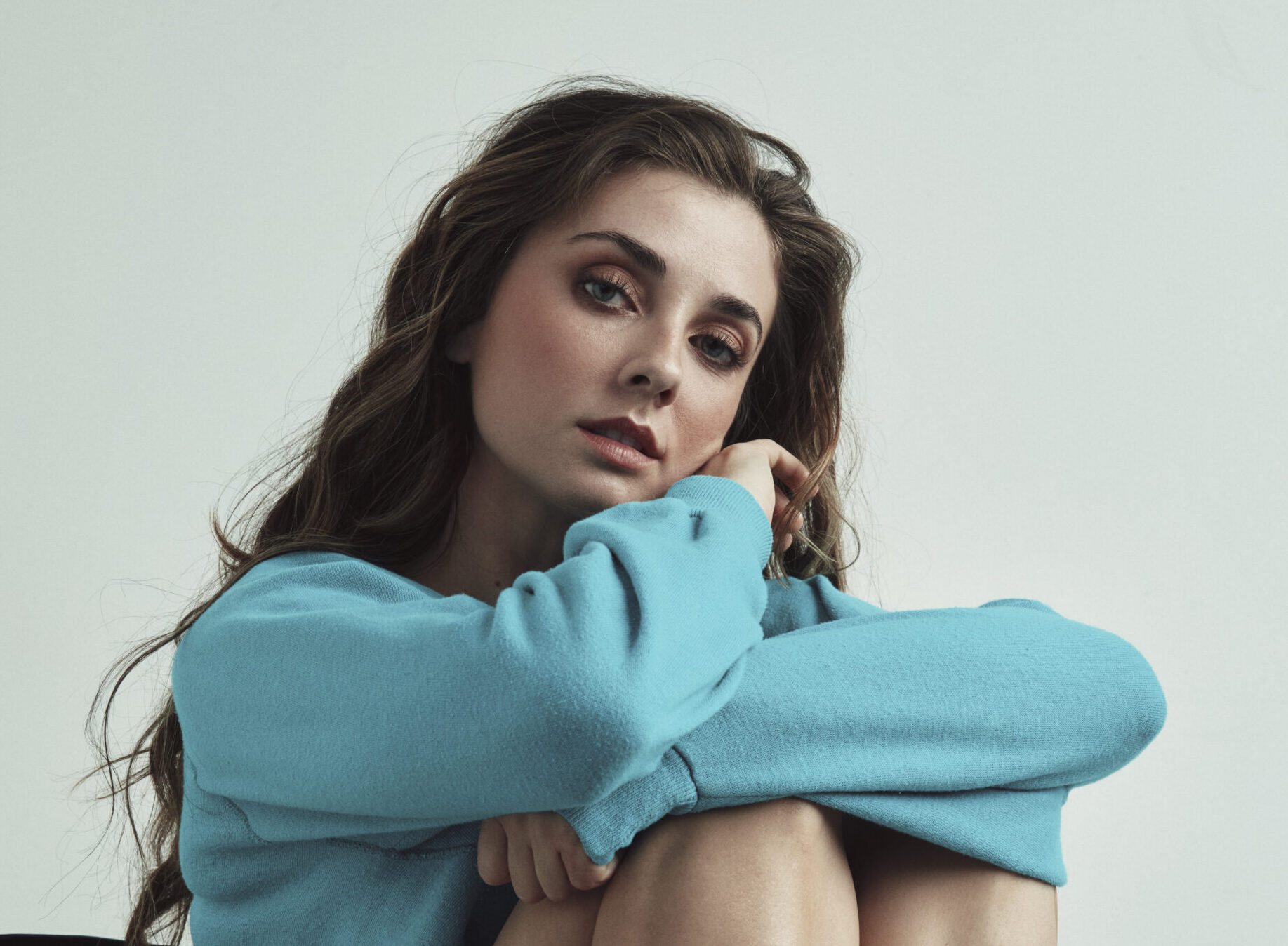
The first thing you notice about Giorgia Whigham is her vibration. She speaks about “radiating”—a technical acting term from the Michael Chekhov technique that, in her world, feels more like a way of living. It’s the practice of standing still and projecting an essence until the air in the room shifts.
“I study the Chekhov technique,” the American actress explains. “It’s just one of my approaches—I think it’s important to have multiple. With Chekhov, we talk a lot about ‘radiation,’ which is very physical. You kind of start to radiate as your character. I would literally walk around my neighborhood doing that.”
It’s a bit goofy, she admits—standing there, not doing anything differently on the outside, yet feeling a total internal shift. But there’s a direct correlation between that energy and how people perceive you. For Giorgia, it’s about how manifesting that inner confidence draws people in, a language that speaks before she ever opens her mouth.
“It sounds a little out there, but it makes sense. In class, you’ll just stand there, and Tom will say, ‘Okay, radiate,’ and you don’t actually do anything differently — you just look at a spot,” she describes. “But it shifts something. There’s a correlation between that and how people perceive you, how you manifest confidence, how people are drawn to you.”
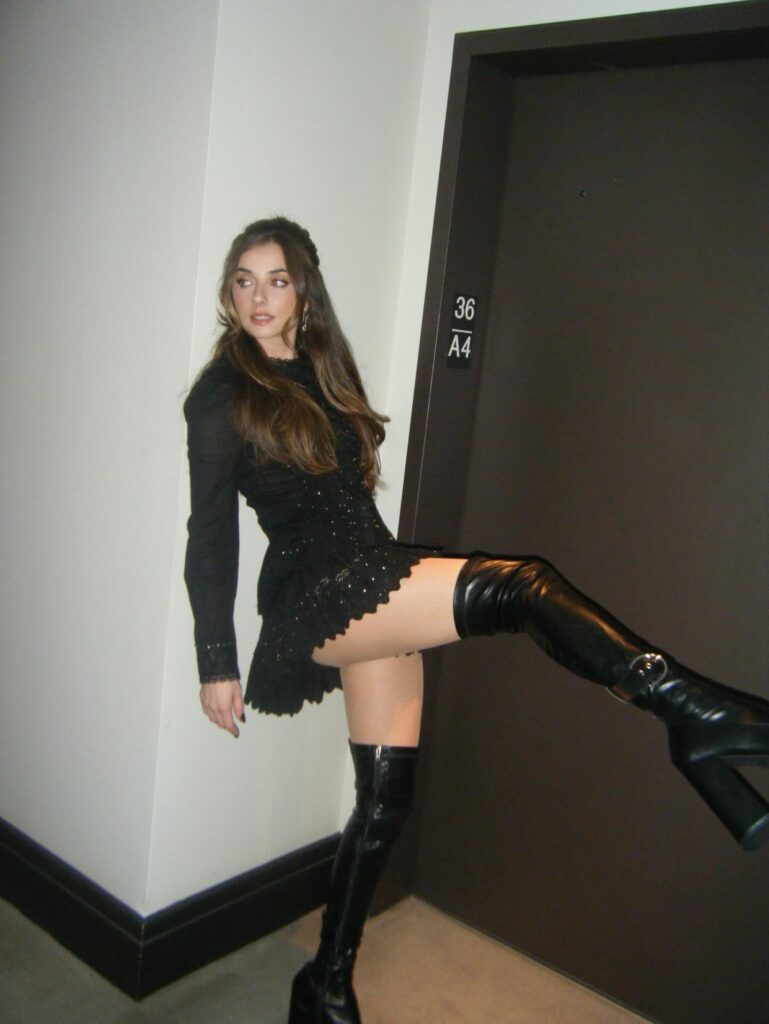
Whigham has a thing for the characters that don’t sit neatly in one place. From her roles as Amy Benedix of The Punisher, to Blair in Ted, she tends to gravitate toward the off-center. These aren’t necessarily roles designed to be liked in a traditional sense, but they are almost impossible to look away from. “We’re not one-dimensional beings,” she says, her voice carrying a thoughtful weight. “We’re confused, angry, and contradicting. I’m drawn to characters you can find yourself at odds with.”
That immersion into the character’s headspace is a delicate balance, one that Giorgia is careful not to tip too far. While the ‘radiation’ of a role is essential, she’s quick to distance herself from the more extreme versions of the craft.” Unintentionally, yeah—my thought patterns do start to shift to my character’s,” she admits. “But I wouldn’t go as far as saying I do full method acting. There can be a lot of dangers in that. For me, it takes a bit of the fun out of it. We’re all here because we love to play pretend, and if you live in it too intensely, it can become a lot.”
Still, the boundaries naturally blur when you’re living with a character every day. On the sets of The Punisher and Ted, she found herself adopting new rhythms without realizing it. “I noticed I was speaking a little differently,” she says. “I think I naturally have a bit of a Valley girl inflection, but for those characters, I dropped it slightly and made them feel a bit tougher—a little more rough around the edges.”
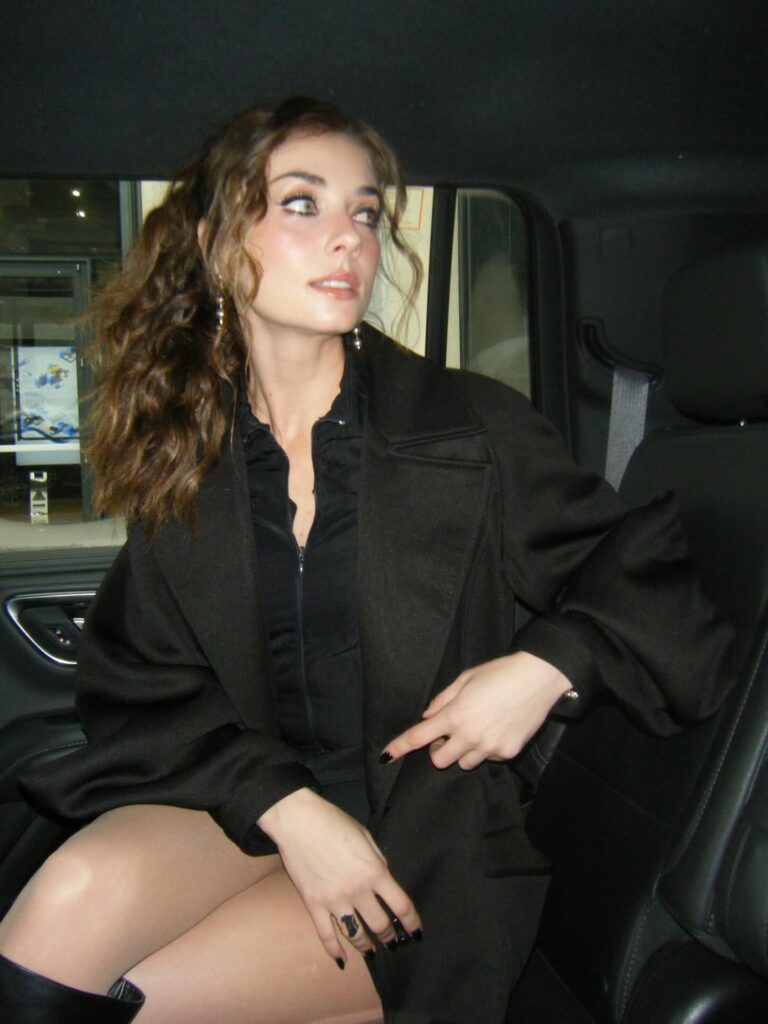
For Sierra Burgess Is a Loser, that meant weeks of cheerleading practice to nail the high school athlete’s poise. After The Punisher, she took it a step further, connecting with Taran Tactical—the elite group famous for training Keanu Reeves and the John Wick cast in weapons handling.
“Guns aren’t really my thing,” she says, “but I wasn’t going to pass up the opportunity to train with them. They’re incredible, and it was a really cool experience.” It’s all part of the same goal: coming into her own body so that when she steps on set, the character’s skin fits perfectly, from the way she carries a prop to the way she walks down a neighborhood street.
That refusal to play it safe has become her calling card. She doesn’t seem to be controlling her characters so much as she is feeling her way through them, a process that begins long before the cameras roll. For Giorgia, entering a role is a meticulous construction of the specifics. It starts big-picture with her longtime coach, Tom Draper—whom she’s worked with since she was a 16-year-old skipping high school classes to hit auditions—and narrows down into the obsessive.
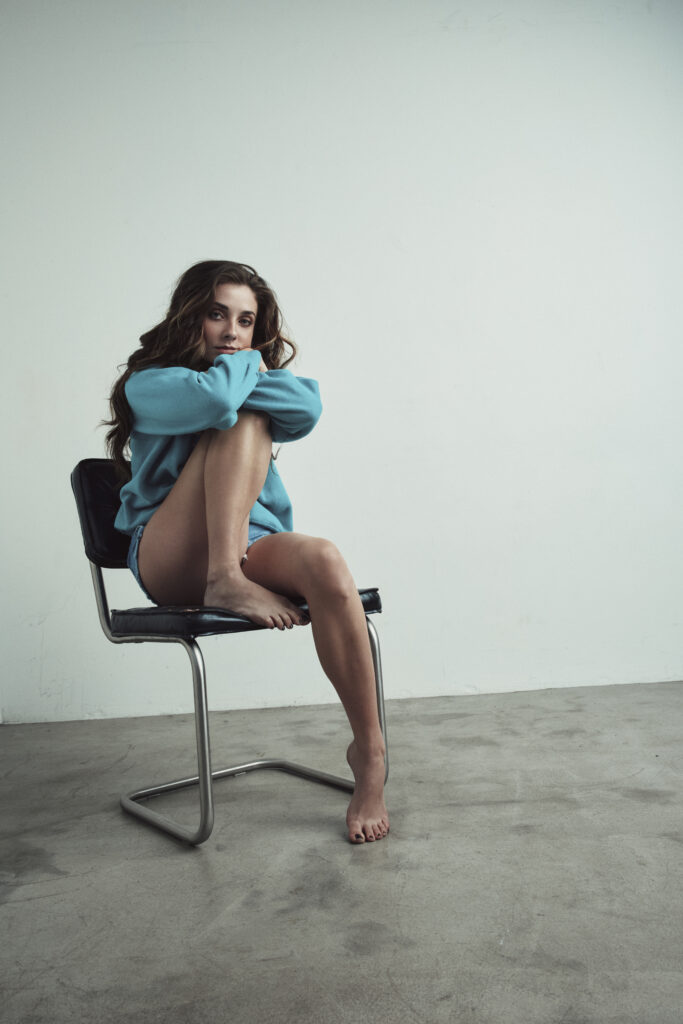
She curates playlists for each character to serve as her creative North Star and journals in character, answering hypothetical questions until the fiction feels like a memory. “Then as time goes on, you become more sure of those decisions and your opinions. From there, it gets really specific — almost like hypotheticals,” she begins. “I start asking myself, ‘Okay, if this situation came up, how would my character react?’ And I journal everything, just jot it all down.”
Besides journaling, movement and nature are a direct conduit to her craft. “I used to be a lot stiffer and more nervous, and doing that really helped me come into my own physically,” she starts. “That translates so much into acting, because I’m less guarded now. When you’re in your body and you feel confident, people can sense it — even if they can’t explain why.” Thus, nature becomes a way to shake off the “stiffness” of a character and return to herself before the next role calls.
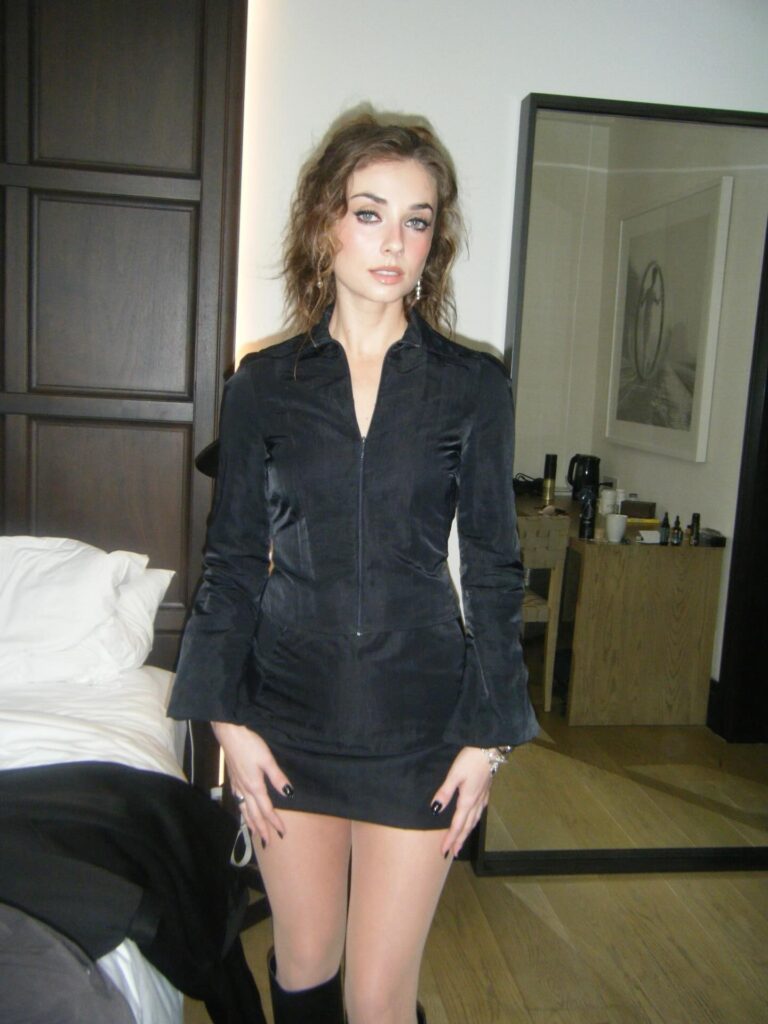
“If I have a chaotic brain, it’s harder for me to lock in,” she explains, touching on a newfound sense of grounding that she carries with her to every set. “There’s such beauty in peace, and that’s where my confidence blossoms. If I’m not confident, I can’t fully step into a character—whether it’s someone deeply depressed or someone bubbly and self-assured. I have to have self-love to find their truth.”
It’s a professional rigor that stands in playful contrast to the “wacky” reality of life on set. She laughs recalling the absurdity of the Ted production—specifically an eight-foot-tall cast chair and the recurring theme of being jumped out at from closets. “I’m very jumpy and gullible,” she admits, “but it’s amazing when you get to go to work with people who have that kind of lightness.”
That duality—the spiritual lock-in of the craft and the ridiculousness of the business—is exactly where she thrives. Beyond the technical rigors of the craft, there’s a more internal scaffolding that keeps her steady. It’s found in the small, specific objects she carries—like an amethyst she keeps for mental clarity. “I’ve only recently found a deeper sense of spirituality,” she says. “It’s helped my acting tenfold.”
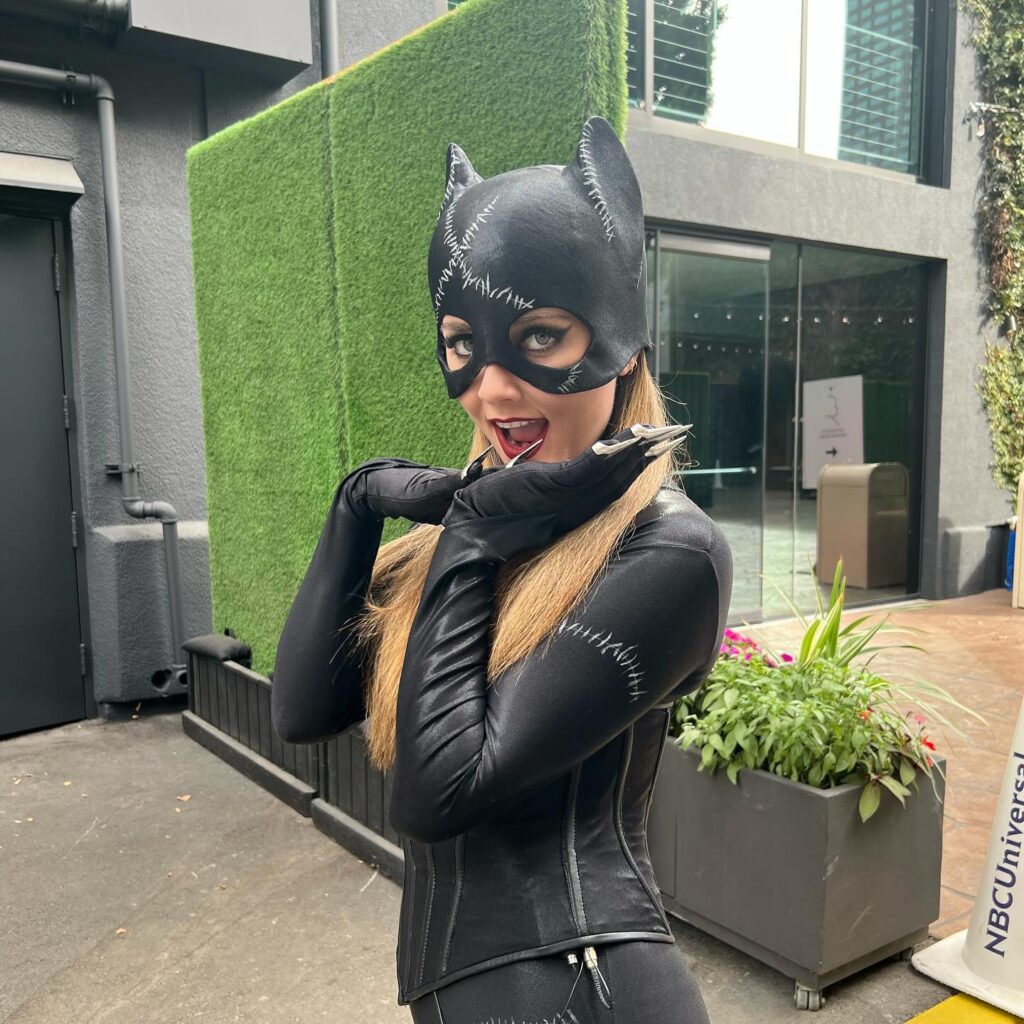
It’s easy to look at a career like Whigham’s and assume a linear, Hollywood-standard path, but her entry into acting feels more like a spiritual inheritance. It started in the fourth grade with a one-line role as Native American Number 3 in a school play about California missions. It sounds ridiculous to most, but for Giorgia, that was the click. “I loved being on stage, the camaraderie, the setup was fun,” she says. “It sounds ridiculous, but that is the moment I knew. It was almost weirdly spiritual for me—I still refer back to it.”
That early spark grew up in a home where art was just part of life. Her father’s own trajectory played out in real-time alongside her childhood; he didn’t really “take off” until she was 12, giving her a front-row seat to the reality of the work long before the success hit. There was an undying love for the craft that translated into a house full of books and a constant dialogue about movies. “The way he talked to me and my brothers about art was so profound,” Giorgia remembers. “It was almost like a law to us to always have a book in our hands. There was no other choice.”
Now, she’s leaning into the heavier stuff. Along with her brother, who writes and directs, Whigham has launched a production company, and they’re already gearing up to shoot a short film this May. It’s about a heavier subject; a darker, more visceral project where she plays a drug addict. “I haven’t gotten the opportunity yet to dive into that,” she says. “What a perfect time right now, where I’m very present, open, and ready to take on something so heavy.”
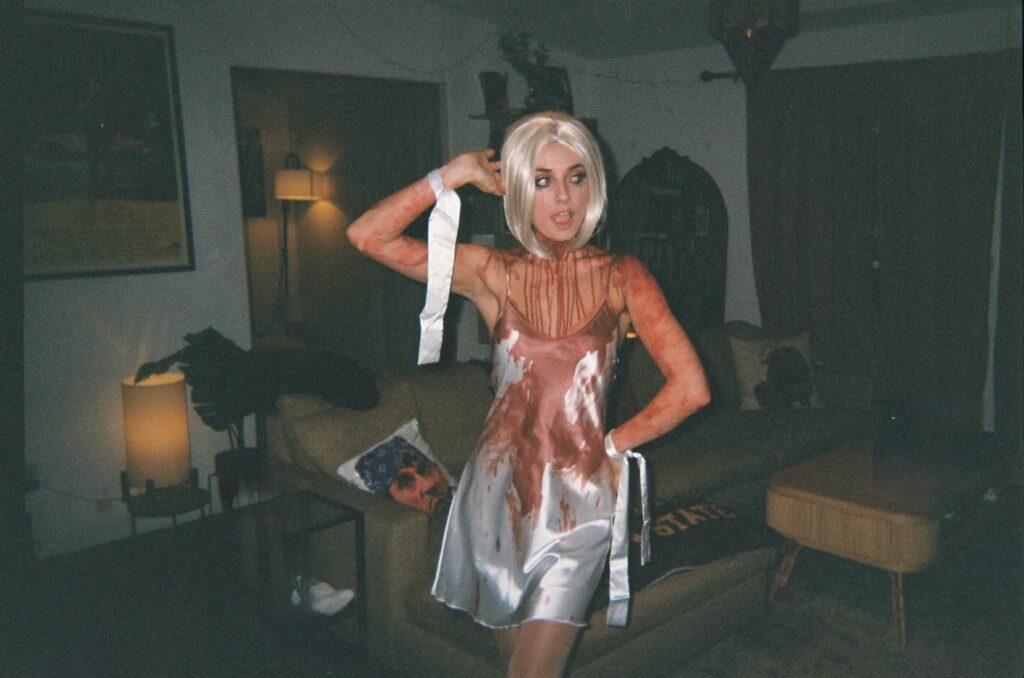
It’s clear she’s also ready to lean into that Scream Queen energy. She mentions being obsessed with Bodies Bodies Bodies and names Bring Her Back as the best movie of the year—a choice that shows she’s looking for horror that actually captures something emotional and out-of-the-box. “I hope,” she says of the genre’s future. “I love horror movies. I don’t know what it is, but perhaps the element of surprise.”
It’s that intersection of the ridiculous and the violent that she’s currently chasing in her own writing—taking her real life and amplifying it “times a million” until it becomes something insane. “I think comedy and horror have a lot of weird similarities. Just in the heightened states that exist in them.”
Whether it’s through her new production company or a script she’s cooking up with friends, Whigham isn’t just waiting for the next horror script to land on her desk. She’s actively trying to build the kind of “wild ideas” she wants to see on screen. “I love extreme, ridiculous ideas,” she admits. For an actor who thrives on being unpredictable and off-center, a full-blown horror era feels like the most natural next step. “I feel like I’m in a place right now where I’m really open and ready to take on something more intense. I’d love to show more range — as much as I love comedy, I’m craving darker material.”
It’s a perspective that keeps the work from ever becoming a routine. To her, acting isn’t just a job she’s landed—it’s a craft she’s still actively discovering. “I’m always constantly in class if not on a gig, trying to learn different techniques,” she says. “There’s not just one way to do this if you don’t want there to be. There are so many different avenues to take, and each one is just as interesting as the last. You could have a totally different experience with how you approach a role.”

When asked to name a single cinematic frame that captures her own internal landscape, Giorgia doesn’t hesitate: the overhead shot of Luke, played by Ryan Gosling, riding his motorcycle through the mountains in The Place Beyond the Pines. “It’s full of trees and greenery, my favorite thing in the world, and the score that goes along with it is just so perfect,” she describes. “It feels very hopeful to me, but also a little lonely. I think it represents me.”
It’s an image termed by movement—something that seems to be a physical necessity for her. She talks about her “need to move” with the same intensity she uses for her acting class, tracing it back to a decade of playing soccer and her current obsession with yoga and pole dancing. “My dad has this ongoing joke,” she laughs. “I’m the only girl out of three brothers, and I’m the most athletic.”
That kinetic energy is what keeps the work from ever getting old. Whether she’s “radiating” on a soundstage or developing a script with her brother, she is perpetually in a state of becoming. “I don’t think this thing could ever get old to me,” she reveals. “I want to be wheeled onto set when I’m geriatric and still doing this. I love everything about making movies and TV shows and just making art. I don’t see a world without me doing this.”
Like that lone rider on the screen, Giorgia is comfortable in the solitude of the journey, as long as she’s moving toward something honest, something heavy, and something entirely her own.