
By
On a cold Canadian morning, cinematographer Jeremy Cox had an answer for almost everything, but rarely the one I’d expect. Ask him about horror, and he starts talking about geometry. Ask him about cameras, and he mentions distance. Ask him what landscape he’d most like to shoot, and he’s imagining Icelandic volcanoes, cruise ships adrift at sea, and oil rigs floating in endless expanses of water. His imagination seems less interested in spectacle than in spaces: how they shape us, trap us, and quietly unsettle us.
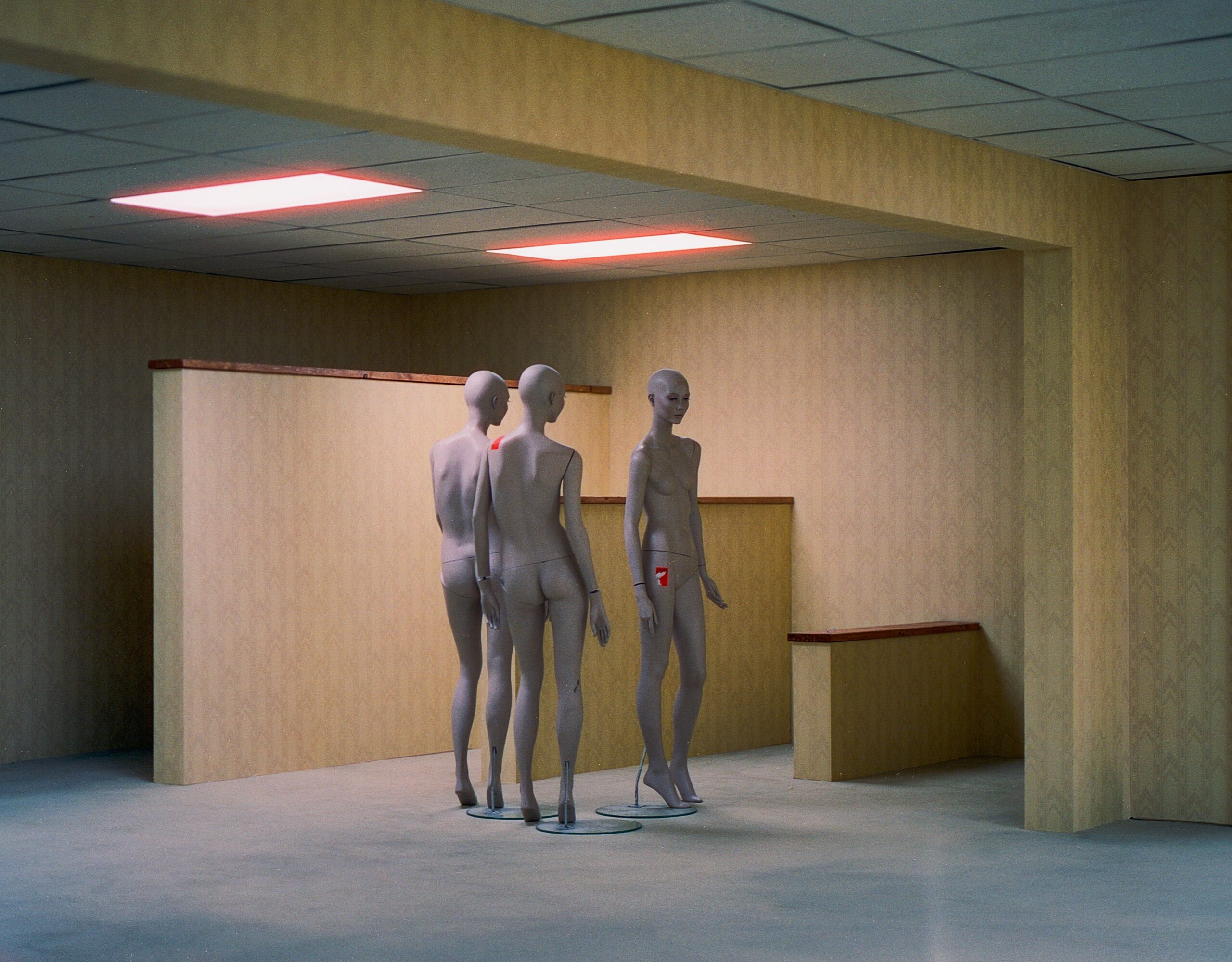
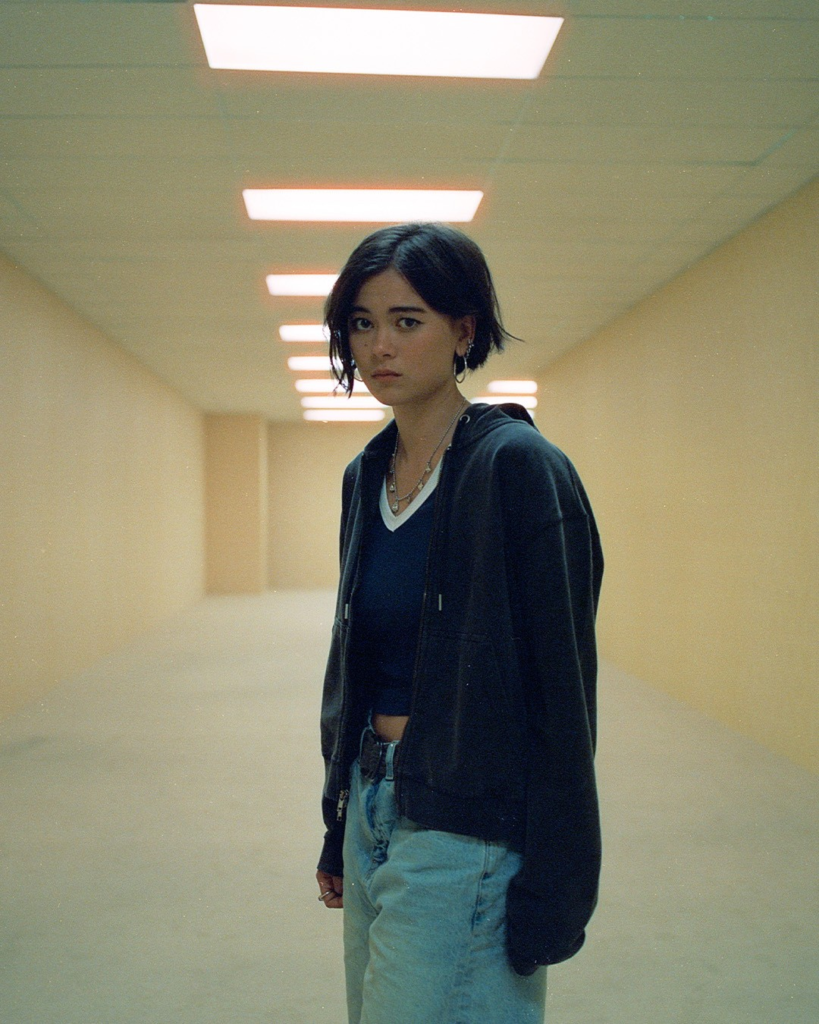
That instinct made him the ideal cinematographer for Backrooms, the feature adaptation of Kane Parsons’ viral YouTube sensation and A24’s highest grossing film to date. A project born from YouTube mythology could easily have chased internet nostalgia. Instead, Cox strips things back. His references stretch from liminal-space photography buried on Reddit to large-format landscape photography, all in pursuit of something that feels remembered rather than invented.
The creatures that inhabit Backrooms are warped echoes of the people they once resembled, just as the film’s fluorescent hallways and empty rooms are warped echoes of places, we’ve all passed through. By stripping away visual noise such as clutter, decoration, and distraction, Cox’s imagery becomes unnervingly precise. A hallway is never just a hallway. A fluorescent office isn’t empty so much as waiting. In Cox’s hands, fear is determined by proximity and sometimes the scariest thing in a frame is the room itself.
We spoke with Cox about building rules for impossible worlds, choreographing camera moves with Finn Bennett, internet fandom, and why he’s not into video games.
Q: You’re always behind the camera. What is your relationship like with being in front of it?
Jeremy: I think sometimes it’s just interesting stringing your words together, going back to something that happened so long ago and piecing together all the different thoughts. It’s more doing justice to what you’re thinking. Getting back there is the hard part, I find.
I wanted to talk about the impact of hype and cultural phenomenon around the film, and films in general. For example, with Obsession being released at the same time as your film, were comparisons drawn that you could have never foreseen?
I think it’s nice to be on the right side of hype. I think everyone’s been a part of a project where it doesn’t have that momentum, but to be a part of something that has such a clear force behind it is quite cool. I think we knew when we were making the film that there was such a fanbase already and that it was such a specific world — the world is already fully fleshed out. A lot of the times you jump into a project and you’re building that from scratch and the audience is understanding it from scratch. So, to be a part of something where the audience knows before they even get to the theater what the world is — that’s a huge head start. Cool to be a part of it and to participate in it.
What is your personal relationship with fans and the online world? Do you peruse Reddit threads and comment sections to inspire your own work?
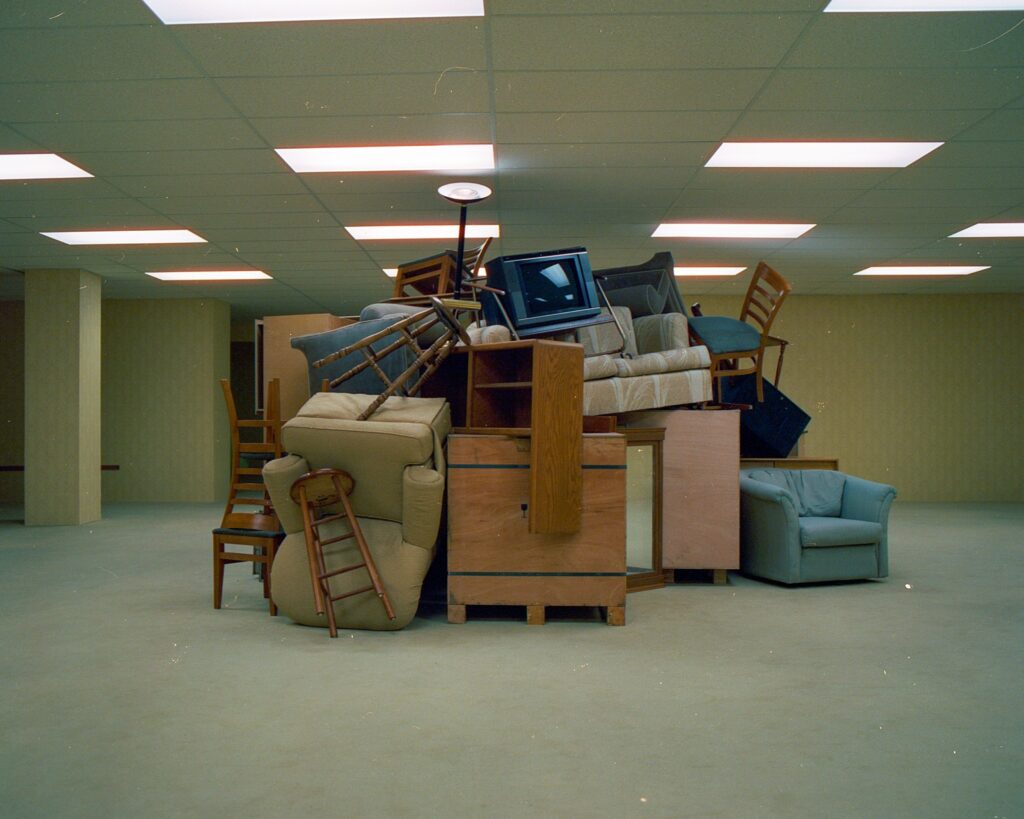
Kane and I looked at a lot of liminal space photography that existed. There’s a lot of it on Reddit and these different ideas of image production, like a lot of lo-fi point and shoot cameras with front flash have this inherent nostalgia leaked into them. So, we looked at a lot of images like that, thinking about how they would translate to a more cinematic or narrative filmmaking experience.
That was a constant, we were kind of keeping our eye on it. It’s a cool world, but it was difficult because a lot of the liminal space images are all front flash, so figuring out how to bake that in was a challenge. But I think the biggest takeaway was just that they all had a simplicity to them. They were always eliminating clutter or having the outside and the inside at the same exposure. So, we took that principle of simplifying and minimizing visual noise and clutter and finding ways to distill each frame to a single point perspective.
In somewhere like Backrooms, the rules of the world — the physics, the logic of the space — feel really vital. How deep into those rules do you have to get before you feel comfortable stepping onto set? Is there room for randomness?
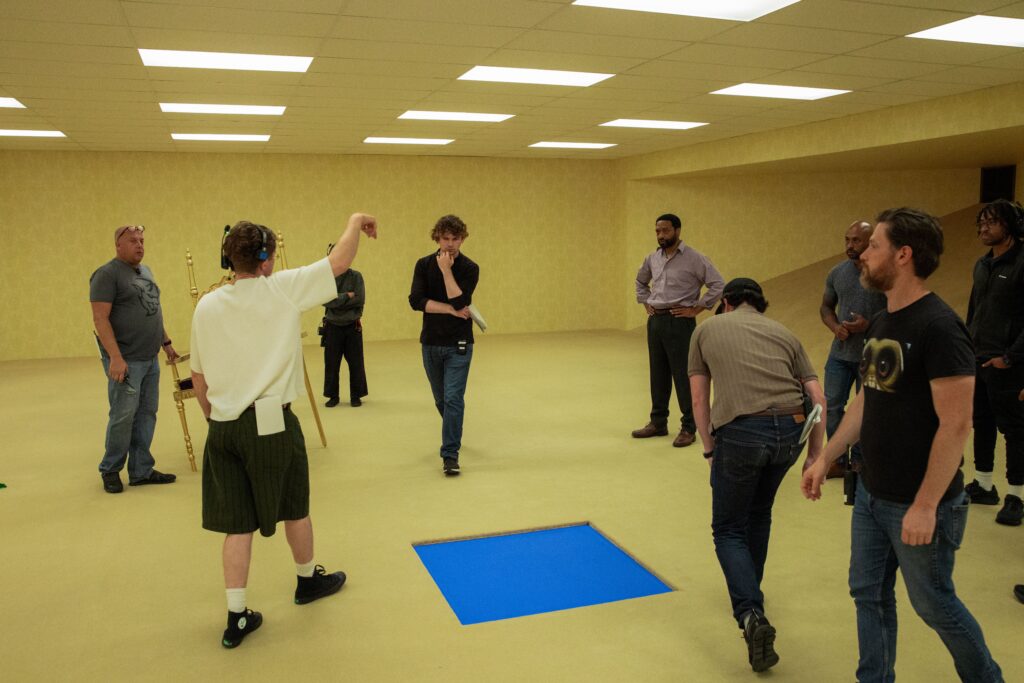
It’s a huge part of building out the shot list and the look itself. There are so many options, so picking the coherent visual language that’s right for each project is key. On this one, I knew very early on that it needed to be a single subjective perspective, so you experience spaces through the perspective of the character. It’s very akin to the YouTube series, which is direct point of view.
That informed a lot of the visual approaches. Our rule system was that you can only see a space as the character is experiencing it — you can’t jump ahead and see something happening before they’ve seen it, which is a common filmmaking approach. Normally you might be in a room, see something bad, and then see the character walking up to it. There’s an inherent suspense to that. So, it was interesting building up suspense by being with the character and looking around the corner at the same time they’re experiencing it.
In the Captain Clark chase scene he’s in certain crevices looking down at her and he can’t reach her, but it’s terrifying — how do you know when a certain shot is going to be executed in the way you hope and truly feel scary to audiences?
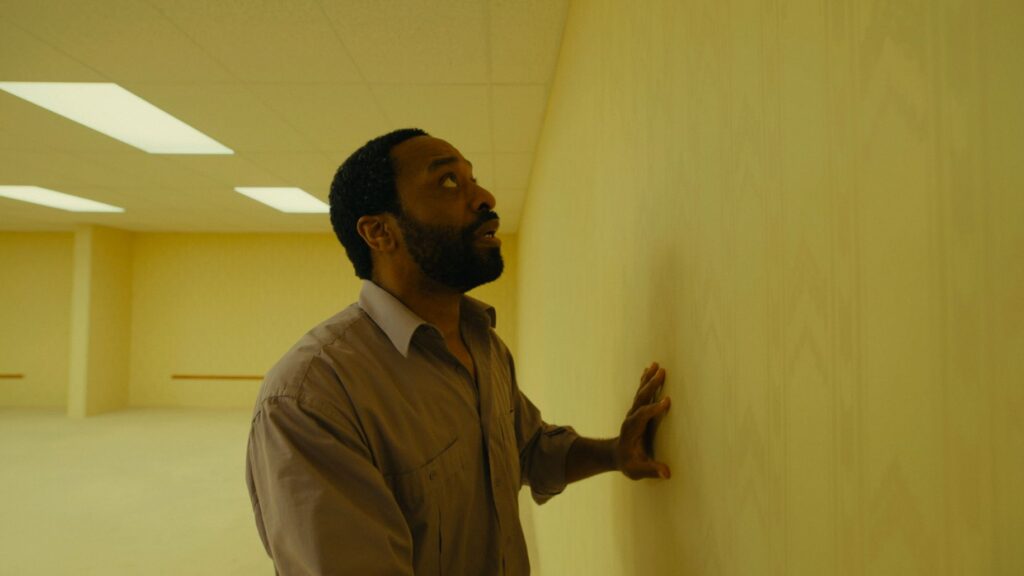
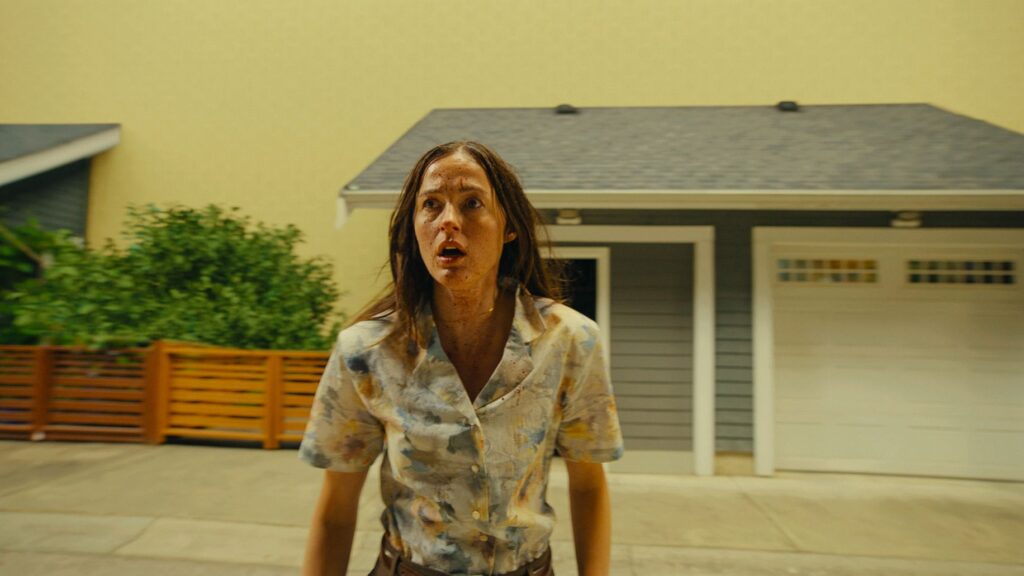
There’s a lot to it. When you’re approaching an image, I always place the emphasis on proximity. It’s less about the lens, but how far is the camera physically from the subject? On screen you can feel that regardless of whether it’s a wide lens or a tighter lens, you can feel that the camera is close or far. And I think that relationship goes a long way. Is the threat close to me? Is the threat far away? And then adding the layer of field of view, when you have a wide-angle lens, it accentuates the distance or the closeness.
So, our biggest emphasis was just being true to the proximity between characters, between Captain Clark and Mary. And then there are things you can do with a wide lens where if you slightly tilt up or go slightly off center, all the straight lines in the background start to splay out in different directions. That becomes an interesting way of taking something like a box, something quite straightforward, and skewing it. You have something really common that you’ve seen before and then it’s kind of altered.
Are there any landscapes that you as a cinematographer would like to explore that you haven’t?
I’d love to shoot around Iceland and do some volcanoes. That’s just a cool landscape, I think. I like the idea of the ocean too. I don’t know that much about shooting the ocean. I’ve always wanted to shoot on a cruise ship as well. There’s something about that closed enclosed system, or like a deep-sea oil rig, where there’s a perimeter and an expanse beyond it. I think that’s a cool visual when you have these closed communities in this open nebulous space.
I want to ask our A Shot signature question, if you were a shot in a film, what shot would you be?
Great question. Have you seen Godland, a film by Hlynur Pálmason? I would probably be a shot from that film. I really love the way it approaches land. It’s also set in Iceland actually, so maybe that’s where my Iceland fixation is coming from. In that film the main character takes a lot of large format photography, and the way the film is photographed references that style. I really appreciate the way those two things coexist. So I would probably be one of the closeups from that film.
I believe you used to be, or still are, a photographer?
Yeah, I always just take stills. For fun, but never as a professional photographer.
Do you think that even as a casual skill it lent itself to your work in Backrooms seeing as still imagery was your main source of inspiration?
It’s all of that. I think developing your visual style, every time you go and shoot something, even if it’s just going for a walk and taking stills, you learn something or figure something out about your way of seeing. You develop your own patterns and interests. Anytime you do anything, big or small, there’s a takeaway in how you colored the photo, how you processed it, what you liked about it.
There’s a scene where it switches seamlessly to make it look like Finn Bennett is holding the handy cam. How did you create that illusion?
I was always holding the camera for Bobby, and there are a couple of instances in the mirror where it’s just him and the reflection. All the other times it’s me holding it and he’s standing behind me to deliver his lines. And then there are instances where I’ll put it down on the bed and you see him run into frame — I put it down and then have his hands on the camera, and then they pull away, so it looks like he put it down. That was fun choreography between him and I.
If you were speaking to someone who did just have an iPhone or a very simple camera and wanted to create something that captured the essence of what you did in Backrooms, is there anything a little more specific you’d tell them?
I would say if you’re going to use an iPhone, there’s the Filmic app where you can record in Apple Log, there are ways of getting a higher bit rate, more depth in the image. So, I think really imploring yourself to make sure whatever system you’re using, you’re getting the most out of it. And focusing on the tonality coming from the image itself. When you’re starting out, it’s easy not to focus on the texture of the way the image literally looks, it’s always about what’s in front of it, how the lighting is. So I would say put focus not just on what’s in front of
the camera, but on the way the camera is capturing the texture and tonality of the image itself. A lot of cameras like the Blackmagic Pocket cameras, the Sony ZV, the Red Komodo are all under $5,000 and in my opinion, you can get really good tonality or at least a raw image to work with in color. That’s what we used here, the Komodo, though to a different extent in that it was printed to VHS tape, so any benefit of the Komodo itself kind of went out the window. But that camera is great. You can have a raw image and play with texture, grain, different LUTs. Of course, it helps having an amazing colorist like Joseph in the background, but there’s still a lot you can learn on your own terms. Just don’t forget how the image is handled as well as how it’s captured.