
By
Many questions permeate mankind and have done since the dawn of time. Our greatest writers, from Shakespeare to Plato, have attempted, with varying levels of success, to answer them. They wondered, what is morality? What is good, and what is evil? What is justice? Can we escape our fate? These are the questions that form the foundation of humanity’s greatest story, Homer’s epic fantasy poem, The Odyssey. It’s the cornerstone of what we recognise as the Great Conversation, the idea that our most important works of literature and culture are, and will always be, in dialogue with one another across time.
It should come as no surprise, then, that this significance has bled into Western culture since it was written 2,700 years ago. Any story about going on a journey, or coming home, will find its genesis in The Odyssey. But no one has ever taken Homer’s text in its entirety and translated it to screen in a way that feels as monumental as the text itself. How does one adapt humanity’s greatest story?
Christopher Nolan has the answer. This is, in some ways, a rather serendipitous union. As a storyteller, Nolan has established himself as cinema’s foremost explorer of time, as both a physical, dimensional phenomenon, and deeply human experience. Beneath the gods and monsters in The Odyssey, lies a profoundly human meditation on longing, identity and fate. Odysseus’ story is our story, and Nolan brings it to the big screen in a way that breathes more life into the text than ever before.
This is an adaptation that is intimate and alive. At moments it feels like grand, live theatre in a way that almost feels overwhelming, before recentering on its core struggle of a man who yearns for his family, and longs to find his way home. Its stunning ensemble, visuals, sound and surprisingly self-reflective take on Homer’s story come together to create an epic in its own right.
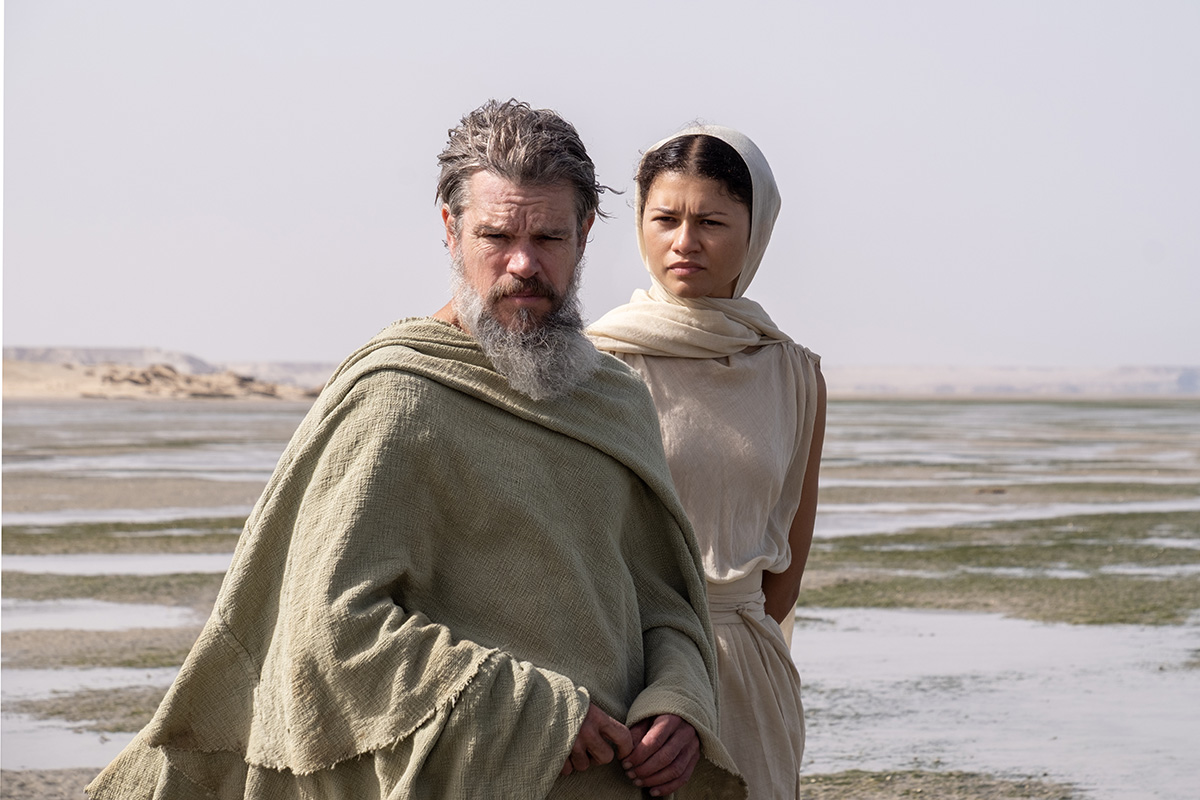
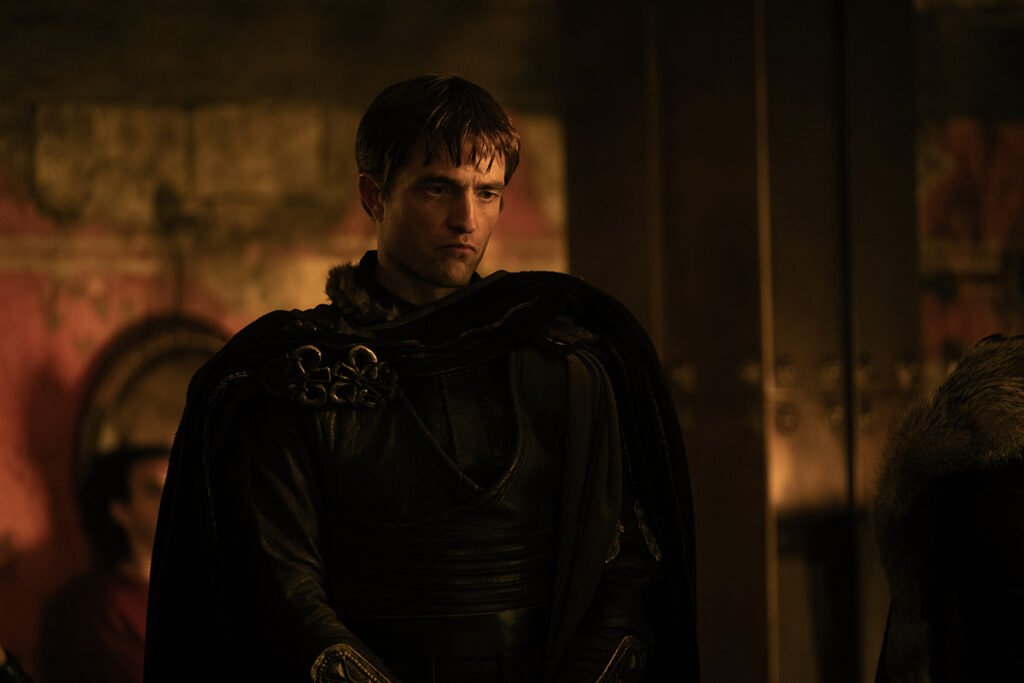
A title card lets us know that this story unfurls during ‘a time of apparent magic’. Nolan doesn’t deviate too far from the classic story that we all know: Odysseus (Matt Damon), the king of Ithaca, has been missing in action for 20 years after leading the Greek army to victory in the Trojan War. Desperately awaiting his return is his wife Penelope (Anne Hathaway), and their son Telemachus (Tom Holland), who are forced to host a barrage of suitors vying for Penelope’s hand in marriage. Among them is the duplicitous Antinous (Robert Pattinson), who attempts to rule the house. He’s cruel to the beggars who make their way through the doors, and clashes with the family’s servants, namely Eumaeus (John Leguizamo), Odysseus’ swineherd and childhood friend.
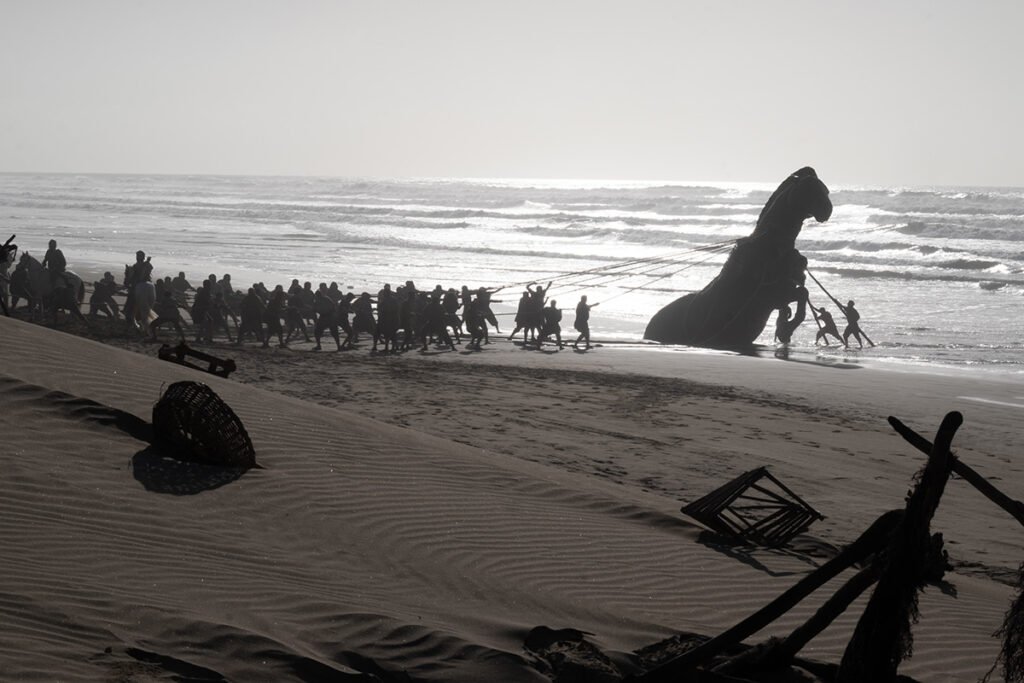
In typical Nolan fashion, the film’s 2 hour and 55-minute runtime veers between the past and present. We see Telemachus set sail for Sparta in search of information about his father, while Odysseus and his army savage Troy and befall misfortune after misfortune on their journey home. Enter the stories we know so well: Odysseus and his men battling a cyclops, encountering sirens, eating lotus flowers with Calypso, a monstrous whirlpool and the six-headed monster Scylla, fighting armour clad giants, getting turned into pigs and back again, visiting Hades and the spirits of his dead men, and fighting the rage of Poseidon at sea.
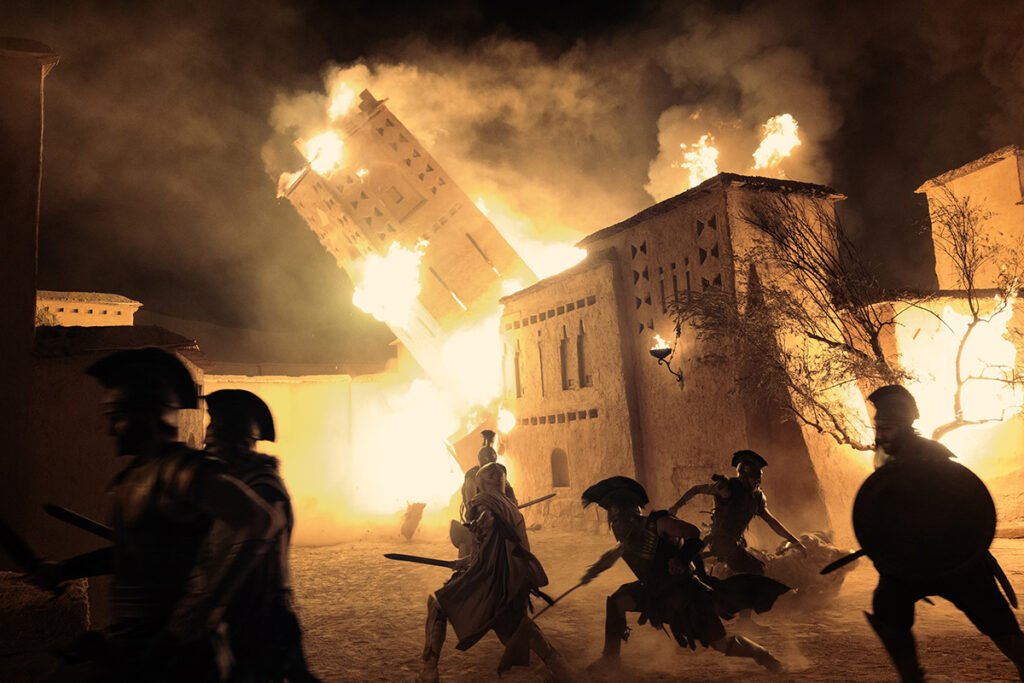
For all its gods and monsters, The Odyssey has always been a story about people. Nolan, and his incredible cast by extension, understand this instinctively. Odysseus is a jaded leader, burdened by the spoils of a war that he himself has orchestrated, and Damon imbues this lead performance with a level of nuance that echoes his brilliance in Good Will Hunting. He is certainly no hero, but instead the embodiment of the complicated nature of man, and Damon, with his rugged, stoic physicality, carries this weight with ease. His Odysseus hits his peak in the final act, with an incredible monologue set to the backdrop of a burning Troy.
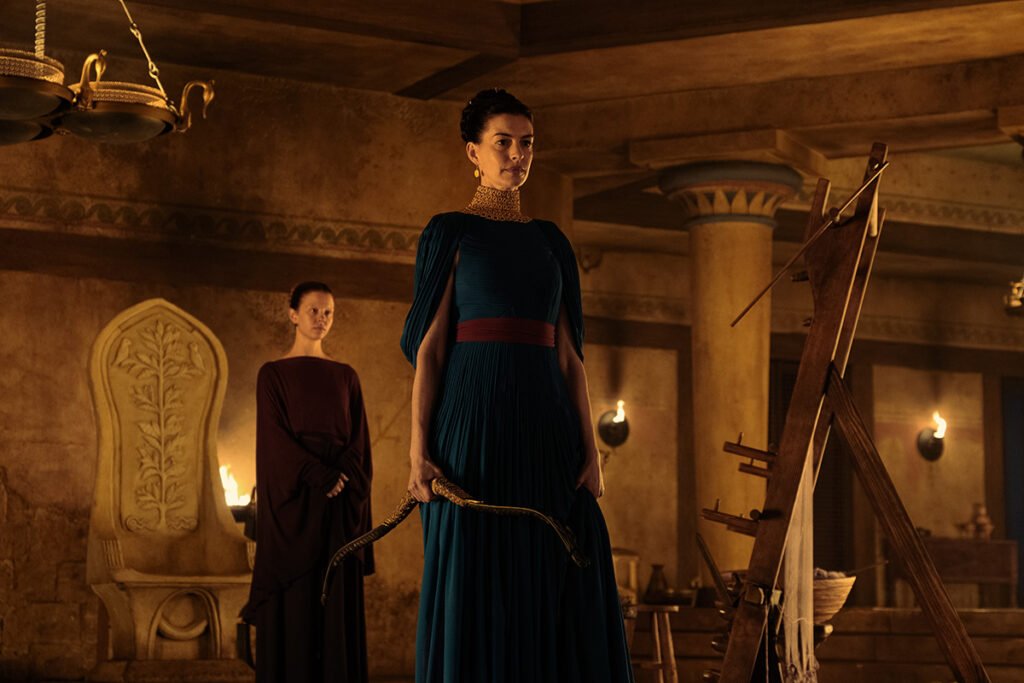
But for all Odysseus’ grand ambitions and revelations about the world, stood beside him is Hathaway’s Penelope. Every intentional frown and crease on Hathaway’s face constructs a Penelope that is both powerful and virtuous in a distinctly Homeric way. Her loyalty to Odysseus, and determination to protect Ithaca, becomes the emotional heart of the story. Telemachus is part of this heart, too. This is Tom Holland like we’ve never seen him before, in a performance that feels coming-of-age in a way that echoes Telemachus’ own journey from boy to man.
Even supporting characters are afforded significant depth, with a surprise exploration of Odysseus’ second-in-command, Himesh Patel’s Eurylochus, emerging as a stand-out extension of the story’s moral questions. The same goes for Zendaya’s Athena, who is the only god we actually see on screen. Though her appearances are brief, they are crucial, and together with Lupita Nyong’o’s Helen (and twin sister Clytemnestra), they serve as reminders of the folly and spoils of men. But no one does this better than Samantha Morton, who brings Circe to life in a surprising horror-esque sequence that is simply captivating, and reminiscent of Heath Ledger’s Joker.
Much of the conversation surrounding The Odyssey to date has centered on the film’s technical feats, given that this is the first film to be shot entirely on full frame, 70 millimeter IMAX. Known for his large format prowess, it’s been hard to imagine a version of Nolan’s Odyssey that wouldn’t live up to the directors’ self-set visual expectations. It really should come as no surprise that The Odyssey is breathtaking. Photographed by Nolan’s long-term cinematographer, Hoyte van Hoytema, the film unfurls across set pieces and a scale that is wholly befitting of one of the foundational texts of Western literature. The colors are rich and beautiful and wholly enhanced by the film’s celluloid format. To the dismay of those without an IMAX theatre nearby, this is absolutely something that must be seen as big and loud as possible.
Yet what’s most striking about the cinematography is not its grandeur, but its intimacy. The cyclops, Polyphemus, looms over Odysseus and his men in a cave, yet the camera’s approach to the one-eyed giant – honing in on his confused, and pained expression in between hovering amongst the human soldiers on the ground – afford the audience the opportunity to feel the same levels of sympathy for the film’s creatures as they might its humans. The film works hard to herald the importance of this humanity, even amongst its giant, armour clad Laestrygonians, six headed sea creatures and sirens.
This is a humanity that abounds within John Leguizamo’s Eumaeus, who embodies Odysseus’ loyal swineherd with an emotional tenderness that almost feels out of place in a world full of such rage and war, in what should be a widely acclaimed and recognised performance. This is mirrored by Elliot Page’s Sinon, Odysseus’ youngest soldier, who represents the youth that is lost to war in an interpretation of The Aeneid character that is hauntingly memorable given his little screen time.
Though not as euphoric as his recent work on Oppenheimer and Sinners, Ludwig Göransson’s thundering score ties the film together, acting as a pseudo-god itself. Göransson channels the might of Zeus and Poseidon with a music ensemble that is as moving as it is anxiety inducing. Enter incredible sound design and effects, and Nolan’s vision of Ancient Greece comes alive. Though not the adaptation full of mythological whimsy that some might have hoped for, together, Nolan, van Hoytema and Goransson construct a world that feels not only lived in, but strangely possible, and for a tale of man from the past with lessons to teach the future, this relatability works.
What lingers the most, however, is The Odyssey’s commitment to its message. It’s deeply concerned with the tension between fate and responsibility, and is, at its core, an examination of humanity’s hubris. Odysseus wants more than anything in the world to go home. Yet, when he comes face to face with the result of his and his soldiers’ actions, both at Troy and throughout their journey back to Ithaca, he fears that the world he knows and loves has been pillaged, too. It draws questions of duty – Odysseus’ to Agamemnon, and Odysseus’ men to him – into consideration with the consequences of war that we don’t always see. But Nolan shows them, by means of a harrowing reenactment of the Siege of Troy that sees men, women and children brought to their knees at the hands of his men. He makes sure to torment his Odysseus’ with them.
The result is an unexpectedly contemporary take on Homer’s story, and serves as a reminder of the selfish, destructive, cyclical nature of man. But through its intimate, human moments – Odysseus clutching a puppy to his chest or teaching a hoard of bright-eyed young boys how to string a bow – it also stands as a testament of the gentle capabilities of the world, even amongst evil and destruction.
The Odyssey see’s Odysseus reckon with the burning of the Bronze Age, and a collapse into a period of darkness, plotting the end of their known civilisation, for better or for worse. It will make you think about our past, our present, and where we’re going. This is a true epic, not unlike Homer’s tale: The Odyssey is a masterpiece that will be recognised as a pillar of cinematic achievement for generations to come.