

By
The internet is often a distorted mirror, reflecting back to its subjects versions of themselves that are both eerily accurate and slightly surreal. For Stephen Dawes, that mirror has looked like everything from a breakout Katy Perry cover that accelerated his career at breakneck speed, to a rolling social media joke comparing his likeness to iconic, moody pop-culture figures like Modern Family’s Dylan or the infamous Rodrick Heffley.
Though many first discovered the American singer through his stripped-back cover of Katy Perry’s “Teenage Dream”—a rendition that quickly gained traction online and led to label meetings while he was still in college—Dawes has since built a catalogue that feels far more personal than the song that first put him on listeners’ radars. Since then, his own songs have amassed millions of streams, including singles like Reputation, Symptoms, Two Hearts, and Stay. His upcoming debut album, Skin to Skin, arrives on June 26. And if the rest of the record is anything like Optimist, well, we’re feeling cautiously optimistic.
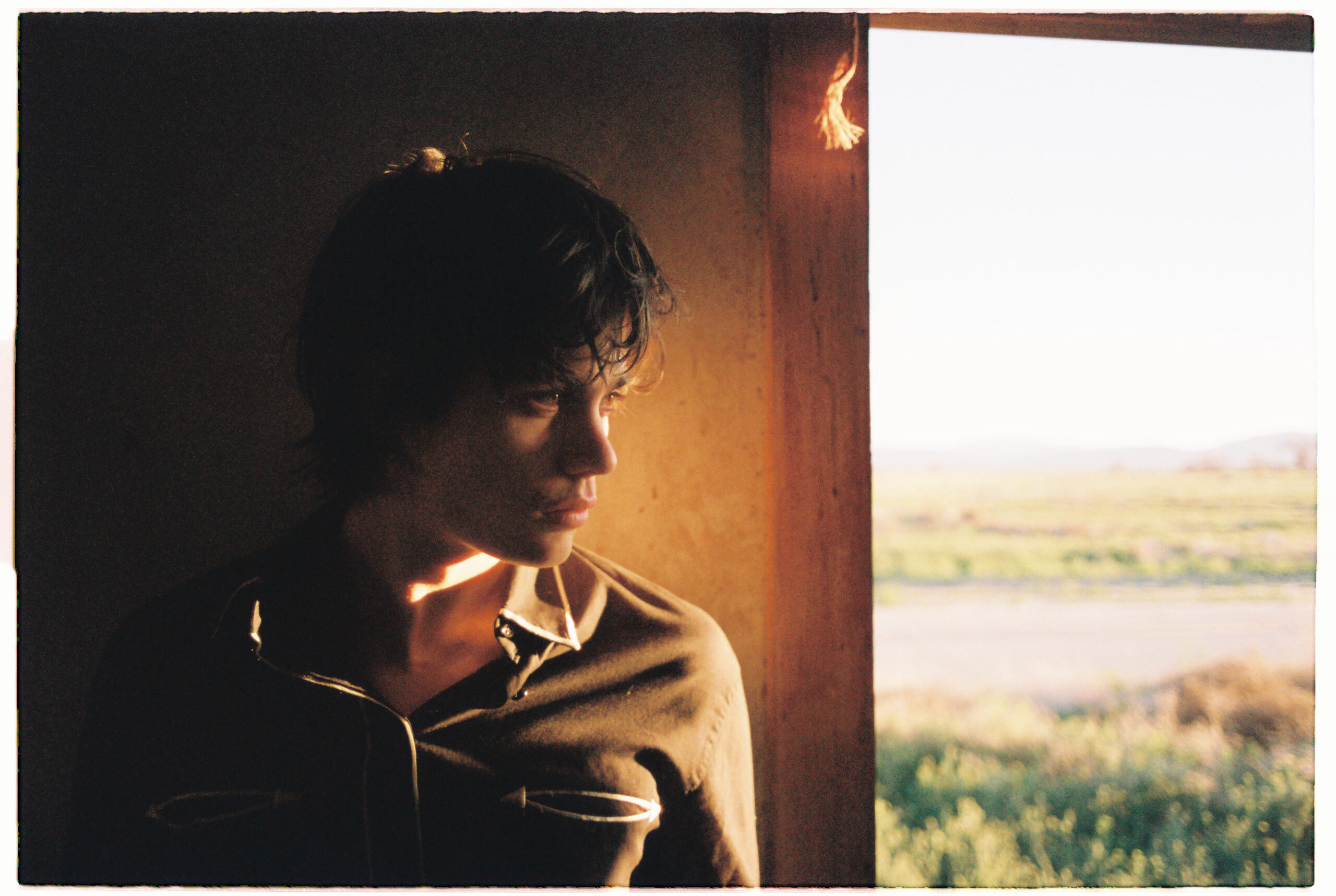
Strip away the memes, the TikTok algorithm, and the “unexpectedly famous” label, and you find a much more intentional reality. In the soft, solitary glow of a piano room, Dawes is trying to capture the exact, unvarnished weight of being nineteen, the whirlwind of Los Angeles, the ache of a situationship, and the feeling of growing into a sound that is, above all else, his own. “Most of my music begins alone at the piano,” he admits sheepishly.
For Dawes, the song-writing process is about the hum of a melody caught on a phone or the tactile resonance of piano keys. He describes his music as a series of time capsules, a way to fasten his experiences before they have the chance to fade. “I love when it brings me right back to the moment I wrote it,” he says, noting that his older work acts as a private map of who he was at nineteen, a time when he was falling deeper into music while figuring out the strange reality of life after the pandemic. For him, everything felt wide open creatively, but life itself was still settling into a new normal.
Sonically, Dawes’ music sits in a sweet spot between breezy bedroom pop and something much more atmospheric. It’s an aesthetic carried by beat-driven grooves and shimmering Stratocaster riffs, but at its heart, it’s always grounded in the piano. There is a palpable warmth to his production—the kind that feels as if you’re hearing the literal movement of his hands across the keys or the slight grit of a vocal take that wasn’t meant to be perfect.
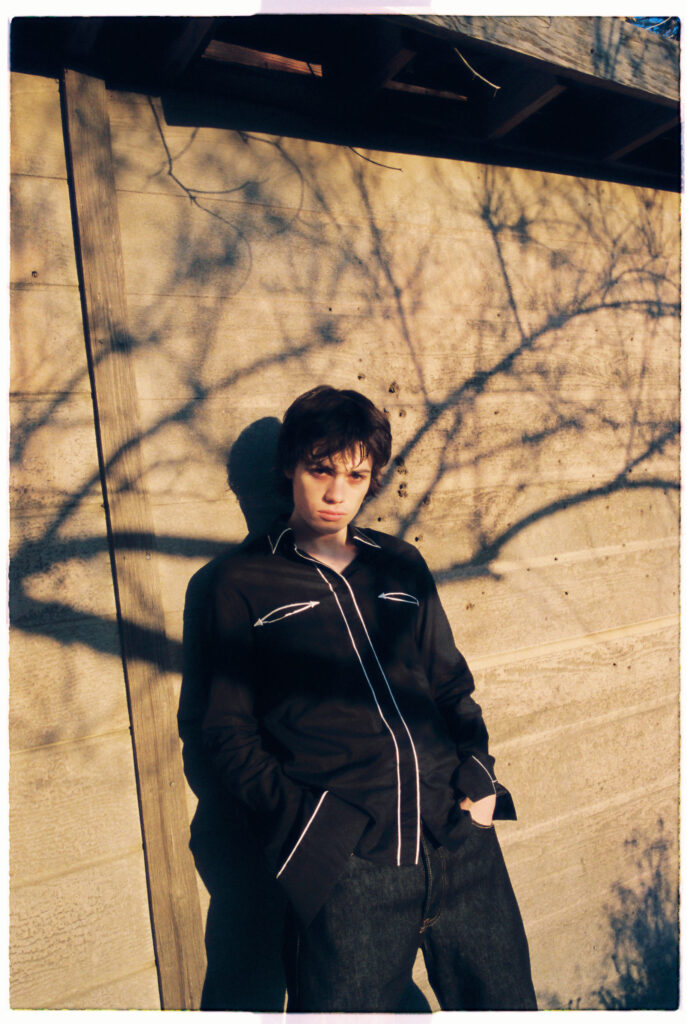
His songs act as a sprawling, real-time coming-of-age narrative, mapping the messy territory of his early twenties. In his lyrical world, he tackles the universal, often isolating, chaos of city life—the distance growing between friends, the intensity of a first real love, and the loneliness that comes with change. His themes touch on intimacy, uncertainty, and lovers caught between desire, public scrutiny, and the fear of losing one another.
On Symptoms, for example, infatuation manifests physically, transforming a crush into something almost feverish as he sings about staying up all night thinking about someone and seeing his future flash before his eyes at the touch of their hand. Whether he’s belting out a chorus or whispering through a verse, he’s aiming for a specific, movielike quality—he wants the listener to feel like they’ve just walked into the scene of a film he’s been living in.
This sense of preservation is purposeful. Dawes views each song as a document, whether he’s producing a track from scratch in his room or leaning into the transparency of his lyrics. “In the last few years, I’ve become a big fan of journalling and taking more photos, which has made it so much easier to write about super specific moments in my life,” he shares. He scarps the impulse to hold back, choosing instead to lean into the specificities of heartbreak and the messy, blurry lines of relationships.
By keeping the production close to his own hands, he ensures that the end result feels like a direct transmission from the piano bench to the listener’s headphones. While Dawes values collaboration, he’s found that the more involved he is in every stage of a song’s creation, the more personal it becomes. “The more I make a song with my own two hands, the more personal it becomes,” he says, explaining that writing alone—or with a close friend—allows him to be fearless in documenting exactly what he’s feeling.
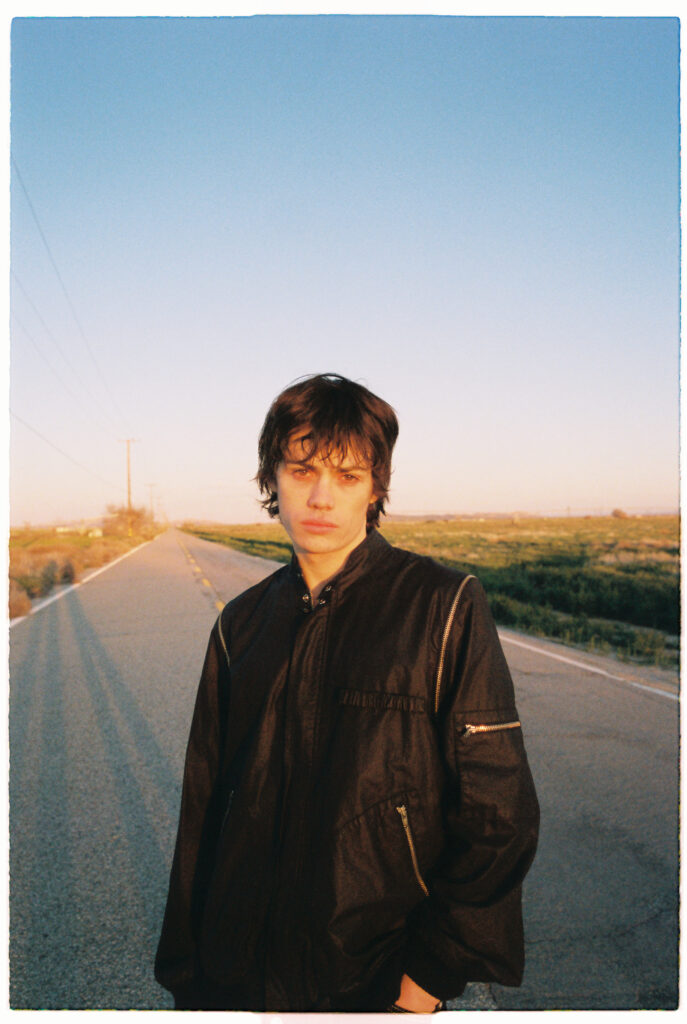
There is a rare, steady consistency to Dawes’ musical identity. While many artists spend their early years aggressively shedding their influences or chasing shifting trends, Dawes finds comfort in the familiar. He speaks of the albums his parents played for him during his childhood not as relics, but as foundational blueprints that he still returns to today. “In some ways, I feel like my taste has never really changed, which is so rare,” he tells A Shot.
That sense of continuity carries over into his own compositions; he still finds himself gravitating toward the same fundamental chord structures that captivated him as a kid. It’s a driving force, one that allows him to experiment with the textures of alternative pop while keeping the core of his song-writing deep-seated in the classic, resonant piano arrangements that first hooked him. This is a songwriter leaning into a lifelong intuition, trusting that the melodies that felt right at ten years old are the same ones that carry the weight of his experiences today.
For all the emotional intensity he pours into his tracks, Dawes carries an easy, grounded perspective on the life surrounding his music. When he’s not in the high-stakes cycle of releasing projects, his days are defined by a quiet simplicity: long sessions at the piano and keeping things low-key with friends. It’s this state of being, he admits, where he feels the most at peace.
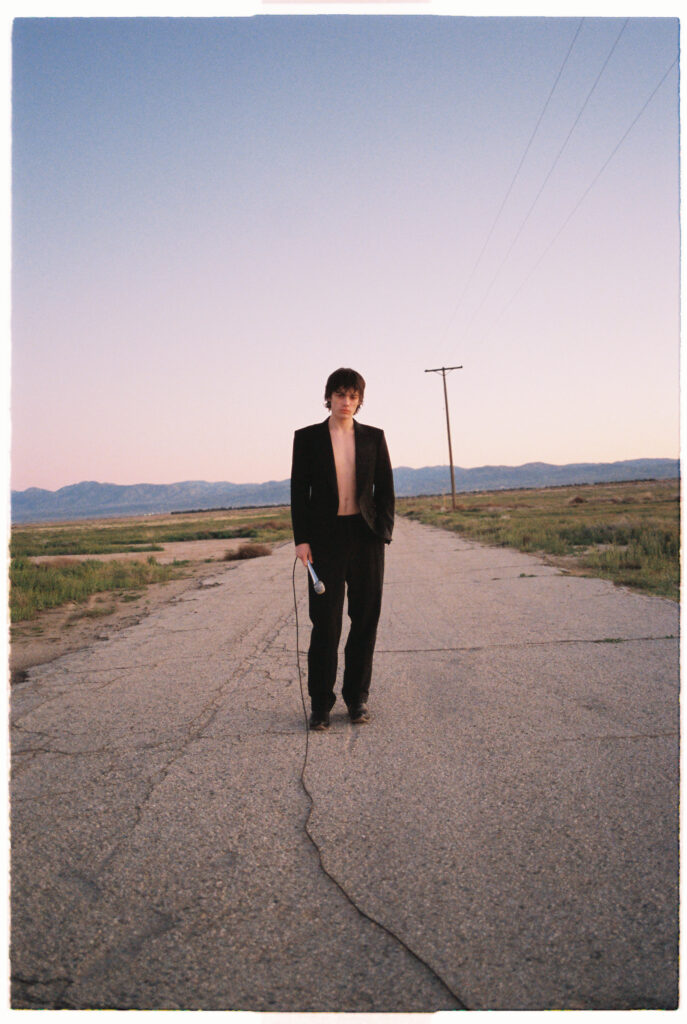
That level-headedness even carries forward to his relationship with his audience. Where some artists might find the internet’s playful obsession with their lookalikes—the constant comparisons to fictional characters or pop-culture figures—to be a distraction, Dawes greets it with a shrug and a smile. He’s in on the joke, even going so far as to fully embrace the comparison on Halloween. It’s a testimony to an artist who understands that his public image is only one facet of his life, and that the audience’s connection to him is built on more than just the music—it’s built on a shared sense of humour and the authenticity he brings to every interaction.
For someone who speaks so often about journals, voice notes, photographs, and personal memories, Dawes ultimately sees music as something communal. The songs may begin in solitude, but they’re built to be shared. “I’ve found that although I’m ultimately sharing these songs with the whole world, I will write about even the most personal feelings,” he adds. “Listeners want transparency, authenticity, and detail.”
As his debut album Skin to Skin approaches, the time capsules he’s spent years assembling are finally leaving the room where they were made. His music is basically a running journal, full of those candid, tender snapshots that might have otherwise disappeared. He isn’t in any rush to hit the next career milestone; he’s perfectly content to keep playing out his story in real-time.
For him, it’s not about chasing another viral moment. It’s about building a record of his youth that he can actually go back to—a collection of melodies that act as a time capsule, waiting there whenever he needs to remember exactly who he was, and how he felt, when he first sat down at the keys.