By
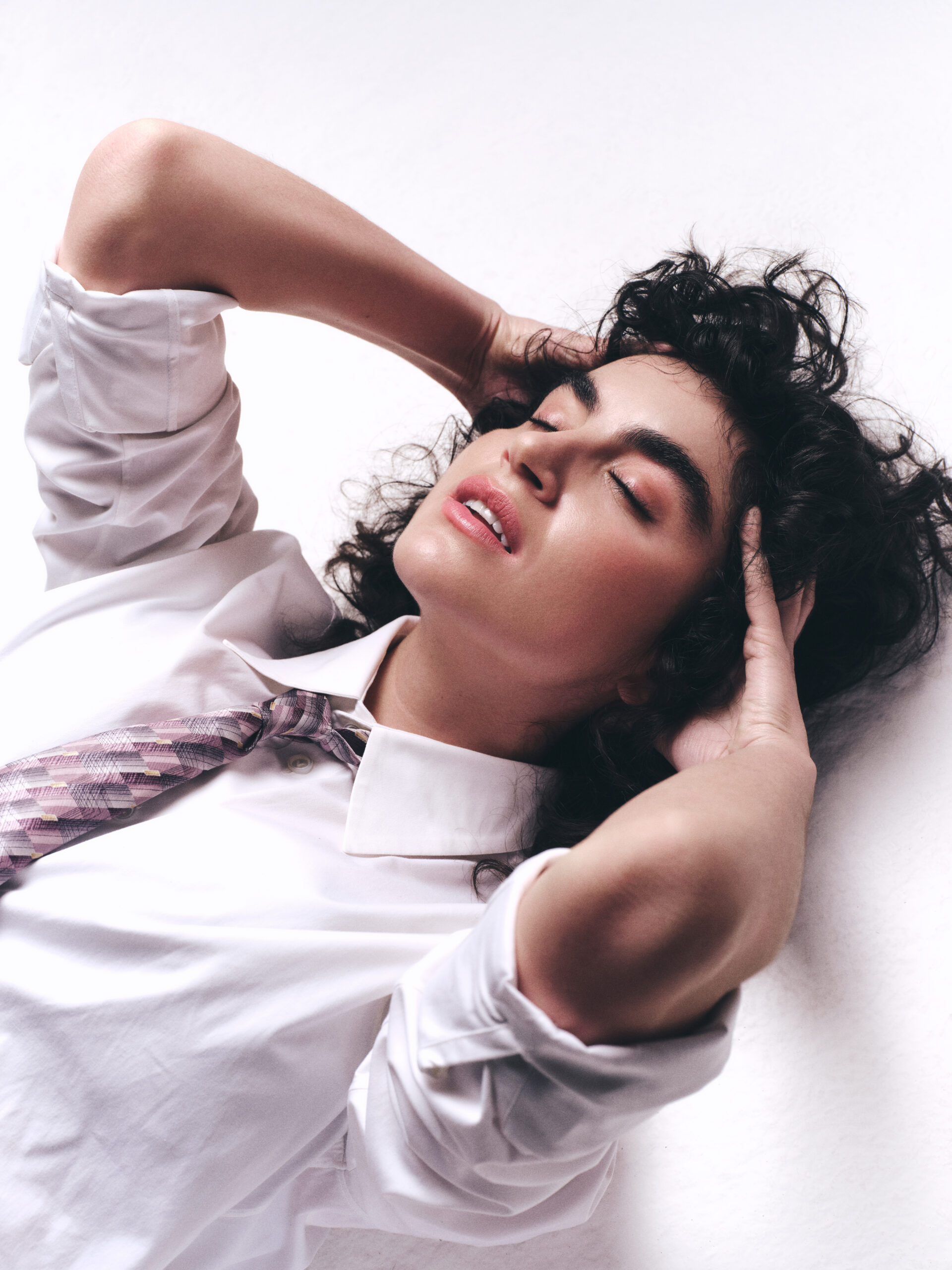
There is a delicious irony in the fact that Sarah Yarkin is currently one of indie horror’s most reliable staples. By her own admission, if a television show is lit too darkly, she’ll have a nightmare. She grew up getting spooked by rom-coms. Yet, sitting across from me on a Zoom screen, framed by a high-volume, 80s-inspired mane she spent the morning teasing for a secret role, Sarah is the picture of fearless creative chaos.
From playing the chainsaw-evading lead in Texas Chainsaw Massacre to the cynical, dead-cool Rhonda in School Spirits, Sarah has built a career out of the very genre that terrifies her. Despite being a staple of the macabre—from the chainsaw-evading lead in Texas Chainsaw Massacre to the cynical, dead-cool Rhonda in School Spirits—Sarah is ironically, hilariously, a “horror-movie-hating” horror star.
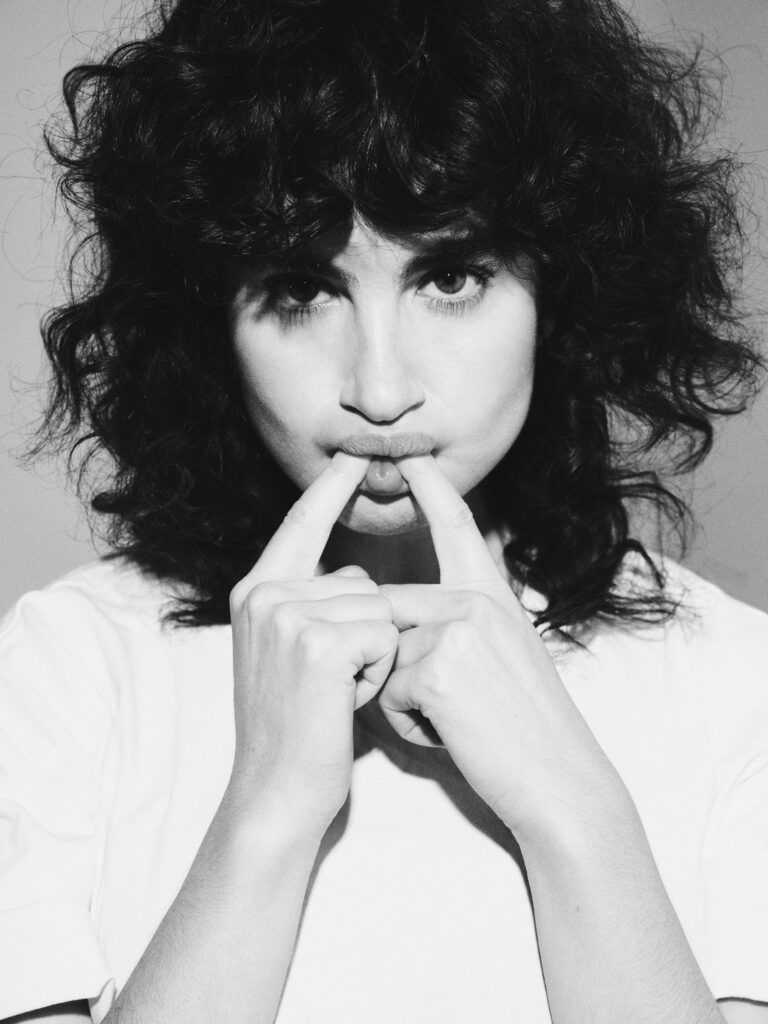
“I’m not the target audience for some of the stuff I’ve been in,” she admits with a wide-eyed transparency that instantly dissolves the digital barrier, while her dog, Frankie, lounges nearby like a silent co-producer. It’s this make-believe spirit that defines her—a high-frequency, “delusional second grader” energy that has seen her transition from a neurotic twenty-something looking for an opening to a self-assured creator who is tired of waiting for the cavalry to arrive.
Throughout our talk, Sarah oscillates between the high-frequency vibrance of a self-described neurotic Gemini and a highly-grounded artist who has recently discovered the power of saying no to desperation. By the time we start discussing her dream of living on a vegetable farm in the mountains, it’s clear that Sarah Yarkin is in the middle of a creative renaissance. She is stepping out of the “cool cat” shadow of her characters and into a space that is entirely, vibrantly her own. In her wide, feverishly-bright eyes, the cavalry isn’t coming—so you might as well start riding.
Q: I’ve noticed that recently you’ve had a noticeable pull toward darker, more psychological roles—horrors, thrillers, and some of your upcoming projects as well. Was that a conscious gravitation, or something that happened more organically?
Sarah Yarkin: Yeah, I feel like it is a funny trend of the work I’ve done most recently, but it really feels like sort of a coincidence. I can’t watch anything scary, I can’t watch a single horror movie. I got scared watching rom-coms growing up. If a show is lit too darkly, I will have a nightmare. I’m not the target audience for some of the stuff I’ve been in, which is ironic, and I’ve had to watch some things so I can understand what to do in this genre.
Even when I read for School Spirits in my audition, and all of season one, I thought it was a comedy. I remember me and Nick, who plays Charley, were like, this show is so funny. All of our parts were like that. Then seeing the season together, and obviously as it’s progressed through three seasons, I’m like, this is a kind of scary show. There are scary parts.
Even with Visitors, the short that I just went to SXSW with, it’s a very grounded sci-fi, and it’s a psychological thriller in many ways. I love working in that genre. I think that’s so fun as an actor, but I approach each role the same—just trying to find the truth in the character and their journey and what they’re going through. I would love to do a comedy. I would love to do something super fun, like sweatpants-on-a-couch-character energy.
Q: Oh wow! How do you watch yourself back in those roles if you get scared so easily then?
SY: Once you’ve done it, even doing Texas Chainsaw, you see how everything’s fake. You know when he’s going to pop out and scare you and stuff like that, so that eliminates the real fear of it. You’re actually trying to be scared when you shoot it.
When you watch it, it’s not scary. The scariest thing is watching myself on screen at all. That’s my own horror movie. We were just at SXSW, and they played the short three times with audiences, and each screening my body is contorting in these ways in my seat. The hardest thing is just watching myself.
Q: When you’re working on a new role or approaching a new project, what’s your starting point? Do you begin with emotion, backstory, or something more physical, like posture or presence?
SY: I went to theater school, and there’s this idea that there are different actors with different approaches, and there are many doors to get to the same place. Some actors are very outside-in, and once they get the physicality and the voice and the outfit, they can access it. Others are internal—what am I feeling? I feel like that’s where I thrive: finding the truth in what the character is going through and how I can relate from my own life or experience or imagination.
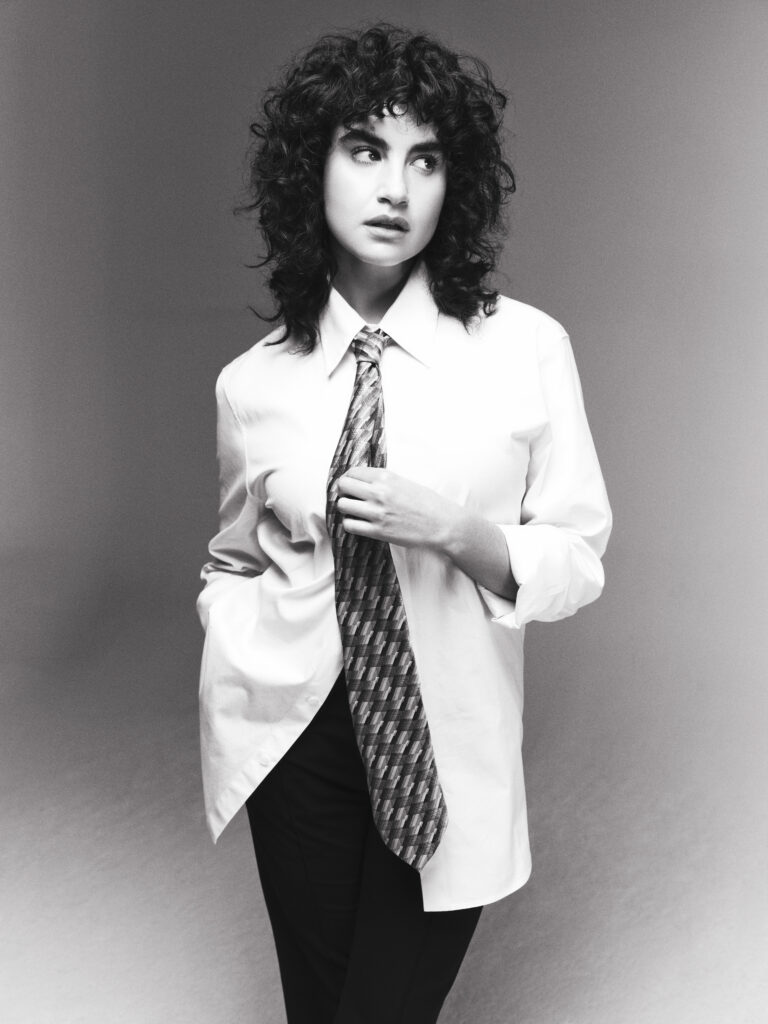
That said, I’m working on a show right now based on a real person and a real event, and I found myself wanting to approach it differently bringing in a photographer friend, a hairstylist, and trying to look as much as I can like this character. I’ve never done that before. If I do get an audition and go forward with it, I’d be working on the voice because I’ve never played a real person before. It’s a dream as an actor to ask, how do I make my physicality just like this person?
Q: You’ve moved across both indie and more mainstream projects. Right now, how do you decide what feels worth your time?
SY: I just left SXSW, and it was such a transformative week. Being on the ground with so many indie filmmakers who love what they do, and being a part of that community, was the best feeling I’ve ever had in my life. To feel like I’m part of that community as well, because I really want to be making indie films.
So much of this is budgetary—can we get the budget to make Visitors, my short, as a feature? It would be great if a studio wanted to give us money. One of the Duplass brothers has this great quote about waiting for the cavalry to come and buy your movie and tell you you’re the star and all this stuff, and they’re not coming. The cavalry is not coming. It’s the best quote, because truly it’s like, what am I waiting for?
When we made Visitors, we had that mentality of, we want to show our sensibility and our talent and what we want to be making, so we should just go ahead and make it. Not wait for someone to buy our script or adapt that thing with us. I would love to move between studio movies and indies and all of that. Being on my show on Paramount+ is such a gift so that I can also make the work I want to be making and that I’m super excited about. It’s an exciting time in indie filmmaking, and I’d love to continue doing that.
Q: What kinds of stories are you hoping to tell more of going forward, and do you feel a pull toward writing, directing, or producing more?
SY: I would love to continue telling stories from female perspectives, women’s issues, queer stories. I think there’s so much still to explore there. I’m always focused on stories about women told by women, and I want to continue prioritizing working with female directors and female writers.
With Visitors, we had a full team of female producers, and my writer-director Minnie Schedeen. It was just an amazing experience of very talented, smart women coming together and being like, let’s go fucking do something. I loved producing. It was my first real experience producing, and I learned so much from these incredible female producers. I would love to be a creative producer, have a production company—Dakota Johnson, that kind of vibe. Let’s go decide what we want to make, I want to be in it, and let’s go.
I’m also writing right now—a bisexual multiverse show with a dear friend—and we’d love to get that off the ground. Think Russian Doll meets Sliding Doors meets The L Word. I want to be making the things I want to see and having fun with that.
Q: How did you reach this point where you’re having fun with the process rather than approaching everything from anxiety or pressure?
SY: I still think I’m trying to find that balance all the time. When you’re really passionate about something, that can come across in its worst form as desperation, which I felt so much in my twenties—just being like, will someone please give me the opportunity to do this and to show that I’m good? Wanting that so badly.
I’m so grateful for School Spirits for giving me this work, this platform, accessibility to other roles, and working with these amazing people for four years now. It’s been such a gift, and I feel incredibly lucky that it happened to me four years ago and that we continue to get renewed.
I knew at a young age, I want to do this, and I’m going to do this. In the past couple years, that clarity, that absolute belief in myself, has waned. There are moments where I go, what if I don’t? What if I actually don’t book something again? That could happen. I’m a very realistic person.
As much as I can, I try to get back into the headspace of being a second grader going, ‘I’m gonna win an Oscar’, being delusional, and also continuing to make work that excites me instead of waiting for auditions. I had two auditions I had to work on after this, but I spent the whole morning doing my hair with my friend and doing this photograph for this role I really want. I was like, why is this so fun? Years ago I would have never prioritized my own work over auditions. Now I’m trying to refocus and go, both of these are important. It’s important, when I go and shoot things for School Spirits, to continue writing my own stuff and never stop the creative process while I’m doing other people’s work.
Q: When you feel in a rut or uninspired, where do you go to get that spark back?
SY: I struggle with this all the time. For me—and my therapist and I were just talking about this—nature is the single most grounding thing for me. It’s both very inspiring and very grounding. I want to live in the mountains. I just want to live upstate and have land and a farm—vegetables, not animals.
I’m a huge hiker. I want to go to all the national parks. After we shot season two of School Spirits, my girlfriend and I road-tripped from Vancouver, where we shoot, down to LA and stopped at every national park. To me, that was the ultimate way to get back in my body, get back in myself. You kind of lose that being on set for three months. It reminds me: this is what I love. I love being in nature.
As I’m thinking about my life going forward, I want to maybe live more in nature than in a city. For me, it’s the best way to get out of my head and into my body.
Q: Is there a moment when you know you’ve found a character—when you’ve fully stepped into their shoes?
SY: I am my toughest critic, so I think often I’ll even watch it back and go, did I ever really get that character?
With School Spirits, it was very funny because I had never played a cool character before. I was playing really nerdy characters for the most part—neurotic, nerdy characters—and I’m very good at that. Then I get this role, and Rhonda is very cool. She’s composed. She doesn’t give a shit. She’s intimidating. I did my audition, and then when I booked it, I was like, oh my God, how do I slow my heart rate? I operate at such a higher frequency than this character. I have so much more energy. I’m much more expressive. What do I do?
I remember getting to set and doing what I thought I did in the audition, and Matt Winkelmeyer, our AP and director on season one, was directing the pilot. He looked at me and said, “Rhonda’s down here,” and he put his hand down here. “Not up here.” He said, “Rhonda’s over here, and Sarah’s over here. Rhonda’s not neurotic.” I remember looking at him like, did you just call me annoying and neurotic? Which is so true, because that’s exactly who I am.
It really became about less—being like, I need to calm down because this character is not who I am. It was stressful to realize I was playing a character that was really different from me. In the audition I thought, this is just me when I’m cool, right? Then going back for season two and trying to be consistent with the character I had created in season one was also scary. By season three, I finally was like, I know exactly who this is. So maybe it takes three years to get into it.
Q: What kind of direction do you respond to best on set?
SY: I feel like it depends on the character, the scene, the circumstances, what kind of direction I need in that moment. My favorite collaborations with a director have this sort of unspoken language. You know when you’re speaking the same one.
Obviously not goal- or product-based direction—like “cry now.” That’s never going to be helpful. I love direction about physicality, things that can help me in that moment. I also love when you’re shooting out of order, being reminded of the exact moment before, or where the character just came from and what they were feeling before that, and getting into that headspace.
I love working with Hannah Macpherson. She directed half of our season, and she’s amazing. We very much speak the same language. TV can move really quickly, so having that shorthand with a director—like, it’s the feeling of this, do you know?—then I know exactly where to locate that in myself. Kind of giving synonyms or emotional cues, something I can grasp in that moment and go, oh, I know what that feeling is in my own life.
Working with Minnie Fine on Visitors was also just a dream because she’s one of my best friends. There was such a shorthand there. We had talked for years about this. She would say something and I’d know exactly what she wanted right then.
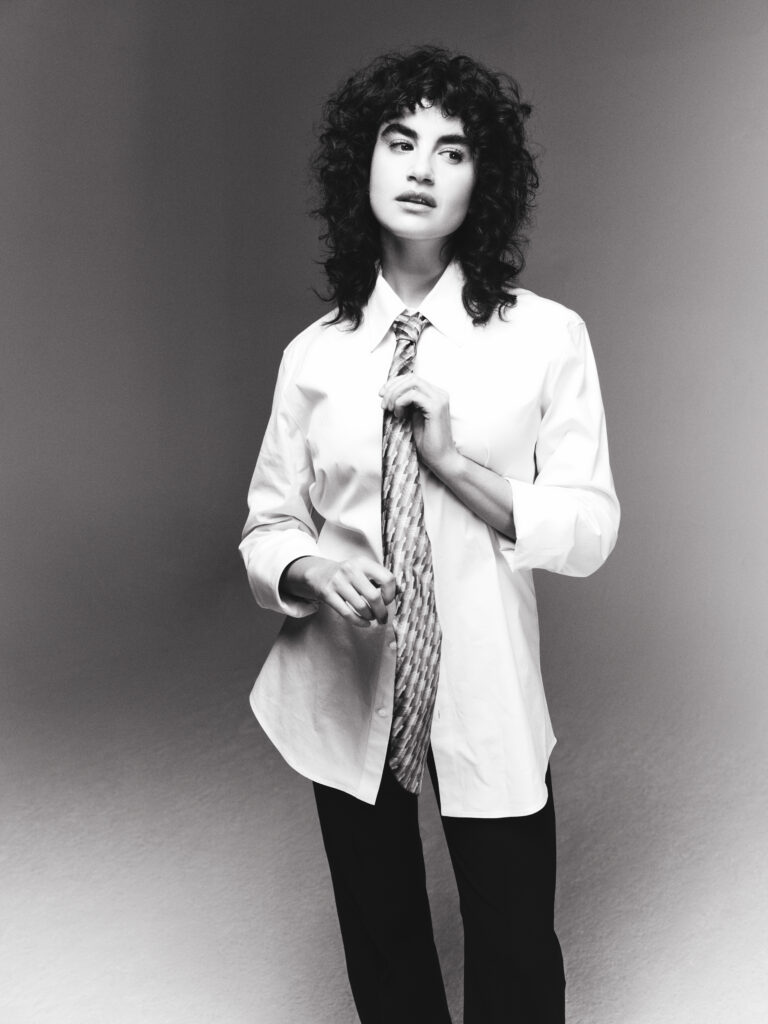
Q: Do you have any habits or rituals you rely on before stepping into a scene, or even before something like a carpet appearance?
SY: When I’m working on a show, there’s such a routine—you get picked up, you go to hair and makeup, you go to your trailer. I’ve always been this way in my life: I have to have my morning routine. If I don’t have my morning routine, the day is going to hell, and everyone around me is going to know.
I need to wake up, drink my lemon water, do my yoga or workout, eat my breakfast, have my green tea. I need that hour and a half to myself, no matter how early it is, no matter what happens in the day. I’ve had this time to myself. I used to always do the New York Times crossword puzzle while eating breakfast. Recently I’ve been trying to just read The New Yorker every morning. It’s a way of knowing that no matter what happens, I’ve had this time to myself, I’ve moved my body, I’ve eaten good food, and I’m ready to go.
I wish I had more of a routine right before carpets, honestly, because it’s always a mad dash to the finish. I’m so stressed. Hair and makeup take too long, then my outfit doesn’t work. It’s always something. I said to my girlfriend, I’ve got to just always plan two hours early, because there’s never enough time.
Q: Is your process now more intuitive than it was at first? Do you trust your gut more?
SY: In acting, I’ve always said—or my manager says—work gets work. When I’m on a job, I do feel like my auditions are better because I’m not harping on them too much. I sort of just throw something out there because I don’t have time to overthink it. In that way, you honestly just have to trust your gut, and that’s the best feeling.
Some days I feel so good in the rhythm of my work and my creative process, and some days it honestly feels terrible. I’m like, I can’t say a single word that feels believable to me. Every day is sort of a new feeling with that. But if I think big picture compared to where I was five years ago in my career, I 100 percent trust my gut more. I know what I want to be doing more. I know how I want to present myself. I know what roles I want to do, and I trust my acting more. That’s just from experience and time.
In my life, too. I didn’t know who I was in my twenties and was trying to figure that out so much. To be where I’m at now and have two dogs and a girlfriend and have a home and sort of understand my priorities more and know what I want more out of life—it’s so much easier for me to understand what I’m feeling and go, this doesn’t feel right, we need to figure this out. That probably just comes with age.
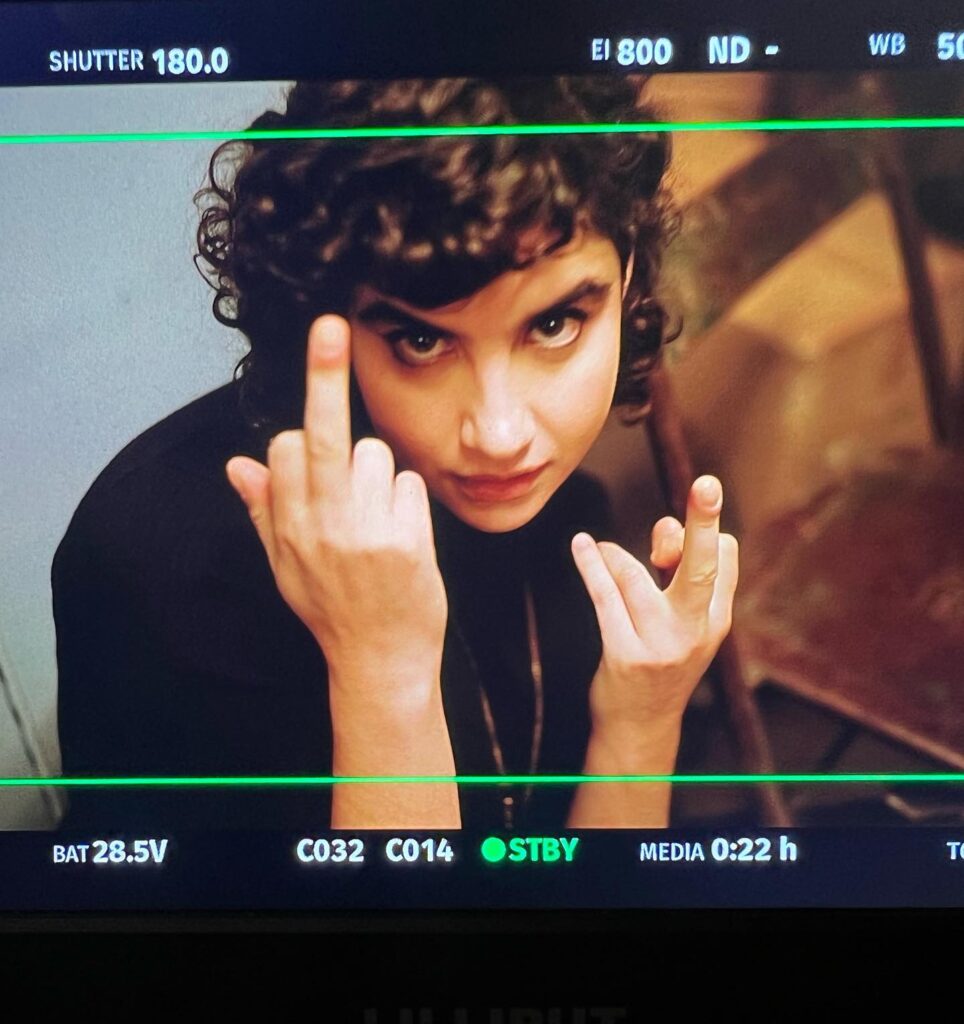
Q: If you were a shot in a film, what would that look like?
SY: That’s so hard. There’s a shot in Shiva Baby—I don’t know if you saw it—which I love. Rachel Sennott is driving in the car, and it’s this long hold on her driving, and she’s in such a state and processing so much that’s just happened, and it’s really traumatic. I can’t say that’s who I am, but that’s a shot I would love to do one day, because she’s just fucking killing it. You know exactly what she’s thinking and not at all what she’s thinking, and it just holds on her. I do my best performances in the car. It’s such an intimate place.
I also keep thinking of the hiking boots in Wild with Reese Witherspoon. She’s at this crisis point and she goes hiking alone. It’s not exactly my life either, but I keep thinking of that because I was trying to think of a shot that’s in nature, and that feeling of being grounded in freedom. Maybe it’s about those hiking boots, because those are the same hiking boots I have!
Q: You’ve said you knew from a very young age that you wanted to act. Did you ever imagine doing anything else?
SY: No. I knew. I just knew from such a young age, in a way where there wasn’t social media and it was very pure—what I was watching and what I wanted to do. I remember watching Julia Roberts win the Oscar, I think it was 2000 or 2001, and she was up there with this huge smile saying, “I’m so happy to be up here.” I remember feeling that through the screen and being like, and I’m also going to be so happy to be up there.
Just watching things and thinking, this is so fun. I want to play for the rest of my life. There really wasn’t a doubt in my mind. As I’ve gotten older, I’m like, how was I so sure of this thing? That’s such a crazy thing to know at such a young age. This has really only been my North Star ever. I kind of wish I had some other interests. I wish I was like, I’ll do acting and also go to business school, but I really had a one-track mind.
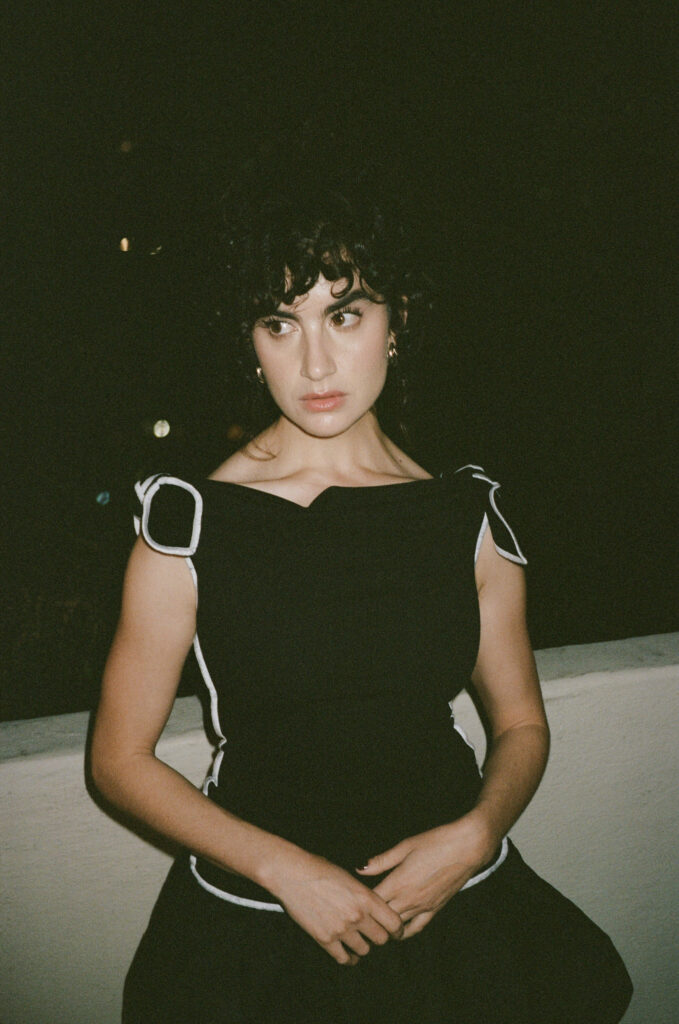
Q: When you hit a moment of absolute doubt, how do you move through that anxiety?
SY: It’s hard. I’ll do an audition for something I really want, and sometimes the tape just isn’t what I wanted it to be. When I watch it back, I go, that wasn’t it. It’s so hard to move on and go, I don’t think I’m going to get this, and that also wasn’t what I wanted, and I’m being so hard on myself.
I think it’s a little like dating—the best way to get over someone is to meet someone else and get excited about something else. In terms of acting or auditions or these jobs, how can I shift my focus to be excited about something else? The best thing is my own work. I did those auditions, but that’s not my whole life. Now I have pages I told my friend I’d finish. How do I refocus on my own work and my own creative process? That feels really good. When you’re good at something and you’re like, wow, I wrote something really funny—that’s a great feeling. It’s getting back into yourself and your own work, your own music, whatever it is, to shift that focus.
Q: Do you still believe in being a little delusional—manifesting certain things even when reality seems to say otherwise?
SY: I think I’m a really realistic person, sometimes to a fault, where I’ll be like, that’s not going to work because this is this. I think if I surround myself with more people who are like, you could do whatever, you could do that, that pushes me toward that in a good way.
Something funny happened this summer. There was someone I felt insecure around, and my friend said, you just need to go in there and pretend to be the person you want to be. So, I went in there and lied about stuff. I was like, I’m this, and I’m that, and I’m also doing this and doing that. This person didn’t care at all. But all day I thought to myself, wait, I actually do want to do that. Then I found myself taking steps toward doing the things I lied about doing.
It’s this reverse manifestation where I lied, and I also don’t like lying because I’m like, I’m going to get caught in that lie, which stresses me out. But I was like, oh wait, I should call that person about that thing, because that is something I want. I just applied to a writing program because I do want to do more writing, and now I’m in the process of doing all those things I had lied about.
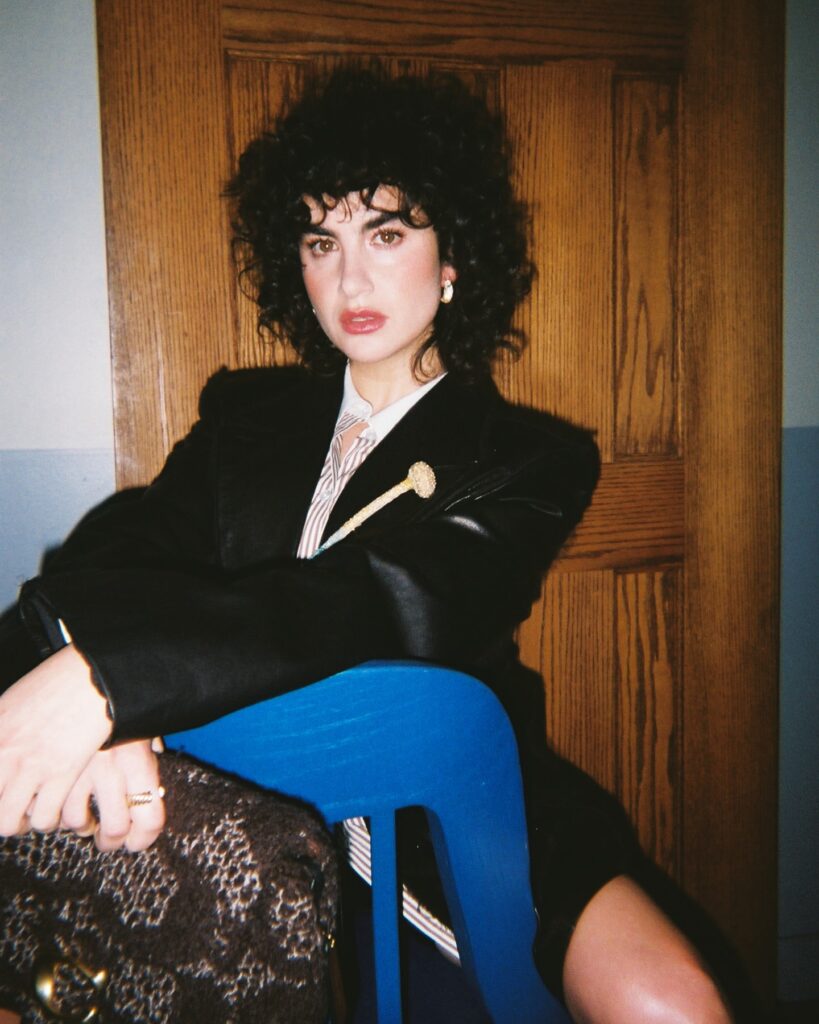
Q: What role does community play in your creative life?
SY: I need to be talking about my work and sharing it with people and hearing about their work. Writing can be such a solitary activity. My girlfriend is a screenwriter, and she’s been working on this script for like a year. I’m so inspired by her and her work ethic, but I also see those parts where I’m like, you have to share this work now because it’s driving you crazy, because you’ve been sitting with this alone.
When I’m working, I need that alone time to get my thoughts down, and then I immediately want to share it. When I write something I’m excited about, I’m like, okay, who can I send this to literally right this second? I have no patience. I just want to share it. That’s what art is about. It’s about sharing it. But you need that alone time where you can just do the worst first draft you’ve ever seen and not share it with anyone.
Q: Has there ever been a role that changed something within you?
SY: The character I’ve been with the longest is Rhonda. I’ve never done four seasons of a show before, so there’s such a symbiotic relationship between how I’ve grown and changed in the last four years of playing her and how I come back to revisit her every year. I’m a changed person because of my own life, and then how I portray her is different.
I started the show feeling so young. It was only four years ago, but that feels like a different person. I feel really tired now, and I kind of understand Rhonda more. I’m like, I am so tired, and she’s been dead for sixty years. Sometimes I feel that way. Genuinely, sometimes I’m on set and I’m like, I feel really old right now. I’m tired. You guys are young. I need to go take a nap.
Anytime I’m kind of bitchy, my girlfriend’s like, you’re becoming Rhonda. I think there’s a give and take. I’ve been playing her for so many years now that I feel such a soft spot for her and everything, she’s been through.
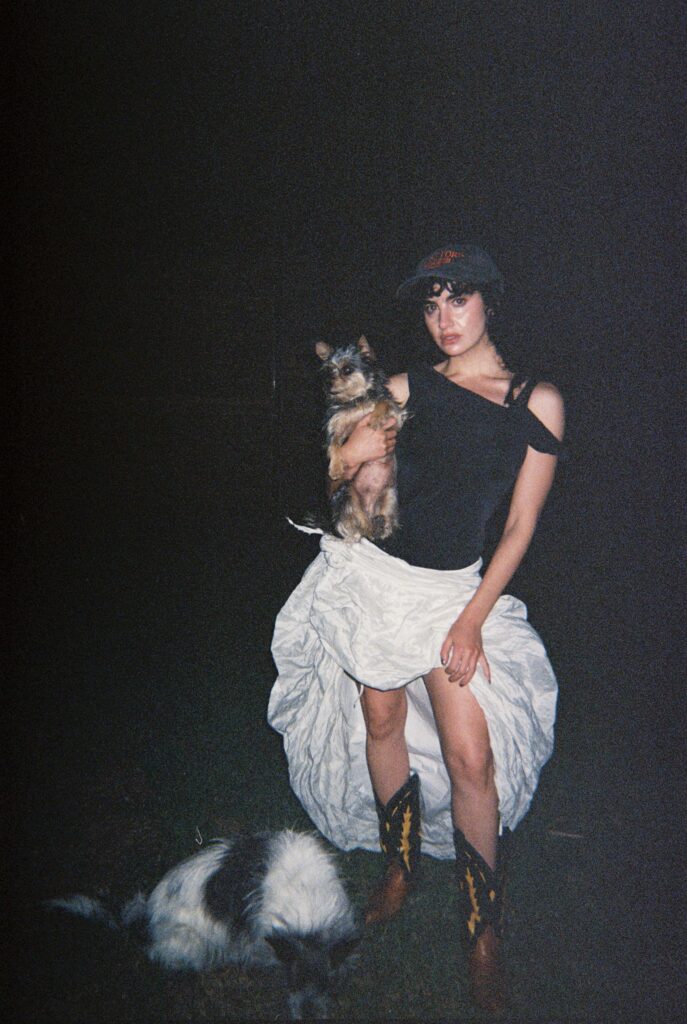
Q: If you had to describe the actor you’re becoming—not the one you started as—what would you say has changed?
SY: Trusting myself more, and meeting myself where I’m at, and not feeling the need to prove something to people or change myself so much. There’s this feeling now of: I contain everything that I need. I have it all right here.
When I was younger, there was such a feeling of, how do I be that character? How do I be that other person? And now, from years of experience, it’s more like, oh no, I am the character, and I just show them that I’m a person. Half the time they don’t know what they want. They just want to see a person. And I’m like, wait, I am a person!
It’s being freer and more myself, and people either love that for the role or not. And when the role is right, it will be mine. Not clinging onto things so much, not becoming so attached to the idea of roles. That’s true in my work and in my life—my life comes first and my work comes second. Work will come and go. Sometimes it will be there, sometimes it won’t. But having the constant of my own life, my own passions, my own loves—whether or not I’m on a job, that doesn’t define my happiness.
Photography @jonnymarlow
Stylist @itsamandalim
Hair @hairbyjohnd
MUA @lorencanbymakeup