By
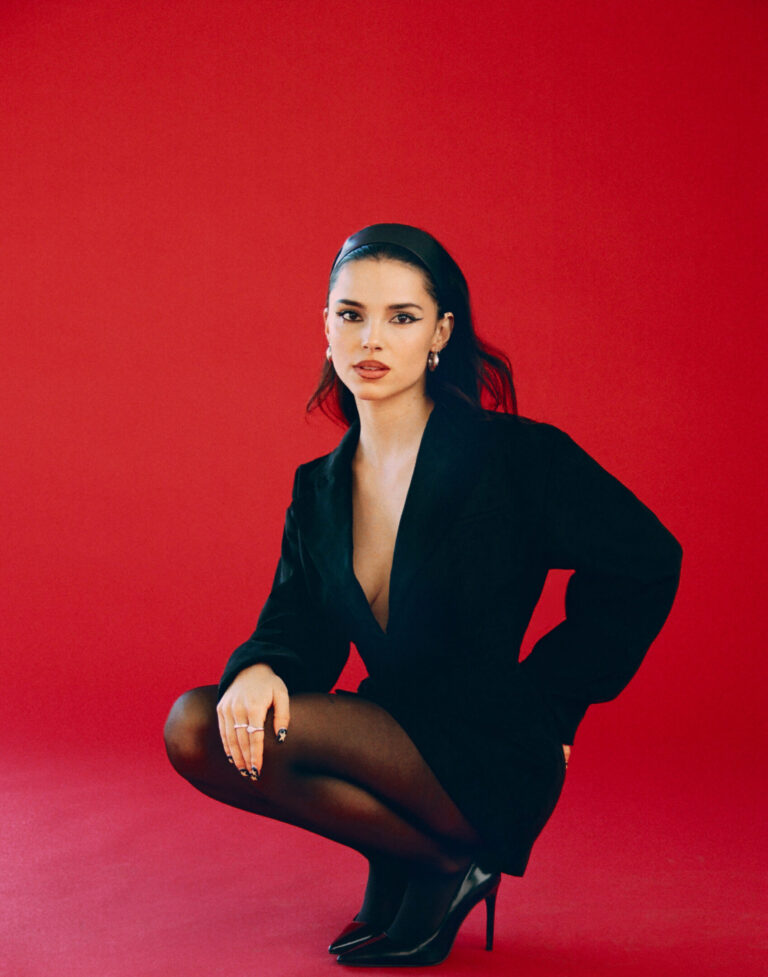
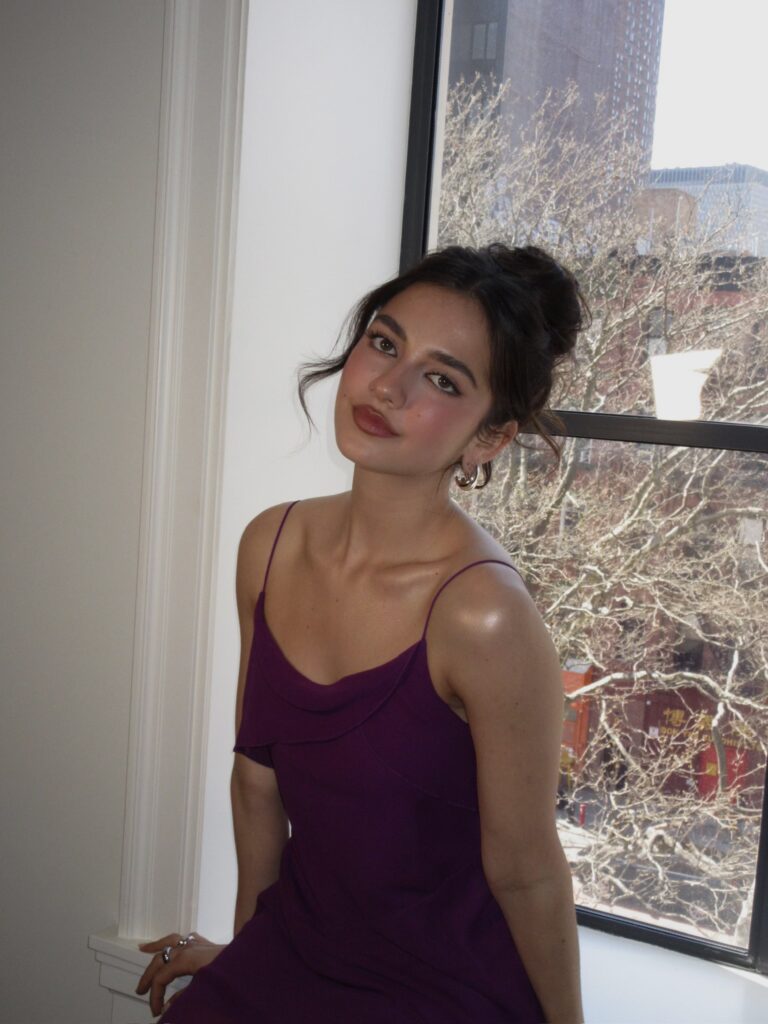
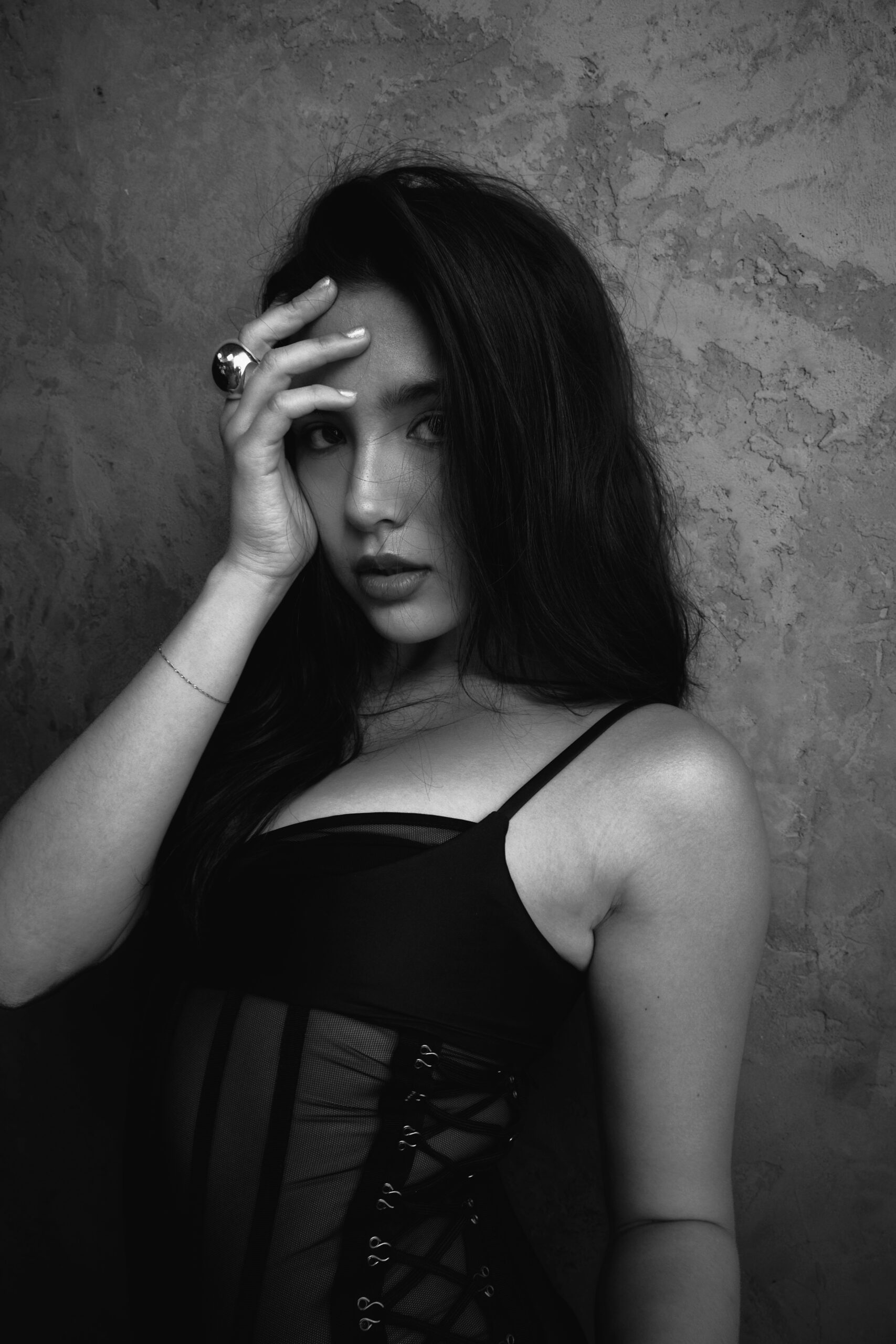
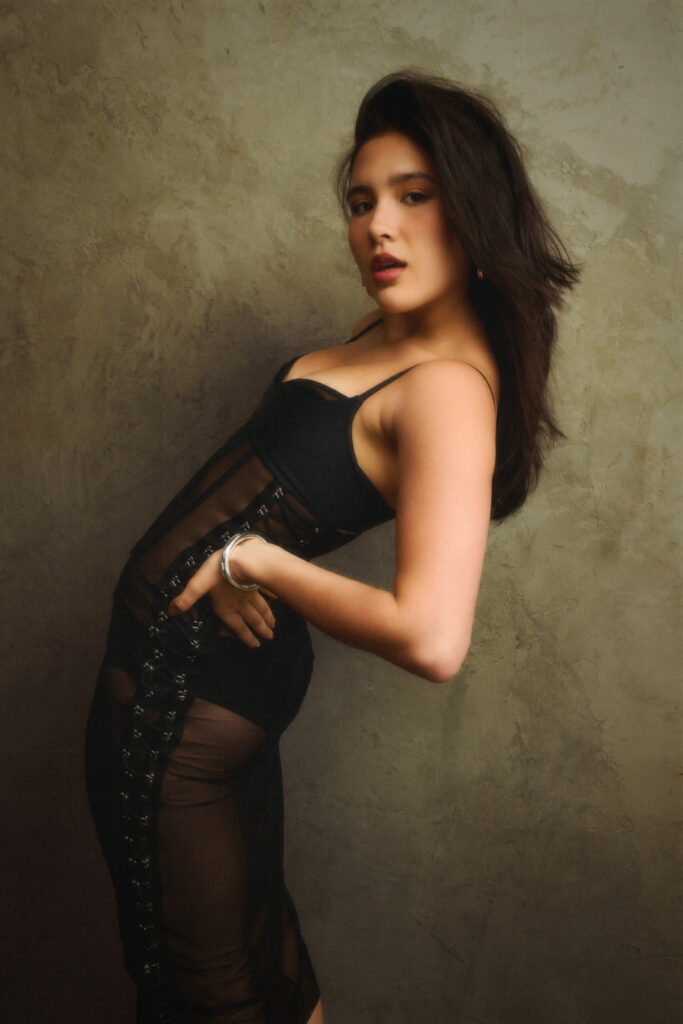
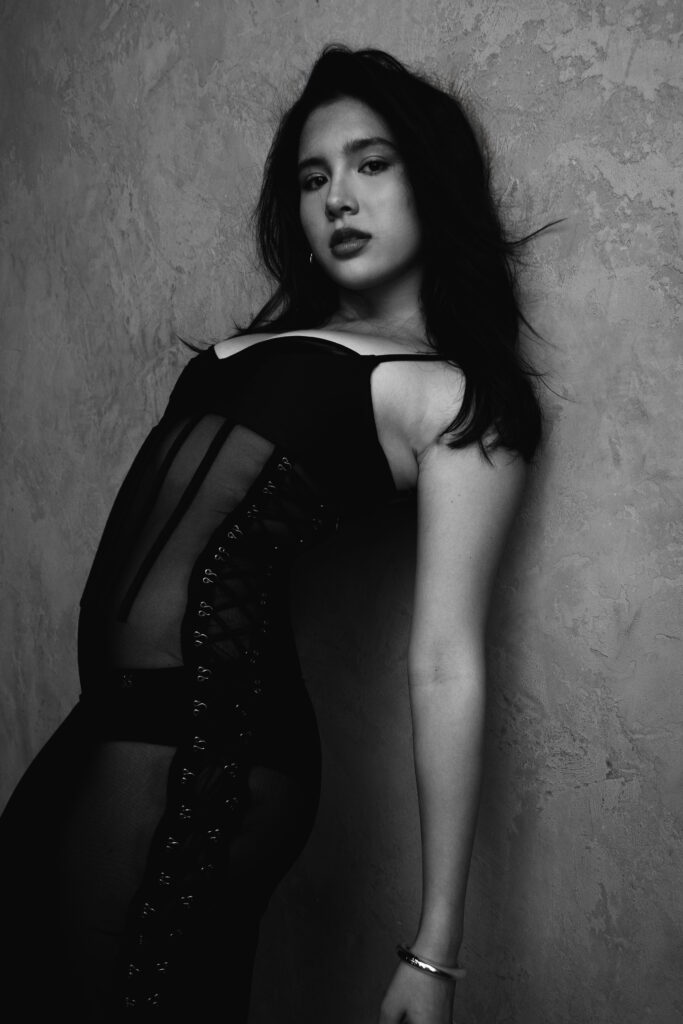
Maya da Costa doesn’t own a laptop. I found this out for the first time at a brief coffee meeting in
Los Angeles where she charmingly lugged a rather bulky briefcase to and from meetings- a
loaner laptop to fulfill her press duties carried with ease. This is not especially relevant to her
performance in Girls Like Girls, except that somehow it is because there is something about the
way she moves through the world, confidently and at her own frequency, that exudes from the
characters she plays.
When da Costa and I chatted about pre-scene hugs (it’s a nervous system thing), her love of riff
offs (à la Pitch Perfect), and her experience filming the highly anticipated Aaron Sorkin film The
Social Reckoning, it became apparent that while she is new to the acting world, she carries
herself with the ease of someone who’s been doing this much longer.
Da Costa, 20, makes her feature film debut in Hayley Kiyoko’s adaptation of her breakthrough
song and novel of the same name. The weight of that is palpable. The 2015 music video has
been watched 163 million times and counting. The novel already had a devoted readership
before a single frame was shot. And then there is Kiyoko herself – writer, director, composer, the
film’s emotional architect – watching from behind the monitor as da Costa inhabits the most
personal story she has ever told. To step into the center of that and do it honestly requires
something that is hard to teach and harder to fake.
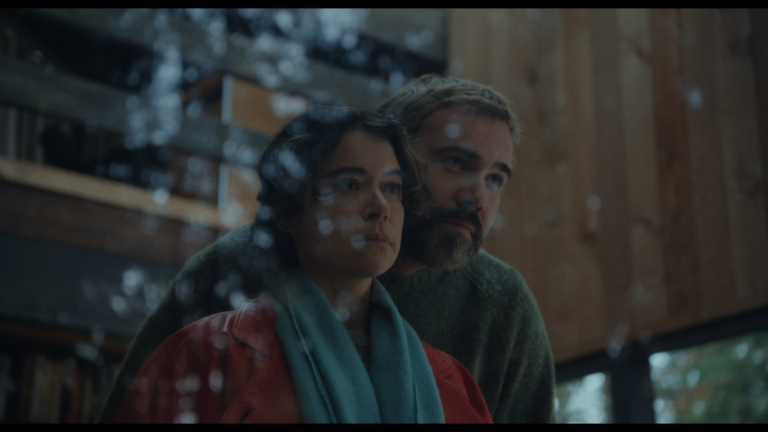
Girls Like Girls opened on June 19th to packed houses and a level of word of mouth buzz I
haven’t seen in a long time. Queer audiences especially have recognized in Coley’s summer
something true about their own — not the romanticized version, but the real one, with all its
uncertainty and grief and longing still intact. Coley arrives in a small Oregon town in the summer
of 2006 with almost nothing, and finds, in the absence of everything familiar, first love. Watching
it, I found myself wishing I’d been a little more like Coley as a teenager, and unexpectedly
nostalgic for the glorious mess of AIM away messages and summers that felt endless.
She told A Shot the one shot from a production of Hamnet that she wants her entire career to
feel like. A hand reaching upward. A room full of people suddenly, briefly, connected. It’s an
ambitious scene, and she says it as if it’s an obvious choice. Which, if you have seen what she
does in Girls Like Girls, it kind of is.
Q: I would love to start at the end of the film, when Sonya’s character has (*spoiler*) a change of heart in the way everyone was hoping she would. I could tell there were a few people in the audience who weren’t as easy to forgive, or had a little bit of frustration- maybe even their own Sonya in their life at one point. As a viewer, is there anything you would change about the ending?
Maya: Honestly, I would leave it as is because I think obviously there’s a huge change from the music video and the book, which a lot of people are having strong feelings about. And I get it. But I do think that there’s a large part of the population that’s gone through this experience, and feels that this is so realistic to how it goes. It’s like, you don’t have the concrete answer because you’re both still kids figuring it out — not like there’s a time jump and suddenly they’re in college where they’re more articulate or have more experience. At the end of the day, not to spoil anything, Coley has just had a huge death in her family. She’s still adjusting to a new father figure. On top of all of this, this is still her first love. And it’s still all within one summer. So, I think it’s incredibly realistic, and I think it’s nice to have something that reflects that, even if people call it maybe not as dynamic as they wanted to see.
Q: As you mentioned, grief is a huge part of this character’s journey as is the feeling of being left behind. How did you take that absence and turn it into grief on screen?
Well, I was figuring out my process through this movie because it is my first project of this kind. I listened to the audiobook four times within my audition process. So technically I had Hayley’s voice in my ear before I even started working with her, which was great and so helpful. But because I had the extra knowledge from the book, that really helped with being able to like to build some ground on what she’s talking about and what she’s feeling in the middle of the movie, and with the scenes with her dad. I think another thing that really, really helped — that I’ve been using for multiple different things that I’ve auditioned for, worked on — is I will journal as the character.
I will fill up multiple pages of a journal and journal some core memories from the perspective of the character. I remember I was in Kelowna a week before filming, and I had this big binder script of Girls Like Girls in front of me and I was like, so what do I do? I’m like, okay, well I have to just trust my gut at the end of the day. I feel like I need to know what she saw. I need to know how she found her mom. I need to know like what she felt in her body when she met her dad for the first time. So, I literally wrote so much about her life back in her old home with her mom, from her perspective — stories about going to school and coming back home. That is kind of how I did that.
Q: In other interviews you’ve talked about another tool, which is your pre-scene hug to get into the emotional place that is necessary to act out a lot of these scenes. My question is twofold. A, how did you realize that that was a tool at all — was that an accident or was that something you wanted to try? And B, how did you go about getting these hugs?
Insane, I know, it’s like — how? What? Why? I found out that it was something that I felt like I needed because similar to journaling, I would look at the situation ahead of me, which was: I have this thing that I have to do at 100 and I have big shoes to fill and I don’t have all the tools in my toolbox. So, I just have to listen to what I feel like I need. I think the first time that happened it was the first crying scene that we were filming, the one where I’m in the jean jacket walking and running to the house and I just felt nervous and really intimidated.
I thought, ‘I feel like I just need a hug from someone that I trust.’ So, I went up to Ingrid, who was our on-set acting coach. She was just so lovely, and we’d made kind of a really close bond the week before filming, and I was like, “do you think I could have a hug?” I had a hug with her, and it settled my nervous system which made me able to go there. I didn’t know it at the time of filming, but definitely something to do with settling my nervous system and getting me into my body. The way that I would go up to these people and ask would literally just be that. Everyone kind of understood right away what was happening. I would keep doing it and no one would talk about it. It was the silent “we got it.”
Q: A lot of my favorite scenes are the bike riding scenes. In films, this kind of movement — biking, dancing, swimming, running — it’s a way that so many characters find themselves. Were there any films that you referenced or had as inspiration that used movement similarly, as part of a character’s learning about themselves?
It’s so funny that you ask this, because I see so many comments on the trailer and everything regarding Girls Like Girls being like, “girl’s on that damn bike.” Genuinely, I did think about Euphoria specifically. I mean, it came out when I think I was like 15 or 16 and it was one of the first things that made me want to get into acting. And I think the way that they add like the music and the biking is signifying they’re going somewhere — even if they don’t know where they’re going, they’re still moving. I think it says so much. Then on top of that, making sure you have the thoughts going through your head that that character would have, that you’re not just saying “okay they told me to bike so I’m biking.” Really important. But yeah, I would say I was definitely thinking about that.
Q: If Coley had a Letterboxd four favorites, what would they be?
Okay, are we setting Coley in like 2006?
Ideally yes, but we can put Coley in 2026 and she’s more grown up.
I think a favorite that Coley would have liked, like as soon as it came out, was Jennifer’s Body. She’d be in love with Jennifer… Megan Fox. I also think that she would really love Good Will Hunting.
Q: After our first meeting I went back and I watched a lot of the scenes from Romeo and Juliet, the Baz Luhrmann film, which I know was one of your favorites. It was so ahead of its time even then. To be able to execute Shakespeare in that way and have modern audiences relate to it is a huge feat— what other films of yours are references or things that you would love to see yourself in or would you consider dream roles?
I really, really, really love Dead Poet’s Society. I’m a huge, like huge fan of Dead Poet’s Society. It changed me when I watched it, so that would definitely be one of them. I would also definitely say Hamnet. There’s one shot at the end of the movie where everyone is kind of connected — Jessie Buckley is looking at the performance on stage, and she reaches her hand up and everyone is kind of reaching and connecting with each other.
That is like one frame that I feel like sums up my goal with what I want to do with my life, sort of thing. Things that make people feel connected. Sorry, I’m trying to find a way to articulate.
Q: I totally understand what you’re saying- it’s sometimes a feeling, as opposed to even a specific role. The A Shot signature question has to follow, if you were a shot in a film, what shot would you be?
I answered it too early, but it was definitely the Hamnet one. That’s me. That’s what I feel like. I feel like that, or I feel like the aquarium scene in Romeo and Juliet — specifically right after when they’re like chasing each other and they’re in between a crowd. It just sums up a feeling, and it invokes a feeling so strongly, even if you don’t understand the words they say.
Q: Definitely, I think both of those are beautiful in such distinct ways. On a different note, you have many skills. You are a trained dancer, I believe you’re a painter, you do Muay Thai. I don’t know where you get the time. Do you have a party trick? Something that we wouldn’t know and if you’re out at a party could impress us all?
Ooh, you’ve lost me at impress.
I know. Or maybe not impressed — maybe like embarrass yourself but it’s kind of a funny skill.
Yes. Okay. I will start a riff off.
A riff off?
Okay. Like — and I do many things — singing however is not one of them, but it’s so much fun. I’ll be like, okay, we’re going to start a riff off. You got your people, I’ll get mine, we’re going to do this. And we will literally start.
Oh, you organize a group? This is a group party trick. You need a lot of bodies for this.
I organize a group and then like somehow in that small group it’s magical and it goes to the whole room.
There’s a kind of Pitch Perfect-esque feeling here…
That’s where I got it from.
Q: Similar to Pitch Perfect, Girls Like Girls has a very big fandom. Are you a part of any fandoms?
That is such a good question. I would say I watched a lot of anime when I was younger. Puella Magi Madoka Magica specifically — I loved that show. I don’t know if you’ve watched it, but the animation style is like really, really different. The storyline is great. I was definitely part of the fandom for that. When I first watched Normal People, that was my entire feed. It’s just too good. And then last but probably most is Glee. That’s a huge fandom.
Q: The soundtrack on this film was a huge part of it, and obviously Hayley did so many collabs and brought in amazing queer artists to be a part of it. Did you have a favorite song from the soundtrack?
Yes. It’s not actually in the movie, but it’s on the album that she made for the movie — Red Bikini, it has Snow Wife on it. So good. I love that one. The song of the summer for us when we were filming was Wet Dreams by Snow Wife. We’d listen to that on the weekends when we were hanging out. Definitely that one. And then I also really like Falling Through by Hayley, which is in the movie.
Q: When you were building the character, did you try to make her independent of the existing work, or did you try to adhere as close as possible to the preexisting versions of Coley?
I really tried to respect and stay true to the information that we have about those characters. Anytime there’s a book-to-movie adaptation, there are already so many people that are going to say, “oh it’s not like how the book was,” — and a lot of those are out of our control. We can’t make the movie three hours long, so we can’t honor every little detail. If I can make the book readers as happy as they can be by just portraying it as true to that as possible, then that is what I wanted to do. I would say the only things that I did add a little bit of myself into was when I was relating certain emotional experiences that I’d been through just to get to where I needed to be sometimes.
Q: The cinematography is so brilliant. What was your relationship like, not only with the camera, but with Sonja your cinematographer? How did that relationship feel, and how did you feel like it changed from your first day of shooting to even just a few days in?
I definitely got a lot more comfortable throughout shooting. The first day, with some of those scenes, I did feel more awkward because I was so not used to having the camera on me for that long compared to what I’ve done in the past. Thankfully it kind of worked, because in the scenes where I was feeling awkward having the camera on me, I was supposed to be feeling very awkward. That’s something that I wanted to untangle and work on a bit more though. As soon as we finished filming, the first thing that I wanted to do was go back to acting classes because while I’m so proud of what I did and I wouldn’t change anything per se, I know that there’s more that I want to work on and improve.
Q: Did you ever want to watch back your own takes? Were you more avoidant? Did you want to see the finished film, or did you kind of want to let the response tell you how your performance was?
I can’t lie. It is hard for me to see myself acting in general. It used to be like this for dance as well, so I have hope that I’ll get better at watching it because I do think that there’s so much knowledge that you can gain by watching your own work. I don’t want to be so precious and sensitive about not being able to watch my own work. I’m working on it, but it is really difficult to watch yourself, especially in those emotional and really vulnerable scenes.
I am not even aware of the camera — I just completely let go because that’s my job. But then later, watching it back, you see what that looks like and it’s like… oh. I’m kind of doing exposure therapy on myself. And I’m making myself watch it with friends and family and loved ones because I know I cannot be that critical on myself.
Q: What about other people — like with your parents, for instance, watching the movie? Was that an awkward experience for you, or were you very encouraging of it?
You know what, it is awkward. I made a plan for a family and friends screening when I was still in LA in the midst of all the press stuff. It was like one a.m., I made a giant group chat of 60 people — saying just come to this theater at this time. I figured that would be great. The next morning when I finally had slept I couldn’t believe what I had done. I got together so many people to watch me do incredibly intimate things.
Q: Yeah. But then — you went? You did it? You sat with them and you watched it?!
Yeah!
Q: This film is very much about first love, but also the feeling of having a crush. What is your — Maya’s — relationship with crushes and the importance of having a crush? Are you a big crusher, or do you not bother yourself with getting too down bad?
I can’t lie — Coley and I have some similarities. Me as Maya I don’t really catch feelings very easily, but when I do, they take a very long time to go away. Like an annoyingly disgusting amount of time for them to go away. But you know, that’s life.
Q: You do have an upcoming role in The Social Reckoning. You said Aaron Sorkin taught you about keeping things simple. Was there any moment specifically where you learned that simplicity, or a moment with him that really taught you something?
I absolutely had a lot of takeaways, even though my time was very short there. It was my first time doing a role like that. Obviously he is known to be a very specific director — the script is the script. That was so new to me because I had never really done that before. I’d always had a bit more space with it. But he was like, “no, I do want it like this” — but like, I could try it in this way or this way — but there are certain things that he wants concrete. And I think that was really a good takeaway for me. On Girls Like Girls, which was my first job and put a lot of responsibility on my shoulders, I felt I had to prove myself. This job specifically taught me that because I was only there for a short amount of time my job is to just do my character’s story, and to it to the best of my ability.
Q: My very last question is very specific to you. What laptop are you doing this interview on? Because I believe you don’t own a laptop, is that right?
I need to get a freaking laptop.
No, you kind of don’t though. It kind of adds a little bit of charm. There’s something charming about you having to find somebody’s laptop to use daily.
I had my dad’s beforehand and then I had it all set up and everything and it just didn’t turn on… This just feels like a hangout now.
But you have to get the laptop back to your brother I think, so you couldn’t even hang out if you wanted to!
It’s true.