By
Before the i-D covers, before the international runways, and before the sudden leap into the global gaze, there was a hallway in a theatre school. It was late autumn in Chagrin Falls. Enza Khoury was a senior in theatre school, navigating her second year living as a non-stealth trans girl, balancing the mundane and the momentous: college prescreens, a new job at a movie theatre, and the dizzying rush of falling for a new boy.
“I have always felt that my life was constantly changing,” the American-Syrian model and aspiring actress says, reflecting on a path that feels like a continuous evolution. “Or maybe it’s more so that everyone’s life is always changing, I just always noticed that mine was.”
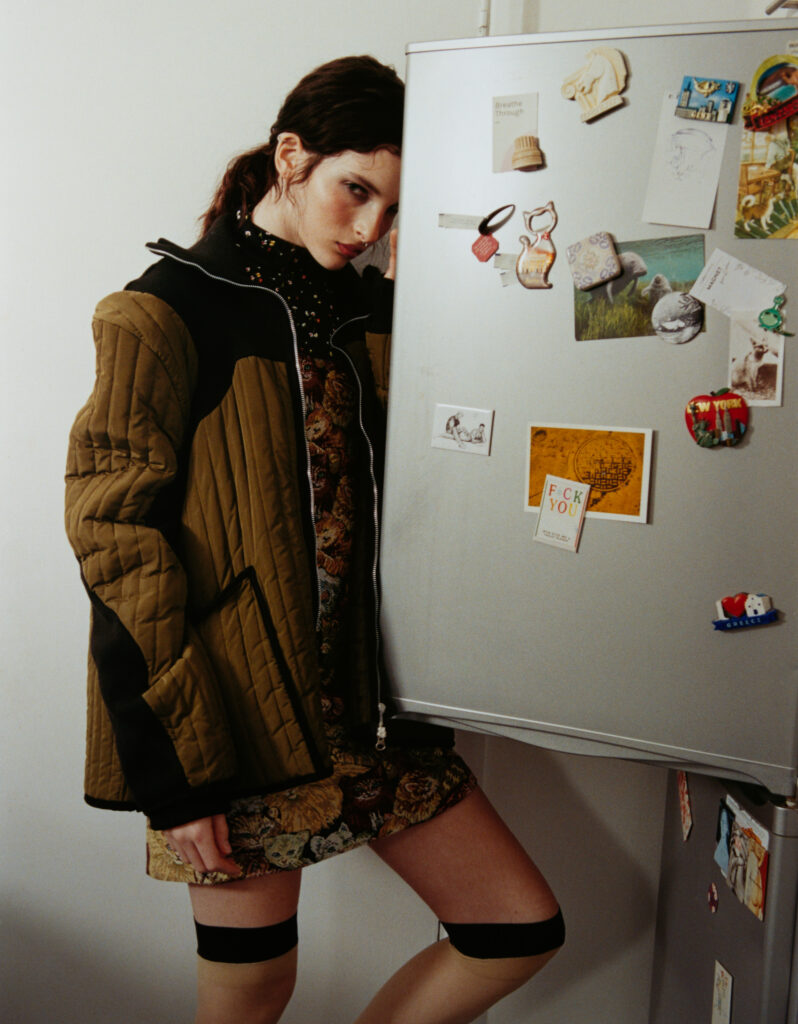
That autumn, the world seemed to accelerate. While auditioning for her Academy’s production of Twelfth Night—a role she would eventually claim as Olivia—she felt herself growing “exponentially fast.” The true pivot was a frequency change. “I have a very specific memory of walking through the halls in school one day, waiting for my acting classes to start, when I felt this shift in my energy and my heart,” she recalls. It was a premonition without a name. “I knew something had changed drastically and although in my main consciousness I didn’t know the specifics, I knew something good was coming.”
Selected by Euphoria casting director Jennifer Venditti through an open call that drew over 800 applicants, narrowed down through five rounds of callbacks, she ultimately emerged as the face of i-D’s The Unknown Issue, and has since relocated to New York City to pursue acting and modeling. When the breakthrough finally arrived, it didn’t crash through the ceiling of her small-town life like a stranger. It arrived with the heavy click of a key turning in a lock she had already felt in her hand. For Enza, the sudden explosion of her reality was a memory finally making its way home.
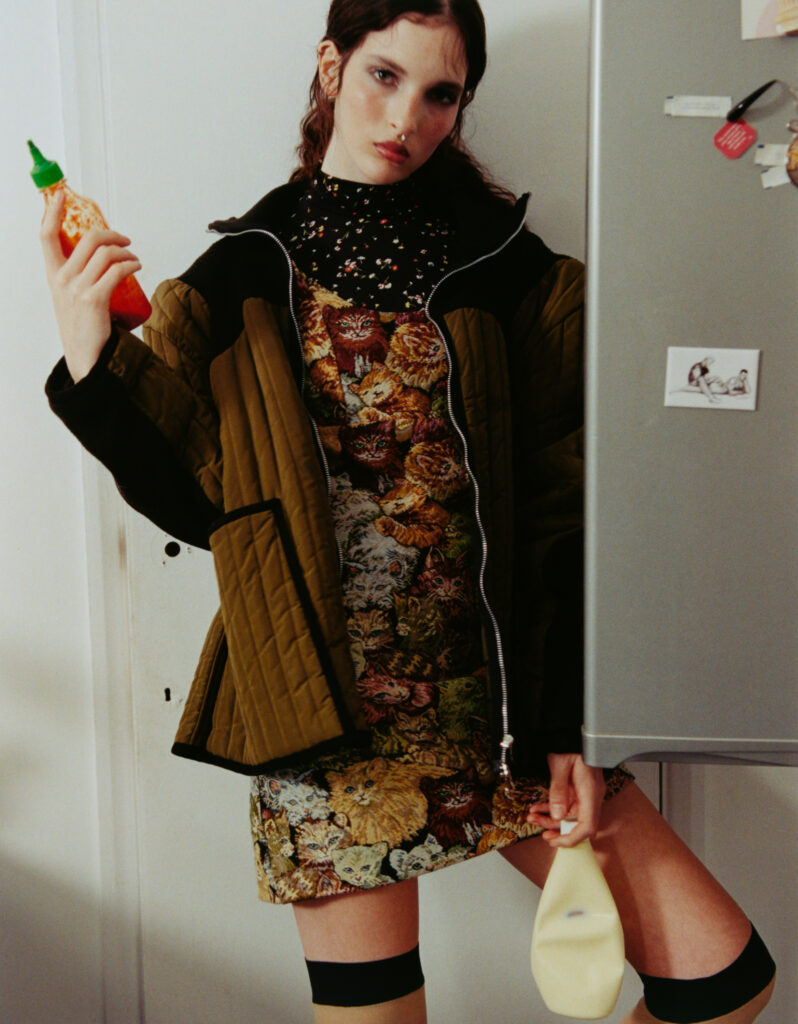
For the Ohio-native, the craziness of sudden visibility was met with a supernatural calm. “It’s like my subconscious and energy field, or heart, were aware of these huge life shifts before I did,” she explains. Because she possessed such a deep knowing of herself, the whirlwind wasn’t something to fear; it was simply the world finally catching up to the expansive energy she’d been carrying through those school hallways all along. “Everything that was occurring somehow felt familiar.”
Now signed with IMG Models, the leap from the suburbs of Ohio to the vanguard of fashion is the kind of trajectory that usually demands a total shedding of skin. For Enza, though, when the industry came knocking, she simply carried her existing identity into a larger room. “When i-D happened, it felt like my world and energy and heart and mind and creativity were expanding… escaping the limits of my small town for the first time.”
Yet, amidst the shift into fame, what felt most normal was Enza herself. Where others might have buckled under the pressure to perform a persona, she found herself moving through elite spaces with an unpredicted confidence. “It’s incredibly rare for a trans girl to be given the opportunity I was given,” she says, “so I plan on doing my best to be the best representation and inspiration possible.” In being celebrated for exactly who she is, Enza recognizes the weight of her visibility.
“My heart,” she says, without hesitation, when asked what survived the jump. “I feel like my heart absolutely stayed the same.” In the industry, it is dangerously easy for the ego to shift and contort a person’s character, yet Enza relies on a practiced internal pivot; retreating from her head and connecting to her heart space. “For so much of my life, I was trapped in a cage, whether that be from others or myself,” she explains.
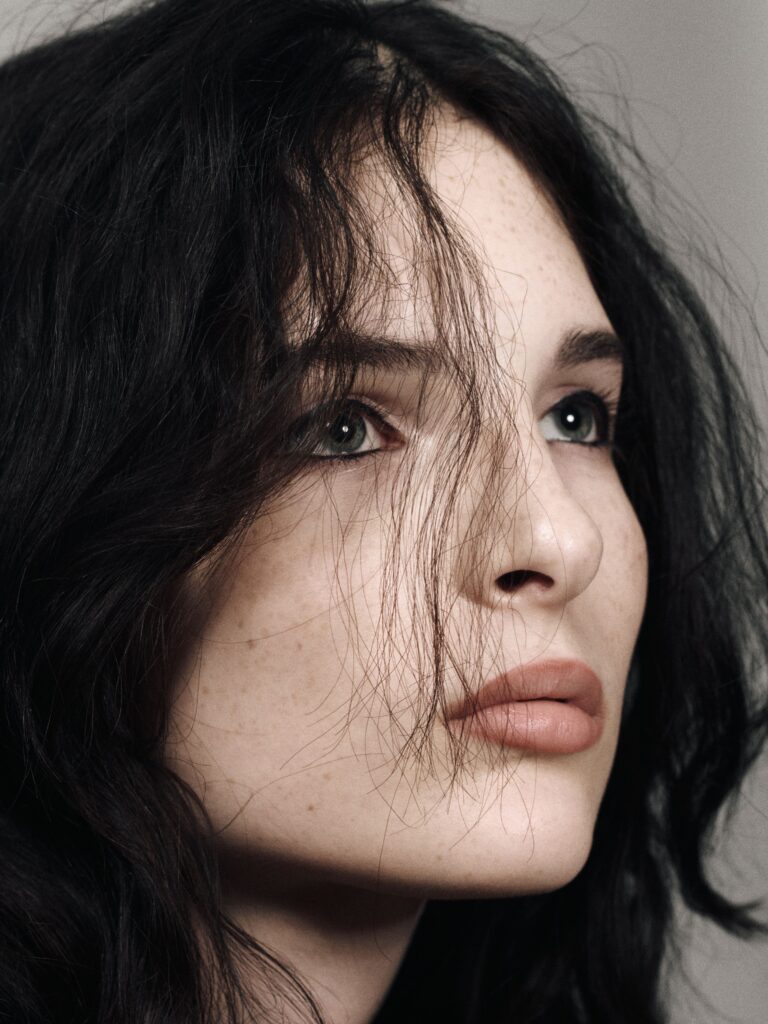
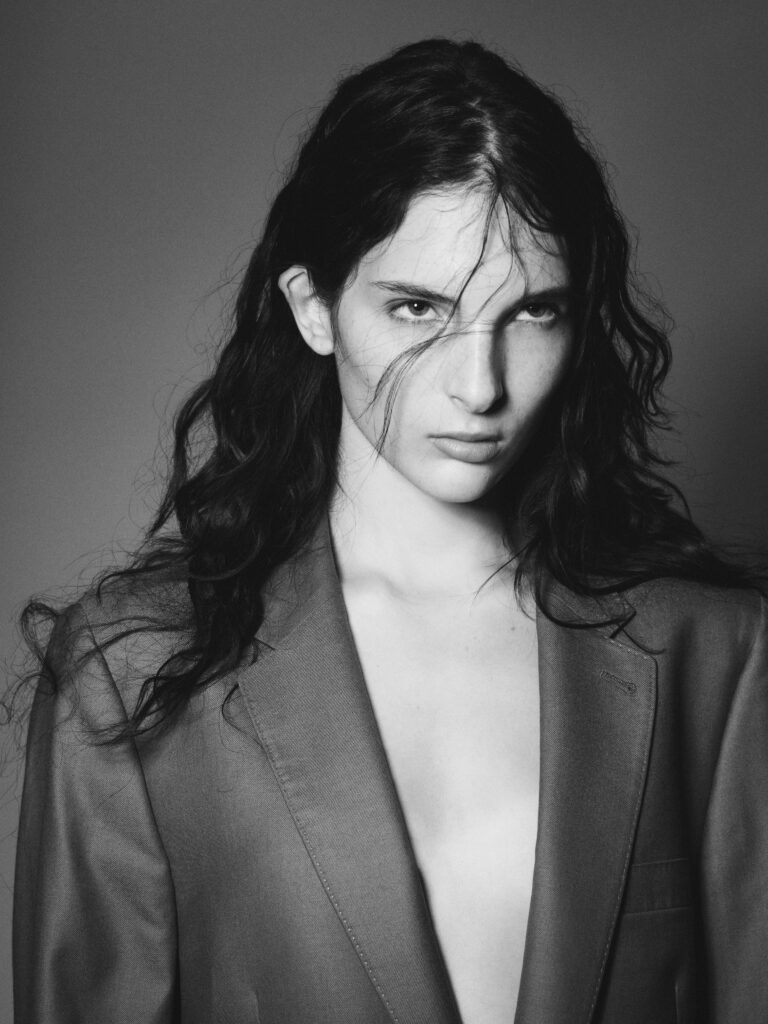
Enza is a visual creature, someone who views beauty not as a surface-level vanity but as something spiritual, yet she is increasingly wary of the vacuum that fame can create. “I feel comfortable being both looked at and listened to,” she says, though the balance has shifted. Modeling has occasionally forced her to confront the frustration of being “just looked at,” a reductive experience for someone who has had a lot to say since childhood.
“It seriously irks me when I’m ignored or not respected,” she admits. Her voice is as much a part of her aesthetic as her silhouette; she is assessing where that voice is appreciated, knowing the “good it can and will bring.” This desire for depth translates directly to the runway and fashion shoots, where she has modeled for names like Harris Reed in their AW26 collection, and walked for Dilara Findikoglu’s SS26 and Sandy Liang’s SS26 show.
Walking a runway show is an exercise in character building, and she treats it as a form of performance art. She studies the designer’s narrative and builds a persona out of the fabric she’s wearing. In the final minutes before stepping out, she performs an internal ritual to ground herself. “I get out of my head and focus my energy on my body. I feel the energy flowing through my fingers and feet.”
She describes an invisible connective tissue between the models backstage—a collective energetic field intended to create harmony. Once she hits the lights, the intellectualizing stops. “Hopefully, nothing [goes on in my head],” she laughs. “I do not think during the walk, I feel. I feel the music. I feel the energy of the clothes and designer.” It is a projection of self that reaches every person in the room, a rejection of the harmful stereotypes that flatten the profession into something mindless. To Enza, modeling is a misunderstood art form, one where each individual brings an inimitable perspective to the craft. “People misunderstand what they want to misunderstand,” she says, “but each model is their own unique individual human with their own story.”
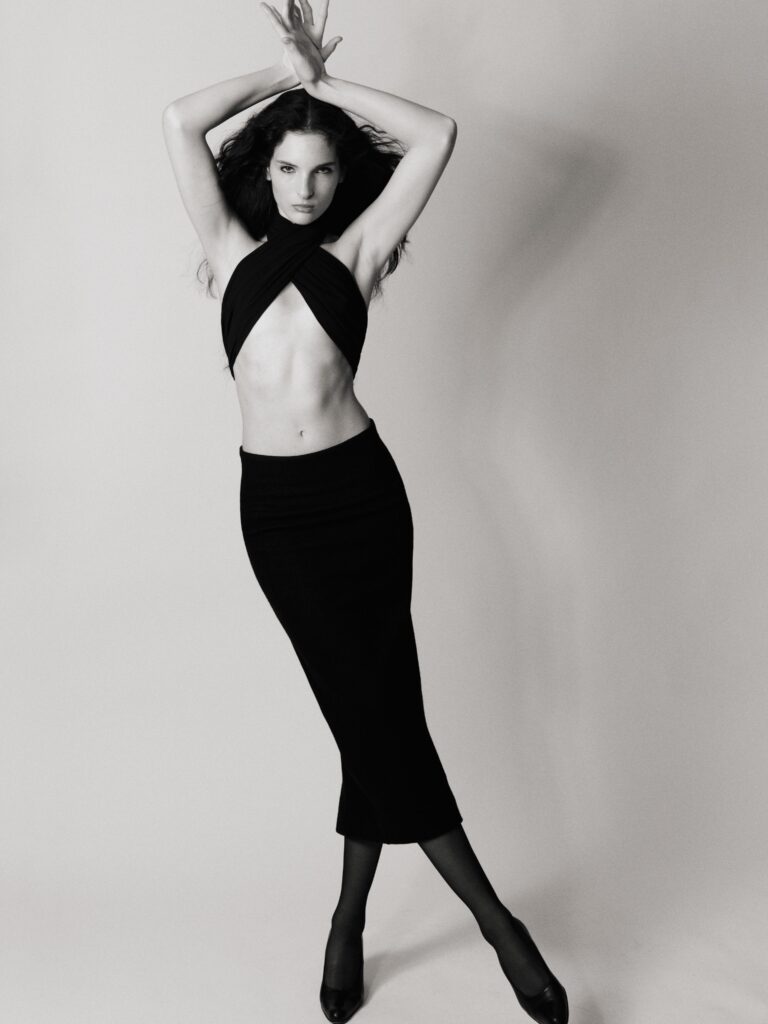
The technicality of Enza’s work is secondary to the way she inhabits her own skin. She views her body with a kind of detachment—not as an identity, but as a temporary tool for navigating a three-dimensional world. “My sense of self doesn’t really rely on my body or face,” she explains. “I don’t necessarily consider ‘myself’ a body… I more so have a human body that allows me to live the human experience.”
By decoupling her identity from her reflection, she finds the freedom to inhabit high-fashion fantasies without the risk of being consumed by the image. “My sense of self comes from my heart. From my actions and how I treat people.”
In her acting, she’s hungry for roles that carry weight—complicated women, queer characters, and the kind of “true good heroes” that offer a sense of hope. When she’s on stage, she describes her presence as a dome, something expansive and severe that reaches the back of the house. In front of a lens, that energy narrows into a sharp point. “My energy is more like a laser,” she says, “shooting forward at my scene partner or the camera.” Whether the emotion is heavy or the movement is broad, the intent is always to bridge the gap between her own humanity and the audience.
Behind the closed door of her room, the preparation for a role is a sprawling, borderless ritual. Enza describes herself as feeling “infinite” in these stretches of solitude, gathering fragments from other people and far-off places to stitch a character together. It usually starts with a digital collage—a Pinterest board that breathes visual life into the script. From there, she lives the role through the mundane, performing everyday tasks as the character to find the specific gravity of their mannerisms. “Nothing is off limits,” she says of this private research, a process of deep empathy.
This same search for connection pulls her toward Syria, a place she has yet to see but carries in her name. “It means everything to me,” she says of her heritage. “It was the main cultural identity my family had growing up, from the recipe books passed down to create Syrian meals, to the family stories told at the dinner table.”
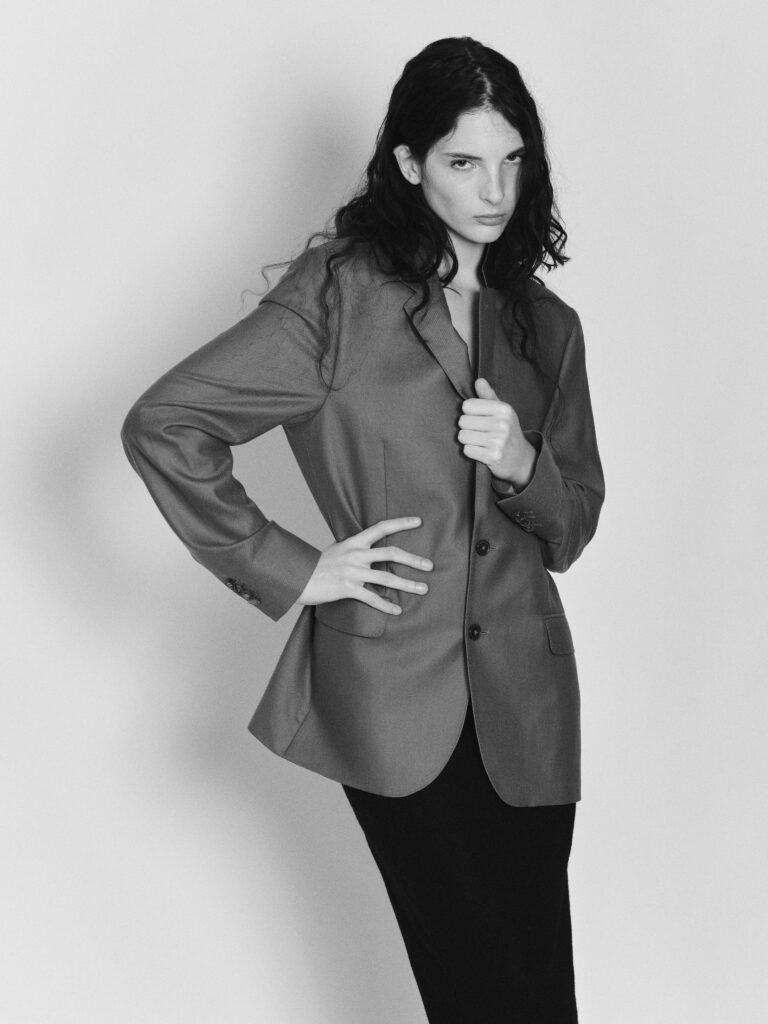
Growing up in a house of six siblings, Enza was the only one to inherit the family name, a legacy she treats as a sacred trust. “I feel a certain responsibility to do it justice in this life,” she explains. More than just a sentimental tie, she is actively reclaiming the language, studying Levantine Arabic to reintroduce it to her family’s daily vocabulary.
Her cultural identity shows up in her life through small choices. It’s in the morning mist of Arabic perfume, the sweep of traditional kohl on her eyes, and a playlist that runs through Fairuz and Elyanna. It’s also political; she consciously supports Levant-owned brands like Kaaf-nun, seeking out ways to connect her personal aesthetic with aid for Gaza. Whether she’s eating at Damascus Bite in London or tracking Levantine news, the connection is alive and constant.
When she thinks about the future—about building a permanent base in New York or London—she finds it hard to list what she’ll take from home. Her past isn’t a suitcase of items to be unpacked, but a part of her internal anatomy. To put those needs into words feels “wrong” to her, as if naming the items would diminish the weight of the life she’s already carrying within.
While she recognizes Paris as the most cinematic location she’s ever stepped foot in, her truest landscape is internal. To Enza, life is less about where you are and more about the lens you use to view it. “The most cinematic place I’ve ever been is in my own head,” she says, “or more so, through my own perspective.”
She’s currently leaning into an aesthetic she describes as “Mediterranean, magical, and eccentric,” a shift that mirrors her desire for a future that feels kinder than the one promised by big tech. The futuristic chrome of sci-fi has begun to melt away from Enza’s vocabulary, replaced by something warmer and more ancient.
If her life were a single film still, it would be a solarpunk vision of the Levant: a sunset-drenched city where tatreez prints and woven fabrics are the norm, magic is a shared language, and string lights crisscross narrow alleyways filled with bookshops, and animals roam the streets in a peace that feels entirely earned. “You can tell by the still that love is the baseline for these people’s existence.”
Her Letterboxd four favorites act as a map of this expansive internal world. The list is a collision of textures: Barry Jenkins’ Moonlight, the cosmic whimsy of Guardians of the Galaxy, the environmental spirit of Miyazaki’s Nausicaä, and Sean Baker’s Anora. To Enza, they are “perfect works of art” that she resonates with on a soul level, stories that capture the same complexity she strives to bring to her own roles.
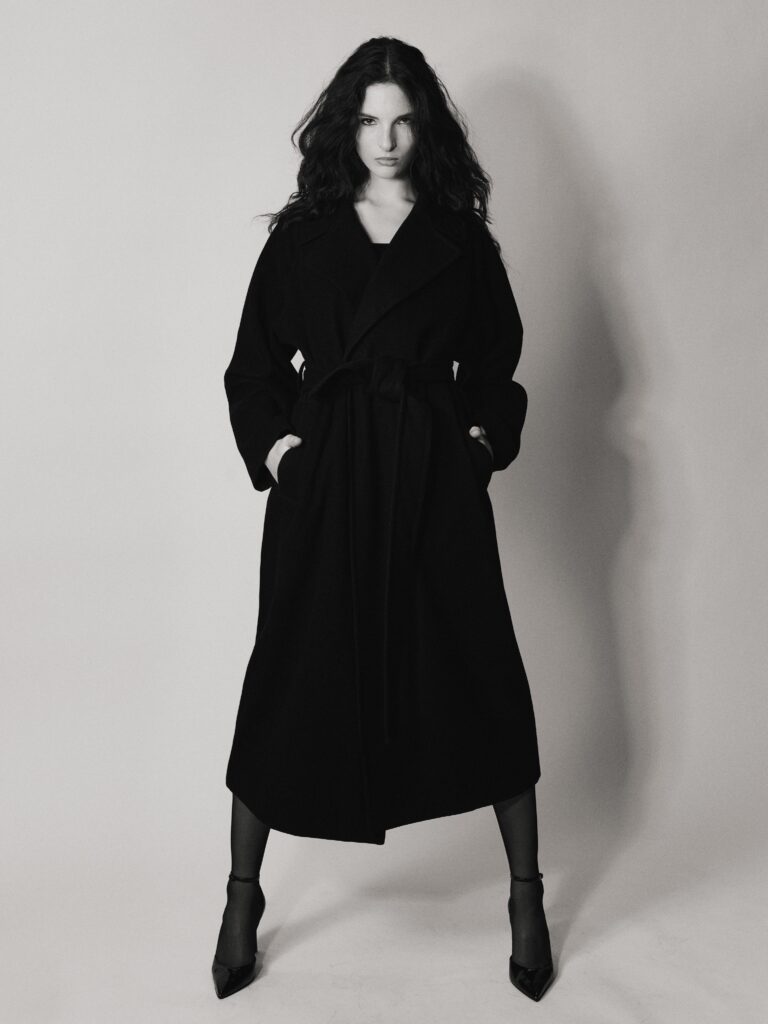
If she could slip into a different reality for a single day, it wouldn’t be a fashion capital, but the tranquil, blue-hued peace of “The Great Before” from Pixar’s Soul, or the whimsical clutter of Howl’s Moving Castle. “I am now looking to build a different future,” she says, “a kinder one, a truer one.”
Despite her public-facing career, Enza’s most intimate creative outlets remain entirely private. Through yoga, journaling, and dancing, she reminds herself that “you are more than just a brain and not everything that pops into your head is the truth.” She maintains a secret Substack where she writes about politics and the things that matter to her heart, far away from the potential judgment of the digital masses. Her Pinterest, too, is a hidden sanctuary, a visual realm built “by me, for me.”
This privacy is a survival tactic. She is fiercely protective of her mental space, sometimes deleting Instagram and TikTok the moment she feels her own thoughts being drowned out by the noise of “media against her whole existence.” It’s a necessary retreat. “I then take time to return to myself,” she says, recognizing that while social media is a tool, it’s one that requires a constant, conscious effort to keep from being consumed by it.
Enza lives in a state of constant, active dreaming, manifesting a future that balances high-art drama with human service. Her “dream year” is a vivid triptych: opening a theatrical Mugler show, starring in a film alongside the likes of Taylor Russell or Hunter Schafer, and eventually retreating to a tropical shore to dance to soul music with her partner. However, the professional milestones are weighted by a desire for impact. She speaks of mission trips and lifting up queer and trans communities with the same fervor she has for a script.
When it comes to the screen, she is ready to shed her real-world devotion to “being good” for a moment. While her instinct is to serve the world, she admits a “selfish” hunger to play a vile, powerful villain—a character who chooses revenge and pleasure over the peace and love Enza cultivates in her own life. It’s a chance to explore the shadows she never allows herself to inhabit.
As she navigates her twenties, the goal is alignment. Life has become a practice of turning even the “horrible feelings” into something beautiful and useful. “I just want to continue to live heart-led,” she says. For Enza, a perfectly imperfect life is the only one worth having, as long as it stays true to the “deep knowing” that has guided her since that autumn day in the school halls. “Every year I become more myself,” she says. “I shed layers… I find new things that interest me… I become someone I never even knew was an option,” she reflects—and she’s only just getting started.
Photography: