By
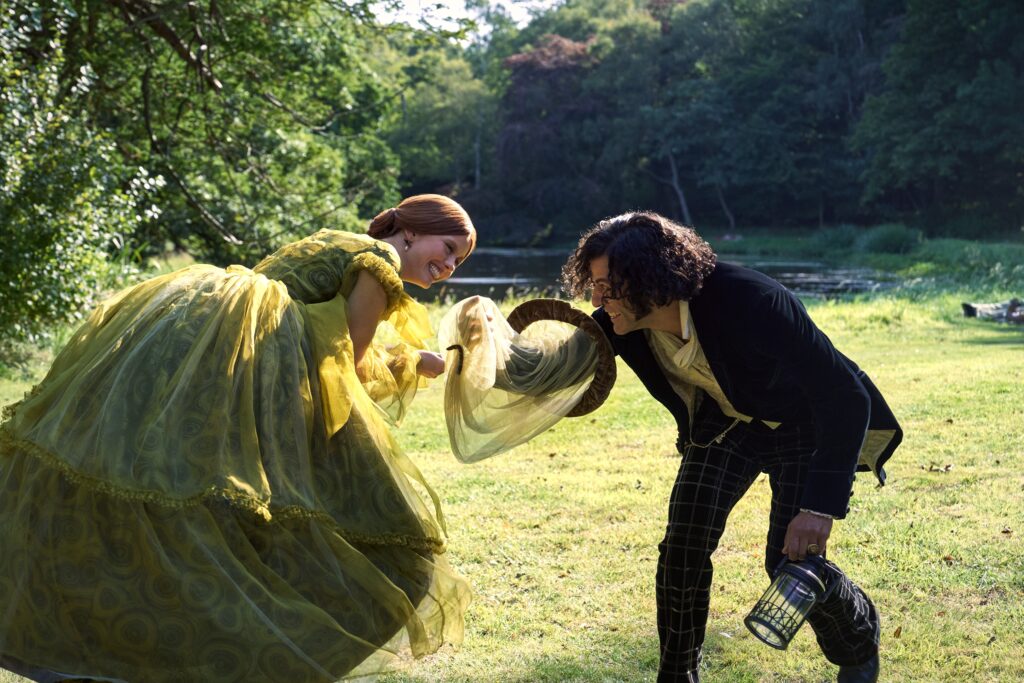
I had the chance to speak with one of my all-time favorite cinematographers, Danish cinematographer Dan Laustsen. A longtime collaborator of Guillermo del Toro, he has shot some of the director’s most memorable films, including The Shape of Water and Nightmare Alley, earning two Academy Award nominations for their work together. Laustsen’s work goes far beyond his collaborations with del Toro. He was also behind the camera on the John Wick franchise and helped turn the character into a modern myth. His career spans decades and genres.
I first encountered his work many years ago, and I still remember specific shots clearly. We spoke with him about his latest collaboration with Guillermo del Toro, Frankenstein.
What was the hardest shot for you in the film?
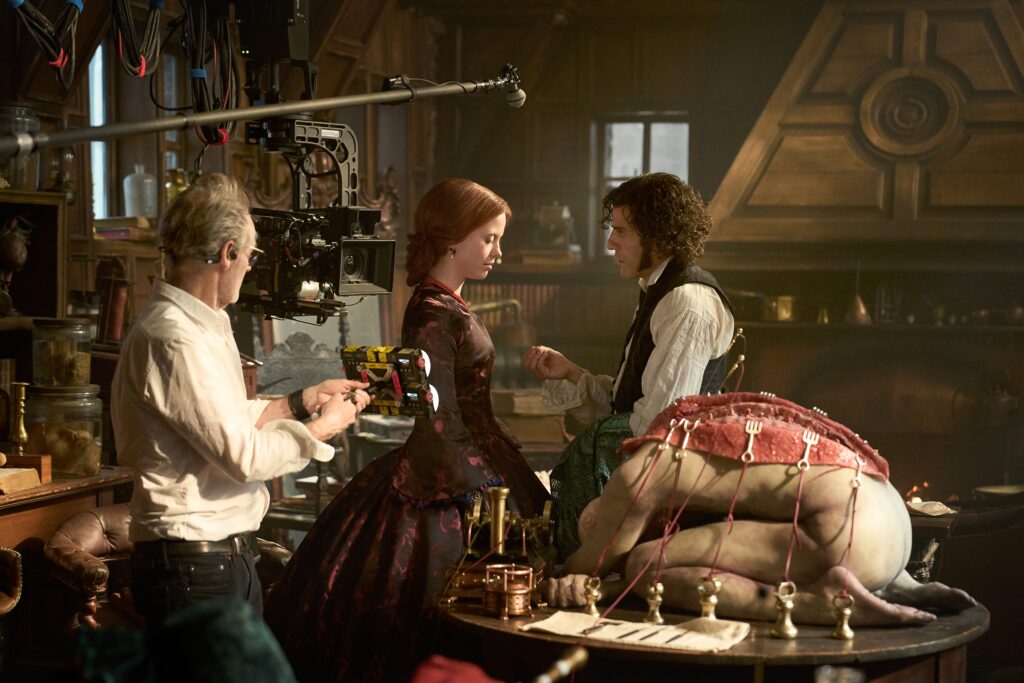
The biggest challenge for me on Frankenstein was the creation scene of the creature. That sequence is incredibly complex because it really depends on every department working together. You have special effects, visual effects, production design, hair and makeup, wardrobe, it’s all happening at once, and everything has to be perfectly in sync.
What made it even more challenging was the way the scene evolves visually. It starts at sunset, then moves into dust and the magic hour, and gradually transitions into night. Once night falls, the lightning becomes the key light source. At the beginning, smoke was meant to be the main atmospheric element, but we later shifted that to steam, which completely changed how the light behaved.
There were so many elements constantly shifting in that scene. When you watch it now, it feels very fluid and visually striking, but when I first read it, I remember thinking, this is going to be a real challenge. In the end, though, it works really well.
Another major difficulty was the number of locations involved. The scene doesn’t take place in just one space, it moves between the lab, the holding cells, his private room, and the rooftop. All of these sets had to feel like part of the same environment, like one continuous space. Making that work visually was definitely one of the toughest parts.
Del Toro’s films walk a line between melodrama and horror and you have worked on pure horror before (Silent Hill, The Possession), how much did you think it was appropriate to bring those horror expertise to Del Toro’s gothic worlds?
We’ve worked together for a long time, so our approach to lighting, set design, and painting with the camera has naturally become more and more sophisticated. When we started talking about this film, we knew we wanted to make something that felt classic, a classic looking film, but shot in a very modern way. Even though the story itself is classic, we didn’t want the visuals to feel old-fashioned.
We didn’t want to go into an old Frankenstein like world or make it feel too strange. Instead, we wanted it to look like a normal, contemporary film, but with a strong classical foundation. The color palette is richer, the camera moves more, and contrast plays a big role, blacks are truly black. It’s about finding that balance between something timeless and something modern.
Do you prefer shooting on digital or on film?
I don’t mind; it’s just two different mediums. You can’t really compare them. These days, when you shoot on film, you’re also thinking about the digital world, because all the post-production happens digitally. Back when I started making movies, everything was shot on film and there was no post, you had to get it right in camera. That world has completely changed now.
How do you respond to people who say Netflix movies don’t look as good as theatrical films?
It really depends on the eyes looking at it. For me, when we were making Frankenstein with the whole team, I’m very proud of how it turned out. To my eyes, it looks perfect. I don’t think it would look any different if we had shot it on film. The way Frankenstein looks is exactly how it should. It’s not a case of, “If we’d shot on film, it would have looked different.” The beauty of filmmaking today is that there’s freedom, you can do whatever you want. There’s no absolute right or wrong, and that’s part of what makes it exciting.
Of course, if someone wants to shoot on film, say a student project or a special feature, I’d do it. I’ve shot over 45 features on film, and I love it. But it comes with its own challenges, there’s no free lunch. For this project with Guillermo, the digital world suited us perfectly.
It’s a common practice now in modern blockbusters that VFXs artists make “Pre-vis” renders of the big set pieces in the film, even before a director or a DOP are attached to the project. Do you view this as hindering a DOP’s work? Or is this just a modern version of “storyboards”?
No, I think visual effects actually help the look of the movie. You have a director with a vision for the film, and then the director of photography helps shape that look alongside them. Visual effects come on top of that, they’re part of the same collaborative process. Everyone is working together to serve the director’s vision. Of course, sometimes you might need to scan a set or make adjustments, and that’s fine, it helps solve problems. But at the end of the day, it’s still the director’s movie, and everything should support that vision.
This is your fourth time working with Del Toro, did your process together change from project to project? Depending on both your familiarity with each other but also the budgets of the different films?
A little bit, of course, you get older, hopefully wiser. I’ve changed, naturally. The first film we did together was Mimic, which we shot on film, and later we made Crimson Peak, which was digital. But I don’t think my approach has changed that much. We still love to play with light, we still want the camera to move, and we still want black to be truly black. We’re not afraid of darkness, we actually like being on the dark side of the light. That part of our filmmaking has stayed the same.
What changes is the movie itself. Every film is different. And Guillermo, especially, evolves from project to project. He’s constantly changing his style, and I love that about him. It’s never the same look twice, each film finds its own language. And that, to me, is beautiful.
We keep saying Del Toro, but after this deep collaboration, those worlds should also be called Dan Laustsen worlds. What is your favorite film in your collaboration with Del Toro?
I think Frankenstein is an amazing movie. The Shape of Water is a wonderful film too; it’s a beautiful love story. I love all of them in different ways, but visually, I think Frankenstein is the strongest. That said, comparing them is like asking whether you love your son or your daughter more. You don’t really choose; you love them for different reasons.
Before starting this project, did you have any previous visual interpretation of the story of Frankenstein from previous adaptations or from the source material that you imagined doing, that was different from Del Toro’s vision?
No, not at all, because del Toro’s vision is my vision. Guillermo is the director, and I know him so well that this way of working feels completely natural. He brings the vision, and then we shape the look of the movie together. He’s spent nearly 30 years thinking about Frankenstein, so of course we follow his lead. He often creates mood palettes for different scenes, which become an important guideline, not just for me, but for all the department heads. It puts everyone on the same starting point.
From there, we talk about the details: which camera to use, how to work with lenses, how to shape the image. There are a lot of conversations, but they’re never rushed. It’s a very slow, thoughtful process that happens over a long period of time.
You’ve been working as a cinematographer for a long time.
Yeah, my whole life. That’s scary. I’ve never done anything else.
What has changed in the industry between then and now? And has your work become easier with the evolution of camera technology?
When I started out, we shot everything on film. It was very direct, what you shot was what you got. There was essentially no post-production. You could make small adjustments, slightly warmer, slightly cooler, a bit darker or brighter, but that was it. You had to do everything in the camera. There was no such thing as “let’s fix it in post.”
Today, you hear that phrase all the time on set, fix it in post, fix it in post. But back then, you couldn’t rely on that. And I think that’s why so many classic films are still so powerful. When you look at movies like Lawrence of Arabia or Apocalypse Now, everything is crafted in camera. There was no safety net, and that pressure created something special. That’s also what we try to do with Guillermo. We always aim to achieve as much as possible in-camera. Of course, it’s not always feasible today, but that intention is still there. The process just isn’t as stressful anymore. Back then, you had to be completely focused, what you shot was there forever. There was no real way to fix mistakes later.
At the same time, I think new technology is incredible. It genuinely helps us make better movies, and there’s no reason to be afraid of it. If you want to shoot on film, shoot on film. If you want to shoot digitally, do that. If there’s a camera that fits your story, you should use it. Craftsmanship has changed, that’s true not just in filmmaking, but everywhere. It’s like a carpenter in the old days who had to do everything by hand. The reference points have shifted. Maybe some of the mystery of filmmaking has disappeared, because film was a chemical process, you never knew exactly how it would turn out.
Now, in the digital world, you know. When we were shooting Frankenstein, the dailies and the final film look exactly the same. If you’re not careful, you can get lost, because there are endless possibilities and variations. But I think that’s a good thing. So, when you ask what’s changed, yes, it’s different. When you shot on film, what you saw through the viewfinder was the movie. That’s no longer the case. But I don’t think that’s a bad thing at all.
Did you ever want to be a director at any point in your career?
No, because I’m a cinematographer. I love being part of telling the story visually and supporting the director in shaping that vision. That’s what excites me. I think directing is incredibly complicated. A lot of people assume it’s a walk in the park, but making a truly good movie is extremely difficult. Of course, being a good cinematographer isn’t easy either, you have to work at it every day. It’s like exercising; the more you practice, the better you get. But I’m not a director. I’m a director of photography, or rather, a cinematographer. And I think that distinction really matters.
Oh, right. Could you explain the difference?
You know, I’m not even sure what “director of photography” really means. To me, you’re a cinematographer. You’re telling the story through cinema, through the look, the light, the lenses, the camera movement, together with the director. And I think that’s a big difference.For a long time, I thought the two terms were the same. And maybe, in the end, it’s just a matter of words. But to me, the cinematographer feels more romantic. It carries more passion.
If there’s one word you’d use to describe your journey with Guillermo del Toro, what would it be?
Passion.
If you were a shot in a film what would it look like? make something up.
At this point in my life, I’d say it would be a very classic black-and-white photograph.
And what’s in it?
Just me.