
By
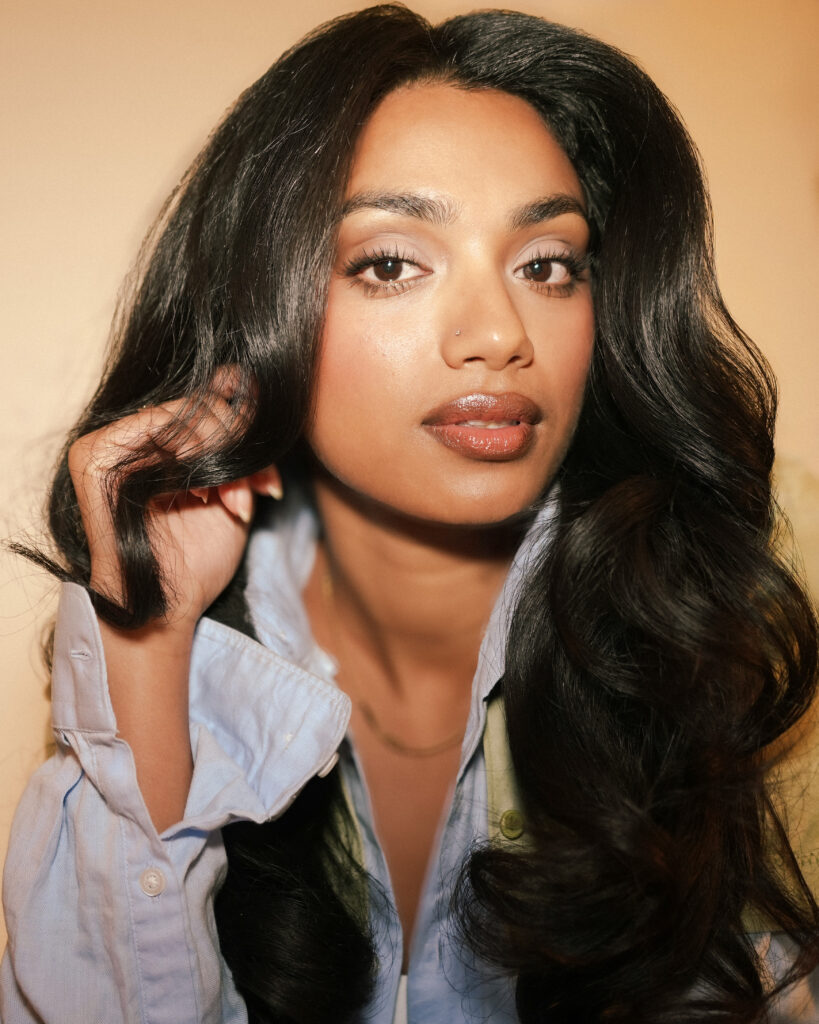
If it feels like Nadine Bhabha’s life blew up overnight, that’s because it did. Just two months ago, the Toronto-born actress and writer was a respected fixture of the Canadian scene—a Letterkenny alum with a sharp pen and a knack for scene-stealing. She is at the center of a worldwide fever dream today.
As Elena in HBO Max’s Heated Rivalry, Bhabha plays the ride-or-die confidante to Kip. When she told a hesitant Scott Hunter, “He deserves sunshine. And so do you,” she was igniting a catchphrase that has since reverberated throughout the Olympics, Golden Globes, and late-night stages.
A true multi-hyphenate, she lets one bleed into the other, from the screen to the writer’s room, having lent her voice to Roku’s Children Ruin Everything and the upcoming Crave mockumentary Slo Pitch alongside Emily Hampshire.
Bhabha works with a clear head in the noise, earning 2026 Canadian Screen Award nomination for Best Guest Performance in a Drama Series, and winning Best Supporting Actress at the New York Web Fest in 2017 for Barbelle. She is too busy sewing her own square into the quilt of stories that truly endure to be interested in the transient spectacle of fame.
Q: When you’re staring down a blank page or a new role, what’s the initial spark that sets everything in motion? Is it a script line you can’t get out of your head, a gut feeling, or is it something more abstract?
Nadine Bhabha: It’s usually the script; there has to be some meat on the bone. There are different pillars when picking something up — is it fun, what’s the money like, who’s working on it. Immediately, just because it was Jacob.
Q: As someone who moves between acting and writing, how does one side of your work inform the other?
NB: Yeah, I’m definitely probably an annoying actor, because I know what feels good in my brain and I want to be able to have a bit of freedom making a sentence work for me, there’s a creative liberation in it. Because I’m an actor, I’m able to write dialogue that someone would want to say.
Q: Do you feel like your creative process is more controlled or a wild, intuitive force that you’re just trying to keep up with — and has that changed over time?
NB: I’m definitely less precious than I was five years ago, able to have more fun while working. You realise that you have one life and worrying about superfluous things makes it less fun. I remind myself that if I wanted to be serious and stressed l, I would’ve gotten a high stress job.
Q: When the creative well runs dry, what’s your reset button?
NA: We’re in this industry for fun. You can still take the work seriously, show up on time, be prepared, do what you need to do, and still have fun— at the end of the day, it’s just people talking and pretending.
I just go out and live my life, hang out with my friends, go experience art and travel. You have to be a person in the world. You have to leave the industry multiple times a day.
Q: From the outside, it looks like a whirlwind of red carpets and global hits, but what’s the ‘invisible’ side of your career? What’s a part of the daily grind or the industry’s machinery that people would be surprised to learn about?
NA: People just don’t know how TV is made, how long it takes, how different each production is and days and when. It’s interesting hearing everyone’s takes on how it works and 99% of it is wrong. People would assume Robbie (Graham-Kuntz), François (Arnaud), and I were on set all day.
Q: Whether you’re holding the pen or standing in front of the lens, what’s the common denominator in the projects you’re gravitating toward right now?
NA: I just want to make stuff that can stand the test of time. There’s been a hard shift in the last ten years where things basically feel like a commercial, or are tapping into an algorithm or an audience that kind of doesn’t exist…
Q: Do you have any kind of ritual before stepping into a role?
NA: No, nothing at all. Not even breath exercises. No shade to people who do that, I’m just a little less precious with my work.
Q: From your vantage point as Elena—the person holding the mirror up to Scott and Kip—what do you think was the ‘secret sauce’ that made Heated Rivalry feel so urgent and resonated with people?
NA: I think everyone just saw a friend that they actually know in Elena, or people who have a deficit in the friend department. Rachel Reid and Jacob (Tierney) created this beautiful character that can take the place of a friend. That character is really real. People are able to cling onto something that feels real.
Q: Stepping into a world that thousands of people have already ‘met’ in their heads through Rachel Reid’s books is a challenge. How did you approach stepping into a world that already has such a passionate fanbase?
NA: I didn’t know they were books right off the job. Throughout the process, I read the books. I know in the months leading up to the show, I sort of took the script as bible at first. I knew there were fans, but I didn’t know just how vast it was.
Q: Did you expect the show — or your role — to take off the way it did?
NA: I think, if anyone says they expected this, they would be lying. You never know. There’s so much out there, so it’s just lovely when people find the thing that you made.
Q: There’s the version of Heated Rivalry that you filmed on set, and then there’s the version that lives in ten-second loops and fan edits on TikTok. What was it like watching your performance get dissected, remixed, and turned into a digital language of its own?
NA: In the beginning it was so funny. Living in a cultural zeitgeist is so transient, it’s only been a few months and it’s fun to see how the show memeified itself.
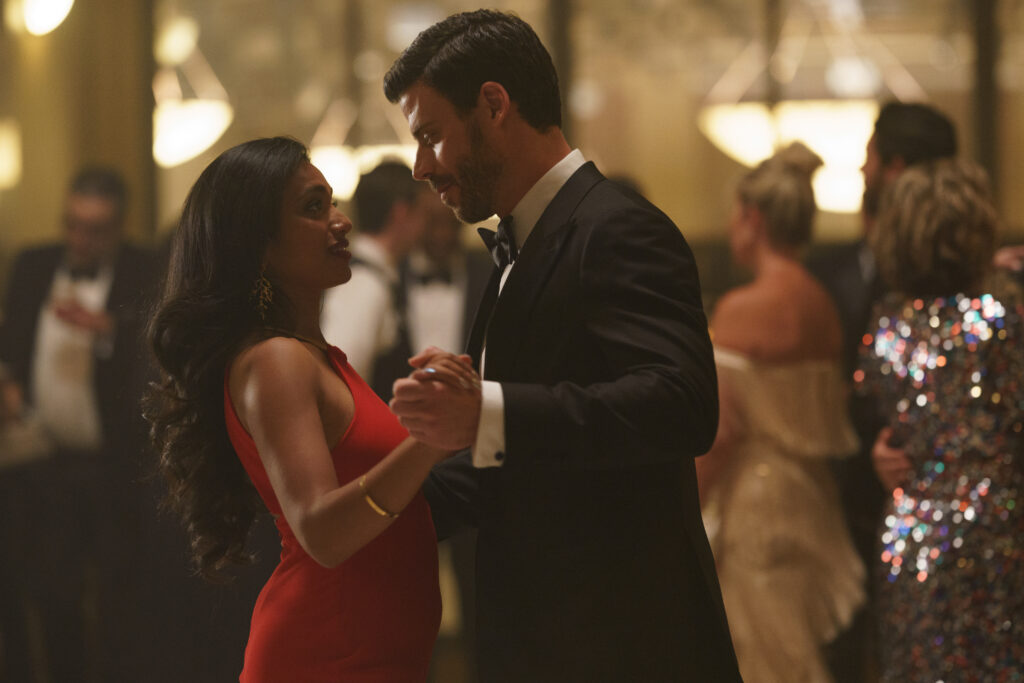
Q: Elena occupies a fascinating space in the story—she’s the one who finally hands Scott and Kip the keys to their own happiness, especially in the dance scene with Scott. How do you personally define the boundary between helping and interfering/meddling?
NA: If people are asking me for advice, I definitely give my unfiltered opinion within reason. You obviously have to be very kind, but it’s hard to watch. Elena and I are very similar in the sense if you do.
Q: You’ve spoken about how there aren’t enough “middle ground” stories when it comes to immigrant identities on Canadian TV. What does that middle ground look like to you?
NA: Specifically, because I’m not an immigrant, my parents are, I feel like there’s either the immigrant experience or the white Canadian experience. I’m interested in the middle of that. I’m not an immigrant, but I’m also not white. It would be nice to see Canadian stories of people who are Canadian, but not white. Just telling stories about love and friendship and centering POC as the leads, without making their identity the point of the story.
Q: You’ve taken on a number of queer roles, is that a conscious curation on your part, a desire to inhabit and protect these specific types of stories?
NA: It’s a mixture of all things. It’s partially a coincidence, and the circles I run in have tons of queer people. It’s not something I’ve ever truly thought about. I have a very diverse group of friends, and these are the stories they tell. It’s a natural thing for people to want to create stories about themselves and the communities they’re surrounded by.
The world that we live in right now is trying to put a container on queer stories. They’re just love stories, too. Like Heated Rivalry, we don’t need to put a huge emphasis on it not being heteronormative.