
By
SPOILERS AHEAD
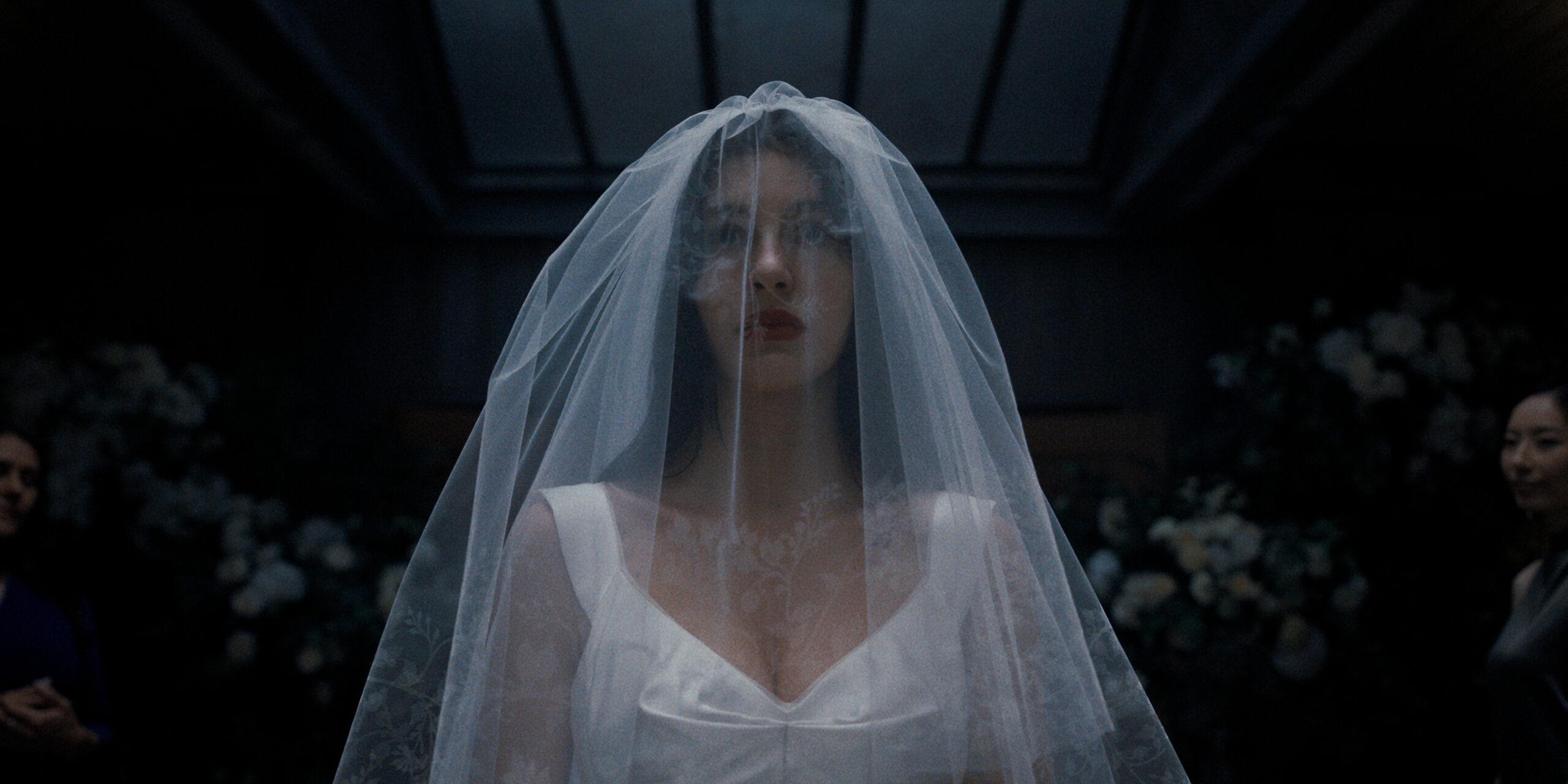
A wedding can be a fairytale. In Haley Z. Boston’s hands, it curdles into something far more sinister—a blood-soaked, dread-filled nightmare in Something Very Bad Is Going to Happen. Produced by the Duffer Brothers and created by Boston, this horror miniseries tracks Rachel (Camilla Morrone) and Nicky (Adam DiMarco) through a claustrophobic, five-day countdown to their nuptials.
In a secluded, snow-blind wilderness, the show strips away the romantic veneer to reveal a chilling truth: a slow, creeping realization that love, under the wrong conditions, can become something terrifying. The show, which also boasts a cast including Jennifer Jason Leigh, Gus Birney, Jeff Wilbusch, Karla Crome, and Zlatko Burić, is a cold-blooded autopsy of a relationship, taking pre-wedding jitters and turning them into a nightmare.
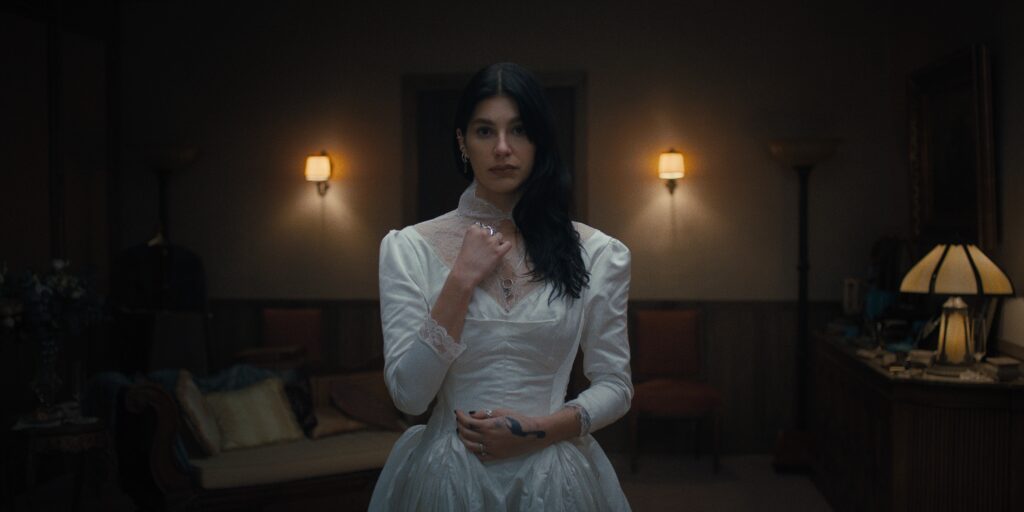
From the very first episode, the show is obsessed with the idea of omens: the carcasses of dead animals, the prickle of strange coincidences, and a persistent, unshakable dread. From the ‘bad luck’ of the tunnel scene or the unsettling, glassy-eyed stare of taxidermy dogs, the world seems to be screaming a warning that Rachel is the only one hearing. Even the pearls in the third episode—superstitiously known as ‘tears for the marriage’—don’t feel accidental, especially when her mother-in-law insists she wear them.
The series wastes no time with small talk. Rachel and Nicky’s dynamic is introduced through conversations about marriage, pregnancy, and children almost immediately in ‘Never Get on One Knee’. There is a frantic, almost breathless urgency to their plans, a sense that they are rushing toward something irreversible. That urgency starts to feel less like passion, and more like inevitability and just following through with plans.
Throughout the early episodes, the script litters the landscape with genre breadcrumbs, baiting the audience into hunting for a conventional monster. Whether it’s the shadow of serial killer Larry Poole, the folkloric dread of The Sorry Man, or the cold, predatory vibes of Nicky’s family, the show keeps your paranoia pivoting. Even the town itself is a desolate patchwork of abandoned spaces and a history of suicides. It’s a deliberate distraction, a way to keep the viewer’s eyes on the horizon so they don’t notice the floor falling out from beneath them in the mid-season switch.
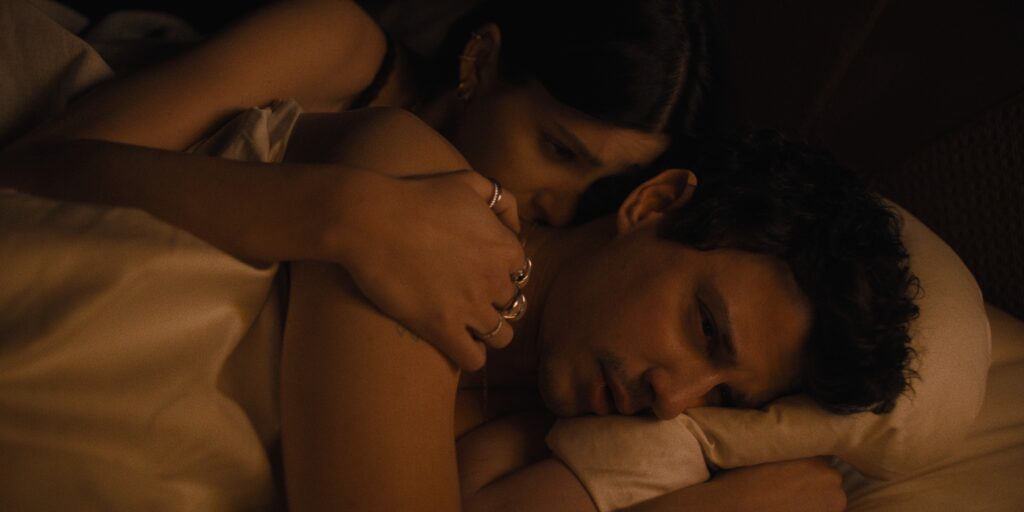
Rachel is not your typical blushing bride. From the outset, her silhouette is defined by an almost funereal poise—all black fabrics and the cold glint of silver jewelry, an opposition to the traditional ivory expectations of a wedding. She moves through the world with a “superstitious skin,” sensitive to the dark frequency of the environment around her. She walks through her own life with keys clenched between her knuckles, bracing for a blow she knows is coming. Refreshingly, and unlike the traditional horror victim, Rachel is a protagonist who listens to her instincts.
As for Nicky, he is the family’s golden boy. The code to the vacation house gate being Nicky’s birthday is a literalization of how the family’s entire world is locked behind his identity. It reinforces the idea that Nicky is the sun of this solar system, and everyone else—especially a ‘Gothic’ outsider like Rachel—is just orbiting the heat. This favoritism sets the stage for the fiancé vs. the in-laws trope, but with a much sharper, more sterile edge.
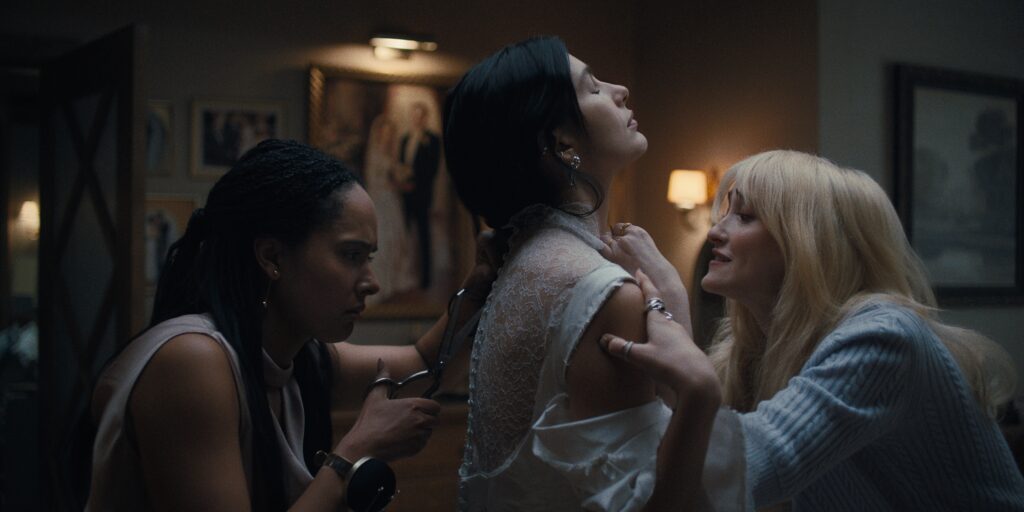
In ‘Bride-Shaped Hole’, episode two, the family’s behavior feels jagged and nonsensical—their conversations are too rehearsed, their hospitality feels like an interrogation, and their boundaries are nonexistent. Once the mid-season shift occurs, these “nonsensical” actions retrospectively become a logical, if horrifying, survival strategy. Even the doll in the woods, in Rachel’s original wedding dress, is a visual representation of Rachel’s own loss of agency—an effigy in the snow, waiting to be used.
The show plays with Rachel’s paranoia in a way that is almost playful. A standout moment of this survivalist humor occurs when Rachel aggressively bites into a peace-offering cake she bought for Nicky’s family, with the text “I’m sorry, I thought you were trying to kill me.” The visual gag of her slicing the cake to leave behind the word “Kill Me” is the perfect distillation of the show’s tone.
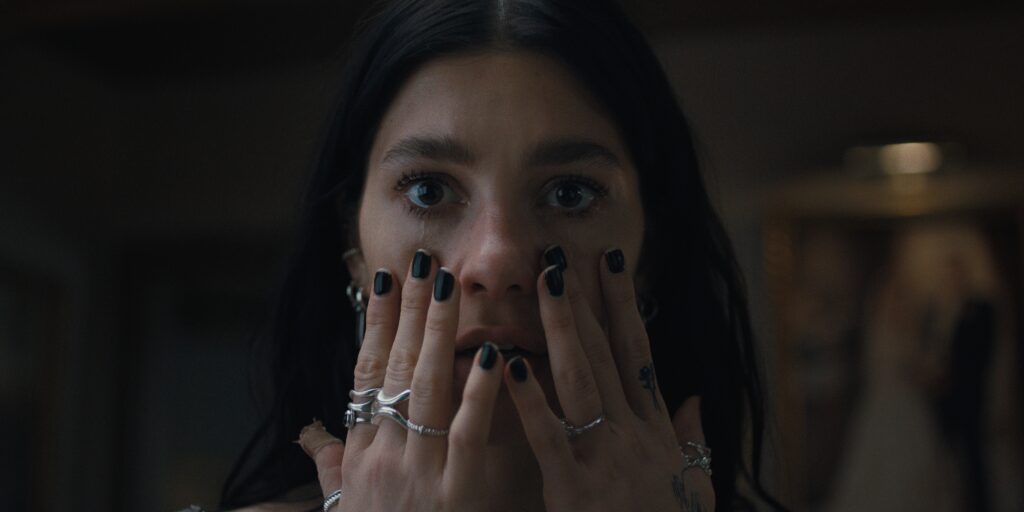
It’s a nod to the audience that while the stakes are life-and-death, the absurdity of wedding-season social graces isn’t lost on the creators. It underscores the central tension: Rachel is hyper-aware of the danger, yet she remains tethered to the ritual, carving out her own dark space within a tradition that seems determined to swallow her whole.
Technically, the series excels at restless tension. The soundscape is claustrophobic, utilizing creaking floorboards and POV shots to ensure the viewer never feels like a passive observer. By the time the distorted glitches and warning-yellow lighting take over the screen, the show has successfully shifted the central question from “What is happening?” to “Why isn’t she leaving?”
Drawing from Carrie’s raw, almost carnal take on becoming a woman and Rosemary’s Baby’s suffocating paranoia around motherhood, Something Very Bad Is Going to Happen positions itself as the missing piece—a horror story about becoming a wife. There are also traces of films like The Celebration, Martyrs, Barbarian and television series Servant.
There are moments where the pacing falters, particularly in the early episodes, where the narrative lingers a bit too long in its ambiguity. But once the pieces begin to click—especially from episode four onward—the series sharpens into something far more cohesive and unsettling. The tone leans into a slow, under-the-skin dread rather than jump scares. For much of the first half, the threat feels external—until the midpoint reveals something far more supernatural at play
Halfway through, the show drops its biggest treat: Victoria Pedretti as Rachel’s mother, Alexandra. She is predictably brilliant and unpredictably terrifying, bleeding from every pore as she anchors the show’s shift into pure body horror. As she stares directly into the lens—blood weeping from her eyes and nose—she breaks the fourth wall to implicate the viewer in the family’s rot. Directed with haunting precision by Axelle Carolyn, the episode is the series’ crowning achievement. It is the moment the narrative bow is pulled tight, revealing a generational tapestry of blood and bargains.
This dread culminates in the show’s most harrowing sequence: her husband Jay’s desperate, mid-climax delivery or ‘rescue’ of the baby. The sound design is unflinching—the wet, rhythmic snap of skin and muscle as he cuts into Alexandra—but the true horror is psychological. Jay’s wailing apologies, his insistence that he’s sorry, so sorry, even as he cuts and dices into her. It is the ultimate literalization of the wedding contract: a life for a life, all in the name of a legacy that refuses to die.
The revelation that the Sorry Man—the spectral figure of Jules’ nightmares—is actually her father is an unexpected pivot. By witnessing her own birth through Jules’ eyes, Rachel (and the audience) finally understands the “debt” she was born into. The curse is no longer an abstract fear; it is a literal inheritance, punctuated by a father who stabs his own daughter to “even the scales” of a dark, cosmic ledger.
At the heart of the horror is a Faustian bargain with Death itself. The show’s mythology posits a terrifying ultimatum: the curse only breaks if you truly believe you’ve found your soulmate—or you pay Death what is owed. This debt has been a silent protagonist throughout the season; we often see through Death’s cold, predatory POV as he stalks the family. Death leaves cheeky little mementos—a doll’s red heel, a taunting token from the custard shop—reminding Rachel that she cannot escape. The mythology of the soulmate is a generational weight that robs Rachel of her agency.
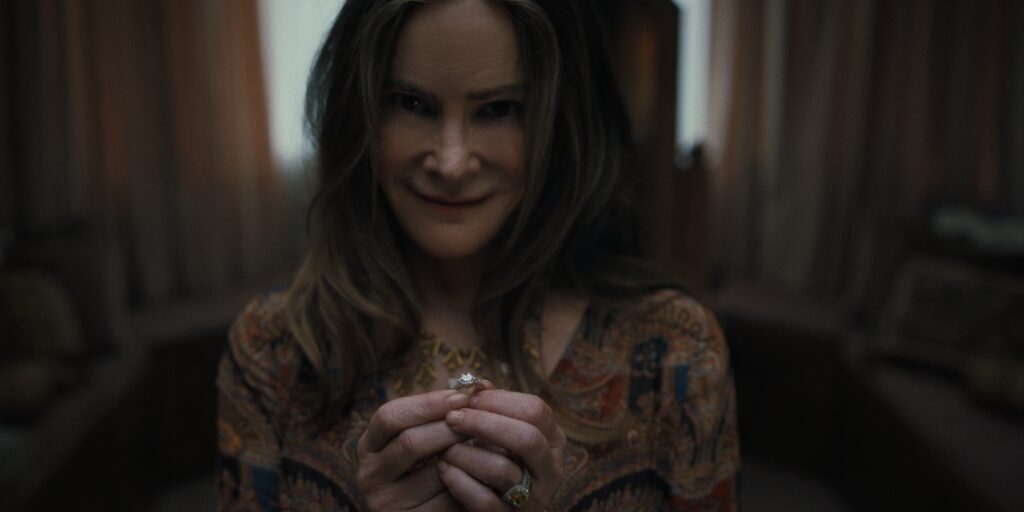
Something Very Bad Is Going to Happen eventually reveals that its superstitions are actually a form of hypervigilance. When her mother crosses paths with Larry Poole and experiences that same unlucky chill, the show confirms that this sense of dread is a hereditary survival instinct. “It’s horrifying but also validating,” Morrone adds. “She’s carried this inexplicable dread her whole life, and suddenly it makes sense — it’s in her blood.” The mother’s feeling that she has ‘been here before’ suggests a recursive nightmare—a cycle of women who sense the trap, smell the smoke, and yet find themselves unable to break the loop. “It confirms the intuitive connection she always felt toward her mother.”
While the show leans into its darker mythology, its most effective horror lies in the mundane agony of pre-wedding doubt. It treats the five-day countdown to the altar as a walk to the gallows, tapping into that low-frequency hum of anxiety every bride feels—the “what if” that keeps you awake at 3:00 AM. The nature of their union suggests that once the vows are spoken, the exit doors are bolted forever.
In the show’s world, the curse is the ultimate literalization of “cold feet.” In a disturbing literalization of “until death do us part,” Rachel’s struggle isn’t just against a curse—it’s against the suffocating pressure to commit to a future she may not actually want. As Boston notes, “You could be told, ‘you have to believe this person is your soulmate,’ and maybe that seems simple, but belief is not something you can fake.”
The tension reaches its breaking point in episode five, ‘I Think You Just Saved My Life’. The rehearsal dinner, usually a sanctuary of sentimental toasts, becomes a public autopsy of Rachel and Nicky’s relationship. As Nicky’s lies are stripped bare and a fraternal brawl breaks out, Rachel does the unthinkable: she takes the mic during dinner and reveals the family curse in front of their elite guests. The episode pivots on a single question: What if the omen wasn’t the flight, but meeting Nicky?
This dinner serves as a haunting prologue to the finale. The father’s speech—a desperate, romanticized tribute to his wife—is later revealed to be a death sentence. In a cruel twist of the show’s mythology, the mother’s death confirms the ultimate horror: his “soulmate” was a fantasy. He forgave her infidelity and clung to his devotion, but in this world, love isn’t fair, or equal.
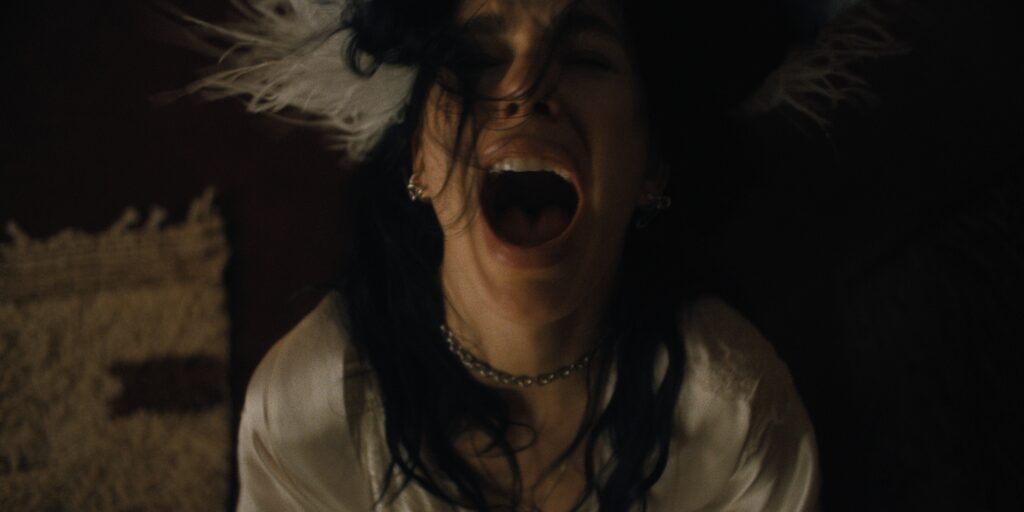
The finale, ‘I Do’, doesn’t hold back. It explodes into a blood-drenched wedding, where whatever illusion of romance was left completely collapses. It’s excessive, violent, and almost absurd in how far it pushes the idea of commitment.
Even after everything, she still believes. She is willing to mutilate herself, to drink something unthinkable, just to prove that this is real—that he is the one. The devotion before the ultimate betrayal is what makes this series truly terrifying, and real. Rachel’s journey is a desperate hunt for certainty, only to find that in marriage—as in horror—certainty is an illusion. The real power lies in the human decision to leap. When Rachel ultimately refuses the supernatural concoction, she is rejecting a magical ‘fix’ for her doubt. Boston suggests that the drink itself is a “placebo effect,” meaning Rachel’s survival hinges entirely on her own internal shift. “The opposite of doubt is actually not certainty — it’s belief,” Boston explains.
Rachel becomes what the series has been building toward all along: The Witness. Not just someone trapped in the cycle—but someone who understands it, accepts it, and, in the most disturbing way, has to live it forever. As the showrunner says, “When you see how it ends, some may take away an anti-romance perspective, but I feel the ending is actually really triumphant.” She goes on to explain, “It tells the story of someone who is choosing to believe that the person she’s marrying is her soulmate, and that is beautiful and brave in itself. It’s not about fate, ultimately.”
The scariest thing in a wedding is… who you’re marrying. The horror lies in the ultimatum: if you are going to step up to the altar, you must do it for the right reasons—or face the Reaper who has been waiting in the wings since the first “I do.”