
By
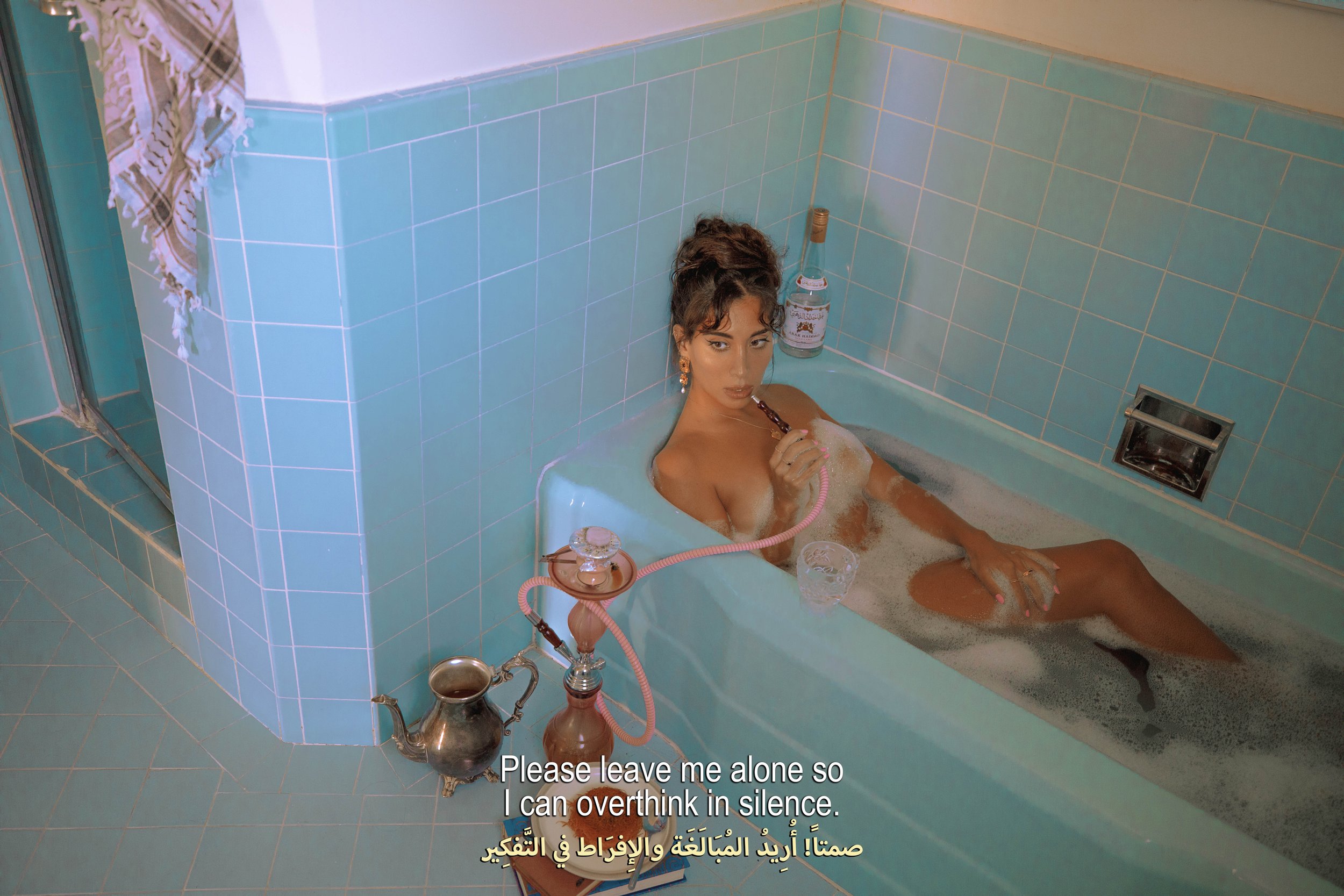
Sarah Bahbah is a Palestinian-Australian visual artist and director whose “one-liners” have become the digital age’s universal language of heartbreak. Based in Los Angeles, she has built an empire on the things we are told to keep quiet—intimacy, shame, and the act of female desire. From directing for Sony Music and Gucci, to self-funding solo exhibitions, and selling over 32,000 prints through her own independent “pay what you can” model, Bahbah has bypassed the traditional gatekeepers to speak directly to the millions who see themselves in her frames.
But to understand the artist, you have to see the girl in the shot.
Picture her: a red-lipped girl on a train going nowhere. No makeup otherwise. Skinny jeans with a slight flare, and eyes still stinging red from crying. A handsome stranger sits beside her; they kiss, and then—before the credits can even roll—she leaves first.
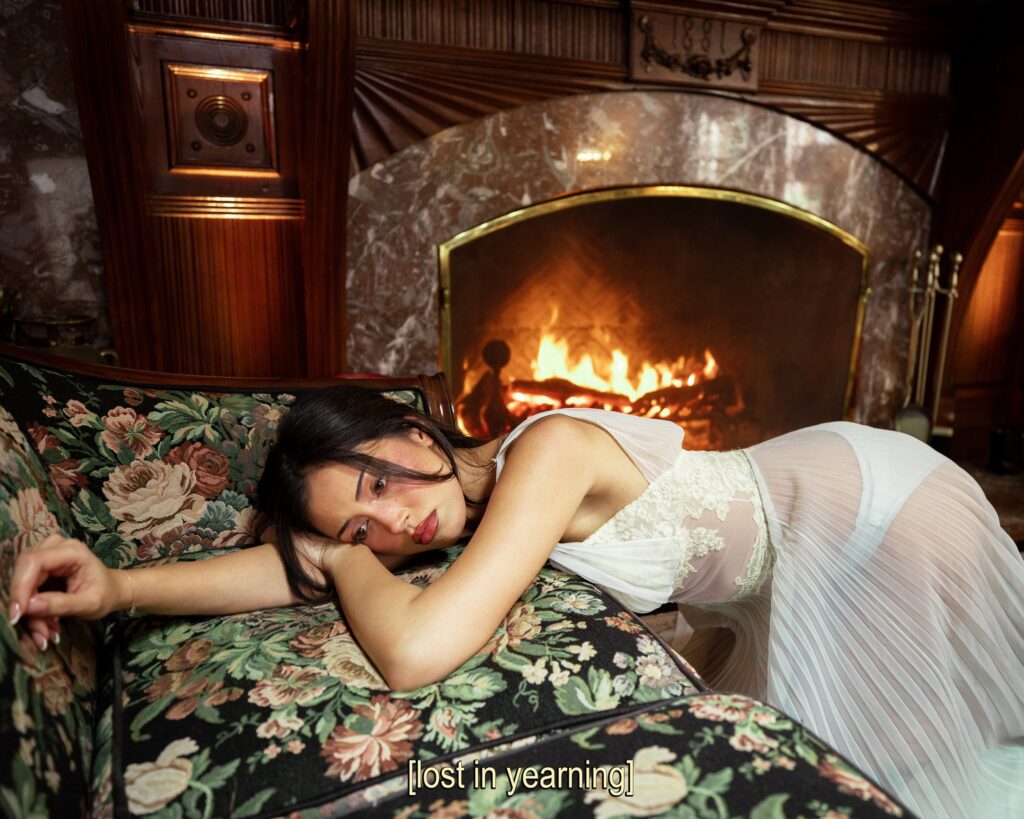
For the artist, these in-between states are where the truth lives. “Life doesn’t resolve itself neatly — emotions don’t either,” the artist reveals. “I’m not interested in tying things up with a bow. I’m interested in the moment before the decision, before the goodbye, before the clarity.” To her, that emotional suspension feels more honest to me than a clean ending.
“When I actively choose to make a series,” she tells A Shot, “it’s the only way I know how to process my emotions. The spiraling, the one-liners, the dialogue — it’s happening while I’m trying to create scenarios where I feel safe.” Whether she is decoding the friction of attachment theory in Fool Me Twice, or dismantling the shadow of cultural silence in her Arab-centric series 3ieb! (Shame On Me!), Bahbah’s work is a cathartic spiral made safe.
“Sometimes I’ll write hundreds of subtitles,” she shares. “It’s a natural instinct for me to want to alchemize pain into something visual, healing through grief.” Even as she moves into long-form filmmaking with her modern-day fairytale Untangled and her expansive, 400-page retrospective book Dear Love, her mission remains the same: alchemizing private grief into a public liberation.
Her latest venture, the hybrid series Can I Come In?, takes this a step further, inviting others to step into custom-built worlds where they can finally release the stories they’ve never told. “With Can I Come In?, that was new for me. I had mastered doing this for myself. That series was me saying, ‘Let me create these worlds for you. Let me help you express yourself.’” In 2023, she put her life’s work into the 400-page Dear Love, a luxury fine-art book that bypassed the publishing machine and moved over 15,000 copies purely on the strength of her own community.
By splashing our most hushed, late-night thoughts across saturated, filmic frames, Bahbah created a visual lingo for the oversharer. But as these private confessions reach millions, they cease to be just art. Now, her work sits at a tense crossroads where her personal purging meets the messy politics of public ownership. “I shoot it, I release it — and once it’s out there, it’s no longer mine,” Bahbah says. “The process belongs to me. The work belongs to the world.”
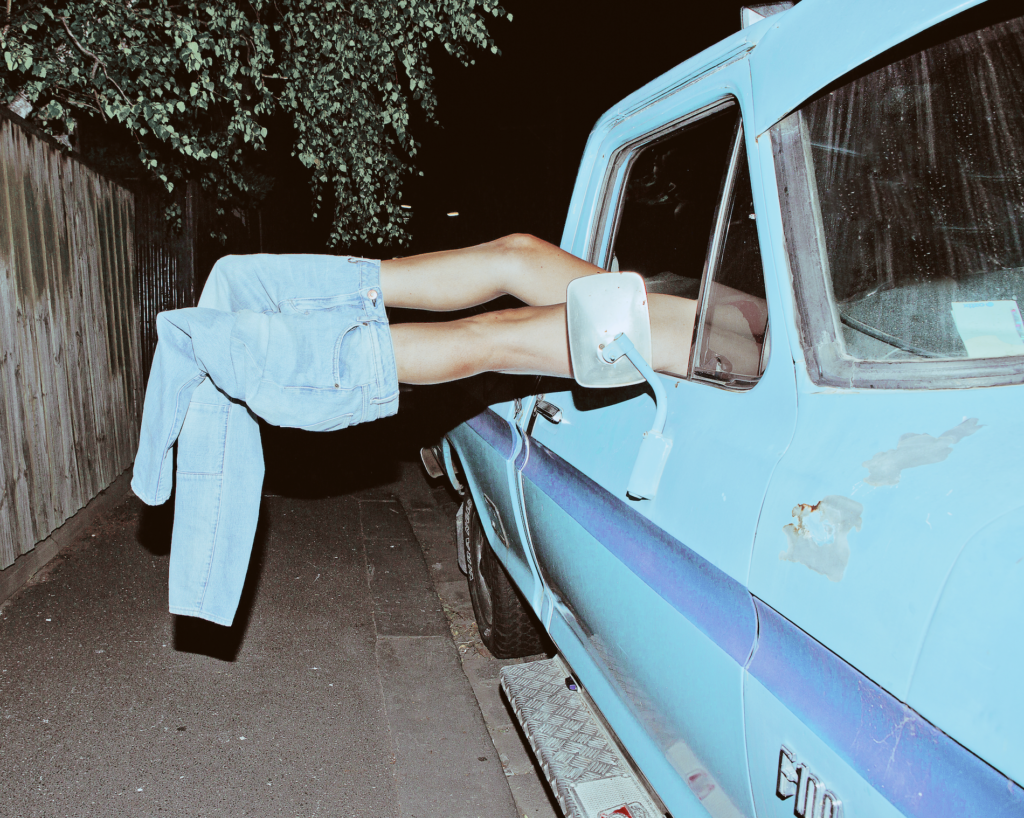
For Bahbah, the creative process is less of a hobby and more of a psychological excavation. “I’m reclaiming my voice, my autonomy, my power by creating this art. It’s cathartic. That’s what it is.” It is a volatile internal weather system—at once deeply uncomfortable and wildly inspiring. By refusing to look away from the parts of herself she was taught to hide, she transforms the act of photography into a mirror for self-discovery.
“Creating allows me to sit with feelings instead of suppressing them,” she explains, a skill hard-won after a lifetime of cultural silence. In her hands, the camera becomes a tool, turning the “uncomfortable” confrontation of her own psyche into the very fuel that powers her cinematic world.
While intimacy and shame are familiar territory for the artist, they never feel stagnant because the person exploring them is constantly in flux. “We exist on a spectrum,” she notes, “light and dark, softness and intensity.” For her, the familiar is simply a foundation for new discovery. She refuses to close herself off to the evolution of her own psyche, treating her art as a living record of her growth. “I’m not closing myself off to new feelings.” She remains an artist because she remains curious, finding new depths in the same emotions, proving that even a well-traveled heart can still surprise itself.
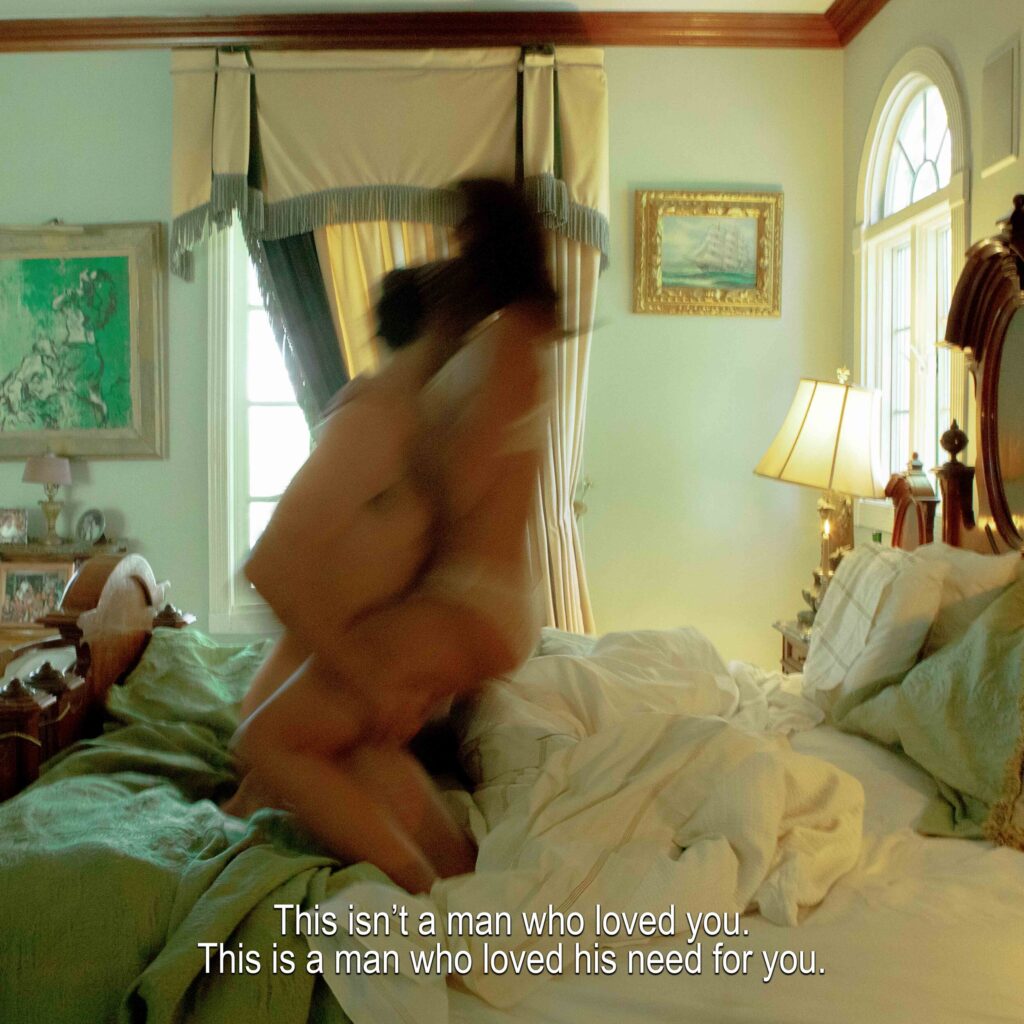
In Bahbah’s eyes, vulnerability isn’t something you get used to; it is a muscle that must be continuously flexed against the weight of tradition. Growing up Palestinian in a culturally conservative environment, she was raised with the idea thatwomen are expected to be submissive and subdued. “That was very polarizing for me because I was experiencing heavy emotions as a child,” she adds.
This forced suppression darkened into a shadow of anxiety and depression. Today, her work serves as the ultimate unlearning. In this light, her art is a form of resistance, a refusal to let the shadow win, and a loud, cinematic rejection of the idea that a woman’s feelings should be kept small. “My art is resistance in that sense. It’s me refusing to be quiet about what I feel.”
The creative rejects the idea that art can exist in a vacuum, especially for a Palestinian woman navigating an industry that feels designed for her erasure. “Of course, art is political. Revolutions have happened because of art,” she asserts. “Anyone who denies that comes from a place of privilege.” To her, success is an act of defiance against a Hollywood machine that has spent decades discrediting her history.
“In the past two years especially, being a Palestinian artist — and a successful one — is political,” she goes on to say. “So much of Hollywood invalidates our existence. I have to exist in rooms surrounded by people who want to erase us from the industry.”
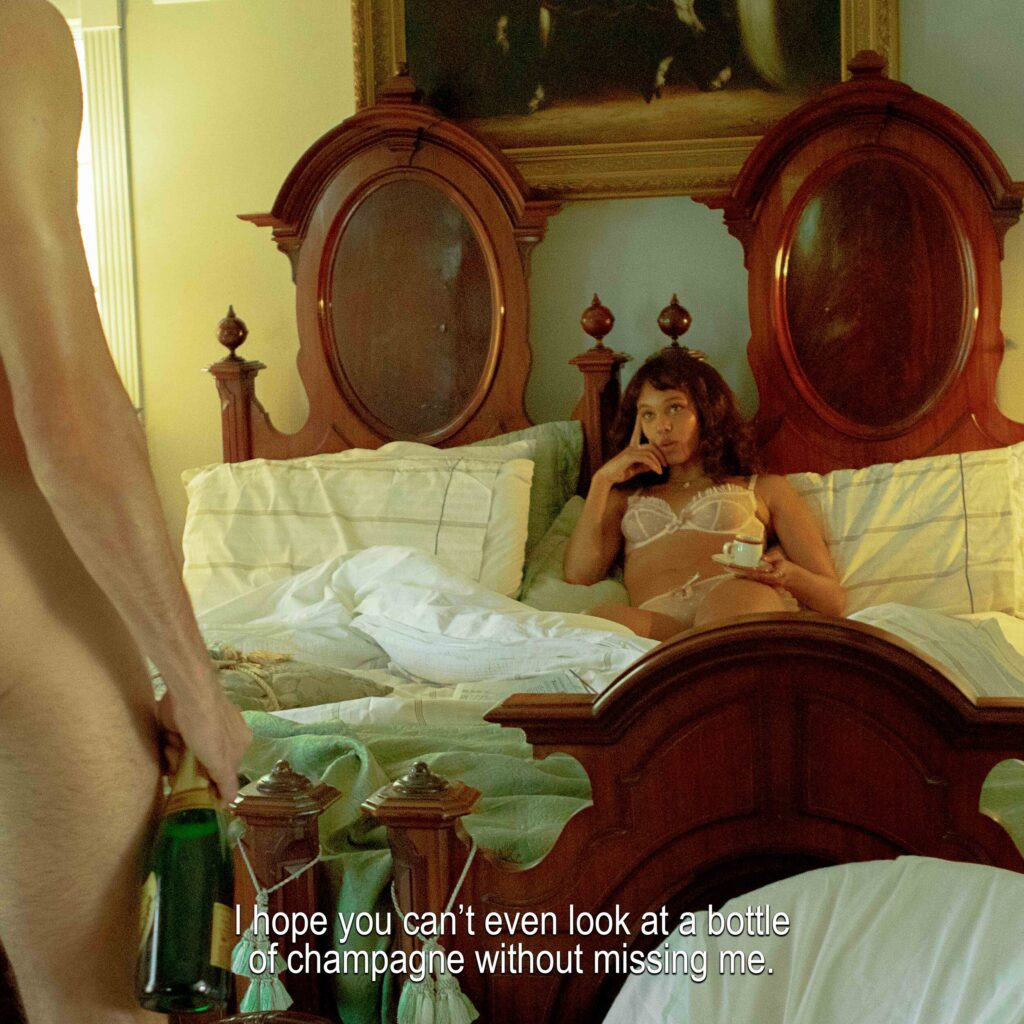
This tension is most visible in the theft of her signature aesthetic. She recounts with a sharp, weary clarity how her visual identity has been strip-mined for advertising briefs—at least six times—by white male directors eager to borrow her look without ever having to carry her burden.
“They try to replicate the aesthetic without understanding the pain behind it,” she says. It is a hollow mimicry of her life’s work; they want the “vibe”, but they cannot access the lived trauma that placed her there. In Sarah’s world, you can copy the subtitle, but you can’t copy lived experience.
The digital landscape might be ruled by the scroll, but Bahbah is acutely aware of the double-edged sword of virality. She knows that a single frame, stripped of its narrative, risks being flattened into nothing more than a “pretty picture” for the masses.
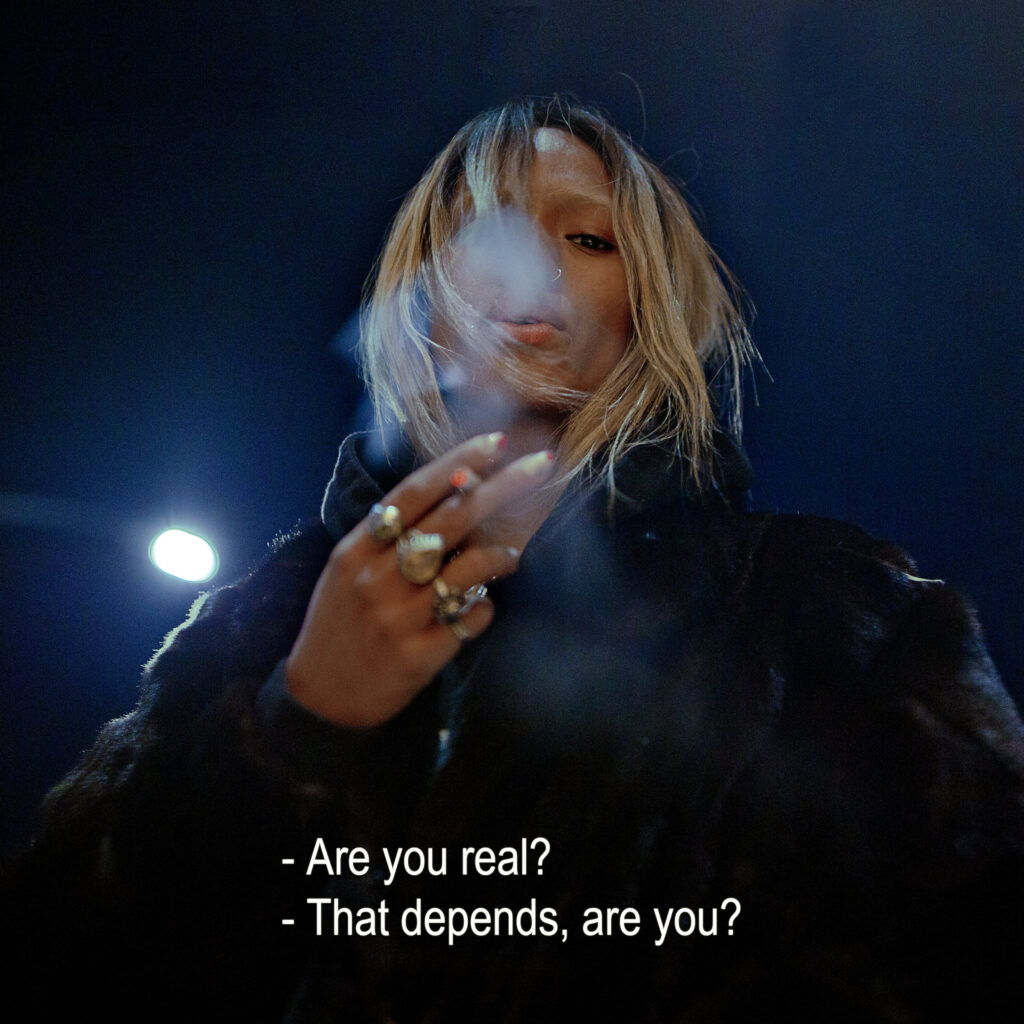
Still, she doesn’t feel the need to hand-hold her audience. She’s fine with her work acting as an emotional Rorschach test. “I always want the viewer to experience it based on where they are in their own life,” she says.
To see her work in its entirety—to read the subtitles as a long-form confession—is to understand that beauty is often the secondary goal. For Bahbah, the true value of art lies in its validity, not its aesthetic perfection.
Whether a viewer approaches her frames through the lens of heartbreak or the clarity of joy, the work remains a vessel for whatever truth they are currently carrying. “That’s the beauty of art. All expression is valid. Not everything has to be beautiful to be meaningful.”