By
It always feels numb, almost hopeless, to care about which Egyptian film gets submitted for Oscar consideration. It’s the same cycle every year, the same choices, the same disappointing picks.
But this year, something shifted.
Egypt submitted Sarah Goher’s debut feature ‘Happy Birthday’ for the Oscars, a film that immediately caught our attention. And just days after she was featured in Variety’s “10 Directors to Watch,” we sat down with Sarah for a conversation that gave us a flicker of hope.
How did the idea for Happy Birthday first come about?
The story comes from two places. One was a short story by Khaled and Shereen Diab about a child at a birthday party. The other was from my childhood. I grew up in New York but spent summers in Egypt at my grandmother’s apartment. I befriended a girl named Sahar, my Arabic was broken, she didn’t speak English, but we became inseparable. I later realized Sahar was employed by my grandmother.
You deal with complex social issues. How did you handle them sensitively?
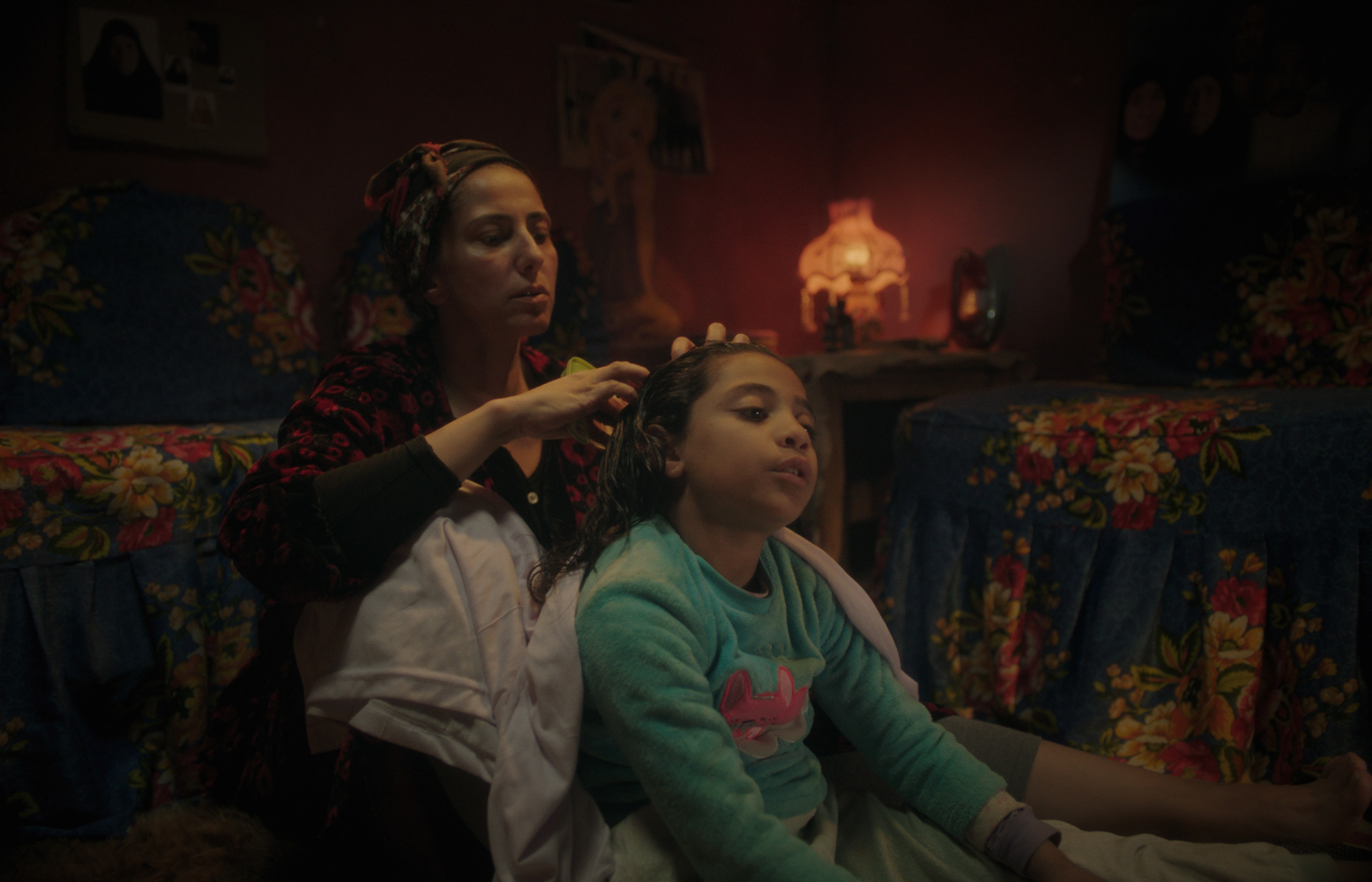
I always wanted the story told through a child’s perspective. Tuha sees the world without judgment. The contrast she encounters, the life she knows and the life she briefly steps into, is sharp, but I didn’t want to preach. I wanted viewers to feel the personal consequences of these realities, not the commentary around them.
Doha Ramadan delivers an extraordinary performance. How did you find her?
Casting took three months. We searched neighborhoods, meeting around 60 girls through improvisation workshops. Doha stood out immediately, confident, creative, expressive. Working with her was magical. She instinctively understood the emotional layers of the film.
The climactic dance scene stays with audiences. How did you prepare her for it?
Though Doha knew the steps, she needed to feel them. We worked with a professional dancer, Zuba, for two months. The goal wasn’t simply accuracy, it was for Doha to treat the dance as pure emotion. And she did. She completely lost herself in the moment.
What were the most challenging scenes to shoot?
Definitely the Nile scenes. We rehearsed one day, and by the next, the water level rose 20 centimeters. Everything changed, the camera, the blocking, the safety measures. It was chaotic, but we had to adapt to preserve the authenticity of the story.
Was there a moment on set that felt truly magical?
The last shot. I hadn’t fully prepped for it and wasn’t sure how Doha would respond. Watching her naturally embody the moment, without speaking a word, was unforgettable. She emoted everything silently. It was one take. Pure magic.
You’ve mentioned having a remarkable crew. Is there anyone who deserves extra credit?
I can’t single anyone out. Every person, from top to bottom, gave everything. My crew was incredible, and I’m grateful for each of them.
How did it feel when Happy Birthday was chosen for being Egypt’s Oscar Submission for Best International Film?
Honestly, I wasn’t expecting the Tribeca awards or the international attention, let alone becoming Egypt’s Oscar submission. I’m deeply grateful that the committee connected with the performances and the story.
As a producer, I know how demanding the Oscars race can be. You need strong campaigns, the right publicists, the right screenings. Many countries struggle because they lack the funding or infrastructure for proper campaigning. I hope our experience becomes a learning model for future Egyptian films.
I’ve traveled to the U.S. twice in six weeks and I’m going again for Academy screenings. The response from Academy members has been heartwarming. Whatever happens, I believe it will be for the best.
You mentioned that some films have huge Oscar campaigns. Can you give an example?
Sometimes these films have marketing budgets that are enormous. A film like Anora, for example, apparently their marketing budget, which included the Oscars campaign, was almost three times the actual budget of the film. For many countries, that level of spending is simply unrealistic.
Do you think this affects which countries reach the Oscars stage?
Absolutely. Every year you see the same six or so countries consistently getting nominations. Meanwhile, many other countries never really reach their potential in the race simply because they don’t have the funding or the infrastructure needed for proper campaigning.
How did Jamie Foxx come on board as a producer?
Jamie and his partner Jotari Turner loved the concept from the start. They offered insightful feedback throughout the process. Their belief in the film was unexpected and invaluable, it helped the project reach its full potential.
Tell us about directing the adult cast, including Nelly Karim and Hanan Mutawae?
Nelly has been supportive since my producing days. She understood the film’s soul and helped guide the younger performers.
Hanan was a revelation, her trust and dedication were remarkable. She fully committed to the physically demanding Nile scenes without hesitation.
What message do you hope audiences take away?
Two main messages which are:
For the industry: We must tell stories that are true to us, not to satisfy funding requirements or festival trends. We need more diversity in our storytelling and more content that reflects who we are. Global platforms want authenticity from all over the world, not just Hollywood.
For audiences: I hope families go together, kids, parents, grandparents. This is a film that sparks necessary conversations. It touches everyone, from the youngest child to the oldest member of the family.