
By
The year 2025 has brought forth many profoundly moving films, yet few have matched the raw emotional power and urgent relevance of Kaouther Ben Hania’s Palestine-centered drama, The Voice of Hind Rajab. Widely regarded as one of the year’s most courageous and indispensable works, the project compelled the director to set aside another film in progress so that she could bring this story to the screen without delay.
In January 2024, six-year-old Hind Rajab was killed by Israeli forces while trapped inside a vehicle in Gaza, subjected to relentless gunfire that claimed the lives of her family members around her. The haunting audio of her final phone conversation with Palestine Red Crescent Society responders was released publicly, reverberating across the world. It exposed the horrendous acts in the live streamed genocide and shed light on the war crimes unfolding under occupation.
In this conversation, the acclaimed Tunisian filmmaker reflects on the meticulous craftsmanship behind the project, her commitment to ethical storytelling that honors Hind’s voice without exploitation, and the film’s support from prominent figures including Joaquin Phoenix, Brad Pitt, and others who helped amplify its reach.
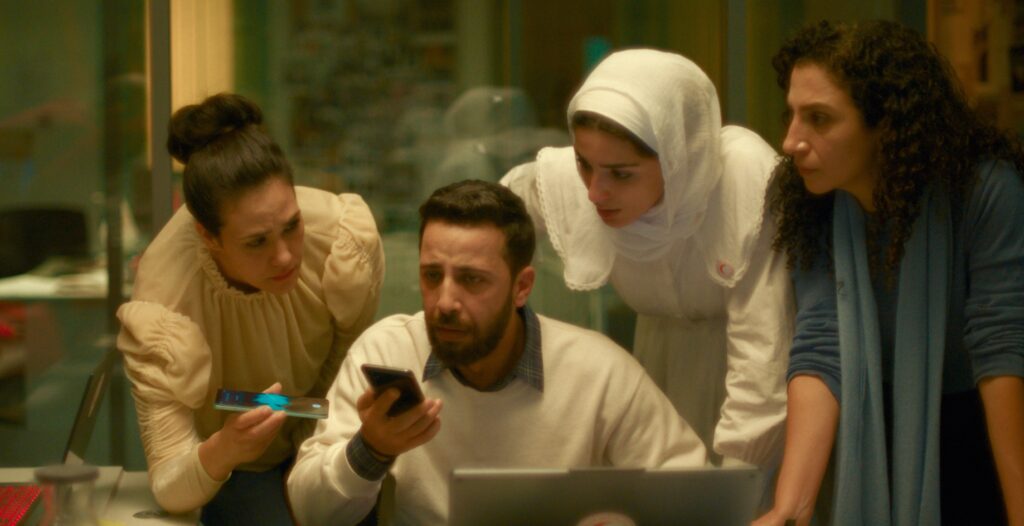
Why did you decide to tell the story from the point of view of the volunteers at the Palestine Red Crescent Society instead of setting the film in Gaza?
This story is anchored in truth. All the events are factual, you know. So, my job as a filmmaker was to choose the best way, the most impactful way, to tell this story. I had the Red Crescent Society share with me the recording of this conversation, and I started with those recordings, and everything was in the sound. It’s a movie about sound. That’s why it’s called ‘The Voice of Hind Rajab’. You have images, you have location, you have this little girl in the car. She’s talking about the tank around her. So, you already have something very real in the archival element. So, for me, as a filmmaker, doing this has no meaning. It’s even ethically questionable to do the scene of a little girl pleading for help. So, this idea, I quickly abandoned it. I considered it for two seconds. But for me, it wasn’t possible to ask the child actor to mimic her, you know? It’s not something that I’m comfortable with.
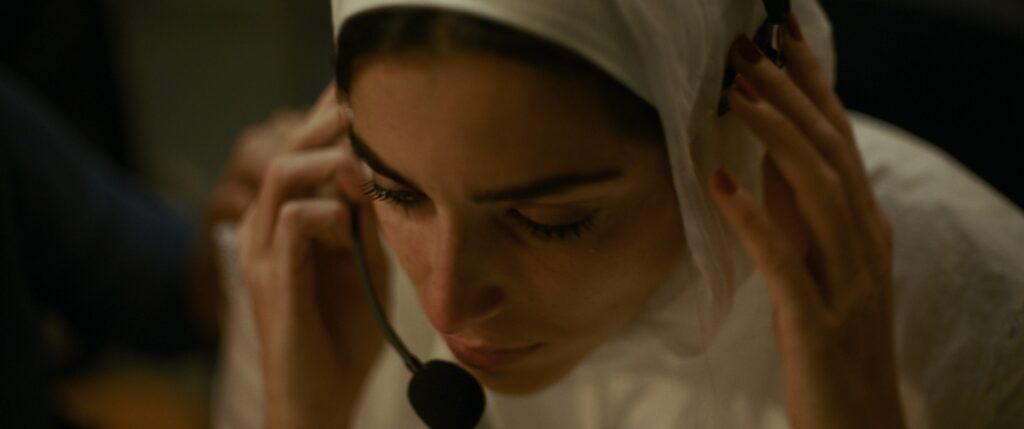
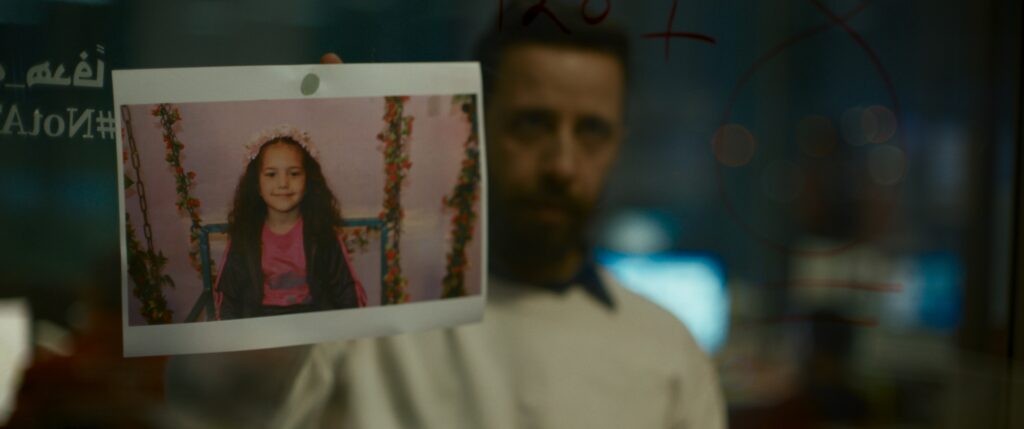
So, I needed the perfect distance to tell this story, and the perfect distance is with those who listened to this voice. And they are not in Gaza; they are in Ramallah. So, in a way, they represent all of us, you know, hearing and seeing the horror in Gaza and having our hands and having this deep sense of helplessness. So, their point of view, for me, was the perfect place to make an impactful movie. I want to protect the victim. I don’t want to protect the audience. I want to tell them truly the horror that happened in Gaza, and especially towards this little girl. But I needed to do it in a respectful way.
I want to protect the victim. I don’t want to protect the audience. I want to tell them truly the horror, horror that happened in Gaza.
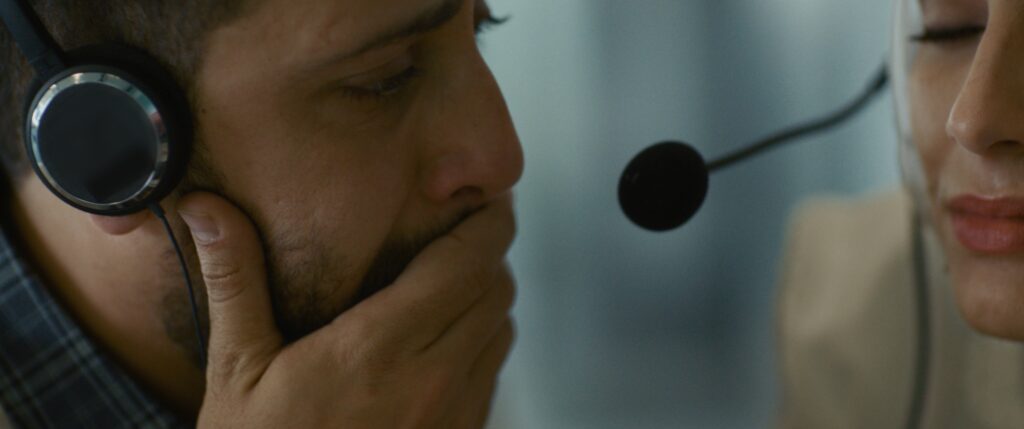
How did you choose Saja Kilani and Motaz Mallees for their roles?
I was mainly looking for Palestinian actors that look like real characters. And I needed at some point to go back to them for this scene with the phone number at the end. So, I did the casting, thinking about not only the physical resemblance, but also resemblance in the temperament, you know. I asked for a self-taped audition from several actors. And I thought when I saw the audition of Motaz that he looks like the real Omar, especially in the temperament. You know, he had this fiery, explosive temperament, and he’s a very sensitive actor. As for Saja, her audition was just amazing. And she was so authentic. The four of them were amazing. So it was, for me, obvious to work with them, and they did a really great job.
What has been the biggest challenge about bringing this story to life?
A lot of challenges. Actually, I was scared to death because it’s a huge responsibility. But at the same time, not doing this movie wasn’t an option for me. After hearing her voice, I felt I needed to do this movie. But the first challenge was, will this movie honor her voice? Will it be good enough? Not good, but effective enough? Will it convey what she felt and what the Red Cross and dispatchers felt? And will it echo around the world? This was my first obsession. And shooting this movie was emotionally very, very hard, but finally we did it. We want this movie to change things, because it’s also a call for action. So, we showed the movie at the United Nations. We showed the movie to several congressmen. We are going to show it in the European Parliament. So, we are trying to make an impact.
How did you convince big names like Joaquin Phoenix, Ronnie Mara, Brad Pitt, Alfonso Cuaron and Jonathan Glazer to join the film as executive producers? How did they end up joining?
So when we finished the editing of the movie, we thought that we needed some support, because our first intention was to make her voice echo and be heard outside of the small circle of the people who are interested in Arabic speaking movies, the people who are interested in Palestine. We needed to reach other audiences, the people who don’t care, the people who think it’s complicated. So we thought that maybe if we contact some big names, it will protect the movie, but also make, you know, make us go outside of the niche place. We sent the movie around through our connections to all those people hoping maybe to have one name. What surprised us was that all of them were very, very touched by the movie, and they proposed to put their name in the credit as a sign of support. So this is how we found ourselves with all those names in the credits.
What do you think it adds to a movie of this nature, when such big names back the project? Has something changed about the way that the industry treats the movie?
I mean, it was the talk of the press just before Venice.
After hearing her voice, I felt I needed to do this movie. But the first challenge was, will this movie honor her voice? Will it be good enough? Not good, but effective enough?
Given the fact that the topic of Palestine has gotten people excluded or blacklisted in Hollywood, do you ever feel worried about the potential bias the film might face among the Academy members?
I don’t know, you should ask them, but we are shortlisted for the Oscars. So, I think that there are several members who watched the movie and voted for us. And it’s an exceptional year also for Arabic speaking movies, because you have an amazing Cherien Dabis film, and you have the Iraqi movie. The three movies are really great. It’s very complicated, but I hope that all those movies will land in the nomination. So, I don’t know about the voter, but I think if we are in the shortlist that there is a number of voters who watched the movie and voted for us.
One of the risks about making this movie is that some people might think you’re exploiting the story. Did you keep that in mind? Were you worried that it would happen?
Yeah, I kept this in mind. I was talking about ethical choices. I thought a lot about how to tell this story in the most respectful way. I mean, all the choices I made were guided by this desire to honor her voice. So for me, it was something very, very important to not stay silenced.
I remember you said that you were working on a different project that you paused for ‘The Voice of Hind Rajab’. Can you tell us more about that project?
It’s already shot actually. I put it aside and I started the shooting just after I did Venice and Toronto. Just after The Toronto International Film Festival, I went back to the set. So it’s shot. It’s a Tunisian movie. It’s a period piece, set in two periods, in the 90s and in the 40s. And it’s a movie about the fact that people don’t like facts. They love beautiful stories, even if it’s a lie. It’s better for them than facts.
‘The Voice of Hind Rajab’ is now playing in theaters.