By
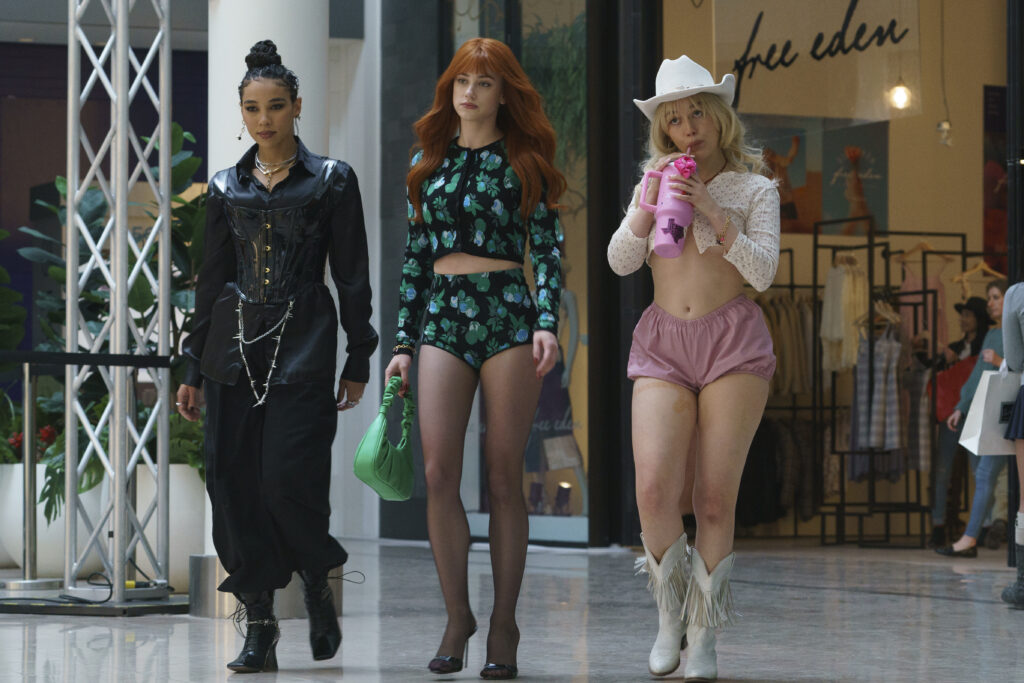
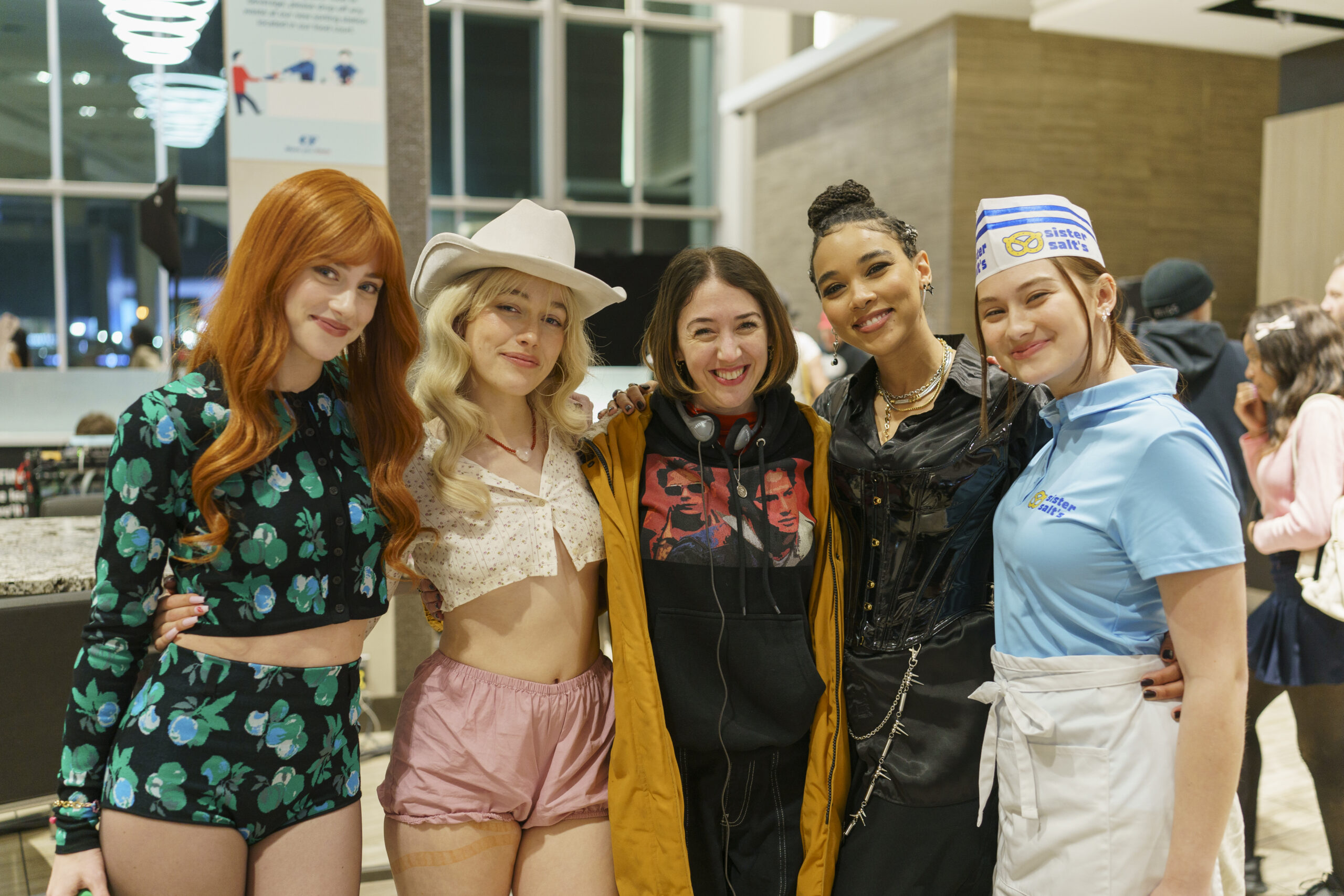
Before it was a wave of viral TikToks from its cast, or a buzzy SXSW 2026 premiere, Meredith Alloway’s feature directorial debut, Forbidden Fruits, began life as a sharp-edged play by Lily Houghton. On its surface, the film feels like a neon-soaked, candy-colored dream: a group of impeccably styled women working at a mall boutique, bonded by “babe” shorthands and something suspiciously close to a cult… Spoiler alert: it’s a coven.
Starring an electric ensemble of fan-favorite TV and internet royalty—Lili Reinhart, Lola Tung, Victoria Pedretti, Alexandra Shipp, Emma Chamberlain, and Gabrielle Union—Forbidden Fruits is a razor-sharp horror-comedy that asks an unfortunately-common, modern question: How much of yourself are you willing to sacrifice to belong? As any horror fan knows, the most beautiful gardens hide the deepest rot.
That rot doesn’t stay confined to the screen either, with a small, oddly visceral moment that felt like it had slipped straight out of her own script. In fact, the line between fiction and reality feels thin enough to break—just ask Alloway, who found herself dealing with a painfully real, torn nail in a storage unit shortly after wrapping the film. An omen? We hope not.
Taking place inside a Dallas mall, a capitalist cathedral of consumption and competition, the film explores the monster of performative sisterhood. A realm where the line between a supportive friend group and a predatory cult is as thin as a pink silk thong, and where the “girl’s girl” rhetoric is used as both a defense mechanism and a weapon of attack. Fresh off its debut, we sat down with Alloway over Zoom to break down girlhood, mall culture, and why she chose to coat her cinematic razor blades in Jolly Rancher sweetness.
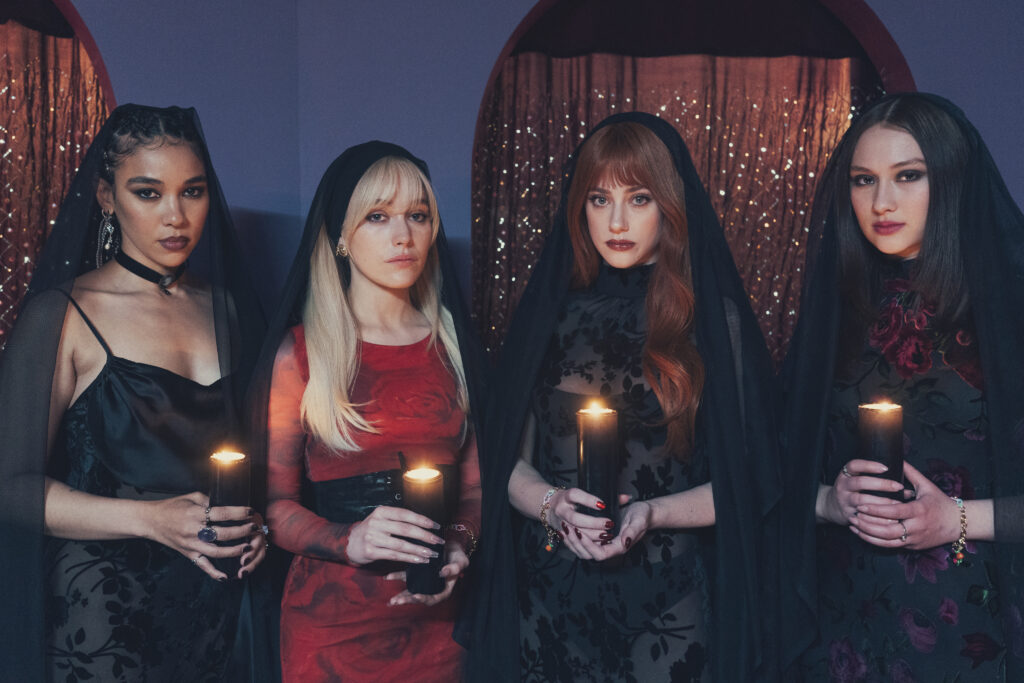
Q: Forbidden Fruits is about belonging, but also about the dangers of belonging too much. Do you think people are more susceptible to cult dynamics today than they were in the past?
Meredith Alloway: I think isolation is something everyone is struggling with right now, especially after COVID. I know I personally feel the need to be physically in places, and belonging in that sense.
This story is about women who don’t want to be isolated, and they don’t want to feel like they’re the outcasts of a group. It is so easy to be behind a screen and not be with people, but these women are going through difficult things in their lives, and despite that, they still have to clock in. They still have to be there and look presentable.
Being able to show up, wear something fabulous, get the discount on the clothes, put on the makeup—I know for myself, it helps me feel beautiful. There’s an element of that going on in the film for sure.
Q: A lot of films celebrate female solidarity, but you seem interested in the darker side of sisterhood. Were you intentionally pushing against the idea that female friendship is always empowering?
MA: When I read Lily’s [Houghton’s] play, Of the Women Came the Beginning of Sin And Through Her We All Die, I loved how honest it was about female dynamics. All the women love each other, and they want to be there for each other, and I wanted to preserve that. In the play, the craziest thing that happens is someone steals a baby pink thing, and it plays around who’s the culprit. I said, okay, for cinema, let’s use the slasher genre to help audiences feel the chaos, the beauty, the pain that all these women feel in the play.
Even when we were pitching the project before we wrote it—which is how we met Diablo and Mason, our producers—we would sometimes get the question: aren’t you supposed to be making art by women, for women, about women loving each other?
I was pondering on that, how society—and what society requires of us—and female relationships aren’t easy, you know? It’s very hard. I would rather be honest about it and get to the issue of why, and make the people who run these systems—or anyone who doesn’t really understand—go, hey, this is maybe what’s happening with your mom, or your wife… this is what’s going on behind the scenes with her.
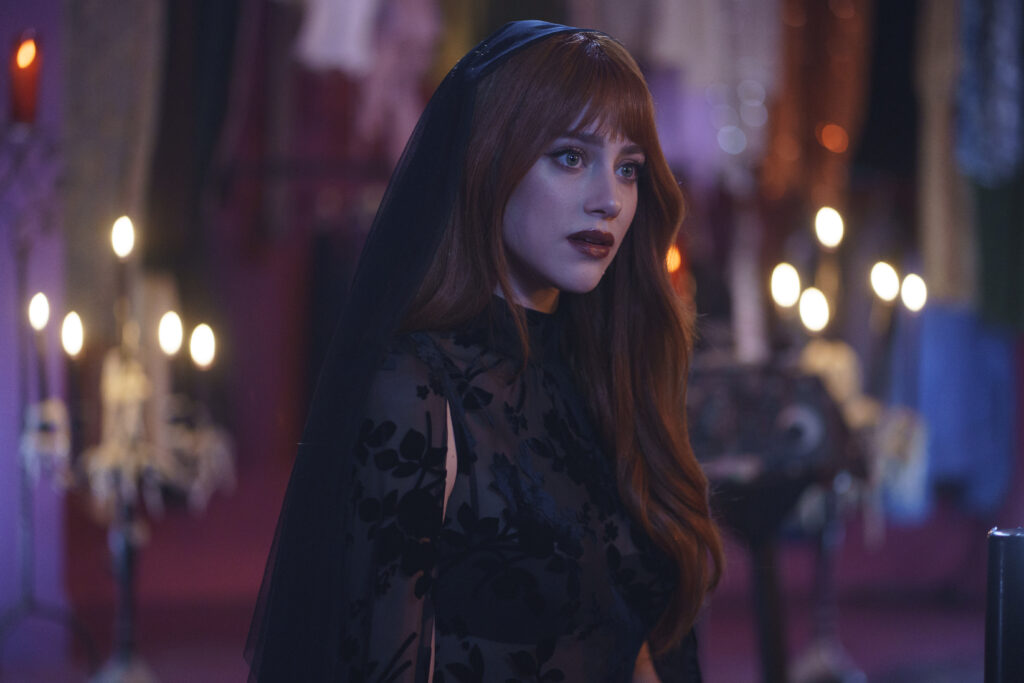
My banner statement with every department was: these women are trying to build a garden in a cement block. Because I wanted to make it very clear that they are trying to love each other. What Apple’s doing in particular [Lili Reinhart], —she genuinely thinks these rules are helpful. She’s like, Cherry’s sober [Victoria Pedretti] and in her mind, this is great for Cherry. Now, is it controlling? I don’t know… maybe.
Even texting boys using only emojis, not words—I don’t think Apple is doing that to hurt anyone. I think these are her ways of feeling like she can survive, and therefore other people can survive too.
Even talking to the actresses, we were very clear that everyone has good intentions, but they are operating within systems set against them. So if someone watches the film and thinks, why are they mean to each other? They’re not actually trying to be mean. They’re all hiding their true feelings and isolating those parts of themselves from each other.
I like to think that if they confessed to each other instead of alone in a dressing room, that this would never happen.
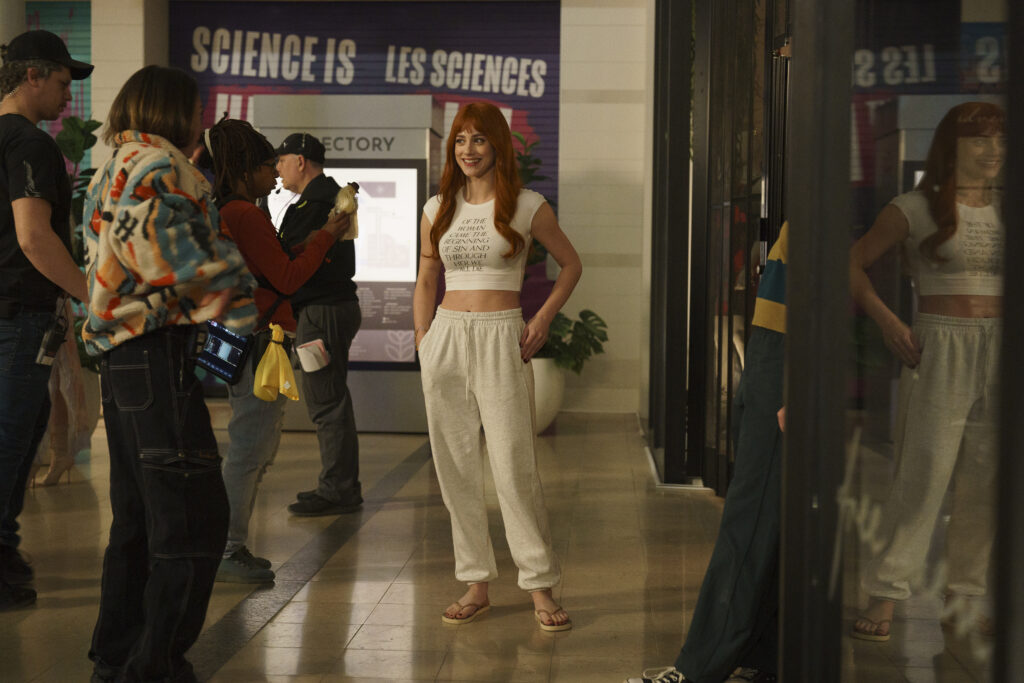
Q: The story unfolds inside a clothing store, Free Eden, in a mall —a very specific setting that almost feels like it taps into the cult-like, exclusive energy of stores like Aritzia or Brandy Melville. What drew you to that environment, and what does it add to the dynamic between the girls?
MA: The play was originally set in a version of the store we’re spoofing, like in Union Square in New York, and I remember telling Lily, I’m from Dallas, Texas. I worked at a mall. I feel like we don’t get enough films and stories that aren’t set on the coasts. There’s just not enough made about Dallas.
Dallas is such a materialistic, uncanny, cool, strange, weird place. I mean—is it cool? I don’t know. Parts of it are. What does “cool” even mean? But I knew I wanted to bring that into the film.
I worked at Limited Too in the kind of mall we’re spoofing, and when you work in retail, you’re surrounded by people of all different ages and backgrounds. It’s not like school where you choose your friend group—you’re kind of forced into this environment by circumstance. I was also really interested in that capitalist ecosystem of the mall, where these women are trying to have meaningful, healthy relationships, but they’re still operating within this very transactional space.
When I finally moved away, I realized how specific—and intense—that environment actually is. Also, I just wanted more mall movies— and more films that aren’t set in LA or New York. Growing up in Dallas, I realized that a lot of these women are navigating very specific expectations, especially within that Texas environment.
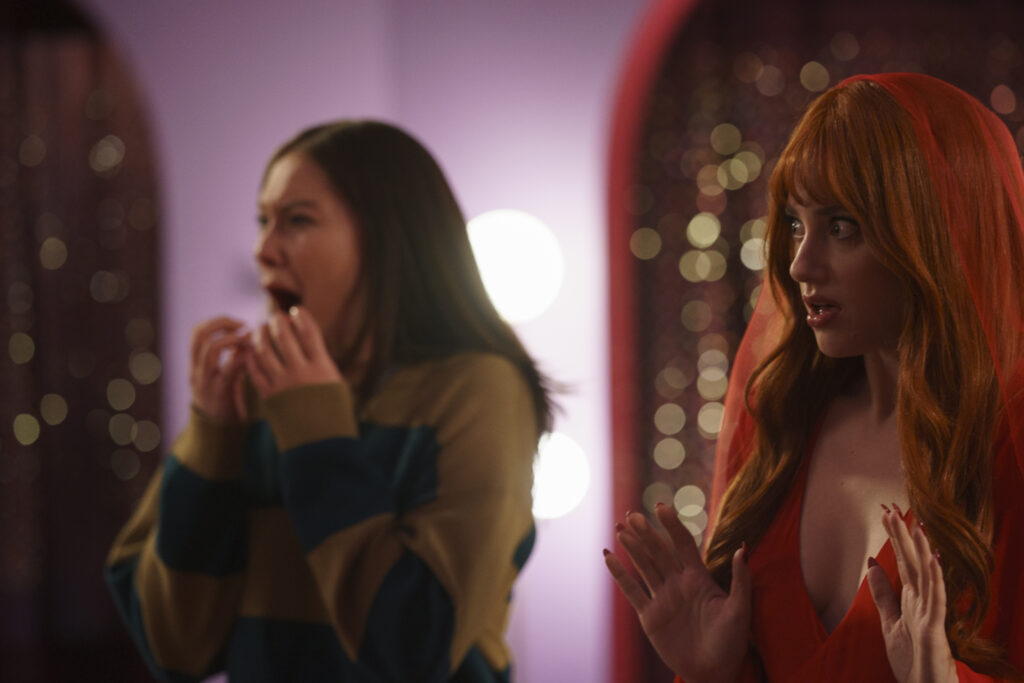
Q. Horror often exaggerates emotional realities. In Forbidden Fruits, what real-world anxieties were you trying to turn into something monstrous?
MA: I’ve always been obsessed with horror. I remember sneaking into my parent’s room to watch Francis Ford Coppola’s Dracula, when I was a kid, probably around five. Way too young, but I became kind of obsessed with how horror works. Like you said, it takes something simple and turns it into something bigger.
Watching Night of the Living Dead, for example—I recently got the 4K Blu-ray—and watching it now, I was thinking, wow, this is such a simple concept, but it’s very political, and it was political at the time too.
With Forbidden Fruits in particular, and setting it in Dallas, Texas, where I grew up, there are bigger questions at hand around what’s required of a woman in a relationship, through Fig’s character [Alexandra Shipp]. She’s navigating this idea that being with a man and being a “girl boss,” or being a true sister, feels mutually exclusive. I relate to that.
It’s also about being a queer woman dating a man—you’re like, oh God, what am I doing? Fig feels like she can’t be part of the sisterhood and also be in love with Norman [Siddharth Sharma]. That tension really speaks to the expectations placed on women in relationships.
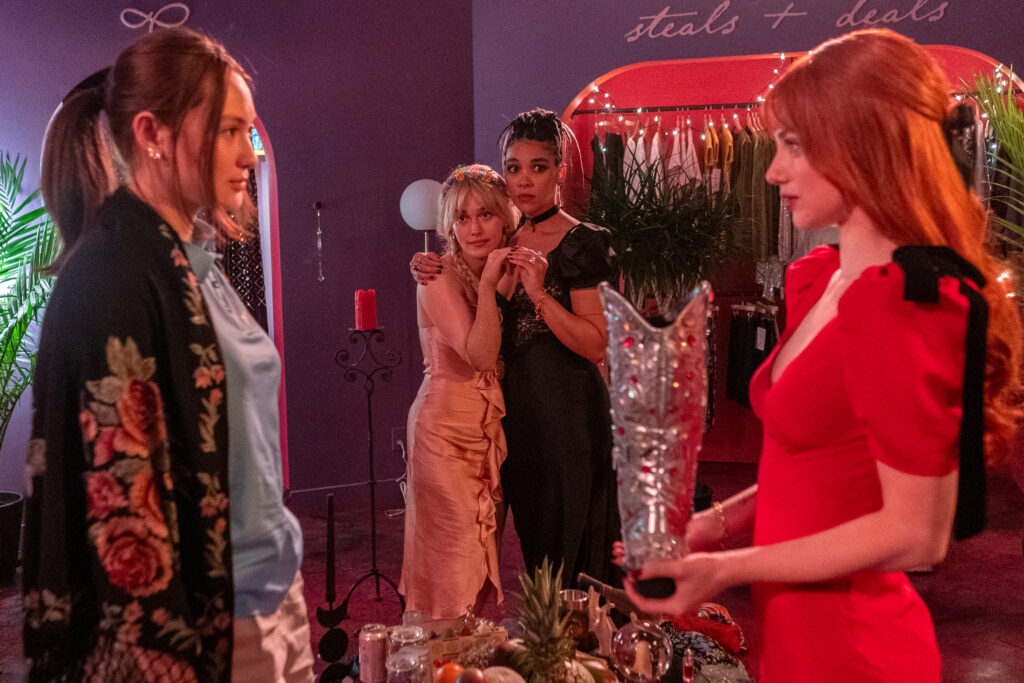
The performative requirements of women are crazy. *SPOILER ALERT* Apple is living in her car, yet wears these incredibly beautiful, expensive, and polished outfits. It’s like, what is expected of these women to wear to work? Financially, they can’t afford to be shopping at Free Eden—they get a discount—but it’s clear that Apple is spending her money on looking fabulous and upholding this version of herself that she thinks helps her wield power. And in a sense, it does. It’s like the amount of money any of us have spent at Sephora—it’s crazy when you really think about it. *SPOILER ALERT*
The expectations placed on women—what they wear, how they present, what’s required of them in a relationship—are the monster. Not something supernatural, but the weight of those expectations, and the ways women are forced to navigate and perform within them.
I wasn’t really expecting that to be the answer. And now, as you said it, it puts everything into perspective. I was thinking, oh—maybe the monster is envy, or more so about their group dynamics. But actually, this is a much deeper take. It’s not superficial at all. I love that.
MA: Yeah, I mean, it even speaks to the relationship expectations with Norman. *SPOILER ALERT* The first big act of violence happens because everyone feels like he’s the snake, like he’s the enemy. Then Cherry trips, she’s holding a meat cleaver—it all kind of escalates from there. *SPOILER ALERT*
But really, it’s all prompted by this idea that if they had just said, hey, I’m allowed to be in the coven and I’m allowed to have Norman, things might have been different. She essentially does claim that by the end.
I love Fig’s character because she actually sticks up for herself. She’s the one going, this is crazy—people are dying. She’s calling out how the expectations they’re putting on the coven are what’s actually leading to the violence, and this has to stop.
Then, of course, it spirals out of control.
This is actually something I’ve personally thought about while watching the film. Whenever one girl in a friend group starts seeing someone, there’s this underlying tension—like the others feel threatened, or assume she’s going to change, drift away, or stop showing up in the same way. I’ve heard so many real-life stories about that kind of insecurity. So I really appreciated how you explored the idea that you can have both, that it doesn’t have to be one or the other.
MA: Well, and true friends want you to be happy, period. You know, I feel really lucky to have an incredible group of female friends—many women in my life who are genuinely rooting for each other’s relationships.
But at the same time, it can get complicated. I mean, even in the film—Cherry is hooking up with guys on her lunch break, the whole mall is in love with her, and she can’t even tell Apple. It’s kind of nuts. But that’s a heightened, almost warped version of what you’re talking about—and hopefully something we can all relate to or have experienced in our own lives.
Q: Horror, satire, and comedy—I feel like this genre is really having a moment right now, but it’s also been super underrated for a long time. I was curious to know what drew you to that specific tonal mix, rather than making a more straightforward, serious horror film, or just a slasher?
MA: I mean, they’re all named after fruits—it’s ridiculous. How can you take it seriously? Even just reading the play, I was laughing out loud, which is so rare. Lily’s writing is so funny.
When we were working on it together, I’ll never forget—she was sitting across from me, and we would write with our laptops connected in the same writing program. She just starts giggling to herself. I was like, what? She goes, you’re never going to let me keep this line—it’s too insane. And I was telling her, well, now you have to tell me.
It was, “you have sand in your ass crack, very beach babe energy”. I was dying laughing, and I said, follow that. That’s the guiding light.
Even with things like naming the character Pickle [Emma Chamberlain]—I give Lily total credit for that. Pickle definitely became a bigger character as we went on. At one point I was like, we can’t have a character named Pickle—we’re getting out of control. But I love Pickle!
I also think some of my favorite films—like American Psycho—are great examples of satire done well. And satire is hard. It really is. So, honestly, if we’re not total trash, I’m happy.
It’s a difficult genre because every single department—from performances to design—has to be working in tandem, and you can’t take yourself too seriously. At the same time, I kept telling the actors: for your character, this world is life or death. Literally.
All the actresses really understood that. Every little thing feels like life or death, and that’s actually what creates the comedy. It’s really a testament to their performances that the humor lands—I hope.
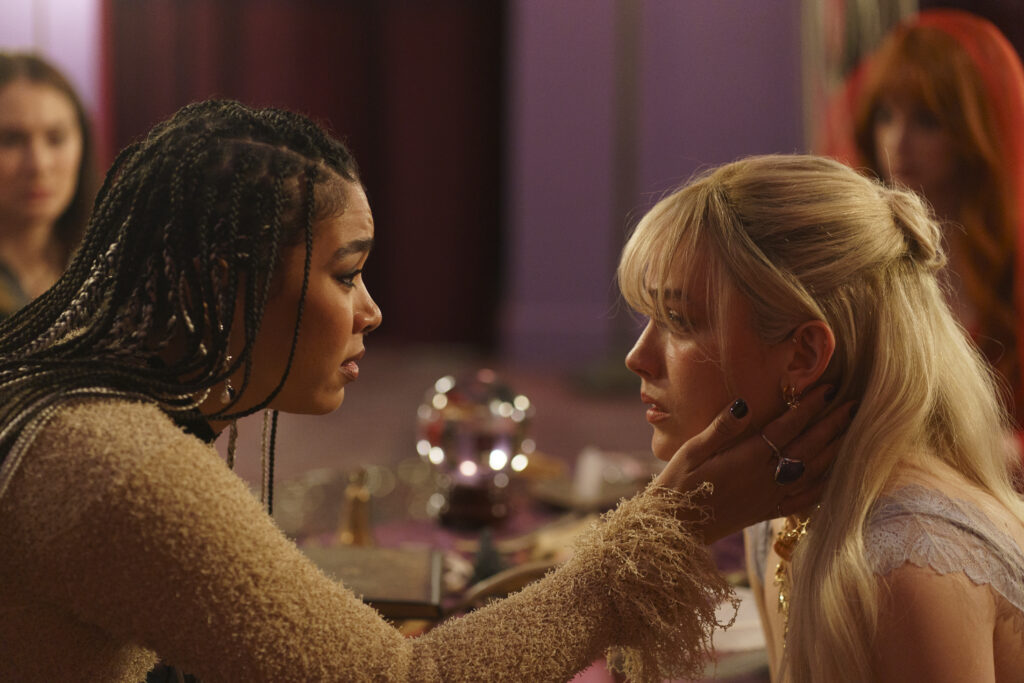
Q: Speaking of the actresses, it’s hard not to notice how many of them come from strong TV backgrounds and already carry such distinct on-screen presence. How did you take that into consideration while putting the film together?
MA: I’m really selfish in this way, because I was such a fan of all of these women. After meeting them, I felt like I could see a seed of who they were—something I had also seen in their previous work—that became the starting point for each character. From there, I let them make the roles their own.
They all really transformed while still bringing their own energy to the table. It was amazing to witness.
Q: Yeah, you’re working with such an interesting cast — actors from very different worlds and audiences. I also wanted to ask about casting—specifically the idea of “internet-aware” actors and how that influences storytelling. You have someone like Emma Chamberlain, and this is her debut role. Was it intentional to cast these very beloved, internet-culture figures? And how did that all come together, especially in terms of building chemistry?
MA: You know, it wasn’t intentional in that way. I just think they’re all incredible actresses, and that’s why they have a presence on the internet—because they’re compelling to watch.
That said, we definitely thought about the tone of the cast. We had the advantage of meeting a lot of incredible actresses, but I do think you’re right—it’s not really a coincidence that many of them have a presence on TV shows. I knew they could do something poppy, but also something grounded.
Some actresses can really do grounded, but they can’t always tap into that fun, flashy, humorous, playful side. Collectively, their energy just worked really well together. We already know them as people who can be fun and poppy, and then hopefully you watch the film and peel back the layers, and realize there are also some really strong emotional performances happening.
With the Pickle character, I always knew I wanted someone who didn’t feel like an actor—someone who felt outside of the main coven. I do like leaning into the cultural perception of who someone is. If someone is overtly famous, you’re already bringing something to the table—it’s like if you cast a big pop star as a singer, you’re one step ahead because that identity is already there.
So for Pickle, I wanted someone who felt different. When I watched her tapes and thought, I would be so lucky to have her in this film. I can’t wait for people to see her—there are kind of two versions of Pickle, I’ll just say that. For Pickle,there’s almost a pre-Apple, and a post-Apple. Her character is quite tragic, and Emma really went for it.
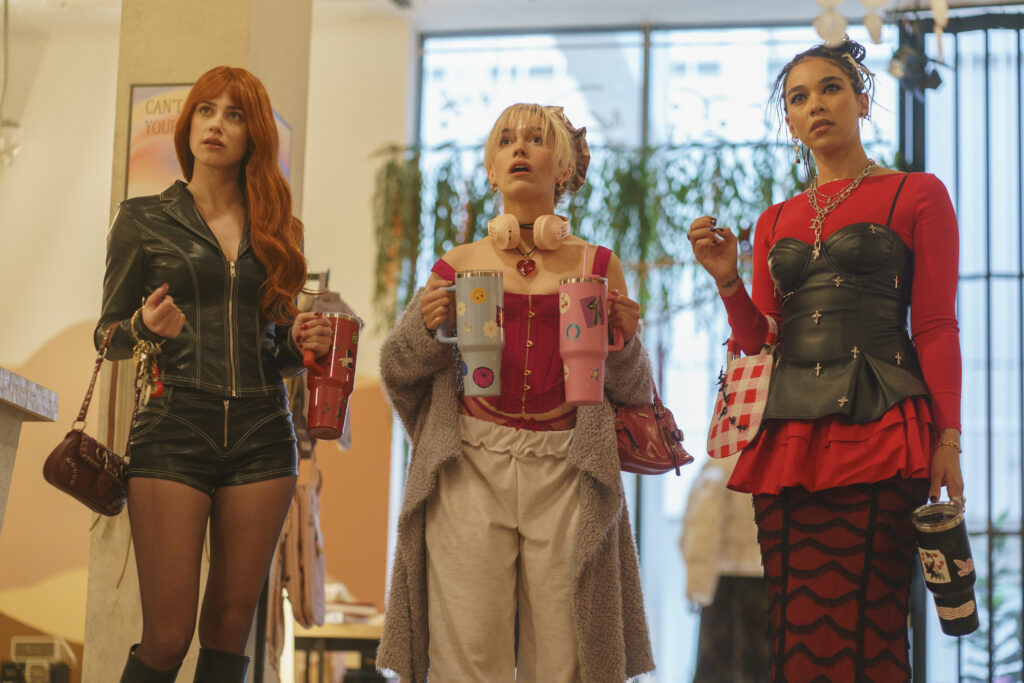
Q: The characters constantly call each other “babe,” almost like a ritualized language within the group. Even right off the bat when they meet Pumpkin (Lola Tung’s character), it’s almost like they’re luring her in with this specific language. Was that something you thought of as part of the cult dynamic? I thought it was really interesting stylistically, and I wanted to get your thoughts on that.
MA: Yeah, I mean, it’s a real thing. At the store we’re parodying—Free People—Lily, the writer, actually used to work there, and she said it was actually a mandate that you had to call customers babe or love. Like, what can I get for you today, babe? or that shirt looks pretty, love.
She was telling me, it’s so uncanny, because you’re also listening to the same song on repeat all day—which is what happens in retail—and you’re calling strangers babe constantly. You’re saying it a trillion times a day, to the point where you kind of forget who you are as a person. I’m glad you found it intentional—because it is.
The reason that was a mandate is because they want customers to feel like they belong—that there’s a personal connection when they come into the store, like they’re part of the coven.
Q: Horror is having a huge creative resurgence right now, finally getting the recognition and the awards that it deserves. And since you’ve been a long-time fan of horror, what do you think the genre allows filmmakers to say that other genres sometimes can’t?
MA: It’s like coating a razor blade with a Jolly Rancher—telling something traumatic, but in a way that feels more accessible. It allows you to explore things that are hard to talk about.
For me personally, movies have always been something that bonds my family. My dad is no longer with us, but my brother and my cousin—we still text all the time about horror movies. I think horror lets you explore dark things in a safe way.
I feel that in my writing too. *SPOILER ALERT* I was talking to another writer friend about this, and we were saying, sometimes you write a scene and think, did I just kill someone with an escalator? How did I even come up with that? But it comes from somewhere real. I used to be terrified of getting my shoelace caught in one. *SPOILER ALERT* Why not play that out on the page?
My therapist always says, do it in your writing, not in your life. It’s about playing out worst-case scenarios, which is something people with anxiety already do. That’s what I’m doing when I write, and, hopefully, that’s what audiences get too.
There’s so much going on in the world—it can feel overwhelming, even debilitating. But maybe you can go to a theater, watch something scary, and feel just a little more in control of your own fears and anxieties.