By
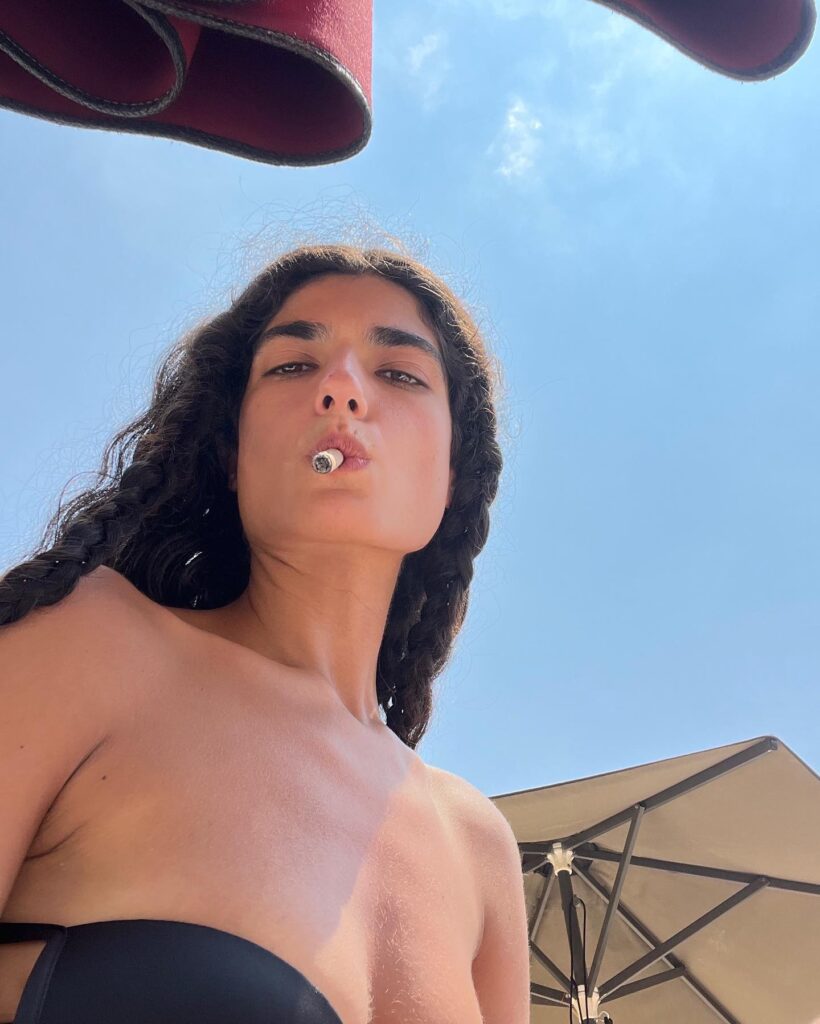
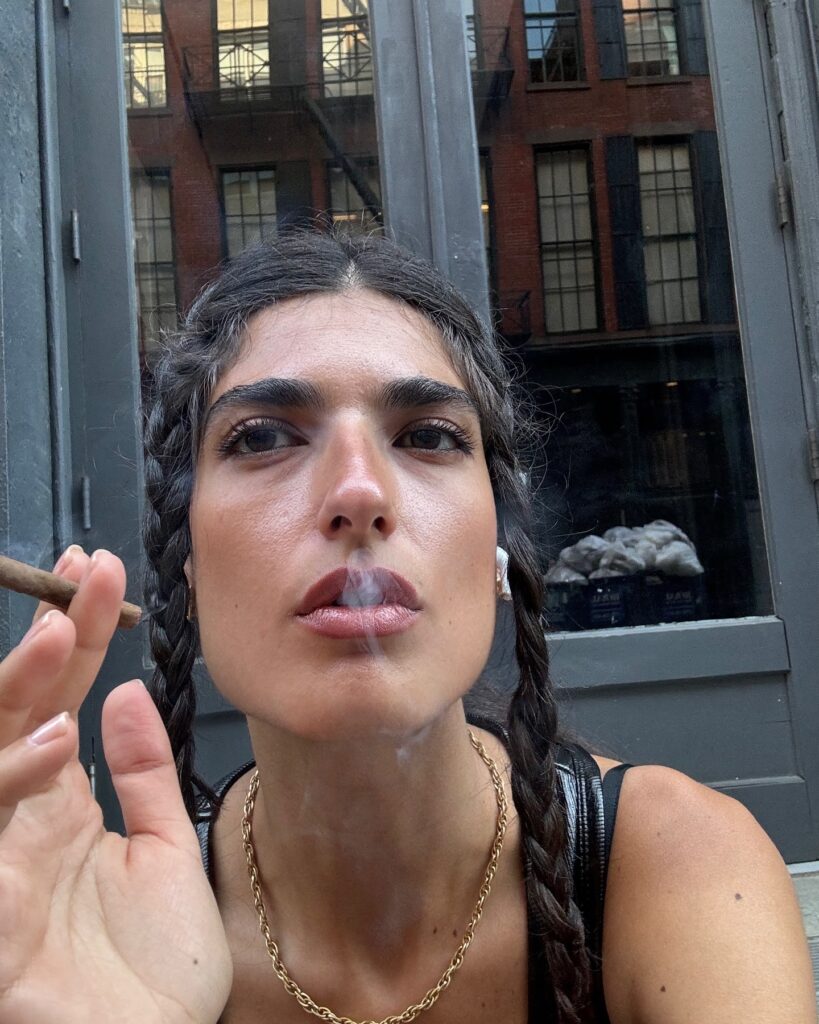
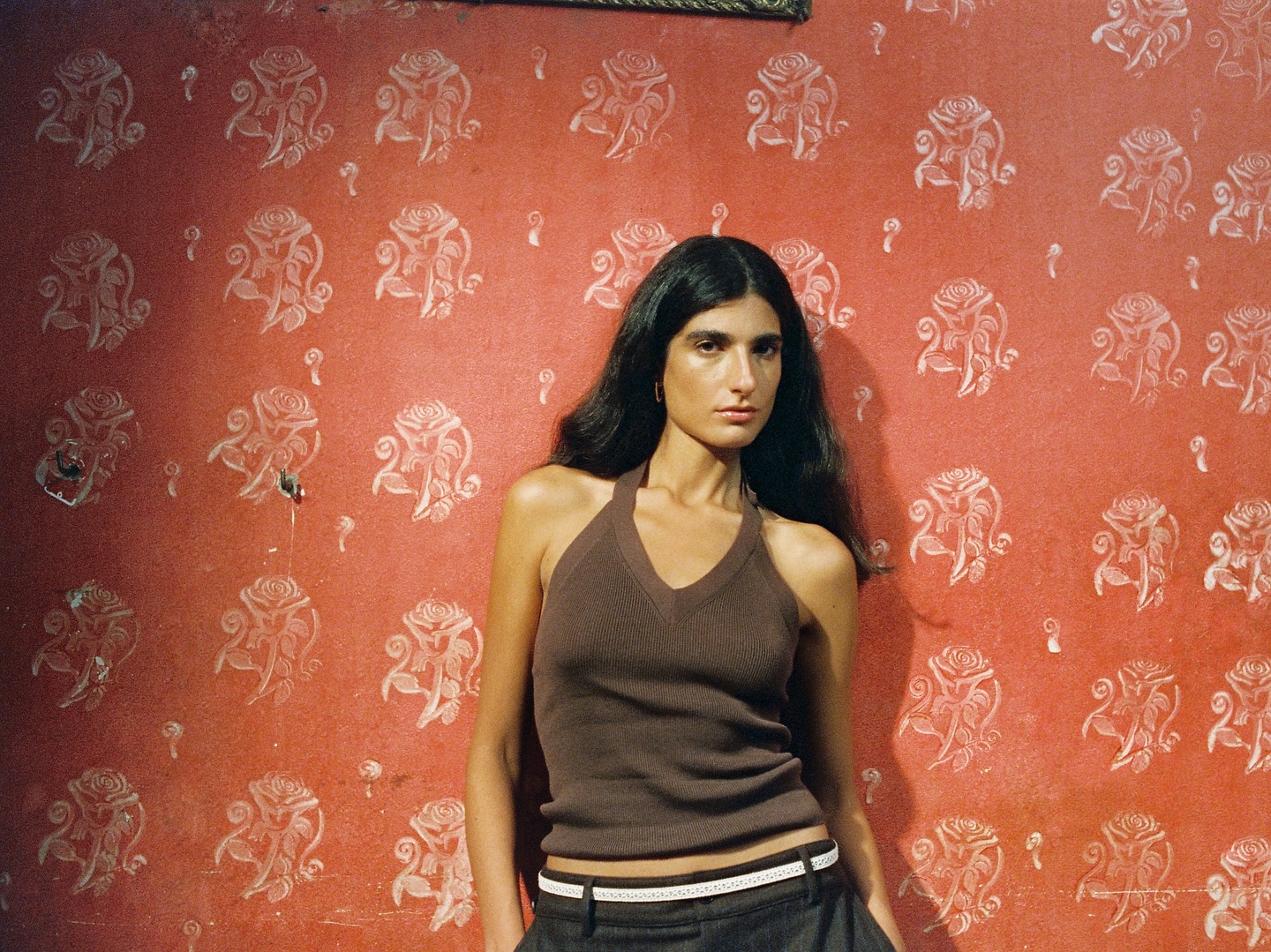
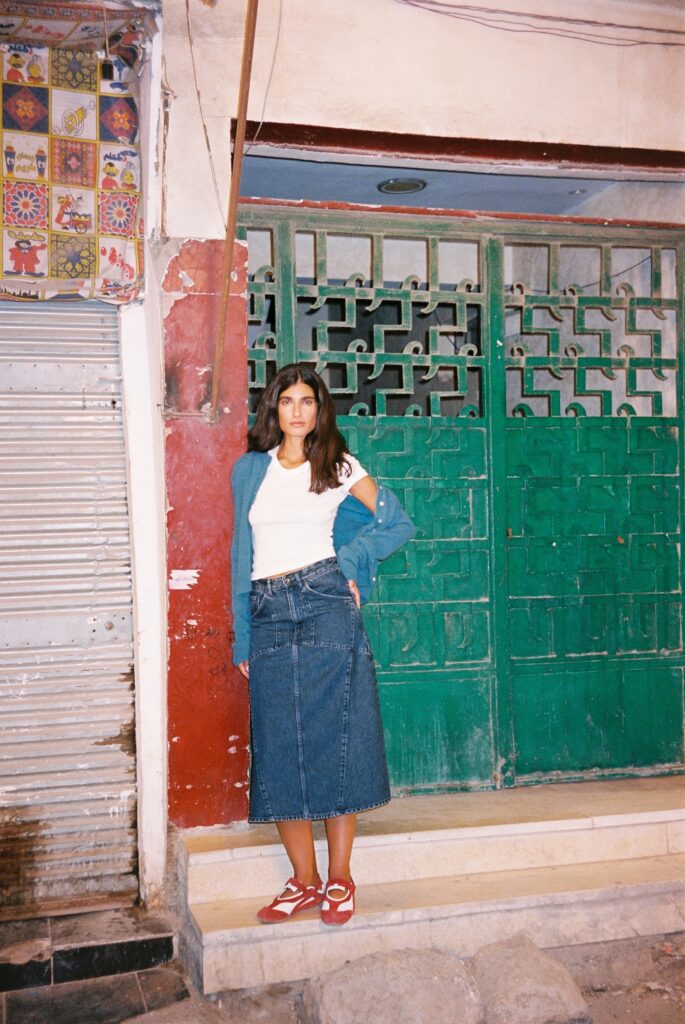
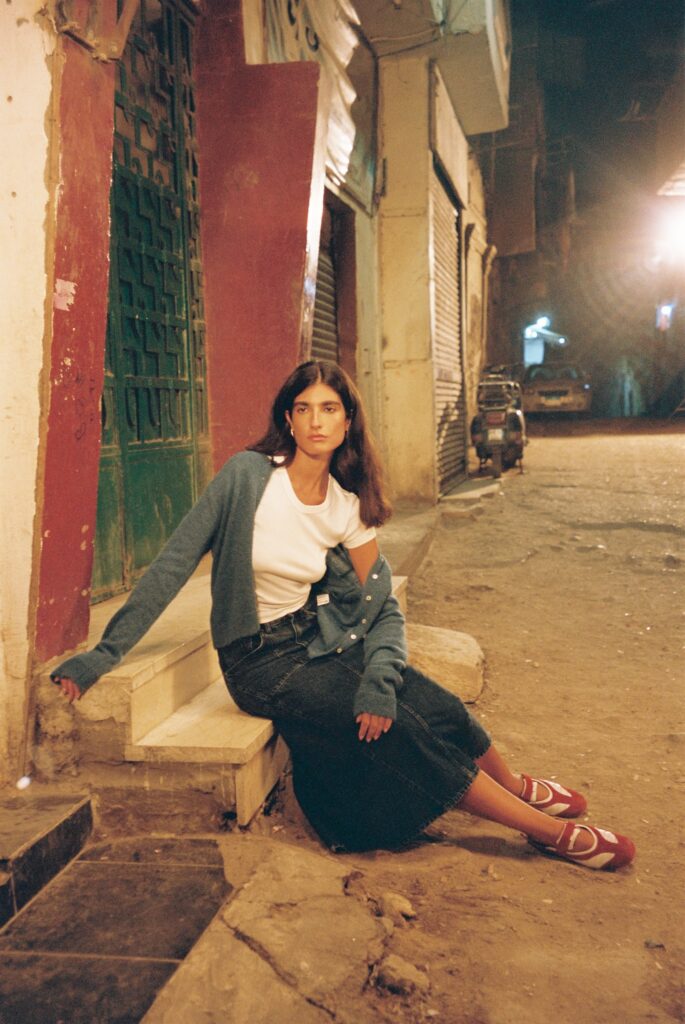
The first thing people tell Romy Nassar is that she’s lived many lives. Strangers say it. In Athens, they call her a goddess. In Cairo, a goddess of war, someone once tried to hand her a statue, insisting it was her. In Toronto, a jewelry seller looked up and called her an Empress. She collects these encounters the way she collects everything else: objects with previous lives, jewelry with quiet wisdom, moments that don’t announce whether they’re beginning or ending.
Nassar is Lebanese, but her compass points somewhere between Athens and Cairo, two cities she describes as almost incarnate in her, ancient and magnetic. Her aesthetic sits in the same tension: Aphrodite’s wild impulse against Athena’s cold strategy, with a streak of Zeus’s silent authority running underneath. She dresses for the lover in her head, whether or not he exists. She hates time. Her favorite film is 8½, because nothing in it is linear and everything exists at once, which is, more or less, how she moves through the world.
Talking to her feels less like an interview and more like being let into a private mythology, one built on hard work no one saw, defeats no one witnessed, and a stubborn insistence on creating beauty anyway. We asked. She answered, in her own time, which is to say, outside of it.
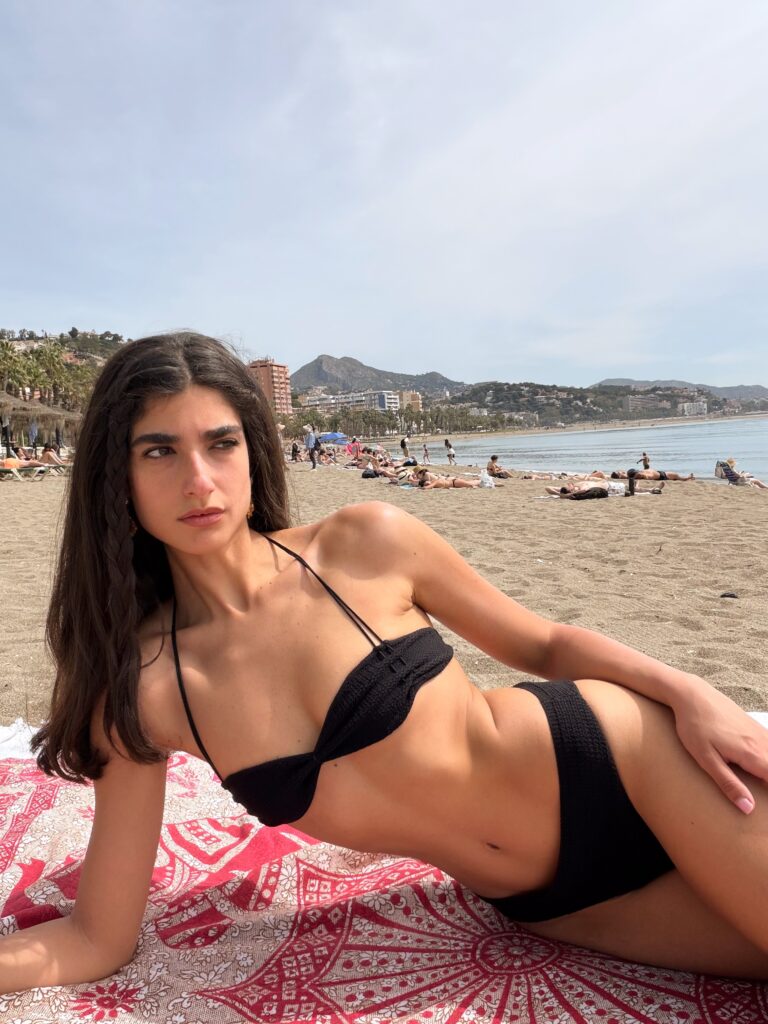
Q: Do you think there will ever be a moment where you feel you’ve achieved everything you wanted?
Romy Nassar: I’m curious and romantic… there’s always something new I want to explore. The moment I figure something out; I get a bit bored of it and move on to the next thing.
I’m not someone who wants one specific outcome in life. The more I chase goals, independence, freedom, all of that, the more I realize how empty they can feel on their own. So, when I think about the future, it’s not about what I achieve… it’s about who I become. I want to be proud of who I am, not just what I’ve done. Because I know I can do anything with enough work and discipline, I don’t really take no for an answer. But that “moment” people talk about… I don’t see it as a finish line. It’s more like a practice. Life keeps changing, and so do I.
What matters to me is being able to recognize myself, to respect what I see. I want to have substance… not just a list of accomplishments. I always forget what I’ve done. I only remember how I felt.
Q: Let’s imagine there’s an unknown world somewhere in the universe called Romy. What does it look like? How does it feel to exist there?
I love this question so much. It resonates with my personality, I also love my name, so attaching a universe to it is great.
I hate time. So, it would be a universe where time doesn’t exist. Maybe a universe where nostalgia is impossible, because the past is not remembered. A world where no goodbye is ever final.
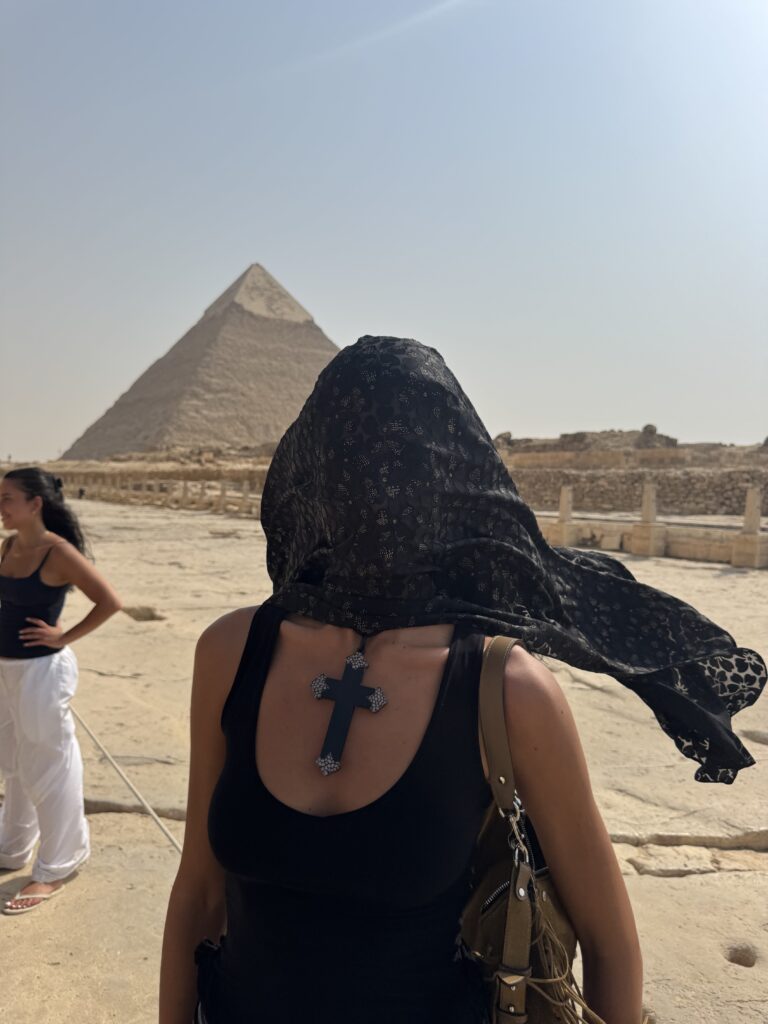
It would feel like home. A world where you can rest, where you don’t have to rush anything. Romy would be inside the pyramids — which I’ve always defined as the jewels of the earth. In real life, they’re tombs, which means it’s a world built for eternity. And there is no time in eternity.
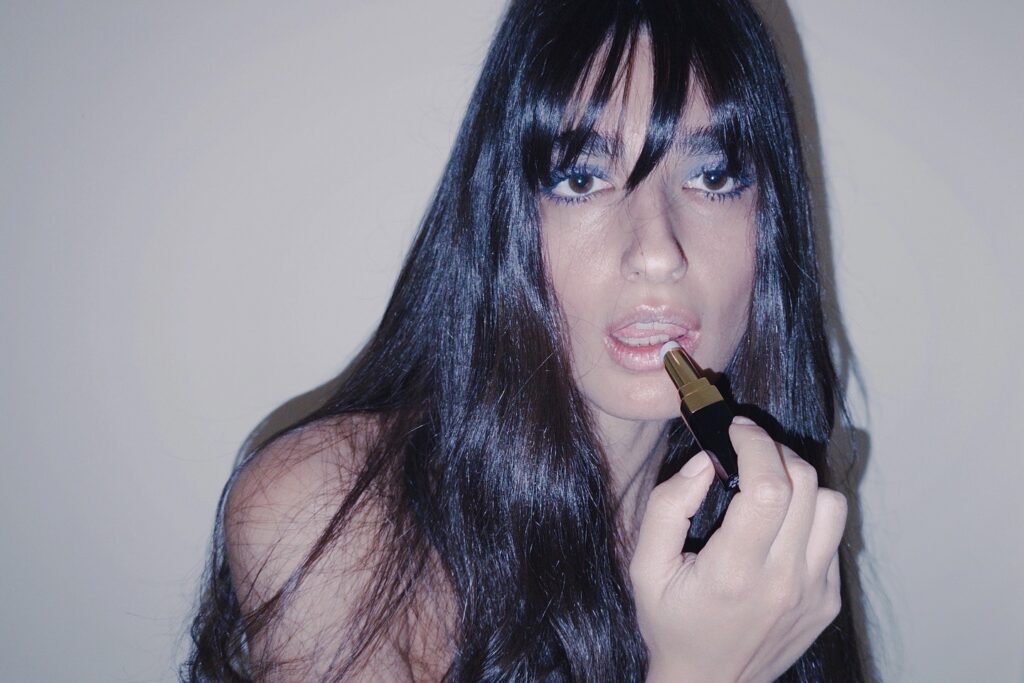
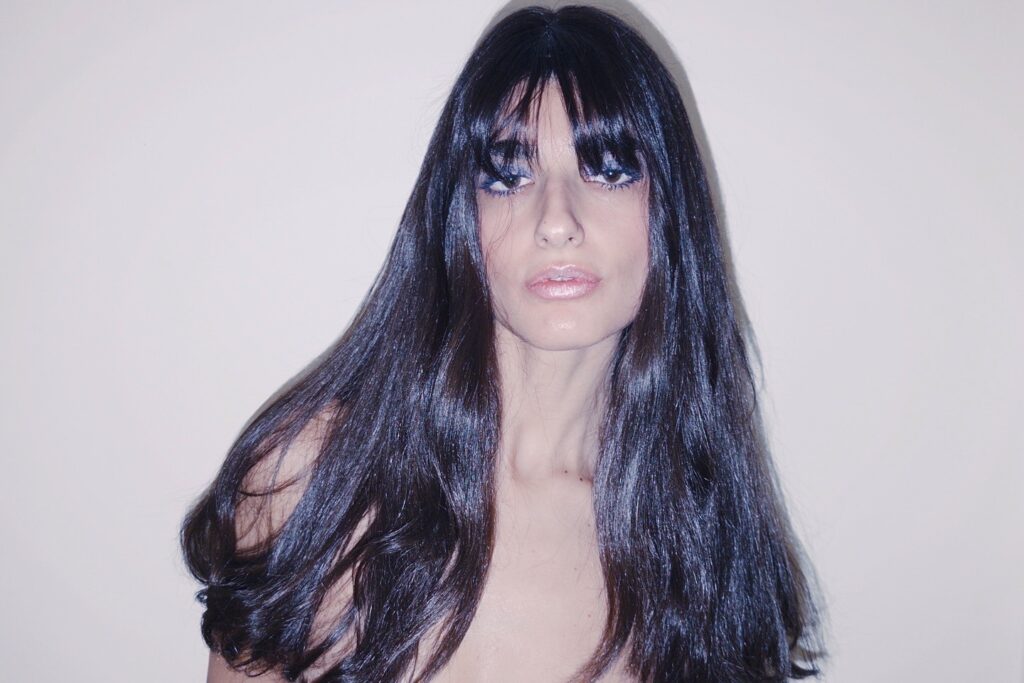
Q: If you had to describe your personality as a mythological figure, who would it be?
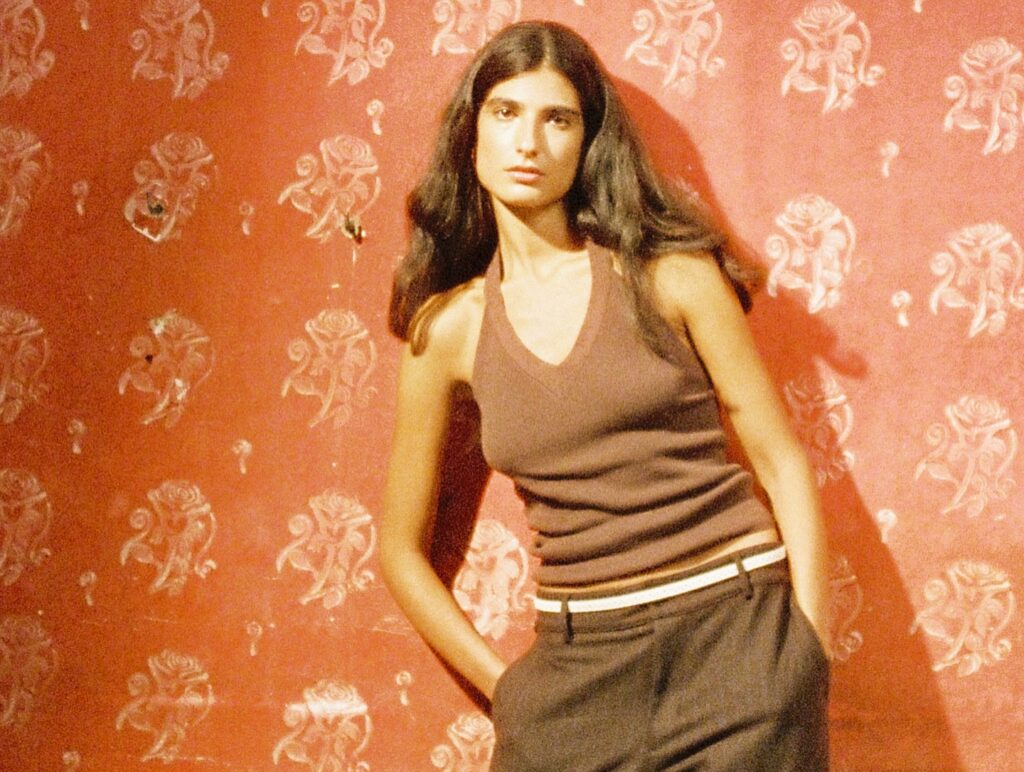
Somewhere between Aphrodite and Athena. That’s the balance I look for. From Aphrodite, I take the love of beauty, the way she makes the world enchanting with jewelry, the finer things, with a touch of her impulsive nature. From Athena, I take strategy, intellect, the ability to move with purpose.
But I also have a quiet, commanding side, a bit like Zeus: he doesn’t say much, but his presence is felt. He emerges when he chooses, and even when he surrenders to destiny, he does it with subtle power. I’ve always loved that tension, Aphrodite’s wild freedom and Zeus’s silent authority. In my dreams, they’re together. In my life, I try to balance both.
Q: Do films inspire the way you dress? Are there characters that have shaped your aesthetic?
I get inspired a bit more by masculine characters than feminine ones… I’m always drawn to a character’s aura, their strength, and then certain elements of their outfits stay in my subconscious and turn into sources of inspiration for the way I dress.
Q: How do you choose what to wear? Is it instinct, a mood, or a story you want to tell that day?
I’m spontaneous… but I’ve said it once before: I always dress for the lover in my head. Whether that lover exists or is totally imaginary. I am so romantic. So, the outfit is definitely a mood. My outfit reflects the day I want to have… not the one I am given.
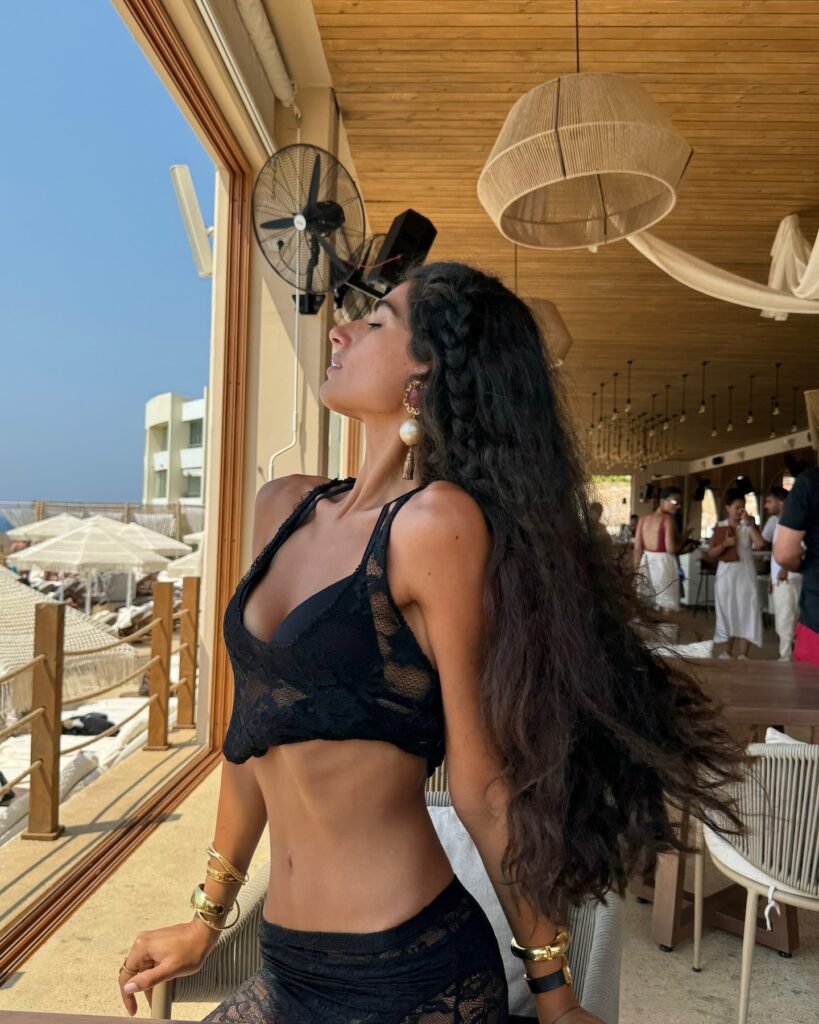
Q: Is there a dress you’ve worn that made you feel like an Egyptian goddess?
Not yet. I’m still looking forward to it. Jewelry, yes! I have a few pieces that made me look — and feel — like it. But a dress, not yet.
Q: Is there a piece you’ve worn that made you feel almost alien?
I don’t think my style leans toward something that feels alien. I prefer pieces that enhance who I am rather than completely alienate me.
Q: What’s the first impression people usually have when they meet you?
That I’ve lived many lives. It’s something I’ve heard quite often, even from people meeting me for the first time.
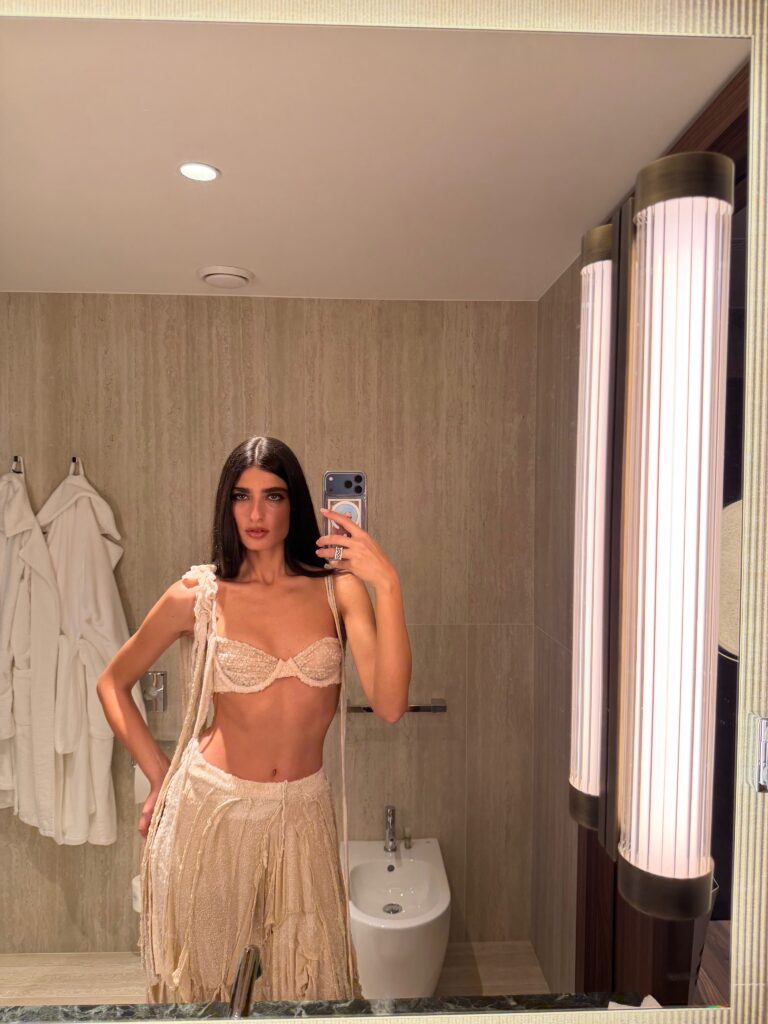
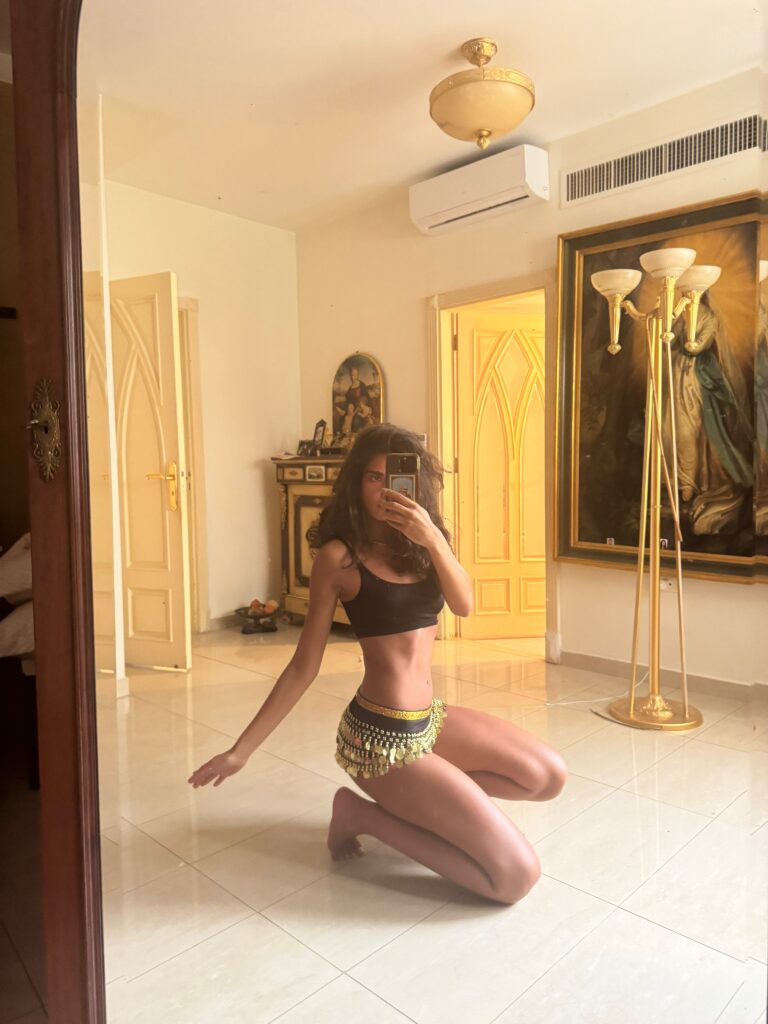
Q: What do you hope people feel when they see your work?
What I’ve done so far feels more like a surface compared to what I know I’m capable of. I’m still evolving toward something more honest and complete. This is just the beginning. But I’m someone with a strong presence, and I think that still comes through somehow, even beyond what’s visible in the work itself.
Q: How much have Egyptian and Greek culture influenced your work? Are there particular kings or queens who inspire you?
These two places feel almost incarnate to me… like something I carry within me. It sounds intense, but my connection to Athens and Cairo feels very real, almost magnetic. They’re deeply linked to my sense of abundance, not just materially, but emotionally and creatively. There’s something ancient and powerful there that I feel very connected to.
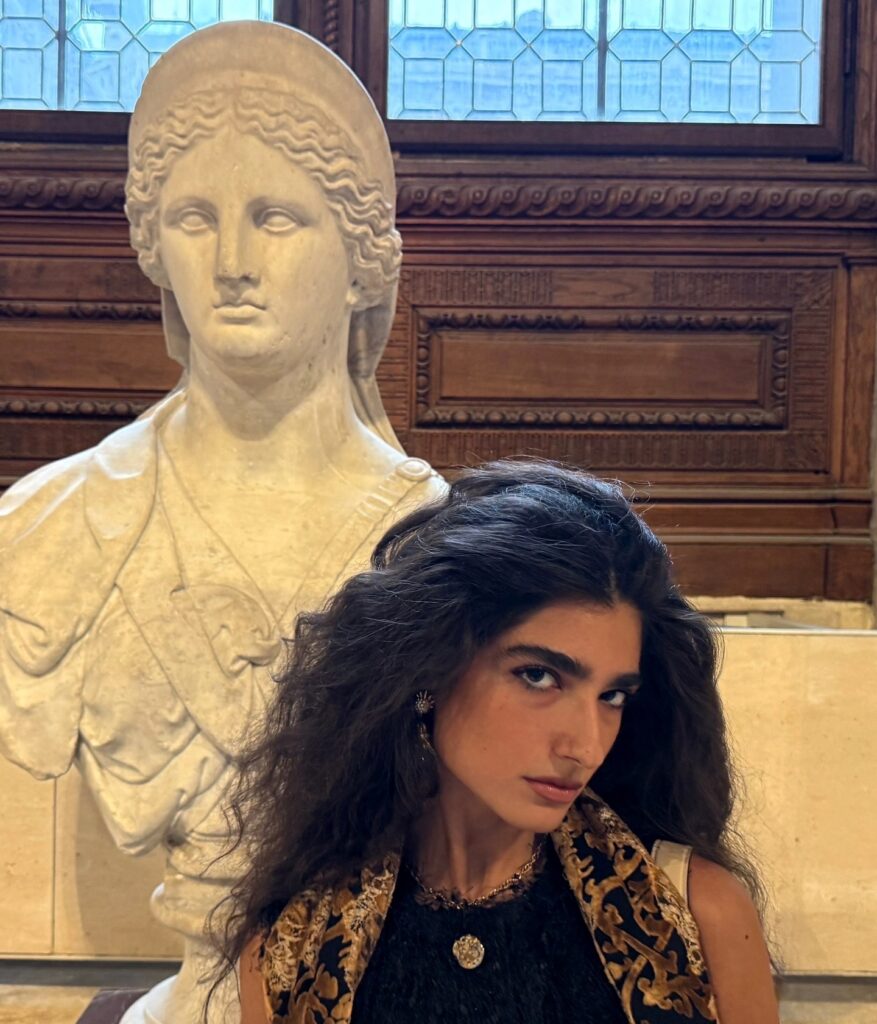
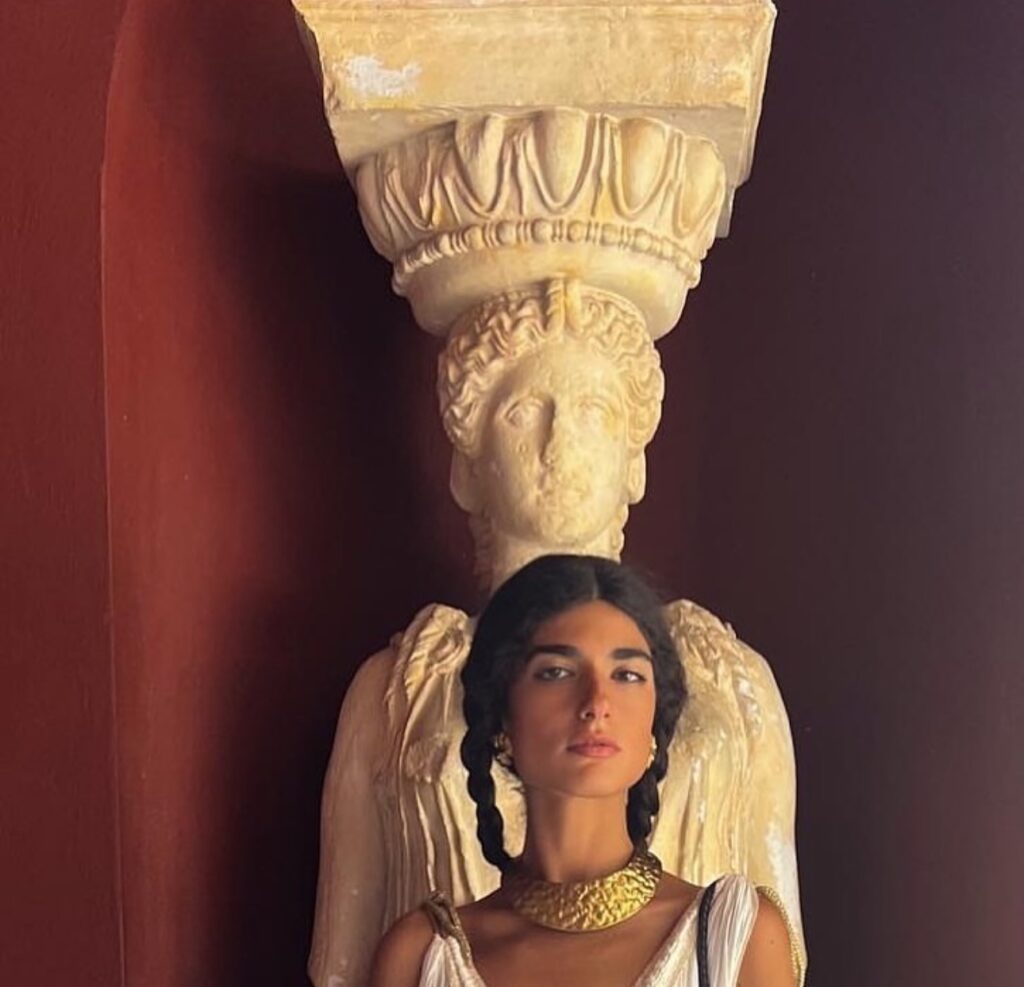
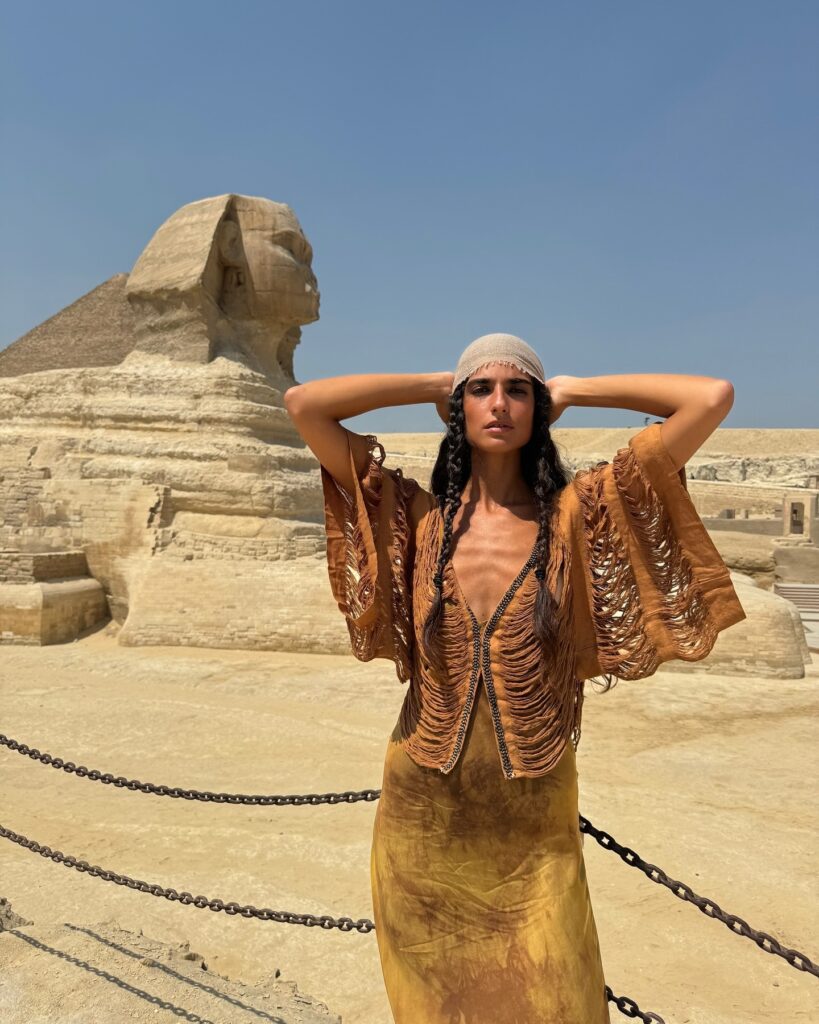
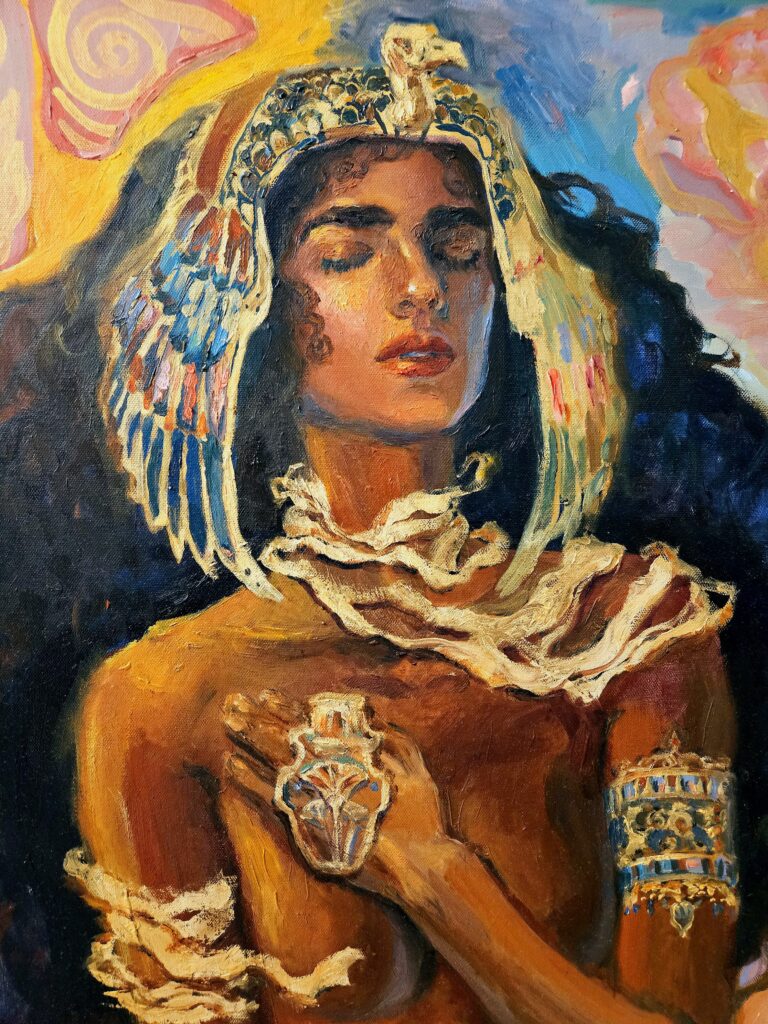
People often tell me I remind them of Nefertiti… which I’ve always found beautiful. Someone once made me a painting of myself as Cleopatra — the artist’s name is Melody Xiong. And in Greece, I’ve been told many times that I look like what they imagine a goddess would be. Some even called me Athena.
It’s funny… because in Egypt, I’ve also been called a goddess of war, and someone once randomly offered me a statue, stating I was her. Maybe there’s something in me that carries that energy… a quiet obsession with justice, with strength… something intense.
Q: Do you listen to music while you work?
When I’m painting, yes. When I’m working, I get distracted even by my own existence, so I need total calm… which is also distracting… hehe.
I love Demis Roussos and Natacha Atlas and ABBA… and then it ends with Bach. I also love movie soundtracks. I’m into sad and dreamy music — anything that can bring me back to a ’70s studio is great.
Q: You represent Arab culture in the fashion industry, and being an Arab woman comes with its own challenges. How have you navigated this in your career?
I’ve never really experienced my identity as a limitation. For me, you come before your ethnicity. If anything, I feel like I carry where I’m from as a strength. I don’t separate myself from it, I embody it. So, it never became a problem, because I never approached it that way.
Even if it were a limitation, I’ve never experienced it that way. If anything, I would see it as something external… not something that defines me. It doesn’t really affect how I move or how I see myself.
Q: How did growing up within Lebanese culture shape your artistic sensibility? What parts of it still live in your work today?
The messiness. The boldness. The lack of structure… and the ability to move forward without knowing exactly where you’re going. It gave me a kind of courage and wisdom, an understanding that so much is out of our control, but what we can control is how we live through it… how we choose to enjoy each day.
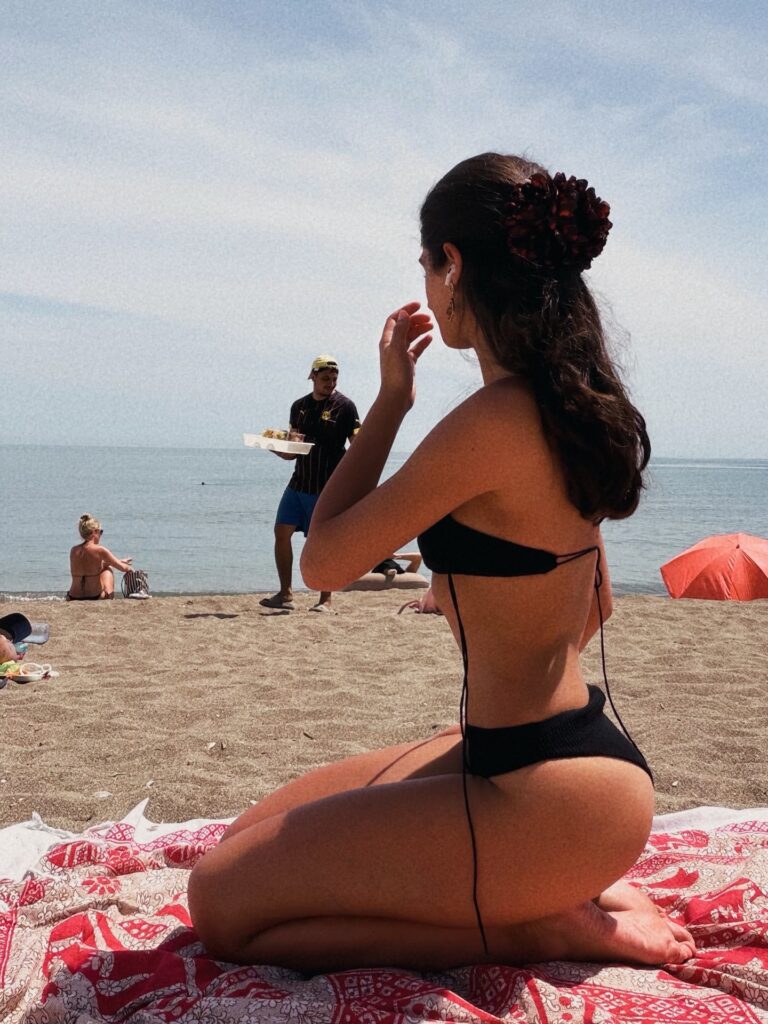
What still lives in everything I do, and even in who I am, is that deep love for life. For food, for hospitality, for being around people. The beach, the sun… that warmth. It’s not something I try to express. It’s just there.
Q: Is there something you wish could disappear from the world forever?
Sickness. It’s one of the only things that feels completely undeserved.
Q: There’s something dark, mysterious, almost mythological about your presence — like a goddess stepping out of a surreal or horror film. How does that energy translate into your creative world?
Something you feel, even if you can’t fully explain it. It’s energy… I don’t know why and how you perceive me like that. But energy doesn’t lie.
It all comes from contrast. I have a lot of that in how I see things. I can have a very negative view of life in general… but I carry it with a strong attitude. And I think that tension, between what I feel and how I move through the world, is what people pick up on. My creative world is simply an extension of who I am.
Q: What is your favorite film of all time?
8½ is my favorite film. I feel like it explains everything I’m trying to say, even when I don’t have the words for it. Nothing is linear; everything exists at the same time. So in a way, I link it to everything I do, my work, my thoughts, even how I move through the world. It reminds me that not having answers is part of the process… and that confusion can be something beautiful.
Q: Have you ever thought about becoming an actress?
It was what I initially wanted to do. But after working in the industry, my perspective shifted. If it ever finds me naturally, I would absolutely consider it — but it’s not something I’m actively pursuing.
Q: Your work revolves around objects that have lived previous lives. Do you think beauty becomes more powerful when it carries memory, history, or even imperfection?
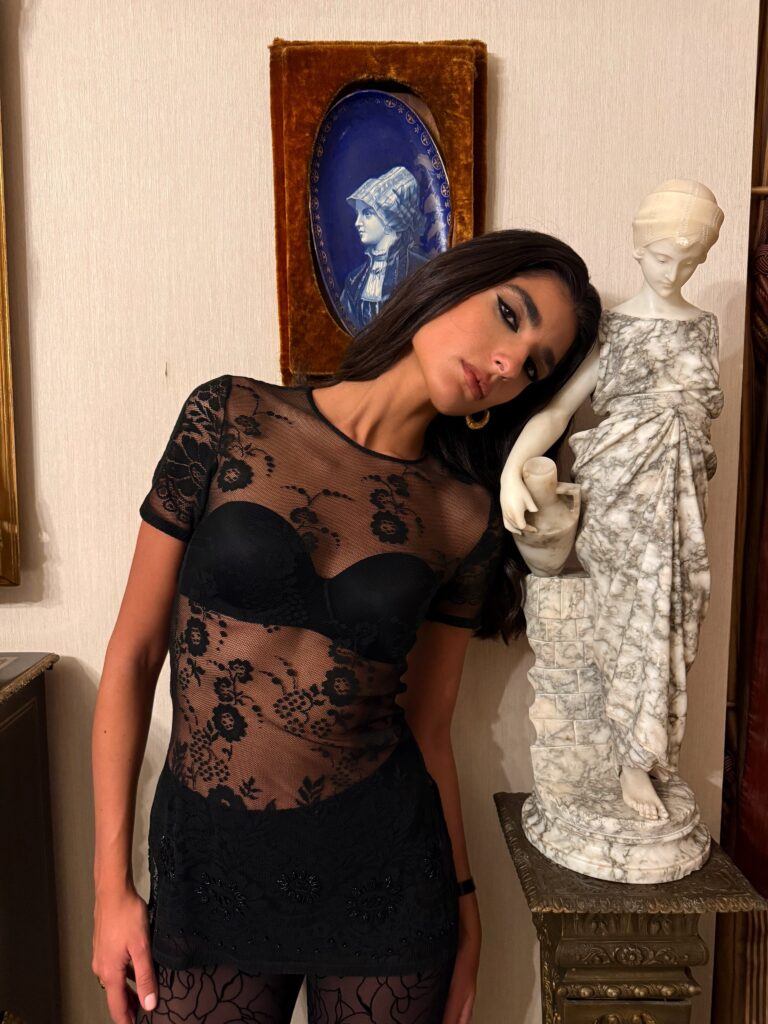
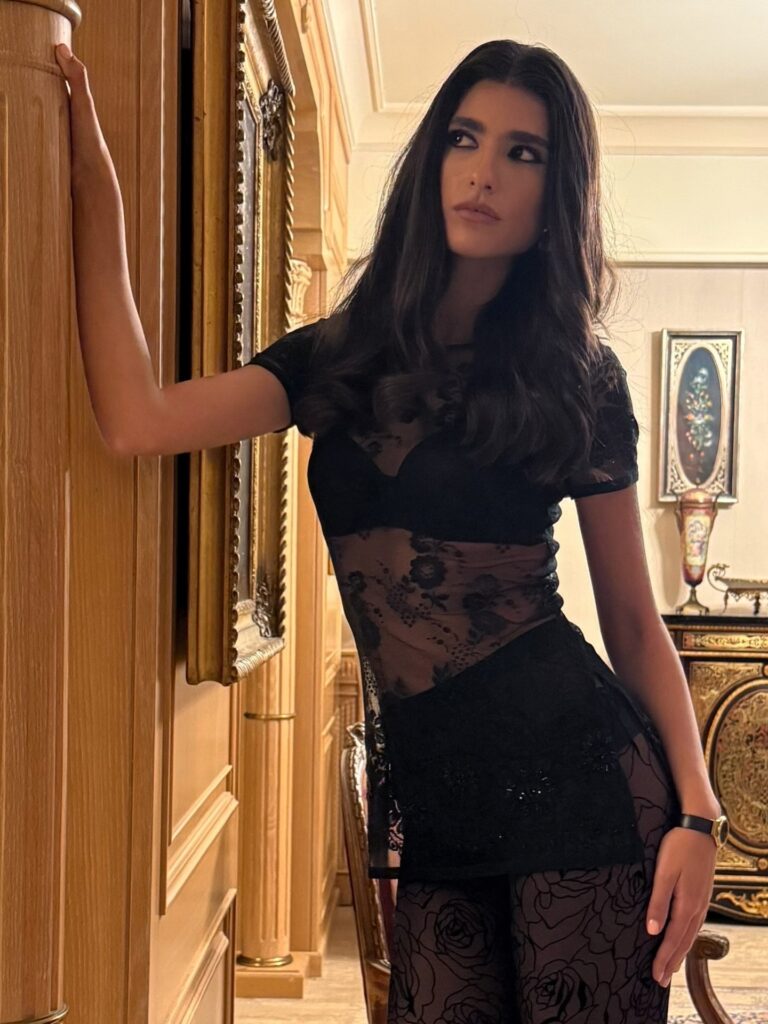
Beauty is powerful when it comes from a true place, and that’s rare. I’m drawn to objects that have lived previous lives because of their individuality. They’ve already existed, they’ve been worn, they carry something… a kind of quiet wisdom that comes from experience. To me, that’s where beauty is. It goes beyond what you see. The more aware something is of itself, the less it tries to please, the more authentic it becomes. And I see that same journey in these objects.
There’s a reason people say, “old is gold.”
Q: If everything you create visually disappeared tomorrow — your images, your archive, your jewelry — what do you hope people would still remember about the way you saw the world?
People often think I’m optimistic, but I wouldn’t describe myself that way. I think I just have a strong attitude toward life.
What I would want people to remember is the way I tried to create beauty around me, consistently. Everything I’ve built has come from a place of hard work, and often from moments of defeat that no one really saw. Even when things weren’t perfect, I still chose to create something meaningful out of it.
And most importantly: I’ve never tried to be anything other than myself.
Q: What is the most special piece you’ve ever found, and what’s the story behind it?
It’s a silver necklace I found during a weekend in Toronto with a close Egyptian friend of mine. I had seen it months earlier and didn’t buy it — I still don’t know why, it wasn’t even expensive. But I couldn’t stop thinking about it. So I went back, almost certain I would find it again.
The seller actually remembered me. He told me I looked like an Empress. That moment stayed with me. I ended up getting the necklace, and my friend insisted on buying it for me, which made it even more meaningful. I’ve always felt a strong bond with him, and that weekend remains one of the most special I’ve ever had.
Since then, the necklace has taken on a life of its own. Every time I wear it, people are drawn to it — without exception. I would never sell it. It feels unique, almost protective. In a way, I associate it with a turning point in my life… things shifted for the better after that. Now, whenever I need a bit of luck, I wear it.
Q: If you could collaborate with any artist or filmmaker on a visual project, who would it be — and why?
My brother. His name is Youssef, he’s a filmmaker, and incredibly talented. I wrote a music video for one of his tracks, Everyday Is the Same, during a very dark period in my life, a time no one around me really saw.
There was a lot of pain in that moment. The title spoke to me… and the song has that dark aspect to it… and life felt repetitive, heavy, like it was stretching endlessly without an exit.
I never sent it to him. I think it’s still waiting for the right moment. I just don’t think I’m ready to go back there… I’m extremely calm now.
Q: And finally, if you were a single shot in a film, what would it look like? Make something completely up.
Everything starts with a song for me. Something in the spirit of “Summer Wine” by Ville Valo and Natalia Avelon… something where “the eyes grow heavy and my lips they could not speak.” It’s not about what’s happening… it’s how it feels. That moment where you don’t know if something is beginning or ending… but you let it happen anyway.