By
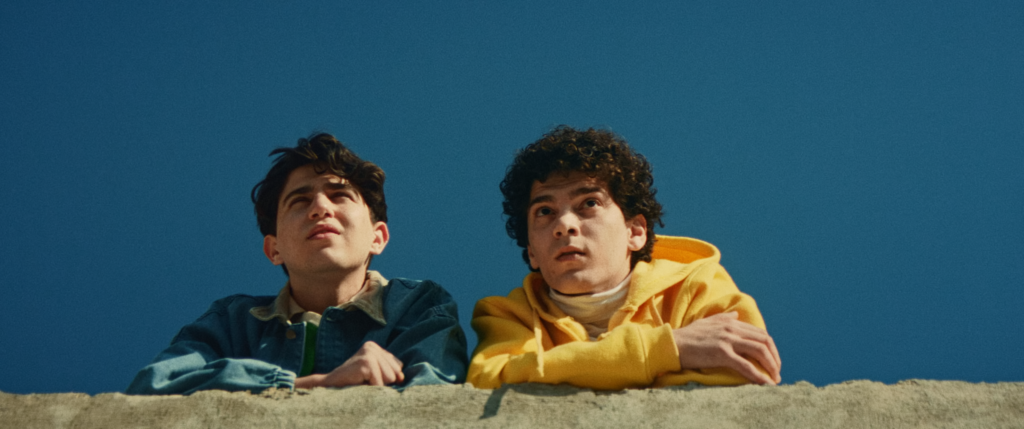
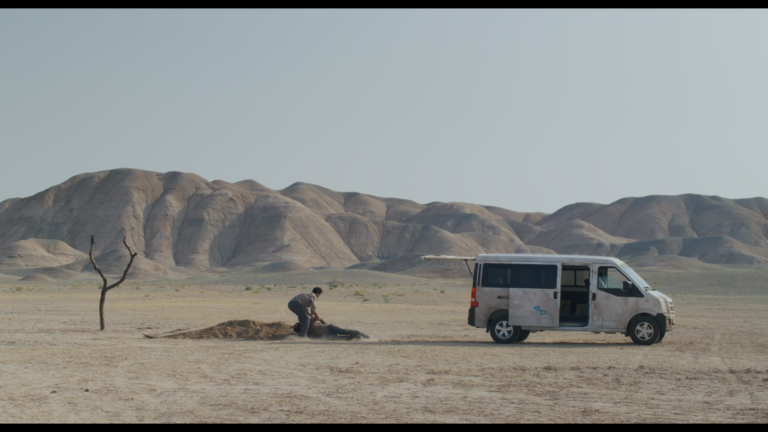
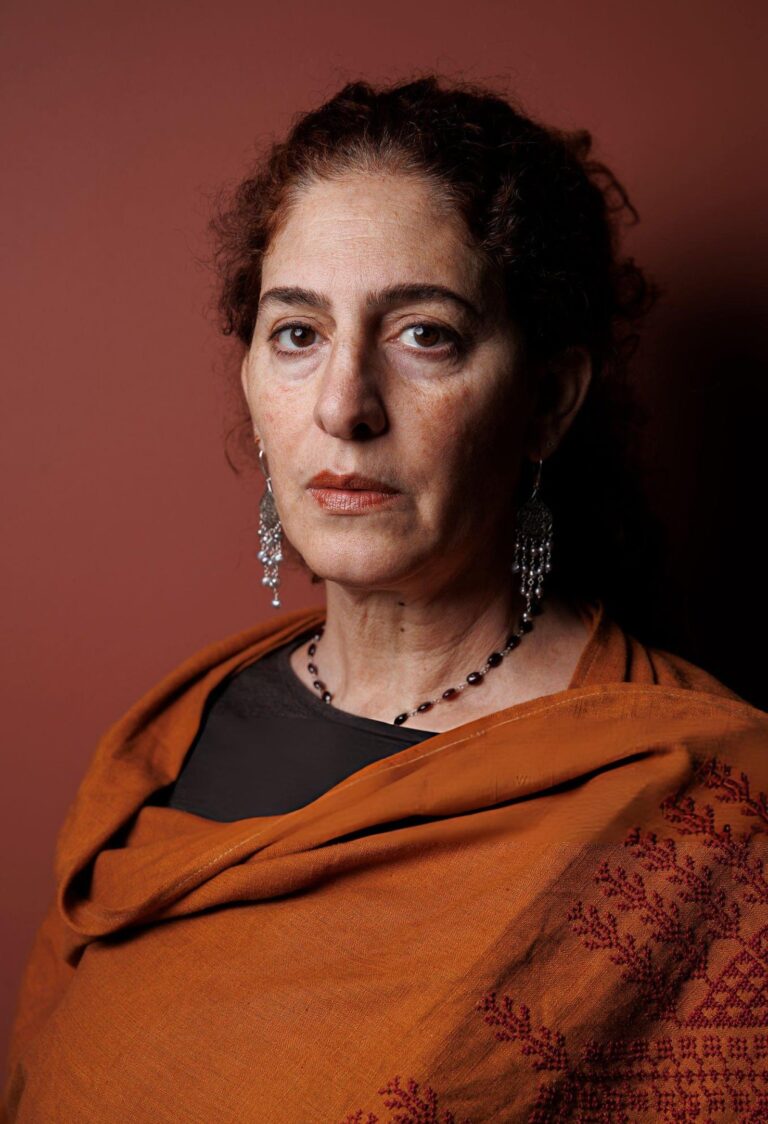
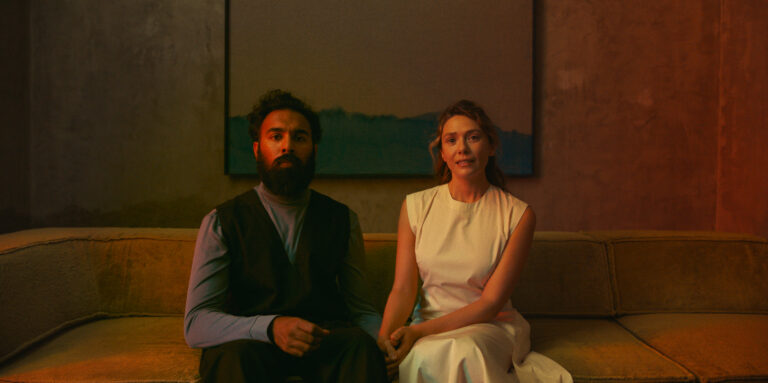
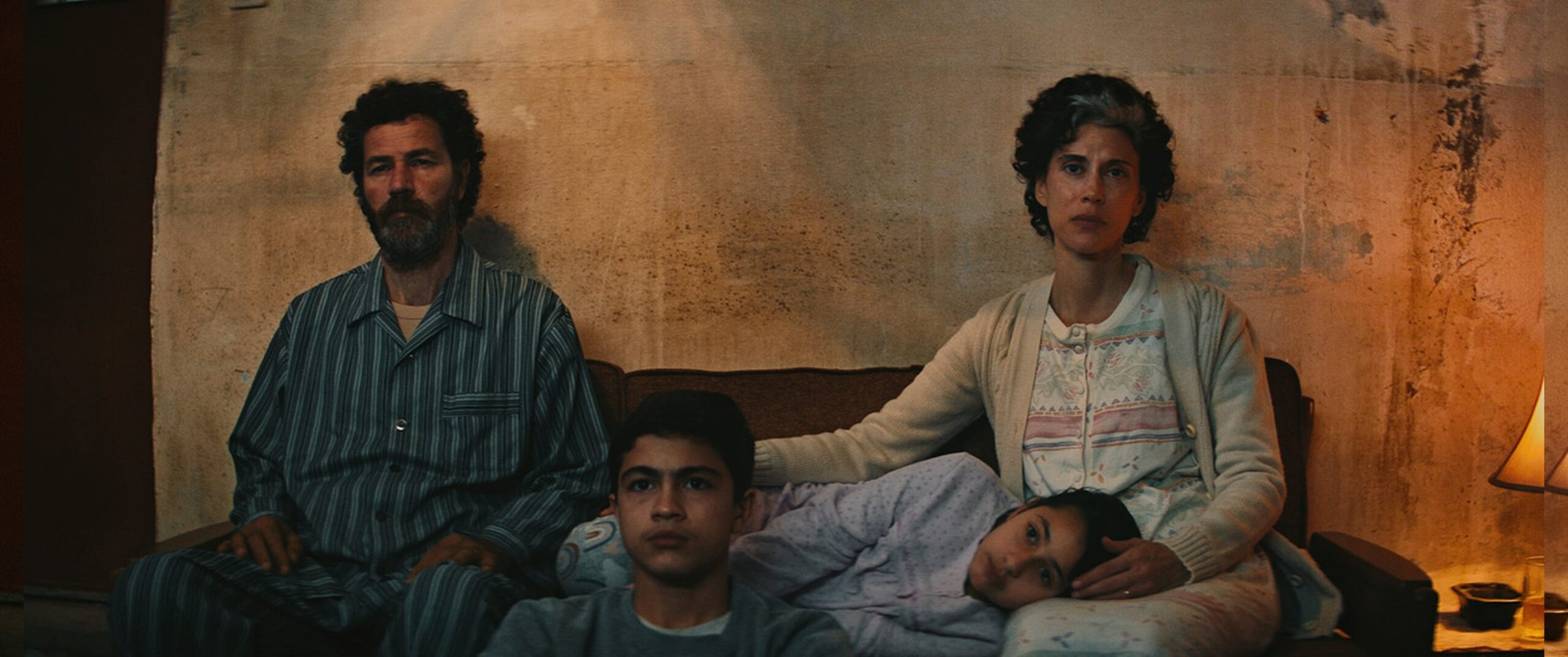
Among the most powerful and emotionally resonant films of the year is Cherien Dabis’s ‘All That’s Left of You’, a sweeping, heartbreaking Palestinian family epic and Jordan’s official submission for the Academy Award for Best International Feature Film. Starring Saleh Bakri, Dabis herself, and Muhammed Abed Alrahman, the film left audiences reeling at its Sundance premiere, with strangers approaching the director in the days afterward to say, quietly and through tears, “I’m sorry. I didn’t know about the Nakba.”
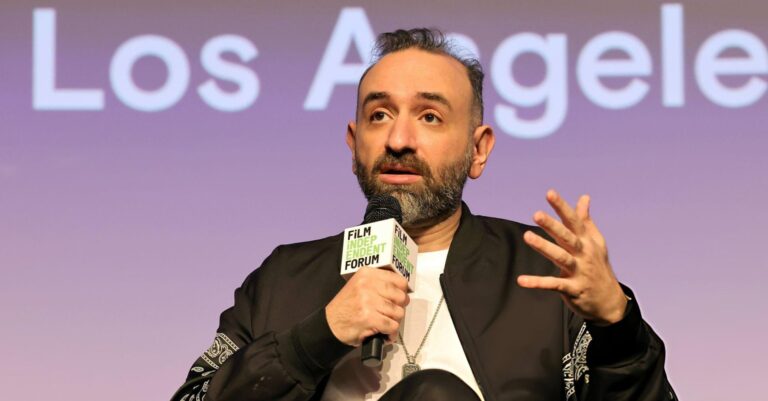
In a raw and deeply affecting conversation, Dabis spoke openly about the struggle to secure North American distribution despite overwhelming critical praise and 19 festival awards, the traumatic childhood experience at age 8 that directly inspired one of the film’s most devastating scenes, and the moment filming was forced to stop on October 7, 2023.
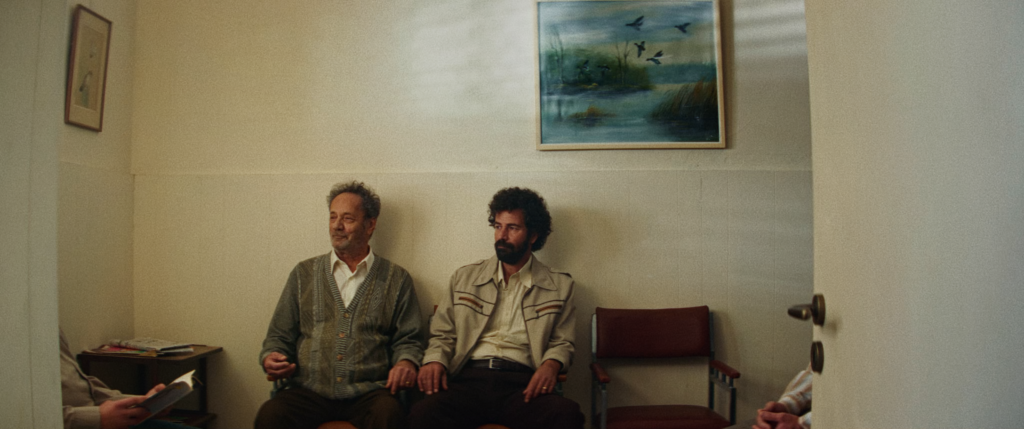
I wanna say that I cried watching All That’s Left of You. I’ve cried watching a lot of Palestinian films. It gets me wondering: Was your intention to make the audience cry?
You know, my intention was to make a very emotional film. Because so often, we Palestinians are relegated to nameless, faceless headlines. We’re numbers. You know, our humanity is never shown. And I wanted to show the emotional impact of these decades of political events on people. And so, yeah, I set out to make an emotional film about how history shapes people and families over time, and how it changes their fates.
I think that it’s a deeply emotional experience. We are really understanding the emotional impact of the Nakba, of the ongoing Nakba, of occupation, and what it’s like for Palestinians to live with the daily violence that is occupation. You know, we say this very benign-sounding word, “occupation”, not realizing, like, how brutally violent it is.
How long did the journey of making ‘All That’s Left of You’ take?
I started thinking about the film back in 2014. I started reading books and just immersing myself in different periods of Palestinian history. I knew I wanted to tell a multi-generational tale, and that I wanted to follow grandfather, father, and son. I was in part inspired by my own dad, who’s Palestinian from the West Bank. You know, he was exiled in 1967.
It took him many years to get foreign citizenship just to return to visit his family. Like, just to visit his family and the only home he’d ever known. So I was inspired by him and his experience, and just watching how events shaped him over time, how he became more and more disillusioned and angrier and angrier, and how his health suffered as a result of his obsession with his homeland, and the fact that it was deteriorating before his very eyes, and he was so far away and felt powerless and couldn’t do anything. So I watched the different generations of my own family and saw how our identities formed in relationship or in opposition to each other. And so, back in 2014, when I started thinking about it, I just, I bought myself a notebook, and I started just taking notes on ideas I had, observations from my own life from watching my father, from visiting the West Bank as a kid, seeing my dad humiliated and harassed at borders and checkpoints, and, you know, even myself having that experience as an adult.
And I started outlining, kind of, characters, and anyway, I actually sat with the film for 5 years before I started writing it. I knew the entire structure of the film. I knew the beginning, the middle, and the end. I knew who all of the characters were. I knew what the arcs were.
I even knew what some of the scenes were. I had already written some of the scenes in my notebook, and some of the dialogue had already come to me. So I started writing it in 2020
And from the time, you know, I started writing it until now, really, I mean, actually, it’s quite fast to get a movie made within this period of time, you know? The film premiered in early 2025, and actually, it would have premiered a lot sooner had October the 7th not happened, because the shooting was delayed 11 months because of October the 7th. I started writing the script in 2020, when the whole world shut down because of the pandemic, and I was like, I suddenly found myself with a lot of time.
And I thought, well, wow, I’ve been sitting with the story for such a long time, I feel really ready to birth it on paper. And so I did. I wrote it, it flowed out of me, it came very quickly, I had a draft within a few months.
And the financing miraculously came together relatively quickly most of it came from Europe and from the Arab world. And I landed in Palestine in May of 2023 to begin pre-production on the film. I worked on the ground for, like, 5 months with my local crew. And I had foreign crew arriving from Germany. And then, of course, we were 2 weeks away from shooting when October the 7th happened, so we had already done so much work. We had laid all the groundwork for our shoot. We found every location, we began construction on the locations that we were going to be changing.
We cast the entire film. We amassed a giant warehouse of really beautifully crafted, props and set dressing and things that were just carefully curated from all of the different time periods. And then we found ourselves having to flee.
We were in Ramallah at the time, and the West Bank became extremely tense, like, within moments of the news. You know, West Bank cities were being sealed off, checkpoints were closing, we couldn’t move, it was too dangerous to try to even leave Ramallah. There were rumors that the border was gonna close, we were hearing fighter jets, we were feeling the earth shake, it was just profoundly tense.
And it became clear that we weren’t going to be able to move around as we wanted and get the movie made there. It was just too dangerous, and my foreign crew was scared and wanted to go home, understandably. You know, their families were worried about them. So we began evacuating people just within, like, 2 days of October the 7th.
I was always hoping to return to Palestine, but we were never able to. We ended up shooting the movie in Cyprus, Jordan, and Greece. Most of it was shot in Jordan, in the Palestinian refugee camps in the north of Jordan.
But we were making it in a time of total crisis. We were in a financial crisis, all of the money we’d spent in Palestine was gone. We had to raise a bunch more money, we had to totally re-prep the film, so we had to start pre-production from scratch. We had to stop for months and raise more money. So from the time we started production until the time we wrapped production, it was 11 months. A shoot that should have taken 3 months at the most took 11 months. So we had that huge delay.
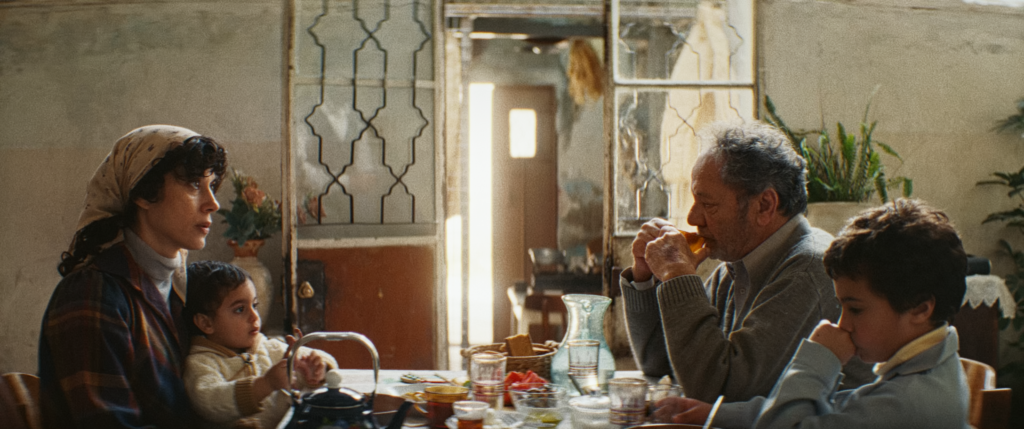
During a heartbreaking scene, Saleh Bakri’s character is humiliated by the IDF in front of his son. Was that inspired by your experience?
Yeah, that’s right. I mean, I had an experience when I was 8 years old. It’s my first memory of traveling to Palestine. And my family was traveling from Jordan into the West Bank to visit my dad’s village. And we were held at the border by Israeli soldiers for 12 hours. My parents were interrogated again and again. The contents of our suitcases were just totally picked through and searched. And the soldiers insisted on strip-searching all of us. And my dad was, like. humiliated, enraged, you know, he confronted the soldiers, trying to talk some sense into them, they started screaming at him, he started screaming at them, and I’m 8 years old, looking at my dad, scared that they’re gonna kill him right in front of us.
It was not only the first time that I viscerally understood what it meant to be Palestinian, it was the first time that I saw my dad totally powerless. You know, it was the first time that I realized that he can’t protect us here.
And, you know, I don’t live under occupation. I did not grow up under occupation. I grew up with privilege, and in a place where my dad actually could protect me, for the most part. But certainly that experience stayed with me, and as I was writing this film and thinking about my own experiences, it was one that continually came up. I really wanted to show the impacts of occupation on people and on relationships between people, and how very often you see kids in Palestine who are shocked when they realize their parents can’t protect them, who sometimes even lose respect for their parents because their parents can’t, like, can’t protect them. Their parents lose all authority with their kids, you know? And this is a really painful experience. This is unfortunately, like, you know, all too common.
We’ve seen Palestinian projects achieve success in the past but they hardly ever focus on the Nakba. What kind of reactions did you get from the Western audience when it premiered at Sundance?
Sundance was an intensely emotional experience. It was with such a large audience, it was a packed theater of 1,200 people, we had the hottest slot of the festival, we had a standing ovation that was twice as long as most films ever get at Sundance.
And people were sobbing in the theater. You could hear them sobbing. I had people come up to me, I had Westerners come up to me afterwards, like, close to tears, saying to me, I didn’t know, I didn’t know, I didn’t know, I didn’t know. Like, over and over, just repeating that phrase over and over, very, very emotional. And I’ve had people say to me “you radically shifted my perspective”. Turns out, a lot of people still don’t know about the Nakba. Still don’t know what happened to Palestinians in 1948 in order to create a Jewish-majority state. I’ve had people say to me “ I’m gonna go home and rethink everything I’ve ever been taught”. You know, this is a whole part of history that has been omitted from history books.
And a lot of people sadly still don’t know about it. I just had screenings in London, where I had people say to me afterwards, “What is the Nakba”? They had no idea, they’d never even heard the word.
(The Nakba, meaning “catastrophe” in Arabic, refers to the mass displacement and dispossession of Palestinians in 1948 , marking the creation of the state of Israel; it involved the expulsion or flight of around 750,000 Palestinians, leading to widespread destruction of Palestinian villages and ongoing exile)
It’s funny because as a Palestinian, I think to myself “Well, surely people have heard about the Nakba by now” You know, especially after the last two years. But, amazingly, a lot of people have still not heard about it. So, I think from a Western perspective, obviously there are many people who know about it, but there’s the people who don’t know about it, and so this movie is opening their eyes. And then for those who do know about it, I think the movie still really opens their hearts, because it’s one thing to know intellectually about it, but to really experience it for the first time in cinema, to experience it emotionally, to follow a family that you become really invested in, and to see what happens to them, not only in 1948, but the ongoing Nakba, how it continues to happen again and again, and how this family just continues to be brutalized.
I think it’s quite an emotional education for people, even if they do know about the Nakba. And it’s an emotional experience, even for us Palestinians who know all of the history, because it’s the first time we’re seeing our story told in this way.
Did you ever get people telling you that you should have shown “Israel’s side of the story”?
I did have people say that to me at the script phase, and I very quickly realized they were not the right collaborators for me if they said something like that. Though I did have some people say it in a much more gentle way, or in a more of an inquisitive way or more of, perhaps, a fearful way, where I was able to have a conversation with them and essentially say to them “Look, this story’s never been told. I’m focusing on a Palestinian family here. So you can either support that, or not”. You know, and the Israelis that I show in this film are the Israelis that the Palestinian family meets. And they don’t meet that many Israelis, so it would be very, untrue, false, inorganic, inauthentic for me to insert Israelis into this film where they would not organically be there. This is a film that is multiple generations of one family, so obviously there’s a lot of story to tell here. I cover 76 years of Palestinian history.
And a lot of history that people don’t know. So there’s not a lot of bandwidth for anything other than that. And this is my focus. This is a story that deserves to be told. And I think a lot of people really understood that. And, you know, there are Israelis represented in the film.
And I think they’re represented with nuance. I don’t think that they’re represented in a kind of caricature-y way, because that’s not my interest as a filmmaker. My interest as a filmmaker is to try to portray people in as much nuance as possible, because that’s what we are as people. So I don’t have an interest in creating caricatures, but I do have an interest in telling the truth.
And the truth is, most of the Israelis that Palestinians come across are soldiers, and they are indoctrinated, and they are working within a system of war and oppression where they are indoctrinated to believe certain things about us. And that’s what war and occupation does. Like, that’s what, you know, that’s really what this system creates, is soldiers like the ones that you see in that scene.
My film actually is quite gentle, if you look at some of the stories out there, especially what’s happening today. Mostly we see occupation in the 1970s and 80s, where it had only been in effect for a decade or two at that time. The occupation has just gotten worse and worse. The occupation of my film is not nearly as brutal as the occupation of today.
Right? And back then, in the 80s, there were only a few checkpoints, and they were flying checkpoints. They weren’t permanent structures like you see today, with the turnstiles, and the cages, and the fences, and the razor barbed wire. You know, it’s really much, much worse today.
I gotta mention the challenges that come with, not just making a movie about Palestine, but also speaking up for Palestine as a woman in Hollywood. I hear stories that hurt me deeply about people losing jobs and representations over their support for Palestine. How has your experience been as a Palestinian woman in Hollywood?
Well, listen, I’ve always been Palestinian, and I’ve always been very vocal about being Palestinian, so I have no way of knowing the opportunities that never came my way. And I’m sure that there have been opportunities that just never came my way because of who I am and what I represent and the kinds of movies that I’m interested in making and have made.
I think some of the racism that I’ve experienced has not necessarily been directed at me, or things that I’ve heard have not been necessarily said directly to me. When I made this film, and we had this incredible reception at Sundance, and we got fantastic reviews, all the mainstream distributors in North America, turned the film down. And some of them said that they were “afraid of the subject matter”. I mean, imagine them saying that about a story of any other group of people. We would call that racist. And so I think that that’s the type of racism that I’ve experienced where it’s presented in some ways more as fear. More as trepidation, or hesitancy, or just, you know, I’ll pitch a story, and I’ll get no’s. I’ll just get no, but I won’t be told why. I’ll just say they don’t want to develop the story. I can’t say that it’s been super blatant, though there was at least one context in which I had a screaming match with someone on a show that I worked on. But that was very rare, and earlier in my career. I think the racism in Hollywood, anyway, is probably more subtle than that.
Javier Bardem and Mark Ruffalo became executive producers on it. How did that happen?
They’re the real deal. You know, they’ve been speaking out about this for years, and they’ve always stood up for humanity, and they’ve stood on the right side of history. And so, when we took the film to Sundance, and it had such an incredible reception and none of the mainstream distributors were willing to step up, my team and I began to realize we are being overlooked because of our identity, because of the identity of this film, and the story that it’s telling. And so we’re gonna have to really pull out all the stops, and really get creative here about how we’re gonna bring more attention to this film, and raise the public profile of this film, and ensure that it’s not gonna suffer because mainstream distributors are too cowardly to pick it up. So we started talking about what we could do and bringing on executive producers, people who have really big fan bases, and who’ve made names for themselves, and can really help us raise the profile of the film. And of course, Mark and Javier were two of the first people who came to mind as people who’ve really been a part of the movement and who care so deeply about this issue.
I don’t always say this but I feel like this impact that you just detailed to me, and how people came up to you and said ‘I’m sorry I didn’t know’ is more important than any Oscar you could win.
I love that. I think it’s really true. I mean, you know, listen, the only thing about awards is that it puts more eyes on the films. The award is the fact that the film is connecting with the audiences. You know, we’ve actually won 19 festival awards thus far. Including 10 Audience Awards. And audience awards are the best awards for filmmakers to win, because it means that the film is connecting with people, with the audiences. I feel so fortunate and grateful to have this movie at this particular moment in time, and to be able to take it out into the world, and use it to connect with people, and to bring people to the movement, and to create compassion.
You made about Robert Redford. And I was wondering, did he get to see the movie before he passed away?
I don’t think that he did. I wish that he could have. He’s been so amazing and so supportive of filmmakers like myself. So, sadly, I don’t think that he got to, but I think he would have been very proud that it screened at Sundance.
If your life was a single shot in a movie, what would it be? I want you to make up something.
I think it would be a really slow push-in. Like, maybe a shot that starts wide and just really slowly pushes in and pushes in and pushes in and pushes in, until it, like, becomes, like, a close-up on a face, on my face, I don’t know. When I was making Amreeka, I was literally dreaming shots at night, and the shot that I would dream the most was just a slow push-in. I just kept dreaming about these slow push-ins.
But I kind of like the slow push-in as a metaphor, because I feel like, for me, my life has been so much about, like really moving in on what is most important.
‘All That’s Left of You’ is showing at the Red Sea Film Festival and will compete in the Awards Buzz – Best International Feature Film section of the 37th Palm Springs International Film Festival on 5 January 2026.