
By
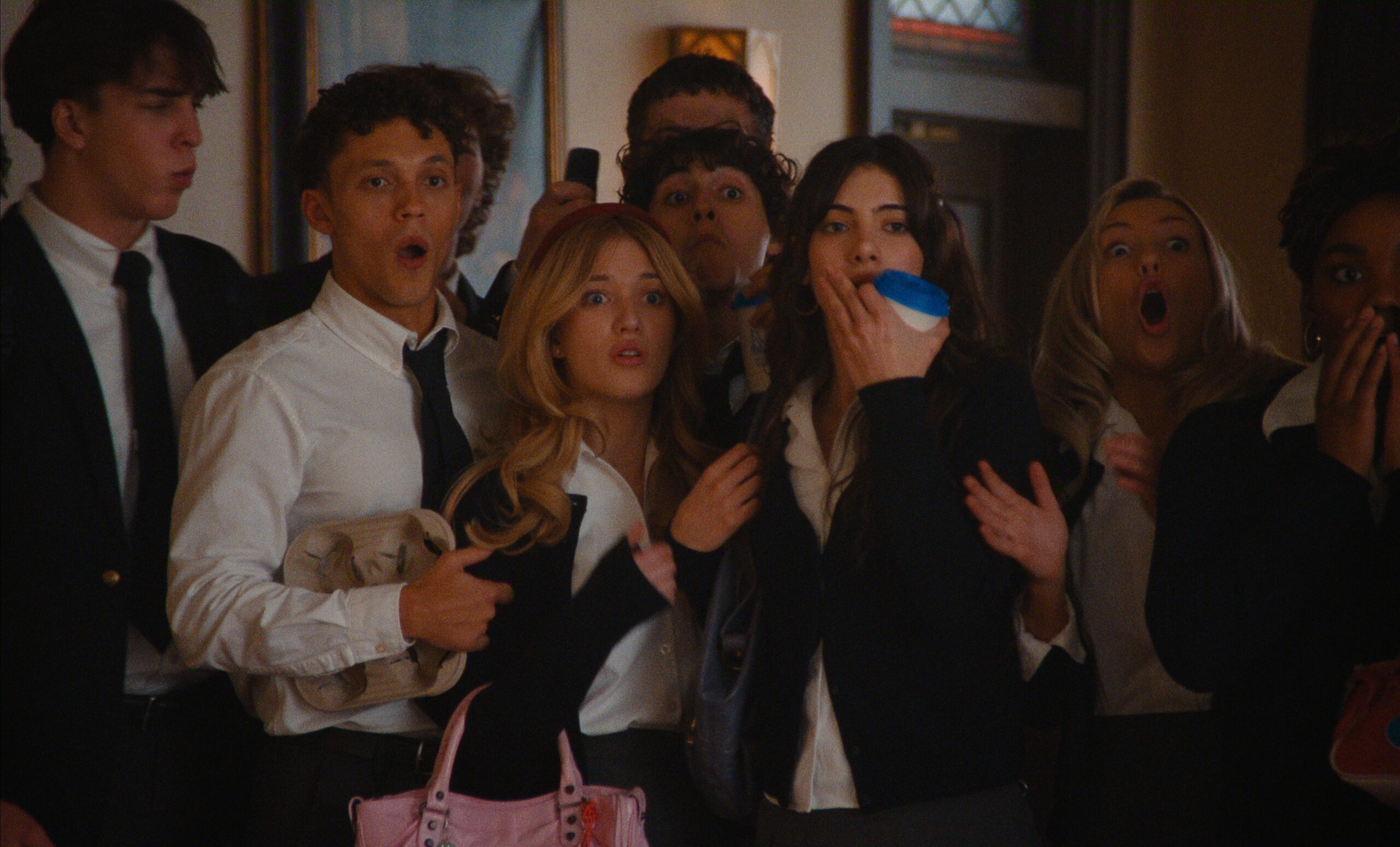
There are few things more alarming to adults than a group of teenage girls who appear to have lost their minds. One girl screaming is a problem, but ten girls screaming? It’s an epidemic. Add a Catholic school, a suspicious initiation ritual and a few claims of supernatural visions, and suddenly everyone is looking for the devil.
Horror has understood this for a long time. Teenage girls have an extraordinary capacity to frighten people, especially when they begin behaving in ways that cannot be easily explained, disciplined or dismissed. Their emotions are excessive, their friendships are obsessive, their bodies are changing, and their desires are suspect. When those things become too difficult for the adults around them to comprehend, the supernatural offers a remarkably convenient explanation.
Something must have gotten into them.
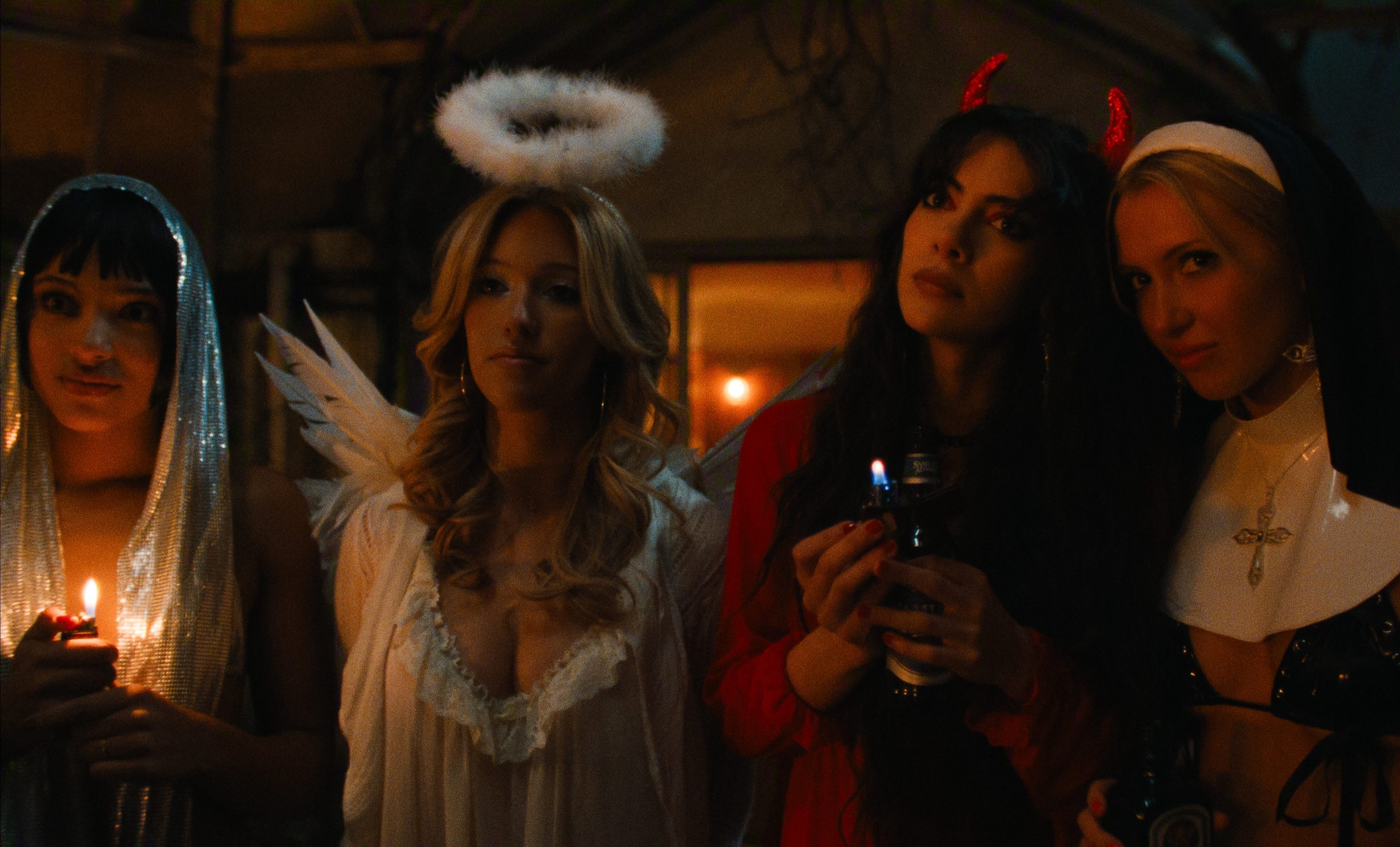
Netflix’s The Body, created by Quinn Shephard, takes that suspicion and runs with it. Set in the early 2000s, the series follows the Lions, a Catholic school dance squad whose initiation ritual goes spectacularly wrong. The series spirals into prophetic visions, paranoia and hysteria, as the girls become more and more convinced that something extraordinary is happening to them.
At the centre are Anya Butler (Kristina Bogic) and Elise Zakaria (Sara Boustany), two girls whose relationship becomes the emotional fault line of the series. Anya is the Lions’ captain, a gifted dancer and seemingly effortless queen bee whose carefully maintained perfection conceals a growing desperation to suppress her sexuality. Elise, her loud, abrasive and fiercely loyal best friend, is the girl everyone is slightly afraid of, even as she nurses feelings for Anya that she cannot bring herself to confess.
Around them is a wonderfully combustible collection of personalities. There’s Grace Franklin (Sofia Wylie), the charismatic, devout Catholic whose influence makes her both magnetic and dangerous; Lisbeth Anderson (Geena Meszaros), the observant outsider desperate to secure her place among the girls; Maddie Delaney (Shirley Chen), the sweet, eager-to-please friend whose inability to keep a secret proves particularly unfortunate in a group built around them, and Katie (Bella Neuspiel), the sarcastic, perpetually unimpressed voice of reason who seems to spend much of the series wondering why everyone around her is losing their minds, even if she’s not quite as unbothered as she’d like everyone to believe.
Together, they form the Lions, a dance squad with its own hierarchy, rituals, loyalties and unspoken commandments. The question, however, is not simply whether something supernatural has taken hold. It’s why everyone is so prepared to believe that it has. After all, the history of female hysteria is, in many ways, a history of people trying to explain women to themselves.
Historically, hysteria has been treated as something of a female affliction, a diagnosis through which women’s emotions, desires and behaviours could be interpreted as symptoms of something fundamentally wrong with them. While the medical understanding of hysteria has changed considerably, the association between adolescent girls and psychological disturbances has not entirely disappeared.
Reported outbreaks of mass psychogenic illness have often involved groups of school-aged girls, whose shared physical symptoms or unusual behavior can spread through tightly connected social environments without an identifiable organic cause. Such episodes are real experiences of distress, even when their symptoms cannot be attributed to a conventional disease process. However, the cultural fascination surrounding them frequently has less to do with the girls’ suffering than with the spectacle of their apparent loss of control.
A 2021 meta-analysis published in the Journal of International Medical Research, examining 28 studies involving more than 32,000 children and adolescents, found that girls experienced mass psychogenic illness at approximately 2.4 times the rate of boys. The phenomenon, now more commonly described as mass psychogenic illness or mass sociogenic illness, refers to the spread of physical symptoms within a group without an identifiable organic cause.
For centuries, women’s emotional and physical experiences were interpreted through medical and religious frameworks that treated deviation from expected behaviour as evidence of something wrong. The diagnosis of hysteria, with its long association with the female body, became an extraordinarily flexible explanation for everything from emotional distress to sexual expression.
Religious institutions had their own vocabulary: possession, temptation, sin, corruption. The explanations changed, but the underlying suspicion remained remarkably consistent. A girl behaving strangely could not simply be a girl behaving strangely. Her body had to be communicating something dangerous, demonic, or otherworldly.
There is something almost reassuring about calling it hysteria. It gives the observer a name for what they cannot understand, and The Body plays with precisely that impulse. One girl claims to have visions. Others begin experiencing, imitating or performing their own. Fear travels through the squad until belief becomes almost impossible to separate from suggestion. The girls are watching one another as closely as everyone else is watching them.
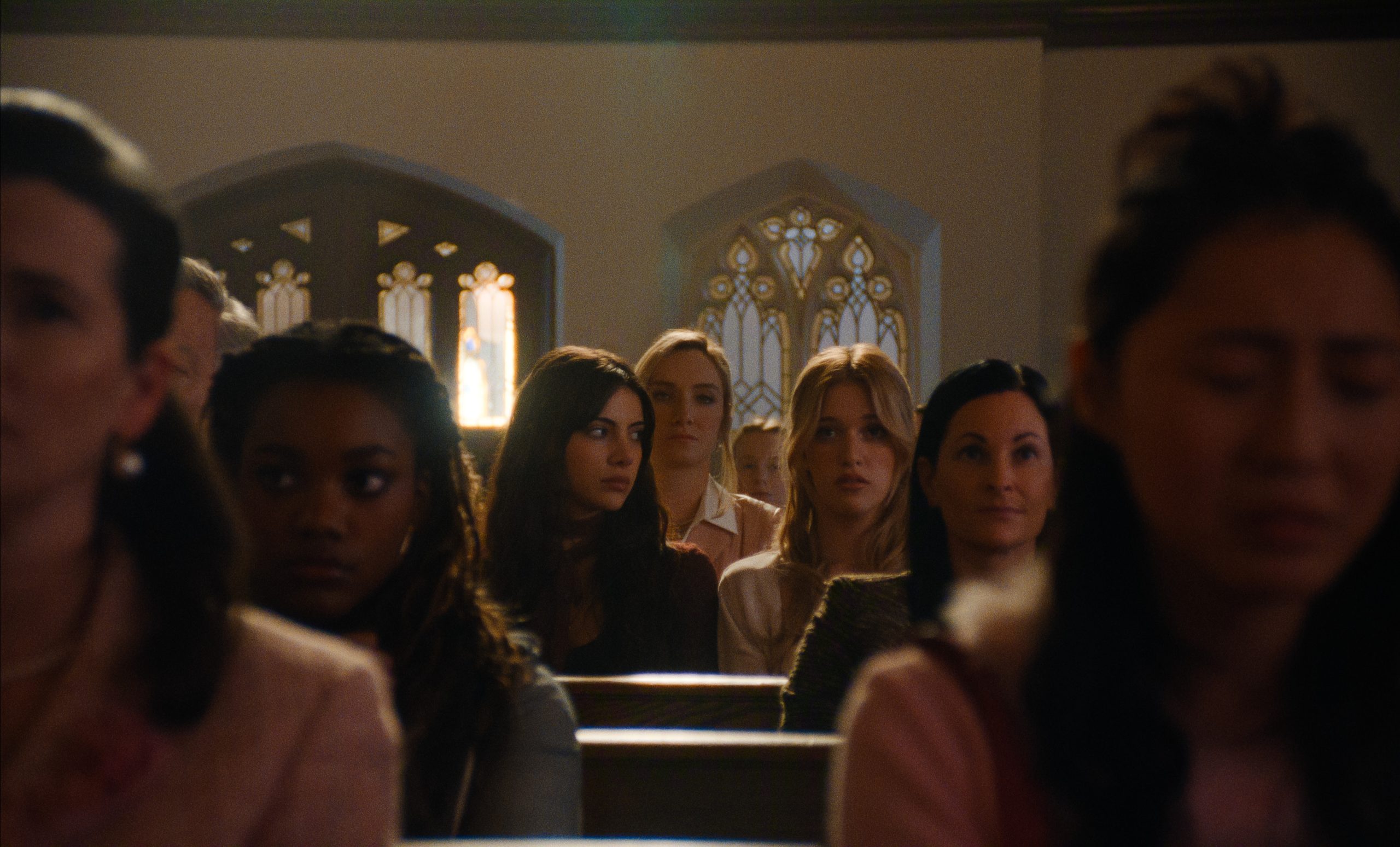
At first, the girls seem perfectly aware of the spectacle they’re creating. During a church service, Elise dramatically faints and is carried out, only to wink at Anya on her way past, a small gesture that reveals just how much of the supposed spiritual experience is performance. The performance then quickly becomes contagious. Soon, other girls begin claiming visions of their own, borrowing from one another’s experiences and escalating the spectacle until the distinction between pretending, believing and genuinely experiencing something becomes almost impossible to establish.
One girl claims to see something, another follows, and suddenly everyone has something to confess, something to fear or something divine to report. The more girls participate, the harder it becomes to question what’s happening without risking exclusion from the group. The girls don’t necessarily need to believe in the supernatural for it to acquire real power. They only need to believe in one another, or at least believe that everyone else does. That is what makes the series interesting: hysteria is not simply something happening to the girls. It is also a language through which the people around them attempt to understand what they are doing.
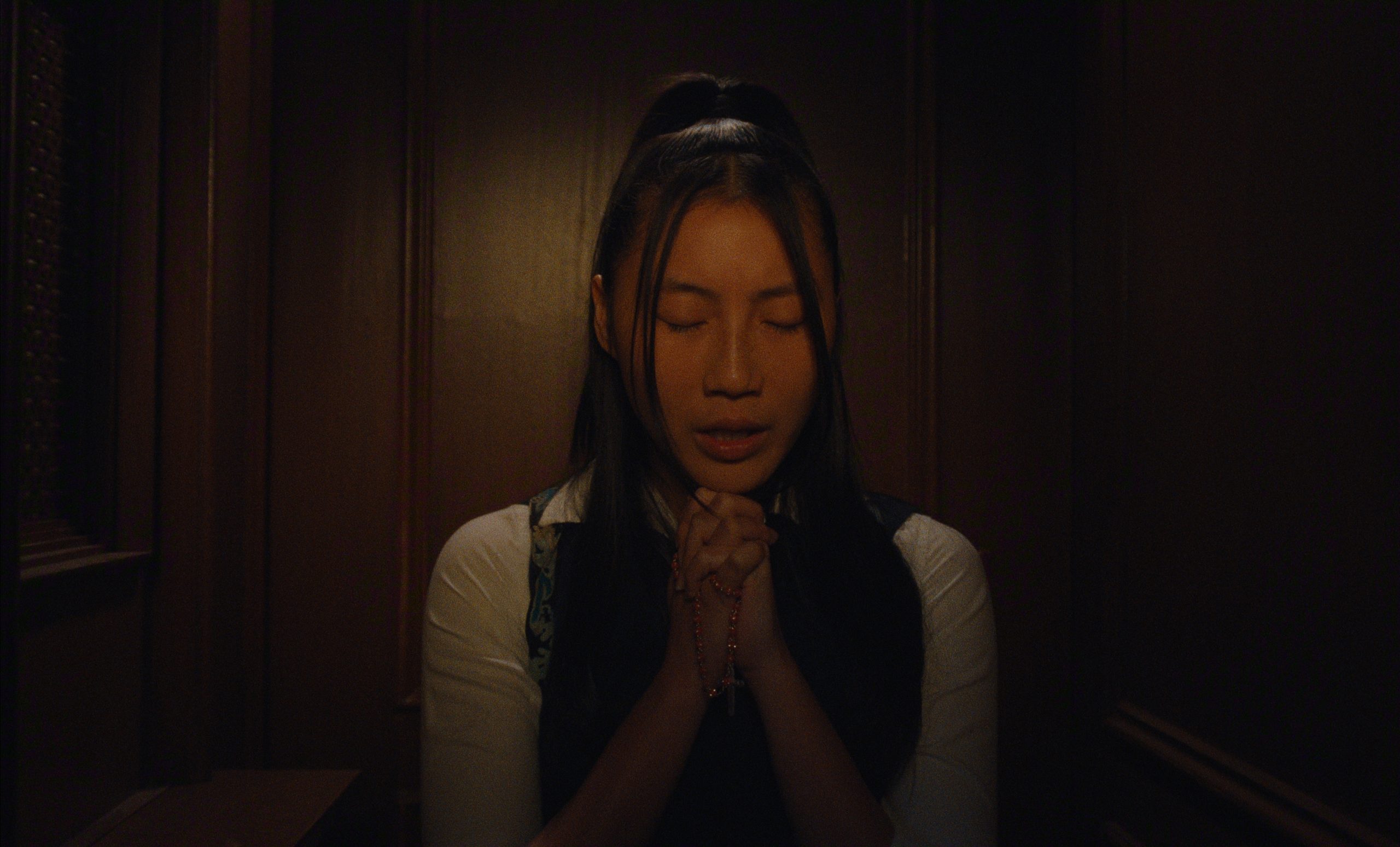
The show’s title offers another way into this tension. The Body is an almost absurdly perfect name for a story about Catholic schoolgirls. Catholicism is a religion deeply concerned with the physical. Flesh and blood, purity and sacrifice, virginity and temptation, the crucified body and the body of Christ. Its rituals continually transform bodily experiences into spiritual meaning. Desire can become sin, whereas suffering can become devotion. The body is something through which faith is expressed, but also something whose impulses must be governed.
Now place a group of teenage girls inside that framework. Their bodies are already undergoing transformations they cannot entirely control. They are discovering sex, attraction, queerness and the peculiar humiliation of being physically present in a world that seems determined to have an opinion about them. Their bodies are simultaneously sources of pleasure, anxiety, shame and social currency.
Grace’s storyline takes this relationship between the body and religious belief to its most unsettling extreme. After falling into a coma, Grace becomes the unlikely centre of a growing religious phenomenon, with people visiting her bedside in the belief that she possesses miraculous healing powers. Her unconscious body becomes an object of devotion, transformed from that of an ordinary teenage girl into something approaching a living relic. People come seeking miracles, projecting their hopes, fears and faith onto someone who cannot speak for herself, much less confirm the extraordinary abilities being attributed to her.
It’s disturbing how the ease with which Grace’s suffering becomes evidence of holiness. Her body is no longer understood simply as a body in need of care, but as a vessel through which something divine might be working. The less she is able to participate in the narrative surrounding her, the more confidently others seem to construct it. In a series preoccupied with girls struggling to control their own bodies and identities, Grace becomes the most extreme example of what happens when that control is taken away entirely. She doesn’t even have to be conscious for the world to decide what her body means.
And then, of course, the girls are dancers. Long before anything paranoia enters the picture, the Lions have been trained to control their bodies with extraordinary precision. Dance demands repetition, synchronisation, discipline and the ability to make difficult physical movements appear effortless. Every gesture is rehearsed; every mistake visible. Their bodies must move together, respond to instruction and perform a particular image of femininity.
Catholic school imposes one system of bodily discipline. Dance imposes another. Girlhood, with its endless instructions about how to look, move, desire and behave, imposes a third. Possession, whether real or imagined, threatens to undo all three. Possession, whether real or imagined, threatens to undo the systems of control imposed upon the girls. But Anya and Elise suggest another possibility entirely: that losing control might not always be something to fear. Sometimes, it might be the closest thing to freedom.
For Anya and Elise, queerness complicates all three. Their relationship is arguably the most compelling expression of the show’s obsession with repression. Anya, the seemingly perfect captain, is so determined to maintain the image expected of her that acknowledging her sexuality feels like an admission of failure. Elise, meanwhile, has made something of a personality out of being unapologetically herself, yet even she struggles to articulate the one thing that matters most: her feelings for Anya. For all their intimacy, these are two girls who have become remarkably skilled at avoiding the truth about each other.
This makes their improvised contemporary dance routine during Regionals all the more extraordinary. Following a falling-out, the two find their way back to each other not through some grand romantic confession, but through movement. It turns into something closer to a conversation, an unspoken reconciliation unfolding in front of an audience that has no idea what it is actually witnessing. For once, their bodies are communicating something neither girl has managed to put into words.
There’s a delicious irony in watching two girls who have spent so much time concealing their feelings express them through the very discipline that has taught them to control every movement. Dance, ordinarily another mechanism of perfection and conformity, becomes their moment of freedom. The choreography is improvised, their connection instinctive, and the emotional honesty almost embarrassingly visible. In a world where Anya cannot comfortably admit whom she desires, she can at least dance with her.
Their queerness isn’t presented as some extraordinary revelation requiring supernatural explanation. It’s something painfully ordinary: two teenage girls trying to work out what they mean to each other, and discovering that their bodies have arrived at an understanding long before their words have caught up.
The disciplined body becomes unpredictable. The synchronised body moves according to impulses nobody can explain. The girl who has spent her life being told how to behave suddenly appears incapable of behaving at all. The reversal is deliciously subversive. In this world, girls’ bodies are constantly being watched and regulated, and the possibility that those bodies might become uncontrollable is both the central horror and a strange kind of liberation.
But The Body is not only interested in the institutions governing the girls from above. It is equally fascinated by the institution they have created among themselves. Teenage friendship, particularly the kind depicted in early-2000s cinema, can begin to resemble a religion of its own.
There are rituals, codes, confessions, hierarchies, punishments and acts of devotion. There are people whose approval matters more than anyone else’s, secrets that cannot be repeated and rules that everyone understands without anyone having to explain them. Belonging is sacred. Exclusion can feel like excommunication. Just ask Lisbeth.
Of all the girls, Lisbeth might be the most desperate to belong. Observant and painfully aware of her position on the group’s social periphery, she approaches friendship like an exclusive club whose membership requirements she is determined to satisfy, no matter how morally questionable they become. She watches Anya and the other girls with the intensity of someone studying for an exam she cannot afford to fail, learning their dynamics, identifying their vulnerabilities and searching for any opportunity to make herself indispensable.
And the lengths she’s willing to go to are extraordinary. Lisbeth helps Anya conceal what they think is an actual dead body, an act that would ordinarily constitute a fairly definitive dealbreaker, but which she seems to regard as an opportunity to establish a bond. Even then, she remains painfully conscious of the intimacy that exists between Anya and Elise, watching their connection with the envy of someone who has been allowed into the room but not quite into the friendship.
Her attempts to secure a place on the team are no less disturbing. Recognising Maddie’s vulnerability around food and body image, Lisbeth deliberately aggravates her eating disorder in the hope of taking her place in the competition. The plan ultimately fails, but its cruelty reveals just how thoroughly Lisbeth has absorbed the group’s competitive logic. She wants to become necessary, even if that means making someone else disposable.
And by the finale, she’s still at it, attempting yet another manipulation to win the girls over. Her persistence is almost tragic, although The Body wisely refuses to let desperation excuse the damage she causes. Lisbeth understands that friendship within the Lions operates according to an unspoken hierarchy, and rather than question the system, she becomes ruthless in her attempts to climb it.
In that sense, Lisbeth is the show’s most revealing character. The other girls may be struggling with religious expectations, forbidden desires or the possibility of supernatural intervention, but Lisbeth is possessed by something more familiar: the need to be wanted. She will betray, manipulate and even help bury a body for the possibility of being chosen.
Really, what is a teenage clique if not a congregation in which everyone is desperate to be among the blessed?
The Lions have their own leaders, their own initiation and their own understanding of what it means to be worthy of the group. Their friendship requires loyalty, performance and, in exchange, silence. In other words, the girls are already practising a kind of faith before the supernatural enters the story. When things begin to unravel, the girls must decide which authority deserves their loyalty: the religious institution that has taught them what to believe, or the group of girls who have taught them who they are.
The systems are not as different as they initially appear. Both demand obedience, both establish hierarchies, both create boundaries between those who belong and those who do not, both promise a kind of protection in exchange for devotion.And both can make questioning feel like a betrayal. Even within the group, another power struggle emerges: whose lead should the girls follow?
This is where the show’s treatment of queer desire becomes especially interesting. Horror has long used possession and supernatural transformation as metaphors for desires that cannot be comfortably expressed. Something inside me is changing. My body wants things I do not understand. I am drawn to someone I have been taught not to want. I no longer recognise myself.
Within religious horror, those experiences can acquire an especially sinister vocabulary. The feeling that something is happening inside you becomes the fear that something has entered you. With that lens, Anya is dangerously, dangerously possessed. For a queer, closeted teenager growing up within a conservative religious environment, that distinction can become painfully difficult to navigate.
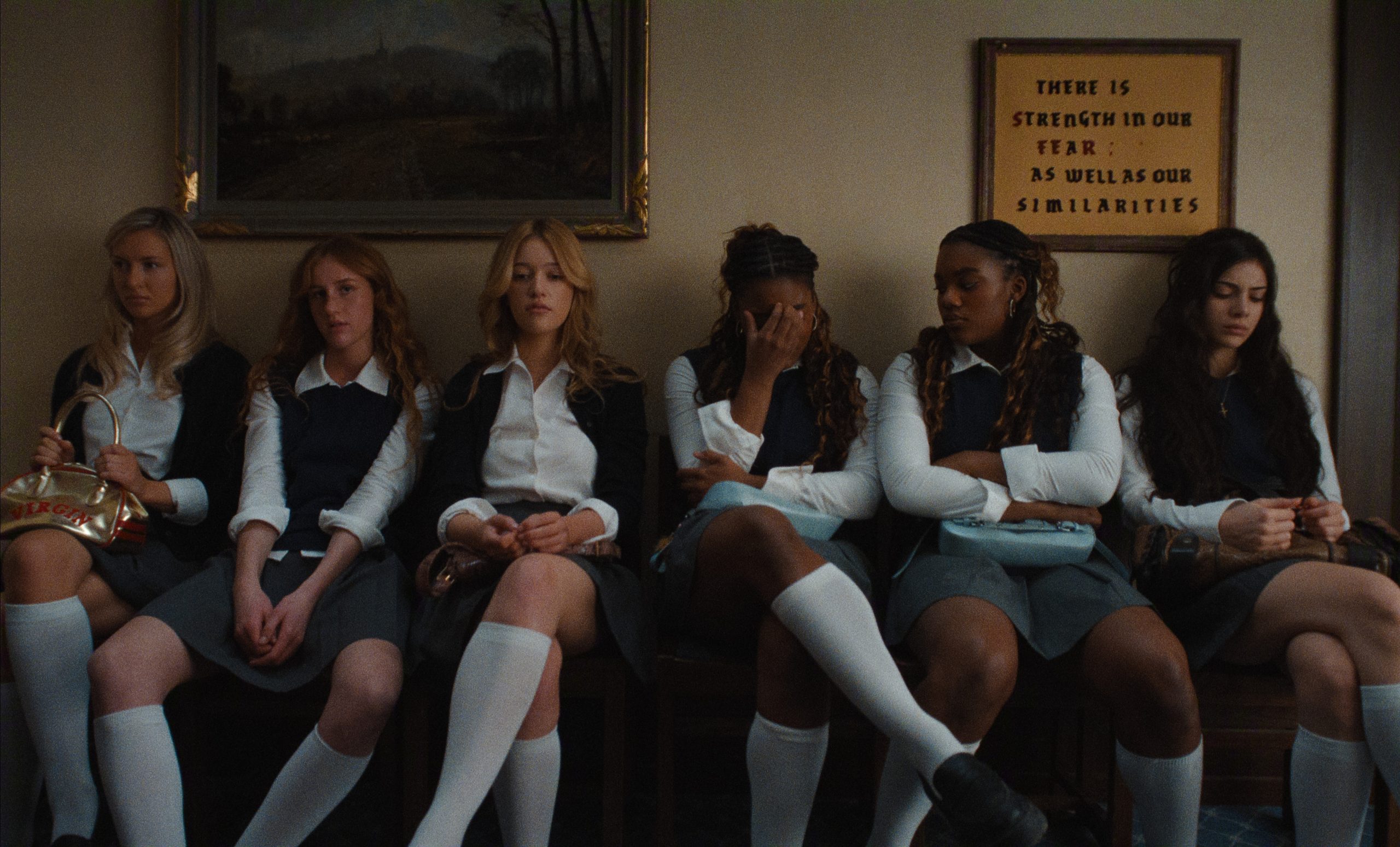
The Body places these tensions in the early 2000s, a period whose cultural attitudes toward sexuality were very different from those of the present. Queer teenagers certainly had communities, language and ways of understanding themselves, but access to those resources was uneven, particularly within institutions that treated heterosexuality as the unquestioned norm.
A Catholic schoolgirl might therefore find herself surrounded by an elaborate vocabulary for what she should not desire, while struggling to find an equally accessible language for what she actually feels. The series makes that conflict part of its larger atmosphere of uncertainty. Its girls are not simply frightened of supernatural forces. Anya, for example, is frightened of being discovered, of wanting the wrong person, of failing to perform the version of herself that her social world demands.
This then creates one of the show’s most revealing parallels. Some of the girls begin claiming supernatural experiences they may not actually be having. Meanwhile, a girl concealing her queerness may find herself performing heterosexual desires she does not feel. One girl says she is seeing things, and suddenly everyone else begins seeing things too. Everyone says they like boys, and the girl who doesn’t understands exactly what she is supposed to say. In both cases, belonging depends on recognising what the group expects and deciding whether to reproduce it.
This is not to suggest that queer identity and collective hysteria are equivalent. Rather, the series places two very different experiences within the same social machinery: the pressure to make one’s private reality conform to a public consensus.That machinery is especially powerful in adolescence, when identity can feel less like something one possesses than something constantly being negotiated with everyone around them.
Who says something first matters. Who gets believed matters. Who is allowed to be strange, desirable, sinful or correct matters When Lisbeth lets out an enthusiastic roar during the dance audition, she’s met with uncomfortable side-eyes, her attempt at fitting in only making her appear more out of place. But when Anya or Elise behave outrageously, their confidence is practically a personality trait. What makes Lisbeth embarrassing makes the popular girls entertaining. The girl at the top of a social hierarchy does not simply decide what is fashionable. She can influence what everyone beneath her understands to be real.
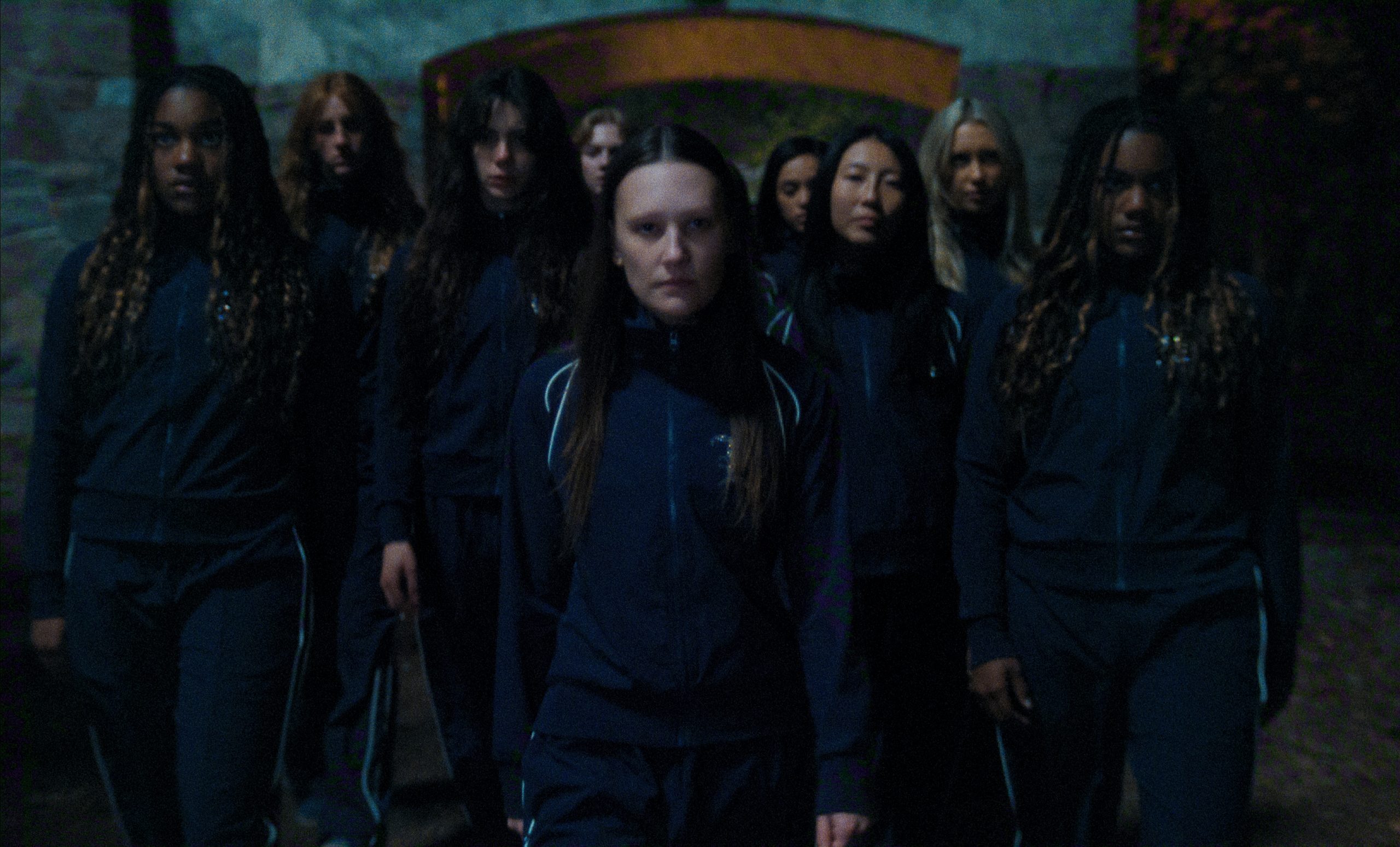
The Body understands how quickly that process can become self-sustaining. One girl becomes frightened. Another sees her fear and begins to panic. The second girl’s reaction convinces the first that her original fear was justified. Soon, the group is no longer responding to a single event but to the accumulating evidence of its own reactions. Fear becomes contagious because everyone is watching everyone else.
There is a cruel irony in the fact that the girls are trained dancers. Their greatest collective skill is the ability to move together, to anticipate one another’s movements and respond almost instinctively to a shared rhythm. The same synchronisation that makes them a successful dance squad also makes their hysteria possible. They have spent weeks learning how to move as one body. Now they are learning how to believe as one.
Yet the series is too funny, too crude and too interested in the absurdities of teenage life to treat all this as a straightforward tragedy. Its girls are horny, sarcastic, occasionally cruel and frequently ridiculous. They make terrible decisions, say inappropriate things (“I masturbate to Daddy Franklin!”, followed by “Yeah, we all do!”) and become invested in dramas that seem enormous to them and incomprehensible to everyone else.
For much of horror’s history, the teenage girl has been made to carry an almost impossible symbolic burden. She is innocence threatened by corruption, sexuality punished by violence, purity endangered by desire or the vulnerable vessel through which evil enters the world.
What she is less frequently allowed to be is simply a person who is funny, selfish, frightened, horny, confused and occasionally wrong. The Body gives its girls room to be all those things at once. Their queerness does not make them uniquely virtuous. Their friendships are not always healthy. Their religious environment is neither the sole explanation for their behaviour nor an incidental backdrop. Thus, the series allows these contradictions to coexist.
The girls are subject to systems of control, but they also reproduce those systems among themselves. They are frightened of judgment, yet constantly judge one another. They resist authority while creating their own hierarchies. They want freedom, but they also desperately want to belong. That just might be the most recognisable thing about them.Adolescence is, among other things, an extended negotiation between the desire to become oneself and the fear of becoming someone nobody else will accept.
The parallels between friendship and religion become almost comically literal when the Lions begin chanting to the devil, offering Grace as a sacrifice in exchange for a place at regionals. It’s a conflict of teenage ambition and religious imagery: a group of Catholic schoolgirls invoking dark forces not for eternal life, unimaginable power or forbidden knowledge, but for the chance to win a dance competition. Beneath the absurdity is something revealing about the girls’ priorities. They have been raised to believe in devotion, sacrifice and the possibility of divine intervention, and have simply redirected that faith towards the thing that matters most in their immediate universe: the Lions.
When the girls begin to lose control, the temptation is to search for an external force responsible for the disruption. A demon. A vision. A curse. Something supernatural. But what if the most frightening possibility is that there is no external force at all? The Body refuses to give us the satisfaction of knowing, and that’s what makes it so compelling. By the finale, we’re left questioning everything: whether Anya’s vision was genuine or merely mushroom-induced, whether Grace is truly suffering from some supernatural affliction, and, perhaps most urgently, what on God’s green earth is going on with Lisbeth. It’s a deliciously frustrating ambiguity, one that leaves us desperate for a second season, if only to find out whether the devil was ever involved in the first place.
There is a reason stories about teenage girls repeatedly return to possession, witchcraft, hysteria and panic. These narratives offer a spectacular explanation for something society has always found difficult to accommodate: girls developing desires, loyalties and ways of understanding themselves. The supernatural turns an ordinary struggle over autonomy into an extraordinary crisis. And it gives everyone watching something to blame.
The most unsettling thing about The Body, then, is not the possibility that something has entered these girls. It is the possibility that nothing has. That the visions, the rituals, the secrets and the hysteria are emerging from the same ordinary forces that have always shaped teenage girlhood: the desire to belong, the fear of exclusion, the shame of wanting something forbidden and the intoxicating possibility of being believed.
For centuries, people have looked at girls behaving in ways they cannot understand and asked what is wrong with them.The Body leaves us with a rather more interesting question. What is it about teenage girls believing in themselves — or, perhaps more dangerously, believing in one another — that has always frightened everyone else so much?