By
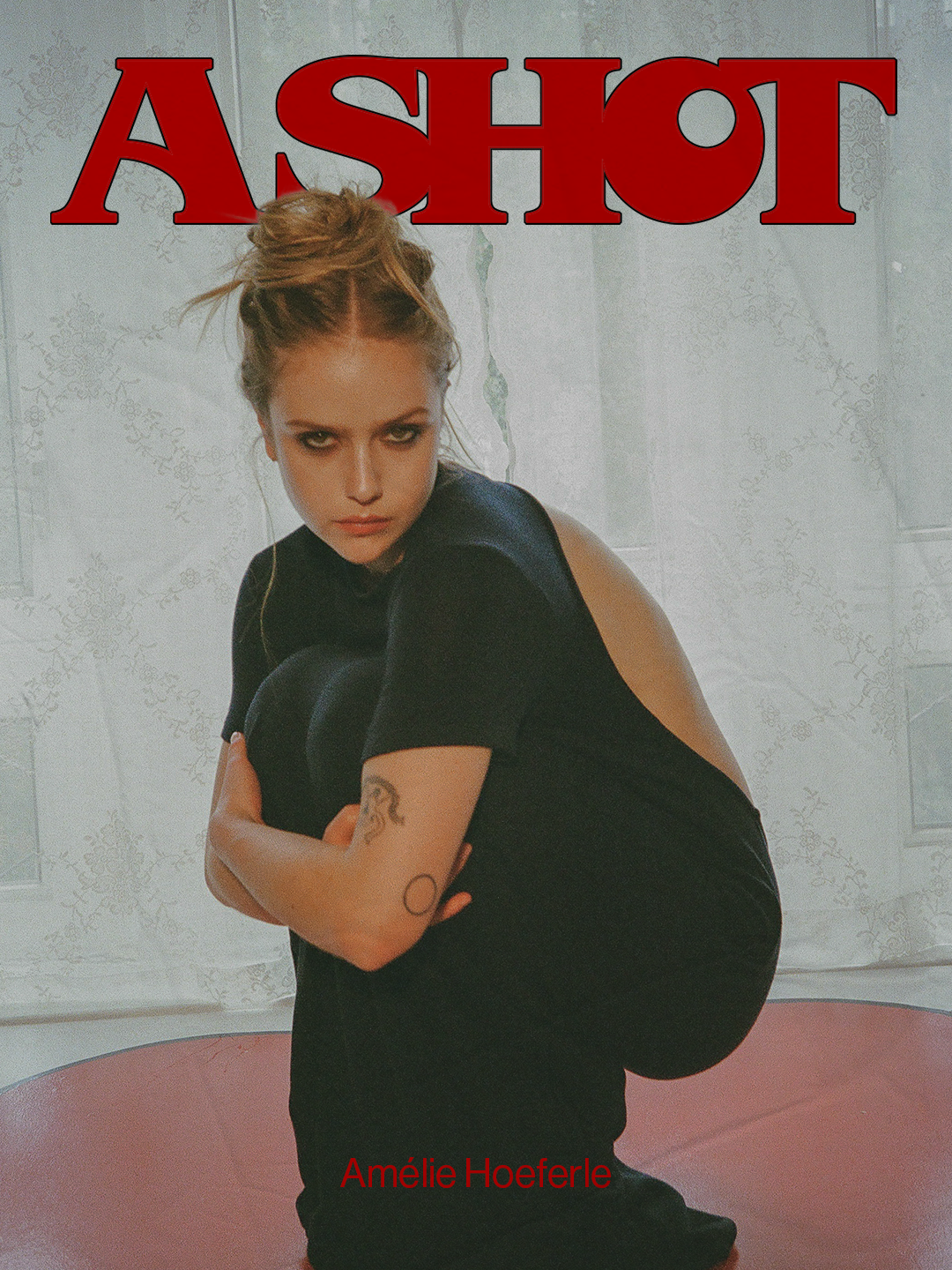
Amélie Hoeferle didn’t see Sterling Point coming, and she’s not particularly interested in overthinking why it did. With season two now underway and Hoeferle recently announced as the lead in the much-talked-about adaptation of Lynn Painter’s Fake Skating, things are moving quickly. Her schedule is packed, her fanbase is growing, and she’s still getting used to the strange new reality of being recognized, although she admits, she mainly only registers it when she opens her phone.
Following her A Shot cover shoot at a home in Brooklyn, Hoeferle sat down with us to talk about where she finds herself now, the whirlwind of the past year, and what comes next.
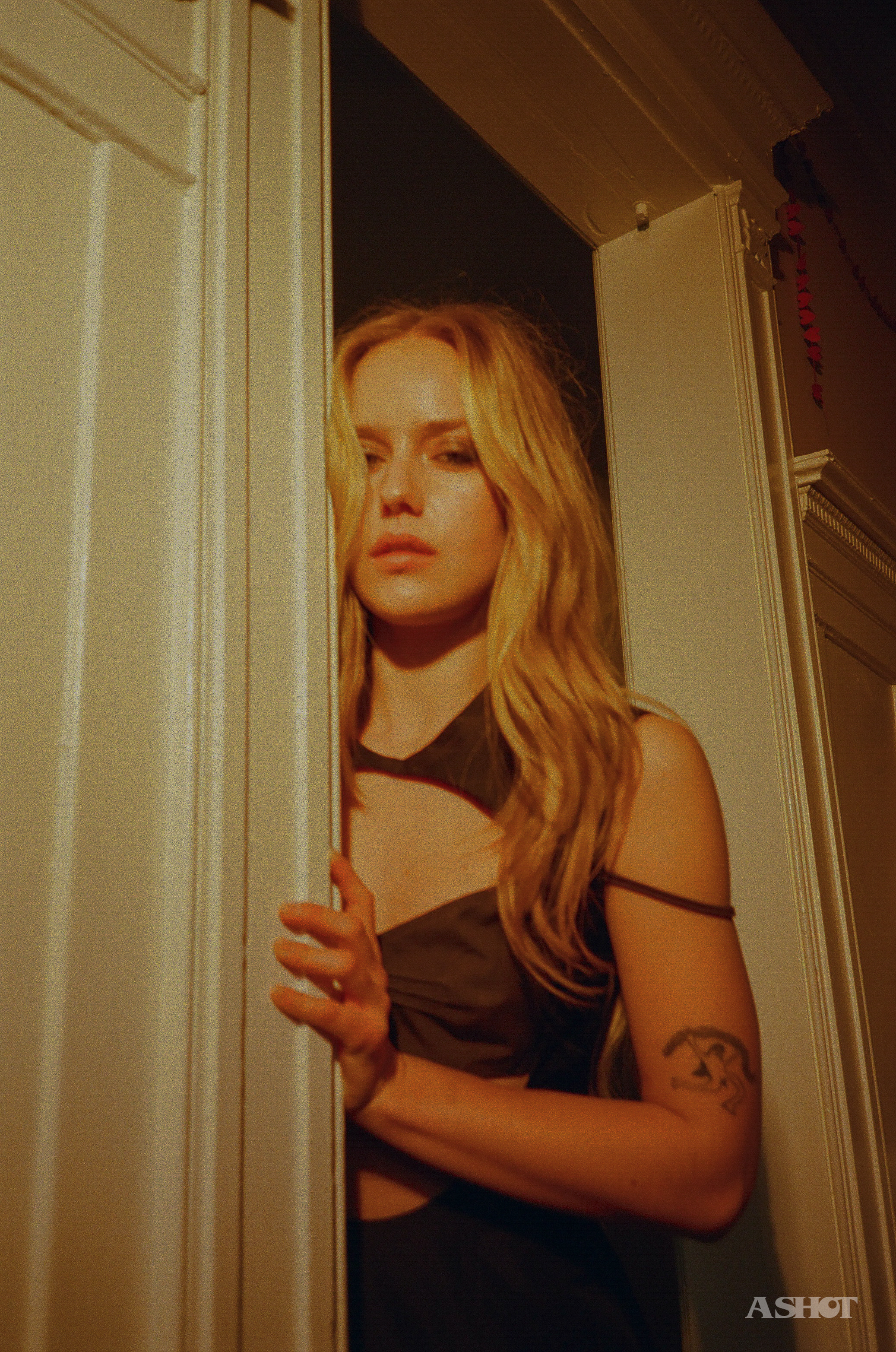
Dress @jilsander
She joins the call on mute. It takes her a few seconds to notice, and when she does, she laughs. It happens every time, she tells me, “Anytime I’m on with someone of importance.” I decide to take that personally, in the best way.
The worst version, she says, is when you come out with something genuinely charming without even trying, and nobody hears it. You can’t say it again because the second time, it’s a line.
She’s wearing a classic red bandana, the same kind Ramona often sports on Sterling Point. It suits her perfectly (of course). From my side of the screen, it’s slightly disorienting, and a little Truman Show-esque, freshly post binge.
She’s in London, just back from five days in her hometown in Germany and about to head to Paris Fashion Week. And after that? “We’ll see.” Her ability to take things as they come suits her as well as the bandana.
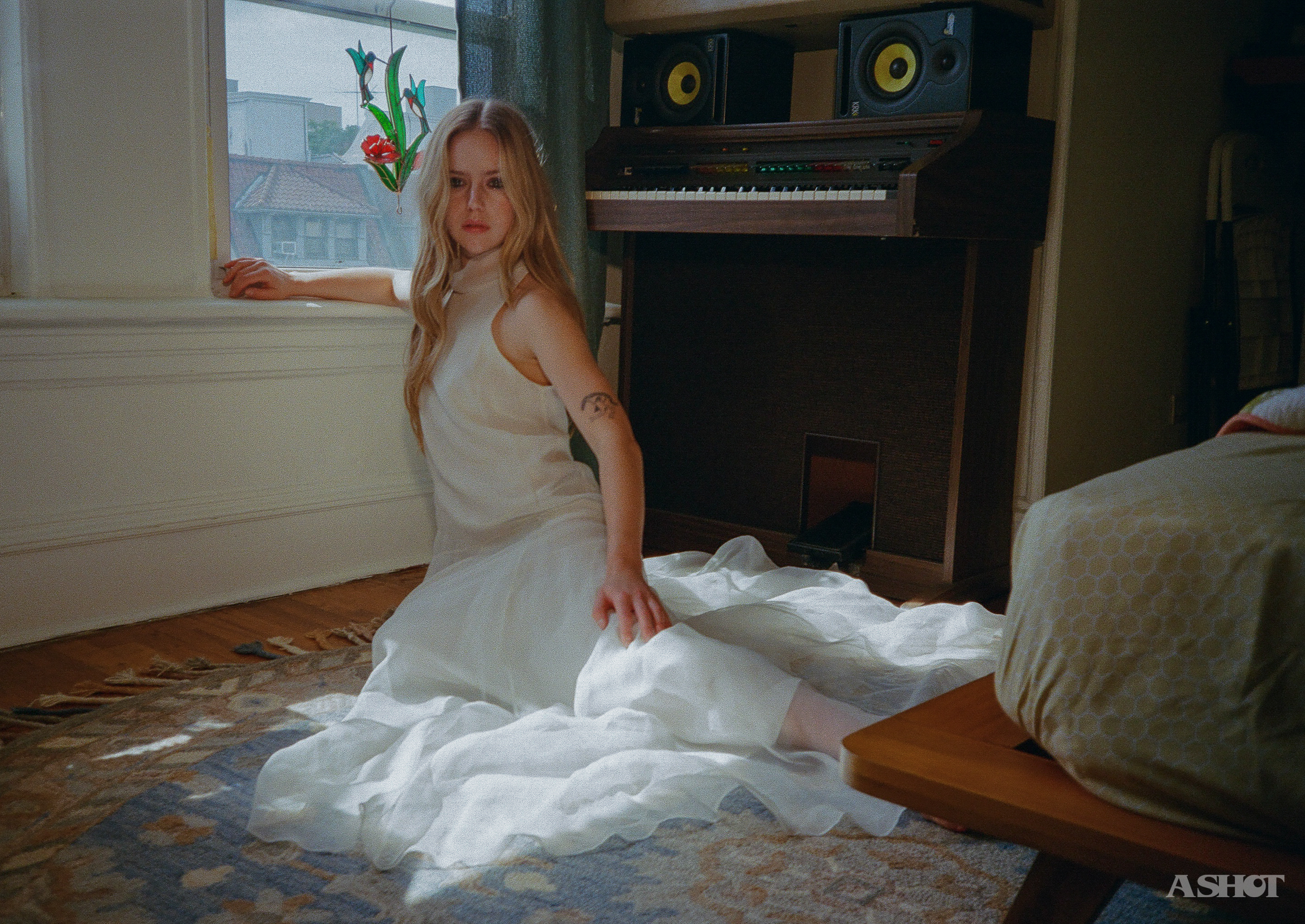
Dress @brunellocucinelli_brand
Hoeferle’s résumé already has some heavy hitters on it: The Ballad of Songbirds and Snakes, from the Hunger Games universe, and Ari Aster’s much-talked-about Eddington, opposite Joaquin Phoenix and Pedro Pascal. But for a lot of people, Sterling Point is where they met her. Created by Megan Park, the filmmaker behind My Old Ass, the Prime Video series follows Annie (Ella Rubin), a 17-year-old Manhattanite who inherits an island on a lake in Muskoka and finds a sister waiting there she never knew she had. Picture The O.C. by way of cottage country: summer romance, family secrets, and a lot of feelings on a dock. Margot Robbie’s LuckyChap produces, and Park runs the show alongside Josh Schwartz and Stephanie Savage, the duo who gave us The O.C. and Gossip Girl.
As Ramona, Hoeferle anchors a story built around relationships between women: a love story with Oona (Bo Bragason), and her bond with half-sister Annie. The audience it’s found isn’t casual. The show went straight to number one on Prime Video and has already been renewed for a second season. People aren’t just watching- they’re intensely invested.
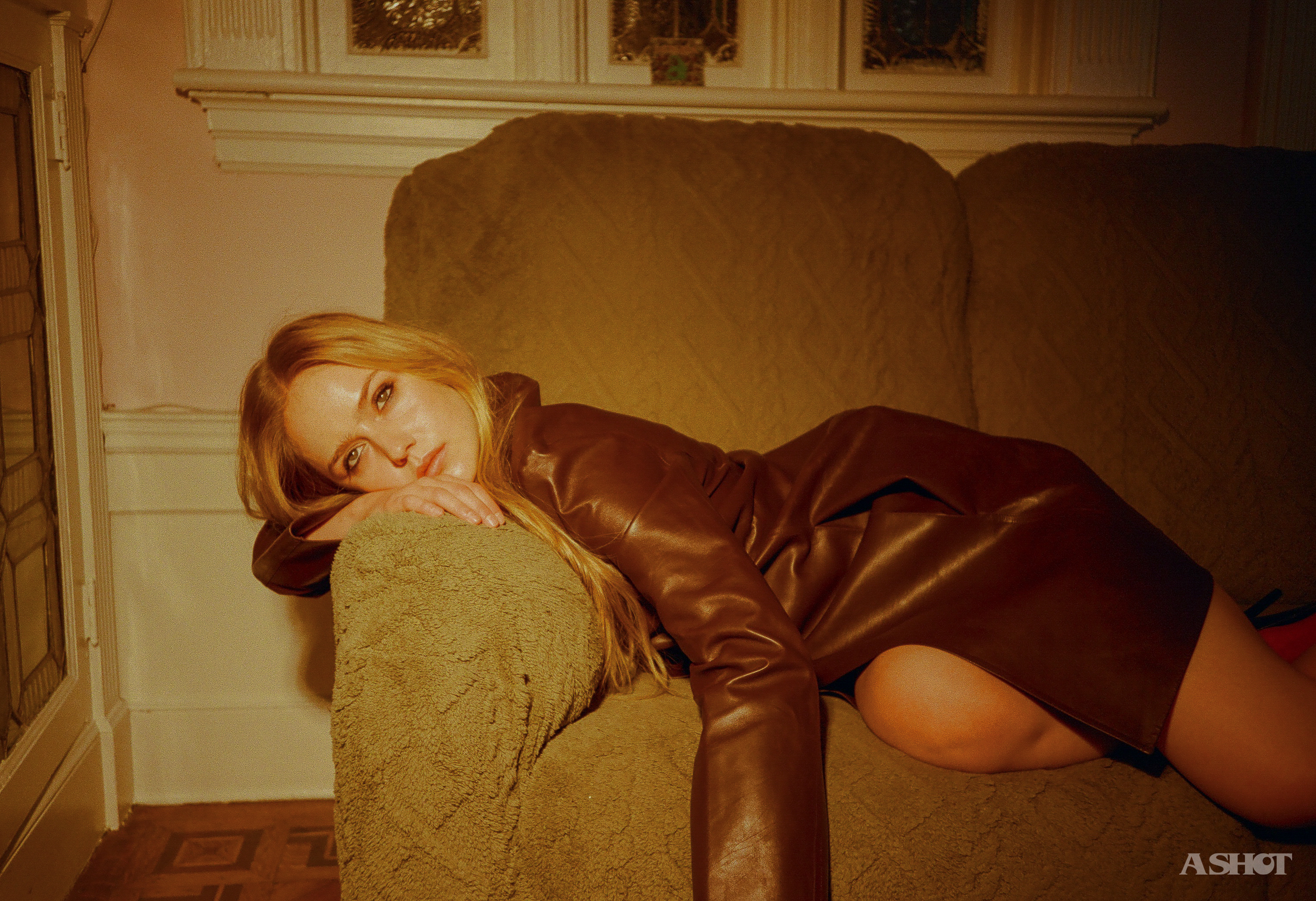
Leather dress jacket @jilsander
When asked if this is the breakout she pictured, Hoeferle seems torn, but not for a predictable reason.
“I didn’t imagine Sterling Point as my breakout role, because I never envisioned myself having a breakout role,” she says. “I know this is such a fake-humble thing to say, but I don’t mean it that way.”
The plan, as she tells it, was a modest one: a full-time job to pay the bills, and small projects with friends whenever she could squeeze them in. Doing what she loves for a living wasn’t really part of the picture. She knocks on wood as she says this, and I catch myself doing the same, a sign of how contagious she is even over zoom. The part that’s surprised her isn’t the success, but what the show has meant to people, “in one way or another.”
So, has she “arrived”? She doesn’t answer the question so much as gently dismantle it.
“The idea of an end goal really scares me.”
“Where does it go from there? Will I never be happy with anything past that, or anything before that, and only be happy in that one moment of having arrived?” she says.
“I don’t think I would consciously know when I’ve arrived. I don’t know if I would really know in the moment: ah, yes, this is the moment I’ve been thinking of. I think ten years from now, I’ll look back at this moment and think, wow, that was a turning point in my life. Or maybe even a year from now, who knows. I didn’t even see it in the moment.” Then,:
“I find a lot more peace in just being present in the moment that I am in.”
In other words: we’ll see.
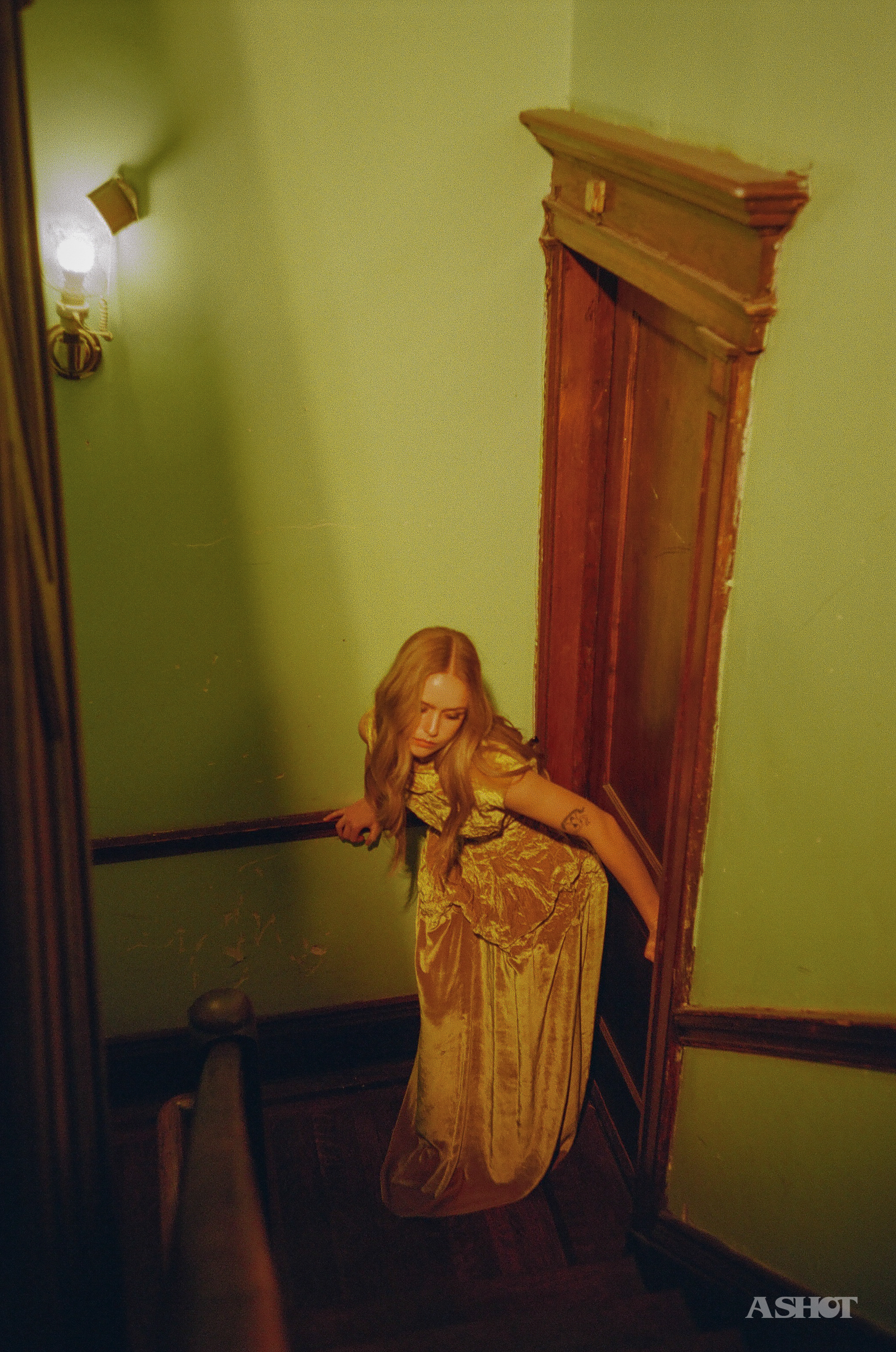
Dress @fforme
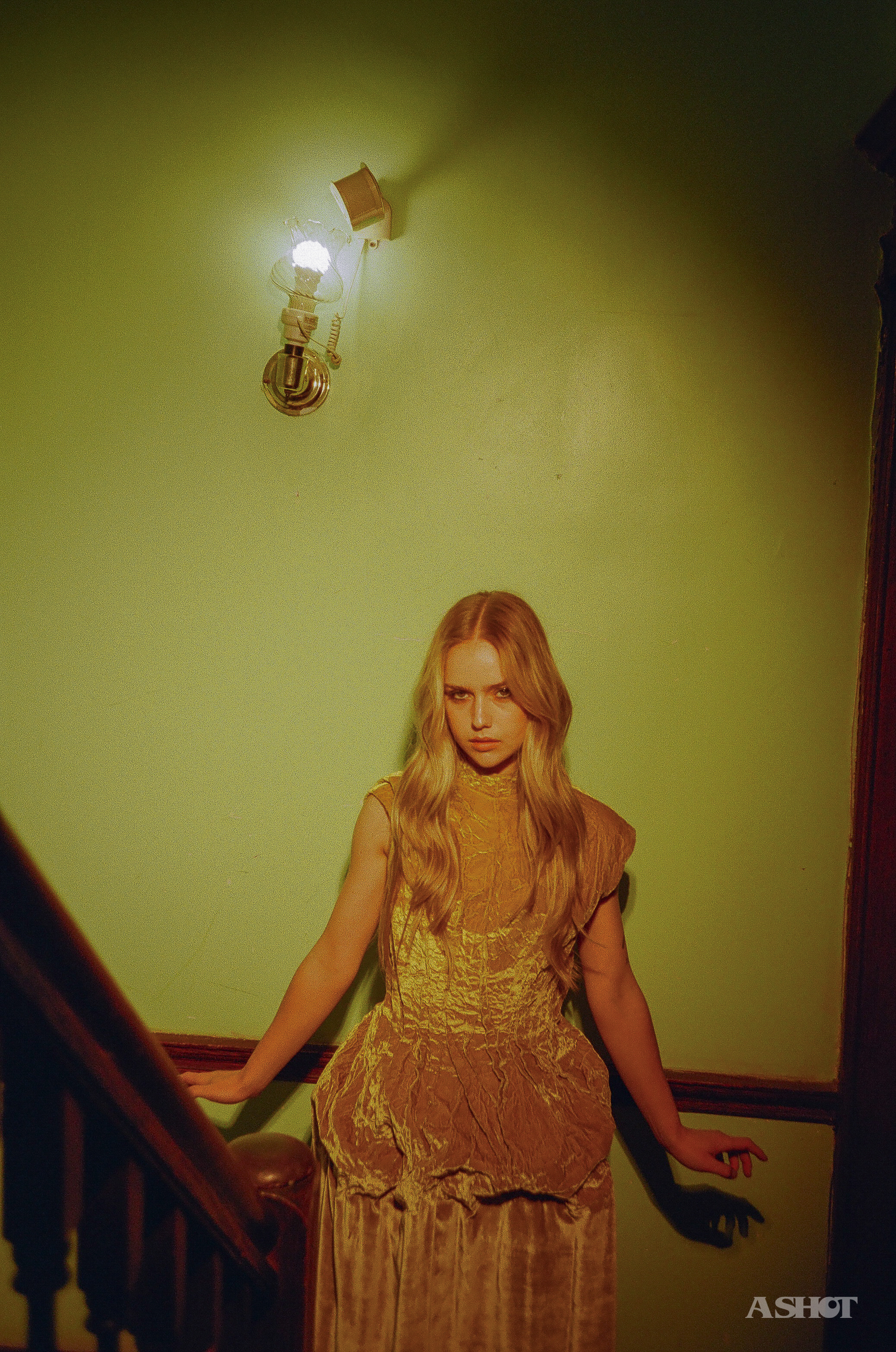
Dress @fforme
She reflects on whether growing up partially in Germany shaped that view. “It’s hard to say,” she says, because she has “the perspective of a German living in America, and also an American living in Germany.” But in the Germany she knows, and among the people she spent time with there, work was “somewhat decentered.” Having just come back from home, she describes the difference in pace: less of the to-go coffee so you get to work on time, the eight hours, then going home to prepare for tomorrow. More room for the rest of life. “I’m not saying that it’s completely ideal,” she adds, doing her part in not romanticizing it.
If she has a goal, it’s this: “To just be able to be a part of it and to act. As long as I’m doing that, I feel pretty content.” She calls acting “the itch that I continue to want to scratch.” Then, after a moment: “Maybe that’s the end goal. Just being content with what I’m doing.”
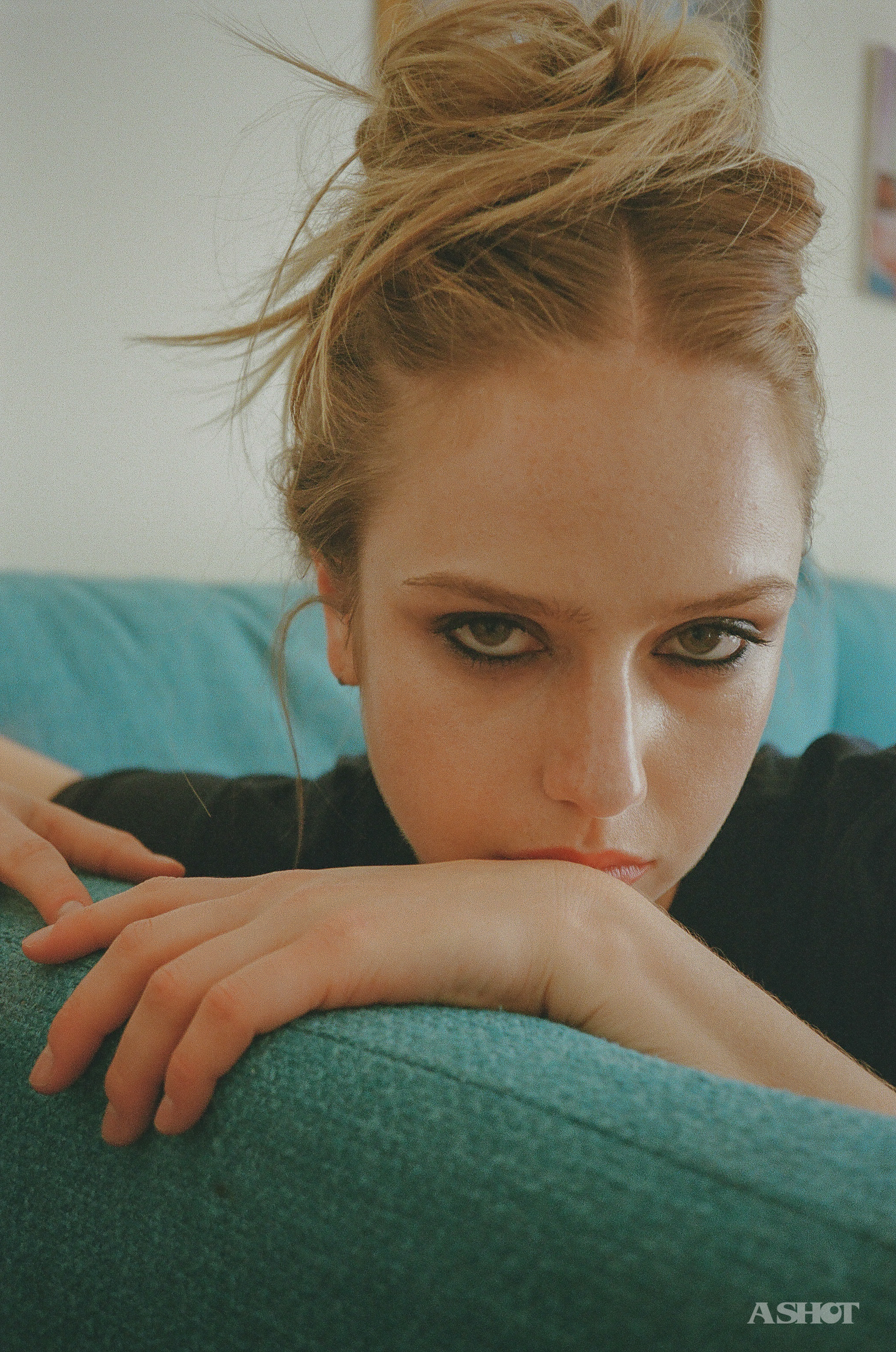
Dress @@anemoslosangeles
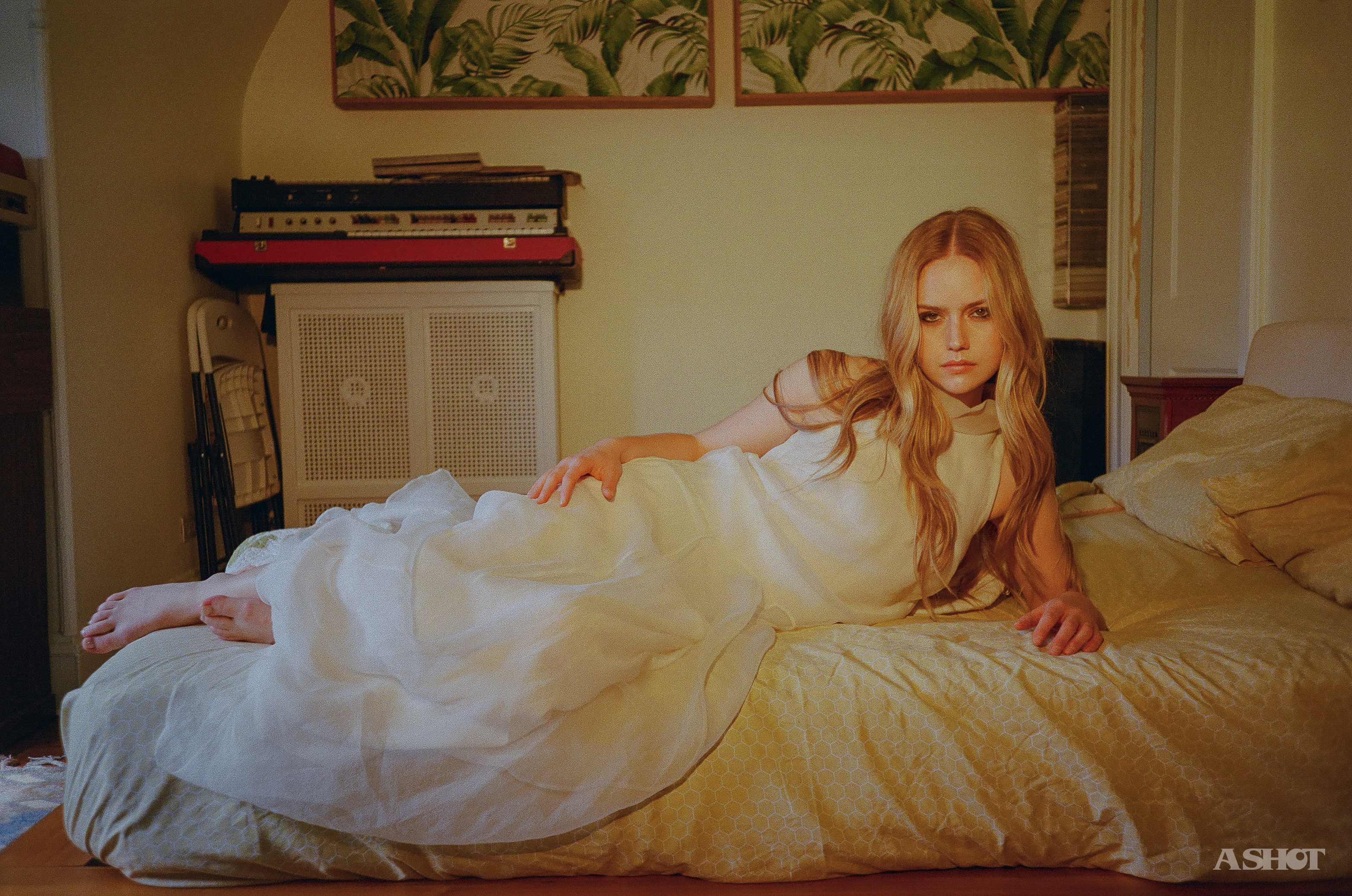
Dress @brunellocucinelli_brand
If acting is the itch, Sterling Point gave her a lot to scratch. The show landed to rave reviews and the kind of fandom that makes it hard to open your phone without seeing each member of the cast sitting front row at a fashion show, or in a fan edit you randomly stumbled upon (100% my algorithm). What fans might not know is that two relationships at the heart of it, Ramona and Annie, Ramona and Oona, were built in almost opposite ways.
With Ella Rubin, the prep was mostly talking. They spent long stretches together, just the two of them, and got close fast.
“I want to talk about everything. I want to rip your skin off your body and just see inside of you. I want to know you like a sister would know you,” Hoeferle says, describing the feeling. “That was really a lot of the ‘prep.'”
With Bo Bragason, it was nearly the reverse. They talked through their characters and the story, and spent plenty of time together with the rest of the cast, but didn’t hang out on their own until roughly the last month of shooting.
“This was never spoken,” she says, “but I think subconsciously we didn’t quite know each other yet as Amélie and Bo, and we were fine with figuring that out as the story progressed. The closer Ramona and Oona got in the story, the closer Bo and I got in real life.” She remembers the first beer they had alone, and the moment it hit them both: “Wow, this is the first time we’ve hung out. This is the closest we’ve gotten.” She’s quick to make clear there was never any distance between them. “I really, really adore Bo.”
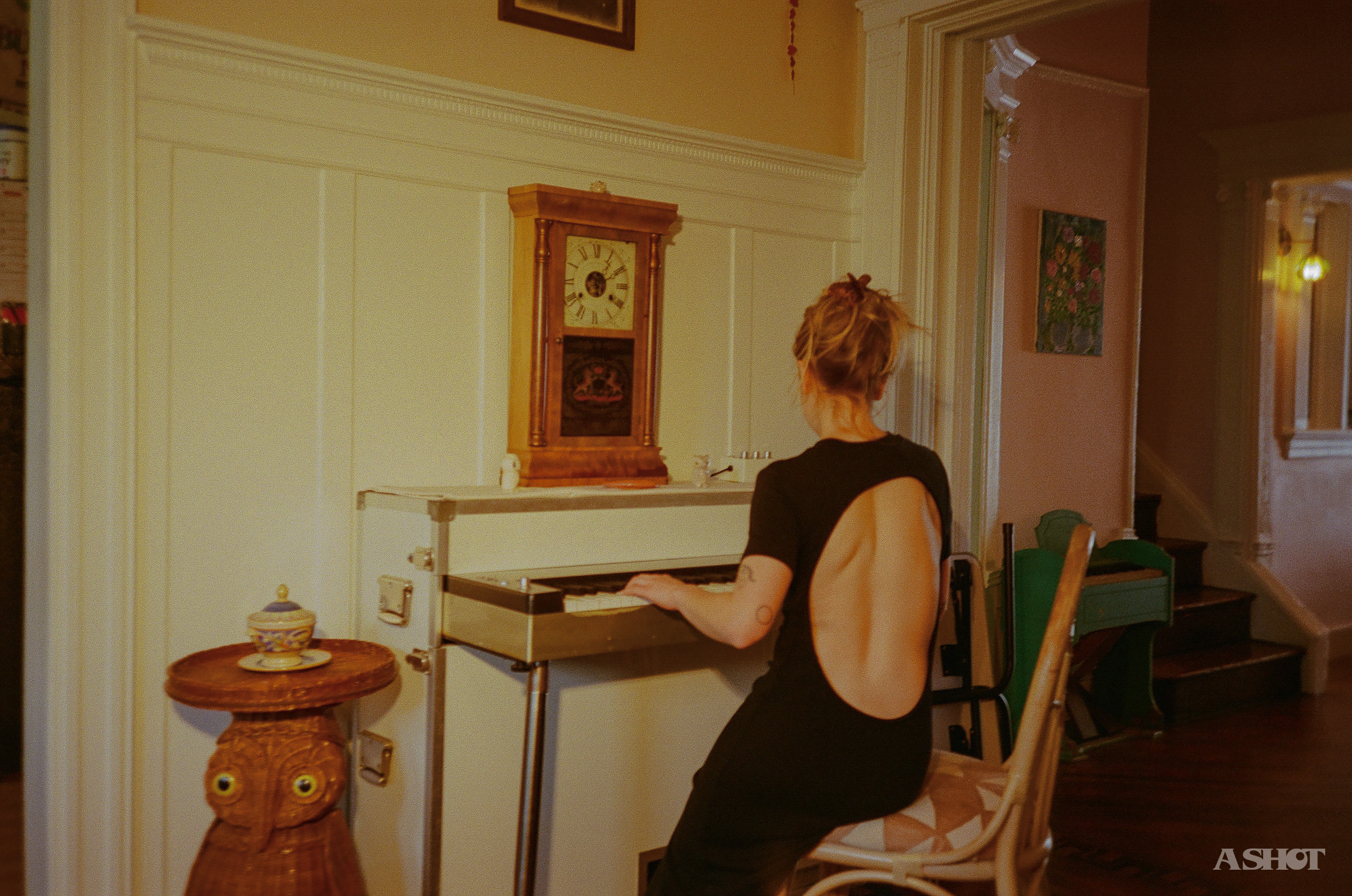
Dress @jilsander
The whole cast, she says, including Rubin, Bragason, and Keen Ruffalo, felt “very free” in their characters, and that freedom followed them off set. “We kind of intuitively knew how to hang out in a way that was conducive to then going on set the next day, which was really beautiful and very rare, and something I didn’t even realize we were doing in the moment. Only upon looking back, I’m like, wow, that’s so parallel to our arcs on screen.”
Which is her theory about arriving, more or less, playing out in real time. You don’t see it while it’s happening. You see it later.
So if she had a seat in the season two writers’ room, what would she fight for? She doesn’t hesitate. “I would really love for Ramona and Oona to, in some world, end up together.”
Selfishly, this makes my gay heart sing, but the why is even more fulfilling. She’s clearly thought about this before and begins by walking me through the arc lesbian love stories on screen tend to follow: the sudden, all-consuming beginning (“the U-Haul lesbian is a thing for a reason”), then an equally dramatic collapse, two lives pulled apart. It happens so often that audiences start bracing for the ending before the relationship has really begun.
What she wants is something that’s still strangely rare. “To see a lesbian couple not end in complete heartbreak and destruction would be really beautiful.” She wants them together “in a way that’s healthy,” then searches for what she’d rather they avoid. “I don’t want to say toxic, but… strenuous love.”
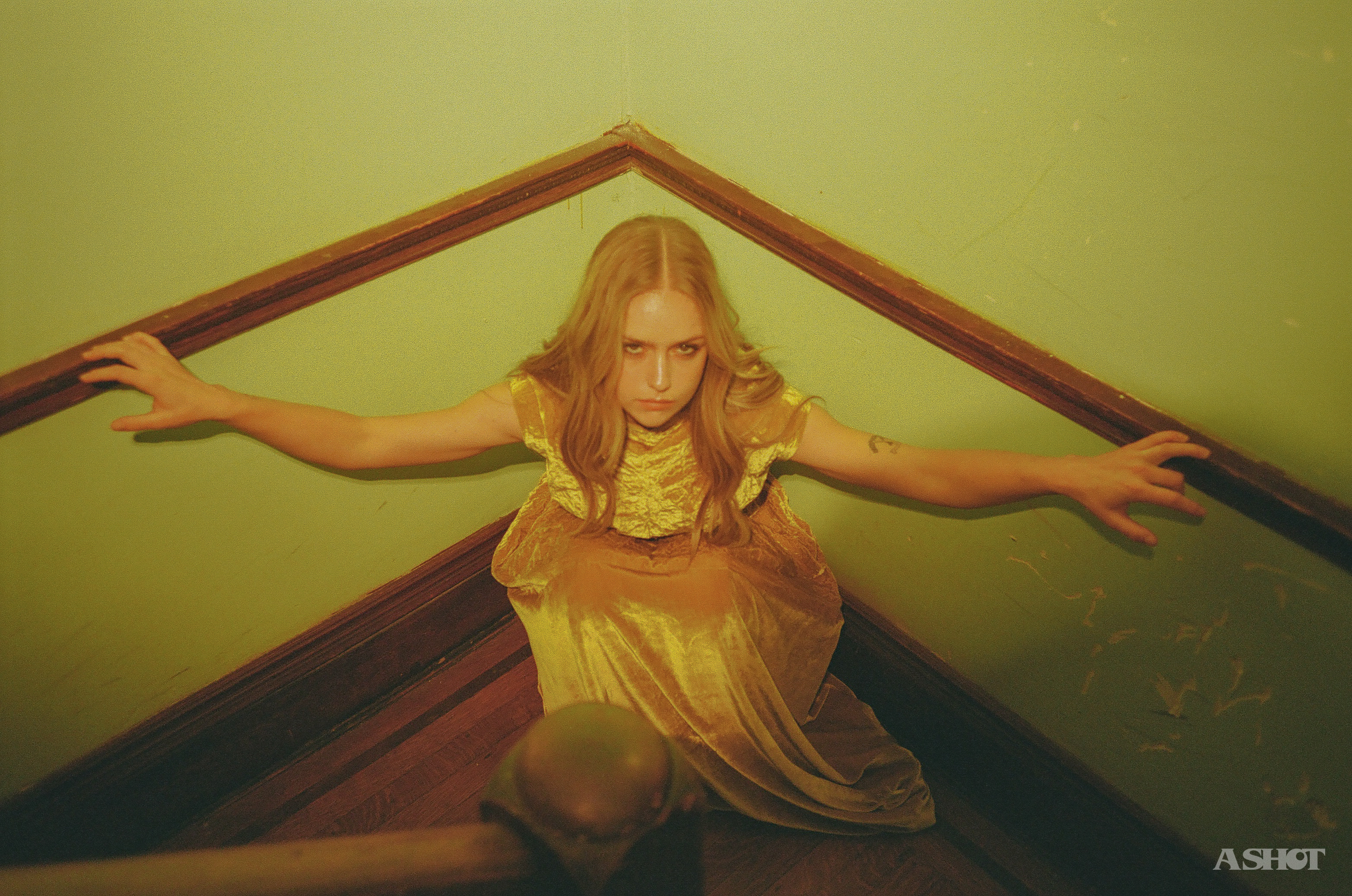
Dress @fforme
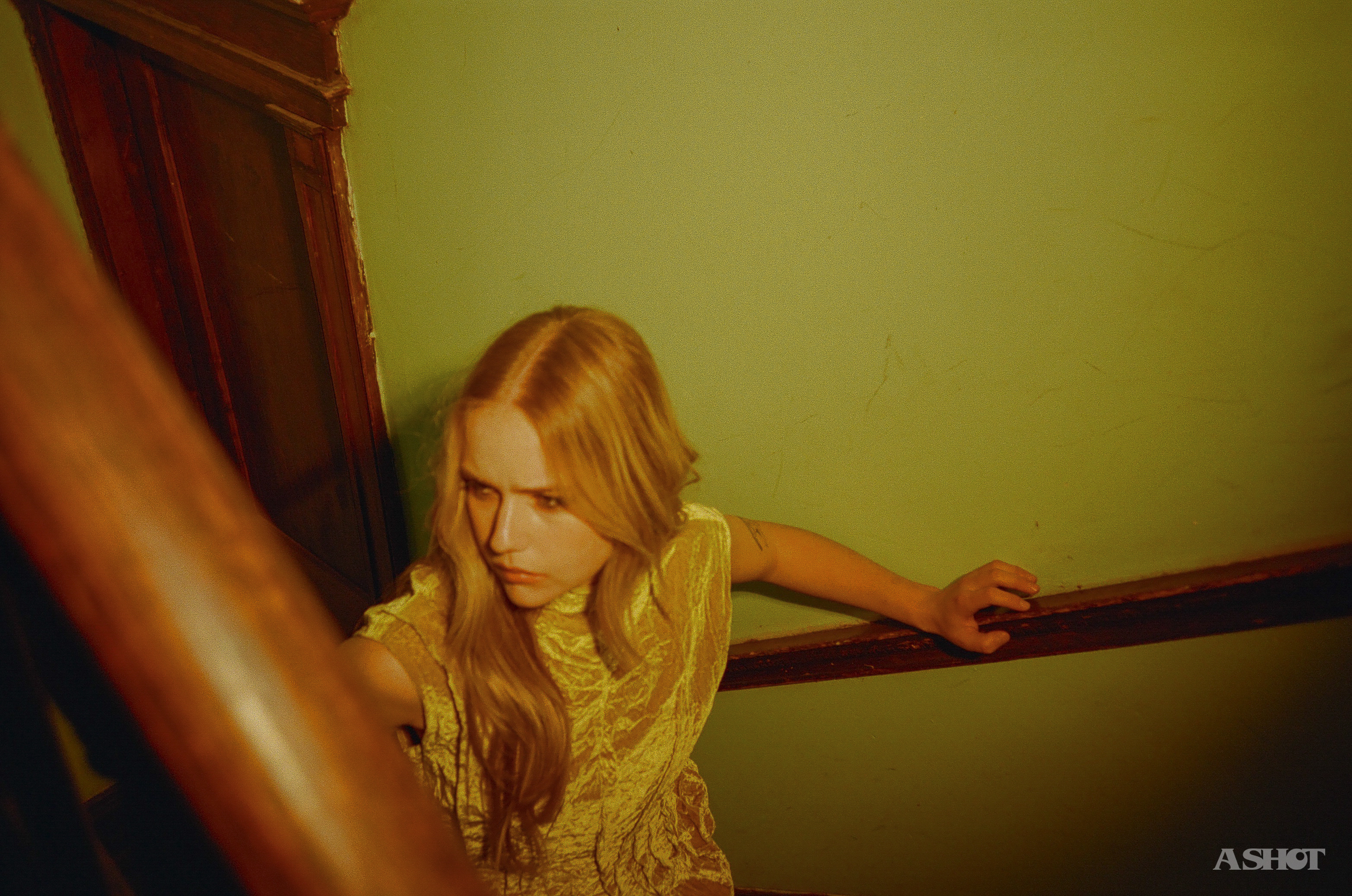
Dress @fforme
The attachment fans form to queer characters often extends to the actors who play them. Viewers quietly expect the actor to explain, confirm, or represent something personal, and that expectation can crowd out their freedom to simply be artists.
Hoeferle doesn’t pretend to have figured out where her own line is. “I’m still figuring that out, honestly,” she says, “how much of myself I want to share with the world, or the people in the world who have access to the internet…Which I imagine is almost everyone.”
What she has decided is where her energy goes. “I pour a lot of myself, my ideas and my thoughts, into this character, into Ramona specifically.” How to be in public is something she describes as still “learning” and “navigating.” But she has one principle she won’t compromise on: “Anything that I show is going to be truthful. So, I’m very careful with what I show, because nothing is false. Everything you give is very, very deeply honest, and I want to continue that.”
It’s worth considering what that means in practice. Much of how public figures manage privacy relies on some level of performance: a curated version, a persona that absorbs attention, so the real person doesn’t have to. Hoeferle rejects that approach. She would rather show less than show something that isn’t true. The result is a boundary that protects her privacy while also honoring her desire to remain honest.
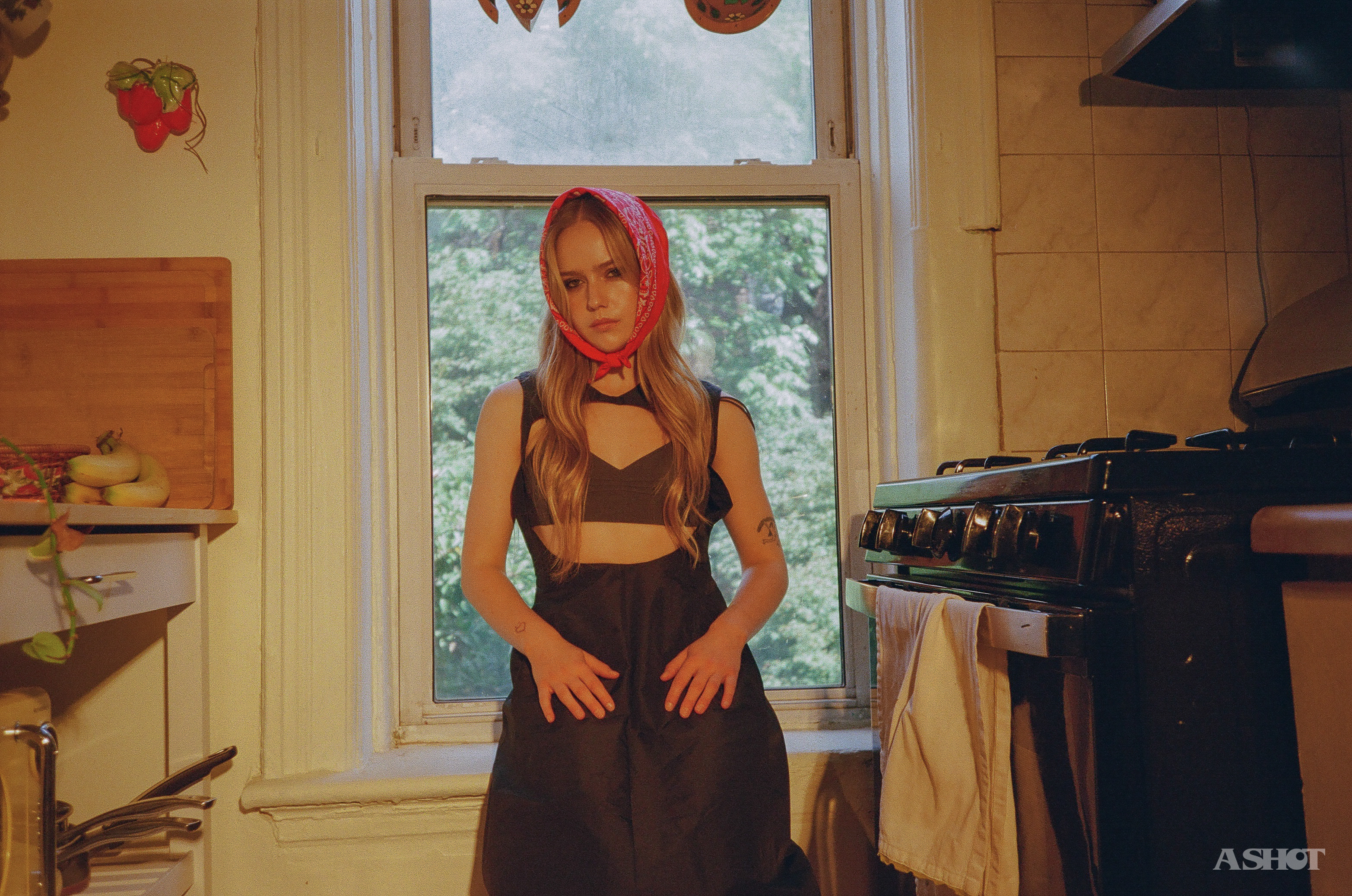
Dress @jilsander
At our shoot, she kept drifting over to a piano she can’t play. Every few minutes, there she was again, hovering in the way some people can’t walk past a dog without saying hello. She grew up playing violin, “weirdly,” and claims she “can’t sing for shit,” and yet music is still central to how she works. Building Ramona, she listened to Adrianne Lenker, The War on Drugs, boygenius, and a lot of Nick Drake, “anything that made me feel a sense of melancholia.” A demanding playlist. As the season went on, it eased into what she calls “hopeful melancholy,”
The actors she admires are top tier: Joaquin Phoenix (whom she’s worked with before), Frances McDormand, Philip Seymour Hoffman. What connects them, she says, is the way they “hook you in, and you can’t figure out what it is.” She tries to describe it anyway. “You can tell this is written word being acted out, but then there’s a living soul behind these words.” She continues, “It’s not always perfect. It’s not always likable. It’s just human. There’s a raw edge to them.” It’s also something she says she finds herself pursuing. I’m buzzed that an actor so recently embraced by a devoted fandom lists being unlikable as part of what she values. It leads me to believe she isn’t planning to spend her career being easy to love or picking projects with the goal of appeasing a crowd, something I’m going to hold her to, whether she knows it or not.
As for which director she’d drop everything for, she knows the list is long but names only one: Joachim Trier.
“I really, really, really, really loved Sentimental Value. His work is so emotional. It’s so human.”
Without having the exact reason for why, this makes perfect sense.
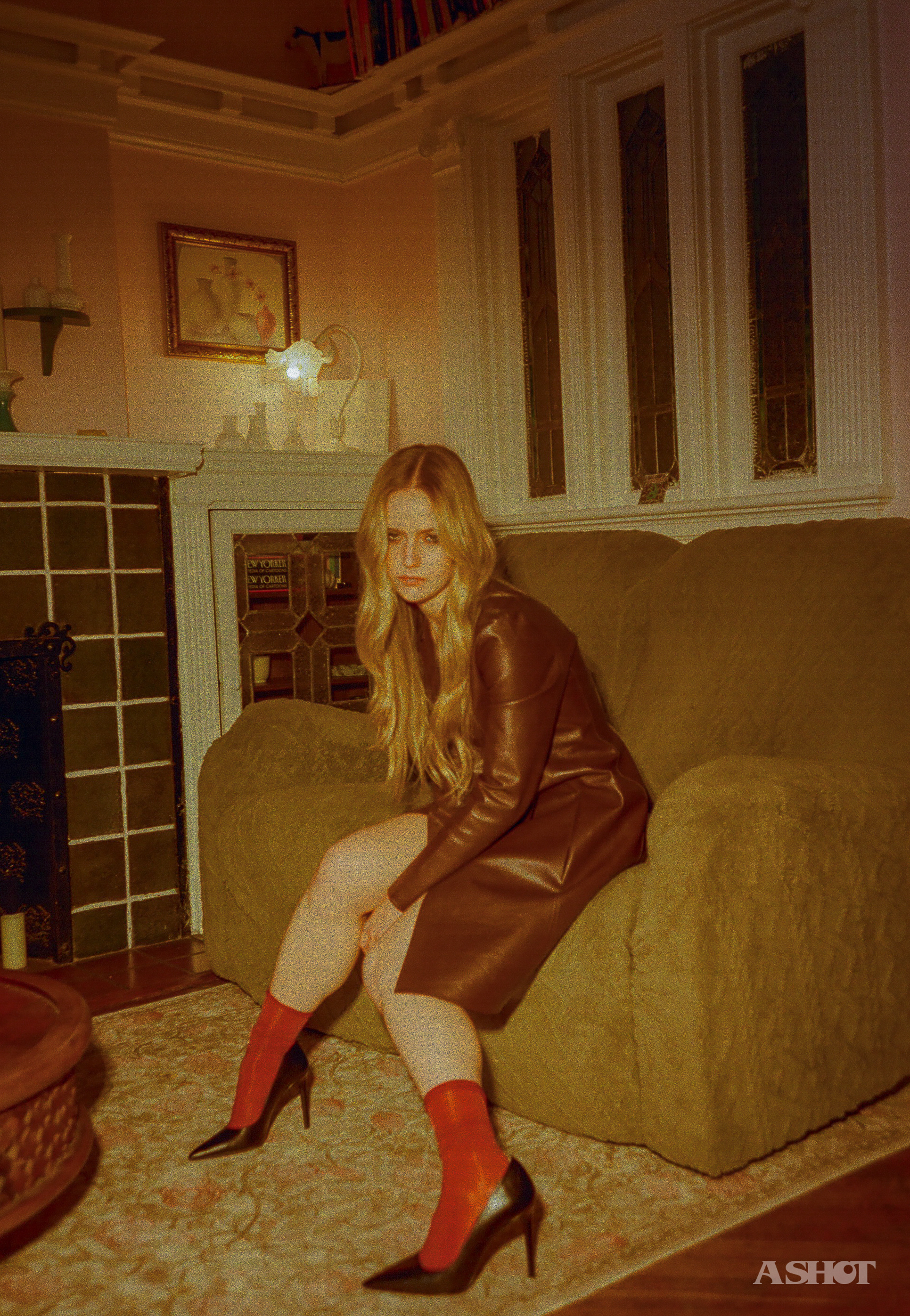
Leather dress jacket @jilsander
Impressively, Hoeferle’s career so far has already moved between horror, drama, and coming-of-age, and she’s open about where she’d like to go next. She recently watched George Sluizer’s The Vanishing (Spoorloos) and calls it “maybe the scariest film I’ve ever seen,” precisely because it avoids easy scares in favor of slow, psychological dread. “I would categorize it as horror, but I don’t know if that’s widely accepted.” What draws her to it makes sense: it builds fear through patience rather than shock, and through what the audience is made to wait for.
Comedy she won’t rule out, though she doesn’t think of herself as funny. Then again, she points out, in truly good comedy “the characters don’t know that they’re in a comedy.” Whatever the tone of the film, what matters to her is that the character believes their situation completely.
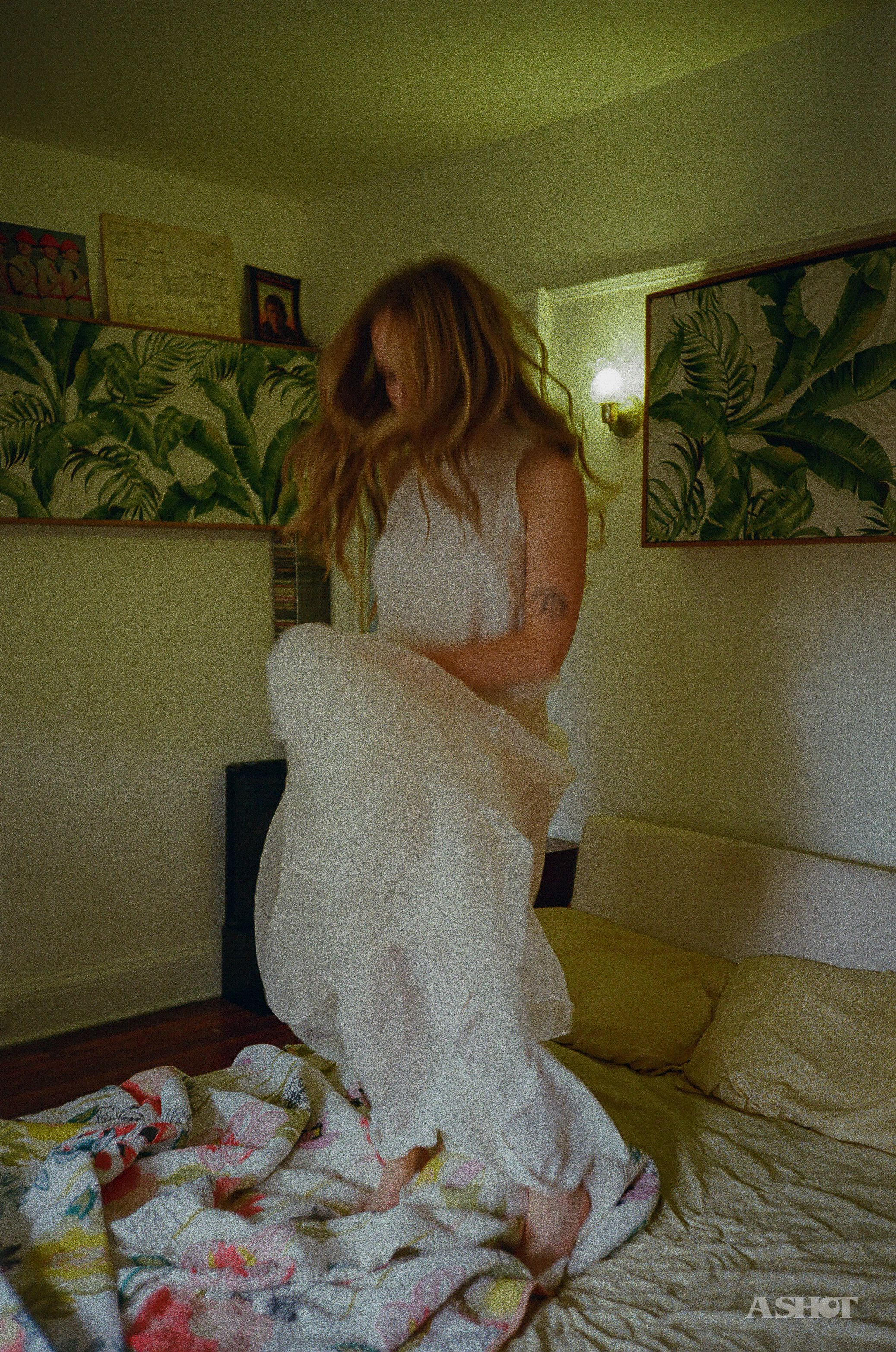
Dress @brunellocucinelli_brand
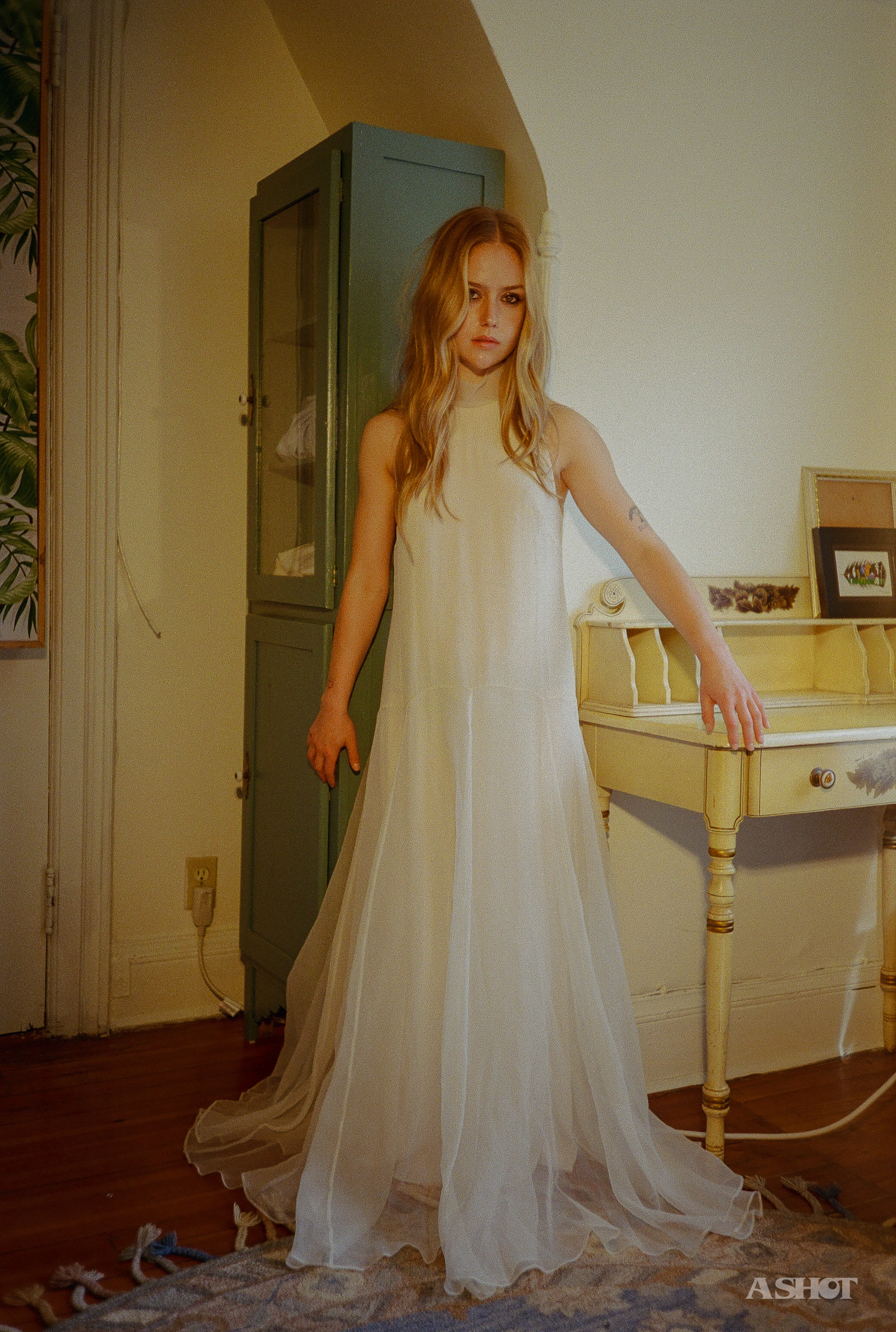
Dress @brunellocucinelli_brand
A Shot asks every cover star which shot in a film they would be and when finally posed the question, she admits it was the first thing she thought about when she woke up that morning.
She gives two answers. The first is a still from Kieślowski’s The Double Life of Véronique. Irène Jacob walks down a street, stops in a patch of sunlight, closes her eyes, and turns her face toward it. “I feel very seen in that,” she says.
The second is a scene from Mike Leigh’s Naked. David Thewlis sits on a couch across from Lesley Sharp, who asks whether he was bored where he used to live. He launches into one of the character’s furious monologues: was he bored? Of course not. Everyone is bored all the time, even though the whole world has been explained to them. “As annoying as his character is, and as horrible as his character is,” she says, “that bit has always stuck with me.”
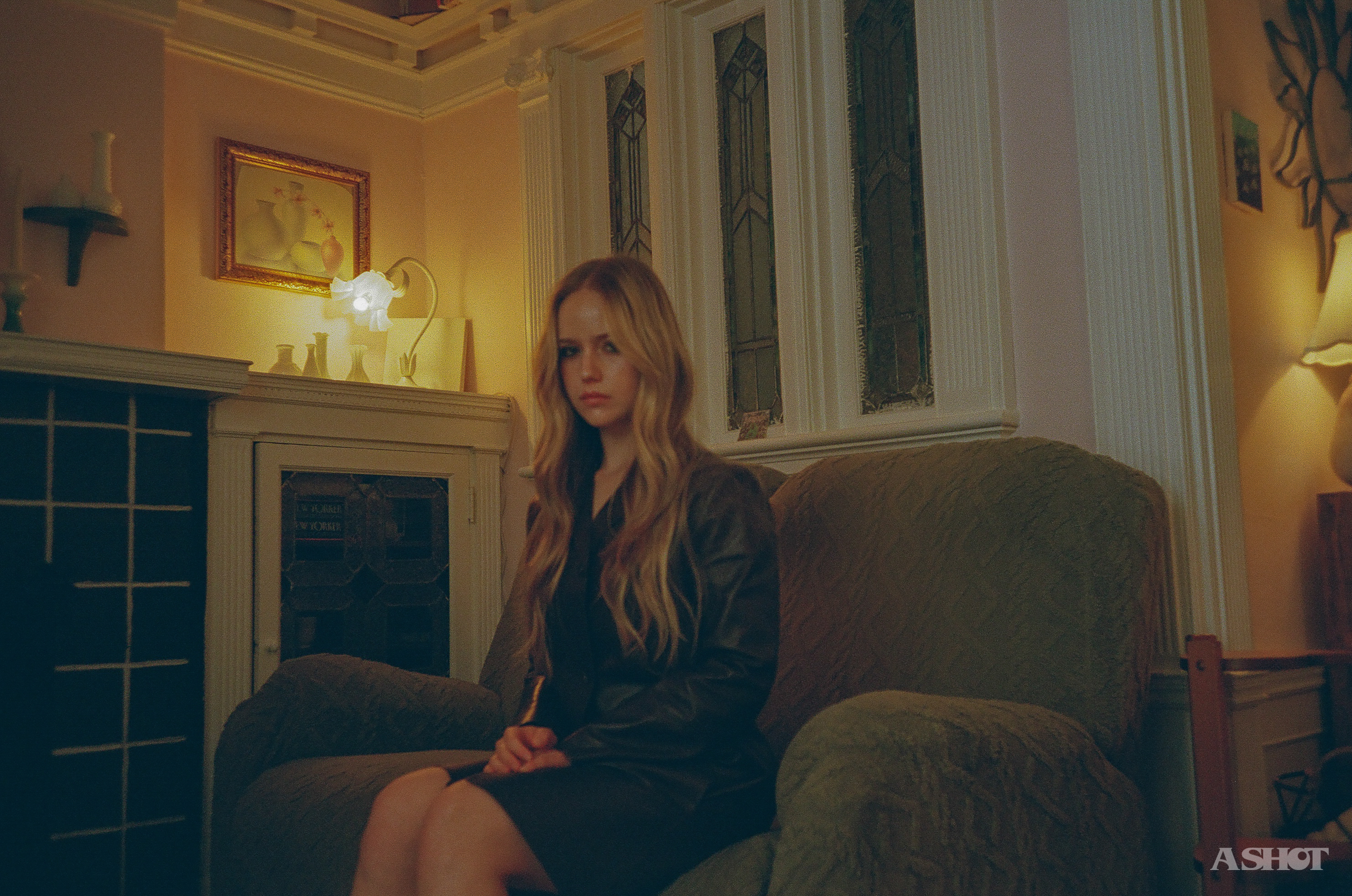
Leather dress jacket @jilsander
We end up talking about boredom, and how the empty time we now fill with our phones used to be when we processed our lives, like staring out a car window as a kid. She wonders if boredom might have an evolutionary purpose. “But actually, how are we bored? How?” Then she turns it on me: “So when do you process?” I don’t have a good answer, because I’m guilty of filling my spare time with my phone.
“This is going to be on my mind for the rest of the day.”
To add onto our lack of processing time, the only responsible thing to do is a quickfire round.
Morning or night? Morning. Birthdays? She wouldn’t call herself a birthday person, but she’s not against them either, which I’m still decoding. Most of her friends, she notes, are Virgos. In Germany, her go-to snack is Peanut Flips with an Apfelschorle. In America, it’s Cheez-Its (their addictive nature is concerning in a way no one should look into). Comfort show: Girls (an iconic choice). Most-played artist: probably still Amy Winehouse, a holdover from last year. Peeta or Gale? Team Peeta, which is reassuring coming from someone who’s actually been to Panem.
And when I ask her to pick a side in Annie’s love life, to help settle online discourse, she skips the question entirely. “I’m Team Ramoona all the way.”
So are we. Between Paris, a second season of Sterling Point and the announcement of Fake Skating, the coming months are full, and she seems happy to meet them as they arrive.
Stylist @bailey.moon
Hair @blakeerik
Mua @kirinstagram
Location @theowlhousenyc