By
In a world where conflict is so often used as the backdrop for films, making yet another movie about World War II and D-Day could easily have been the worst idea. Yet Pressure manages to avoid that entirely. Rather than giving us another conventional war movie filled with sprawling battle sequences and traditional battlefield heroics, it takes a far more unusual approach, placing a meteorologist at the centre of the story. There are no obvious action set pieces for much of its runtime; instead, the film finds its tension in weather forecasts, maps and a group of men arguing over whether the conditions are right for D-Day. It is an original take on a war story we have seen countless times before, and somehow, it works — and it does so really well.
Set in the 72 hours before the Allied invasion of Normandy, Pressure follows RAF Group Captain James Stagg as he attempts to convince Allied command that the planned launch date could be a disaster because of the weather. The fate of thousands of soldiers rests, in part, on his ability to predict something that is inherently unpredictable. It is a surprisingly effective way of creating suspense, because the film understands that Stagg does not need to be fighting on a beach to be under enormous pressure. His battlefield is a briefing room, and his weapon is a weather forecast.
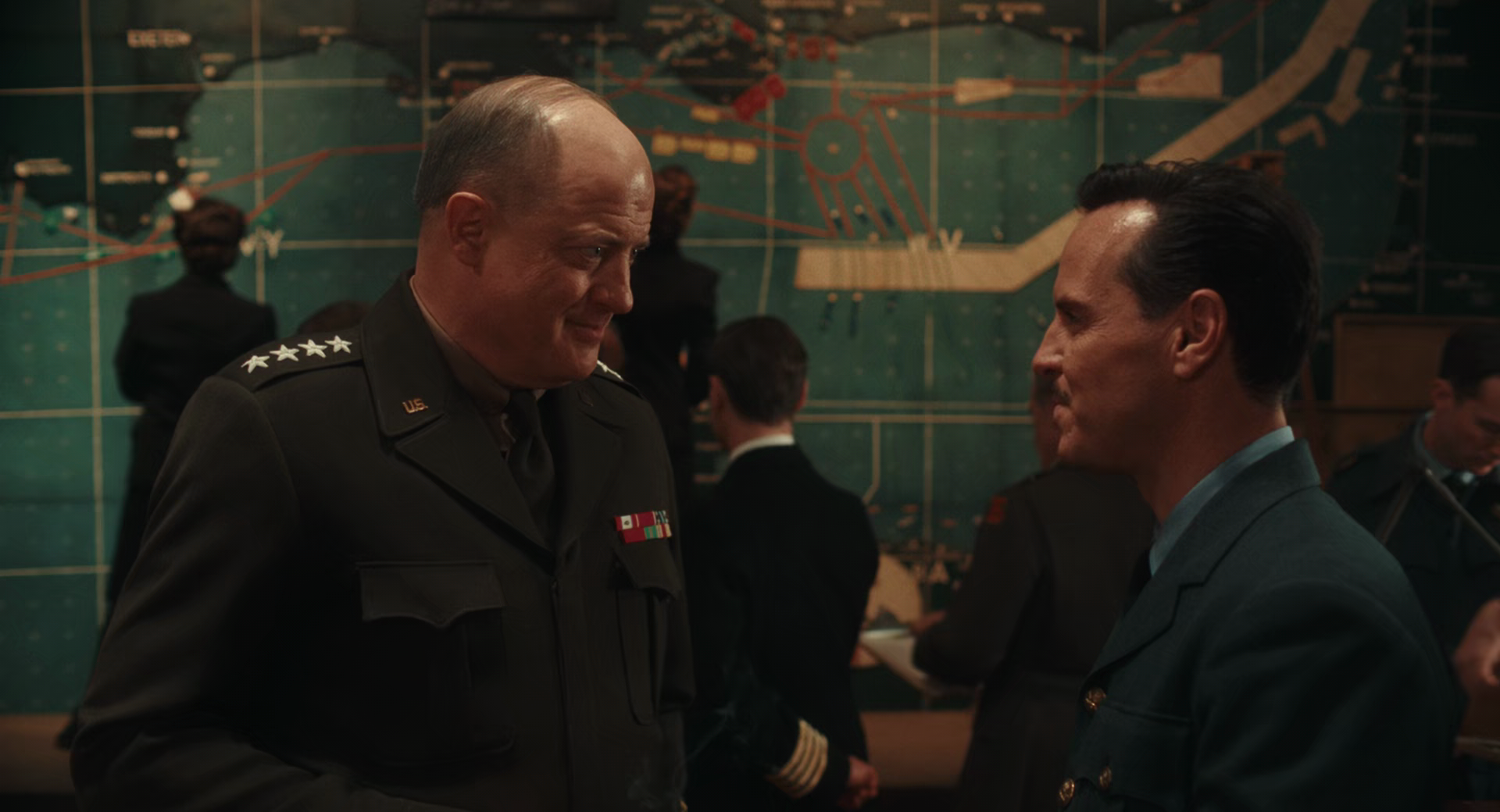
Andrew Scott is undoubtedly the film’s biggest strength. His performance as Stagg is breathtaking, demonstrating once again the range he possesses as an actor. There is a restraint to his performance that makes the character particularly compelling, with Stagg’s stubbornness, frustration and doubt always sitting just beneath his calm, professional exterior. As Scott himself described the character, he was “fun to play because he’s not a people pleaser”, and that is perhaps exactly what makes him so interesting. Stagg is not designed to be universally likeable, and Scott never tries to make him so. Instead, he plays him as a man who is willing to stand his ground even when doing so puts him directly at odds with some of the most powerful men in the Allied command.
Brendan Fraser is equally impressive as Eisenhower, bringing a very different energy to the film. Where Scott’s performance is controlled and restrained, Fraser gives Eisenhower a sense of someone visibly carrying the enormous weight of what he is about to order. The scenes between the two are some of the film’s best, because their conflict never feels as simple as a general versus a meteorologist. Both men understand the consequences of getting the decision wrong, and there is an interesting dynamic in watching two people who, in different ways, are both hoping the other is right.
One of the more interesting aspects of Pressure is the way it changes elements of the original story, particularly when it comes to Stagg’s wife. These alterations may not necessarily be the most historically faithful choices, but they add another emotional dimension to the story and, more importantly, help create tension outside of the central debate over the weather. It gives Stagg more of a personal life and prevents the film from becoming nothing more than a series of men standing around discussing forecasts.
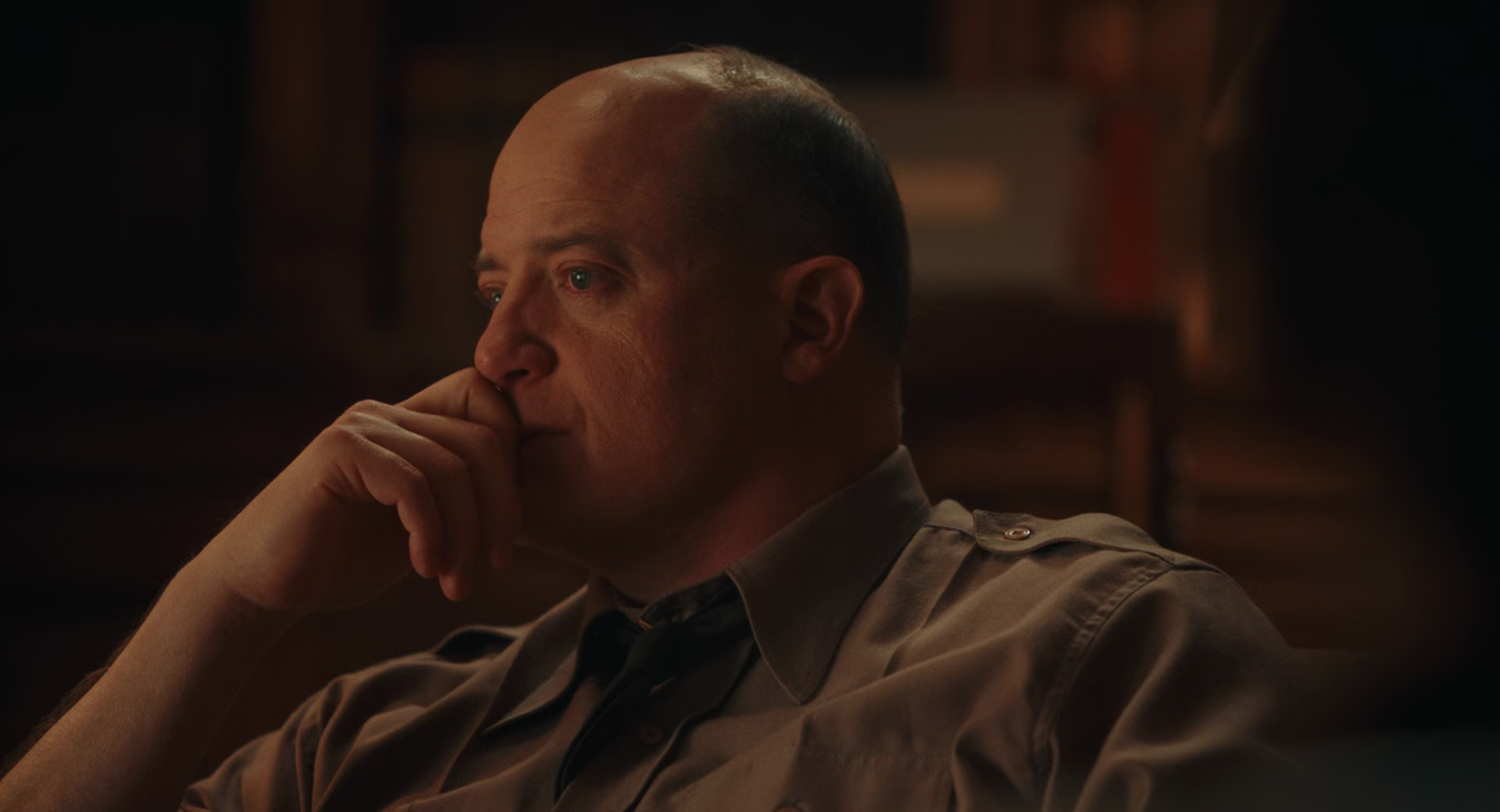
And that could easily have been the film’s biggest problem. A story centred almost entirely around meteorology, military briefings and discussions about whether it is going to rain does not exactly sound like the recipe for a gripping cinematic experience. Yet Pressure understands that the audience does not need to understand every detail of weather forecasting to understand what is at stake. The film turns something that could have been academic into something genuinely suspenseful. When officers are gathered around maps discussing wind speeds and cloud formations, the film makes it feel as though the fate of the entire war really does depend on the next forecast. Because, in many ways, it did.
There are moments, however, where the film begins to feel repetitive. The central argument is revisited several times, and there are scenes where characters essentially find themselves having the same disagreement in slightly different ways. This occasionally takes some of the momentum out of the story, particularly because the film is deliberately confined to such a small period of time.
Thankfully, the film’s final act provides a welcome change of pace. After spending so much time inside briefing rooms, Pressure eventually takes us to the Normandy beaches, where staged combat is blended with archival footage. The shift gives the film a much greater sense of scale and, more importantly, reminds us why all those arguments about the weather mattered in the first place. The film has spent so long focusing on the decision that it is effective to finally show the consequences of it. The cinematography is particularly impressive here, avoiding the familiar desaturated grey aesthetic of many Second World War films in favour of a richer, warmer visual texture. This gives Pressure a distinctive look and makes the contrast between the contained briefing rooms and the chaos of Normandy particularly effective.
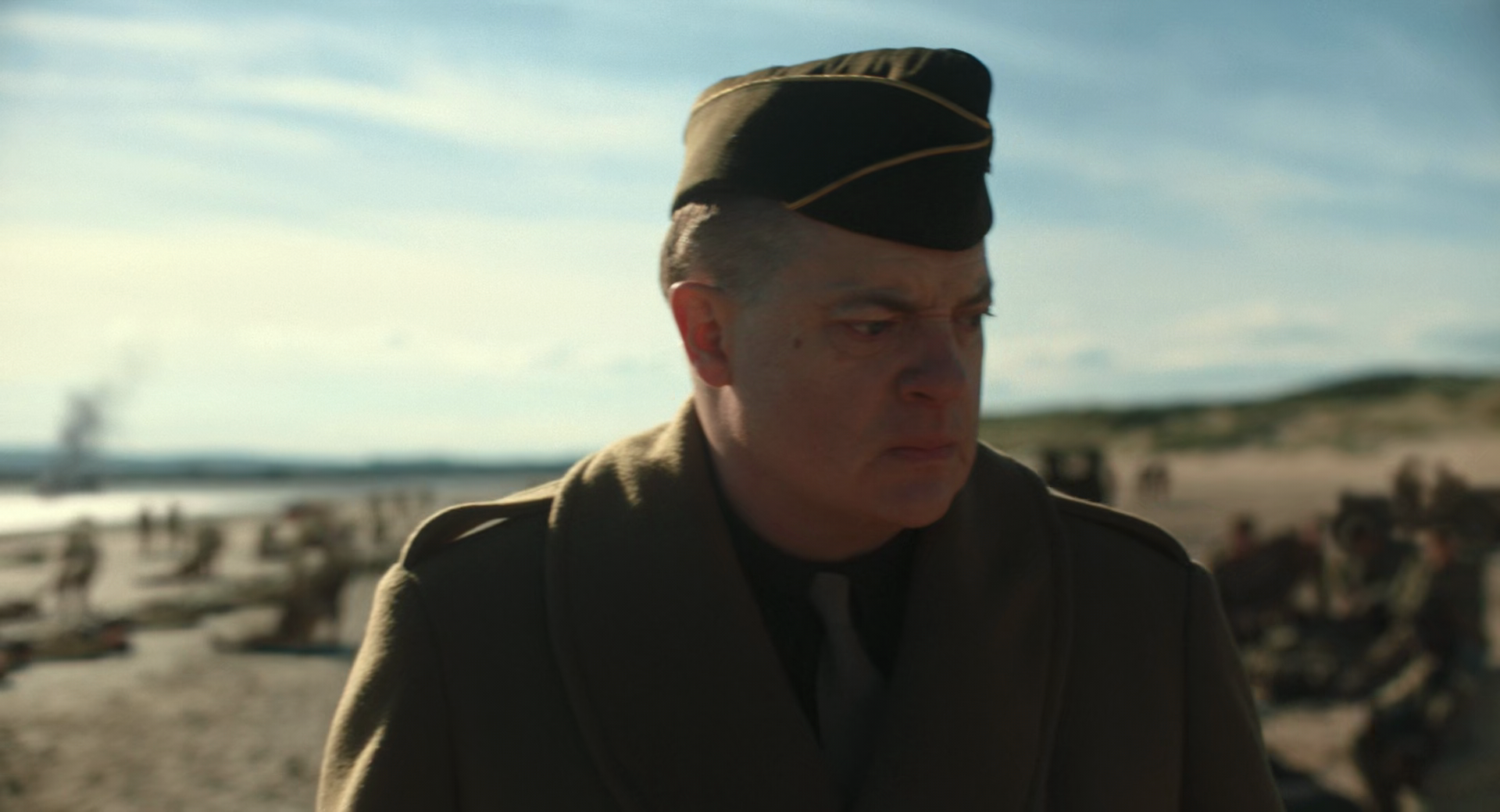
It is also refreshing that the film is only 100 minutes long. In an era where films increasingly seem to believe that longer automatically means better, Pressure is proof that a story can be told effectively without stretching itself beyond what is necessary. And perhaps that is what makes Pressure so effective. It takes something that should not, on paper, be particularly exciting and turns it into a genuinely tense war drama. There is no need for constant explosions or enormous battle sequences when the film can create suspense from a man looking at a weather map and knowing that thousands of lives depend on whether he gets it right.
For anyone looking for a different kind of WWII movie, Pressure is well worth watching. Scott’s performance alone makes it worth seeing, but it is the film’s ability to make a weather forecast feel like a matter of life and death that ultimately makes Pressure stand out.