
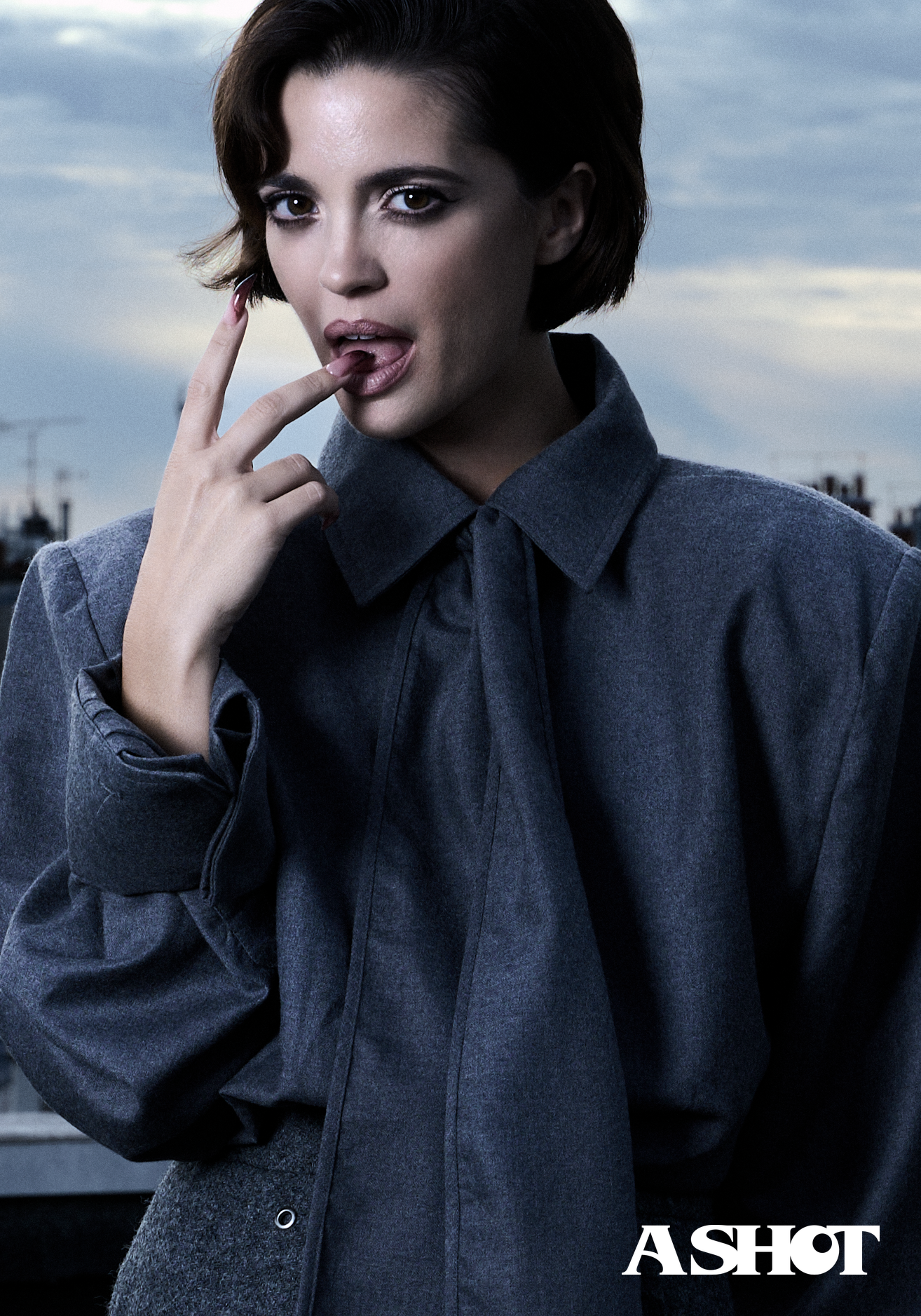
By
Joana Ribeiro has always been drawn to people who don’t quite fit the mould. Now, as she steps into the DC universe with Clayface, she’s exploring what happens when people are cast aside for being different and the pressure to change in order to belong. It’s a theme that resonates with the Portuguese actress, whose own journey has taken her from studying architecture to building an international acting career, all while remaining rooted in Lisbon.
Her love of cinema led her to acting, but finding her feet in the industry also meant learning to let go of the need to get everything right. On her first international film, Terry Gilliam’s The Man Who Killed Don Quixote, she was determined to prove herself. Then co-star Jonathan Pryce offered a piece of advice that shifted her perspective: “It’s not about you.” She began to understand that acting wasn’t about perfection, but about collaboration, curiosity and being open to the unexpected.
When we speak over video call, Ribeiro is in Lisbon, the city she has always called home. With her short hair and blue shirt, she looks effortlessly put together, and her warmth comes through immediately. There’s something particularly easy about speaking with someone who, like me, is navigating the world in a second language. Our conversation turns to learning to let go of perfectionism, finding freedom in collaboration, and cinema’s power to make people feel seen, as well as why difference should be embraced as a strength rather than something to overcome.
In her latest project, Clayface, she plays Mia, an ambitious aspiring singer and actress whose desire for success leads her down some questionable paths. Beneath its body-horror premise, Ribeiro sees Clayface as a “weapon against intolerance”, exploring exclusion, power, and the lengths people will go to in order to become someone else just to be accepted.
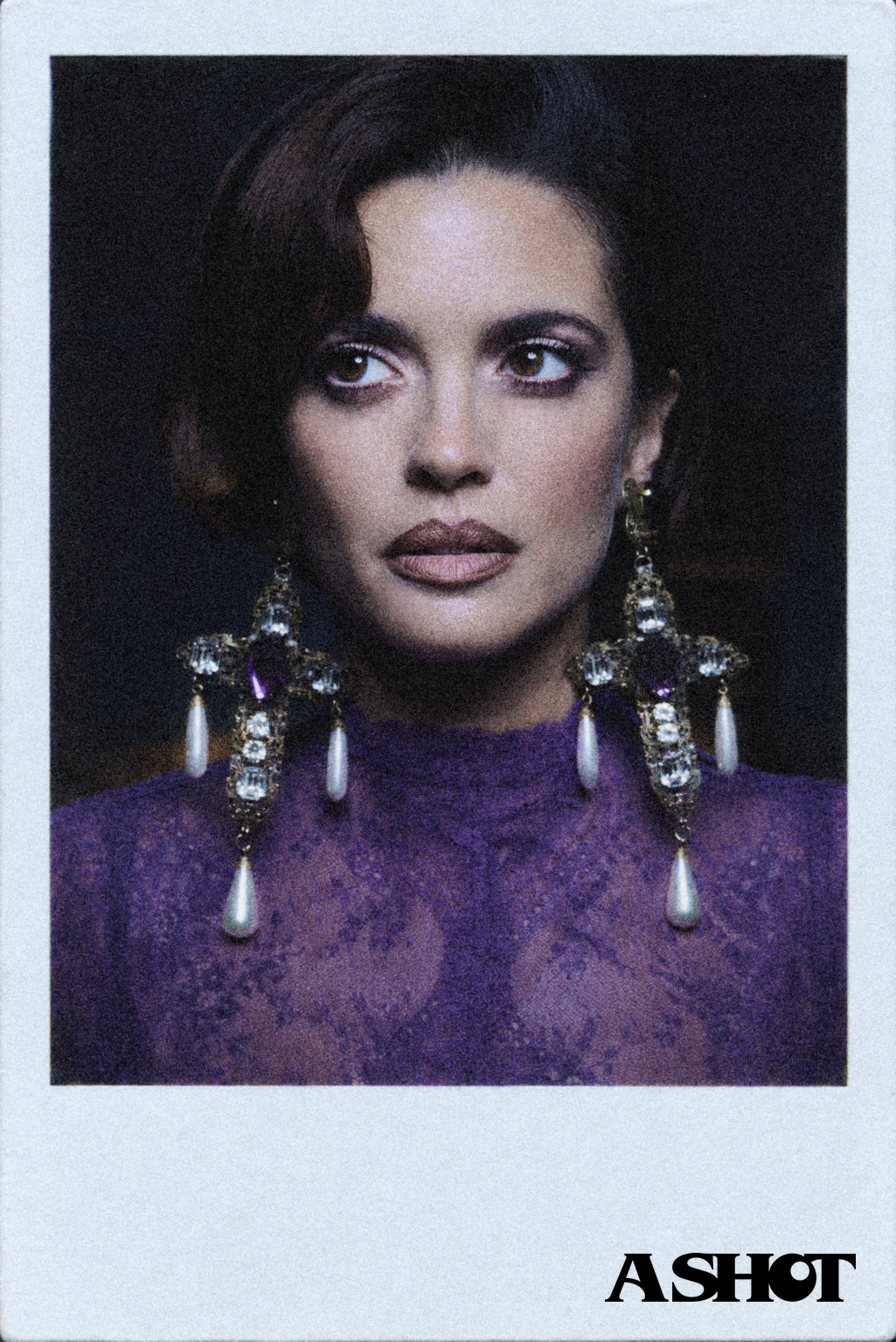
Top: TANGOLI
Earrings: ANTIC TONIC
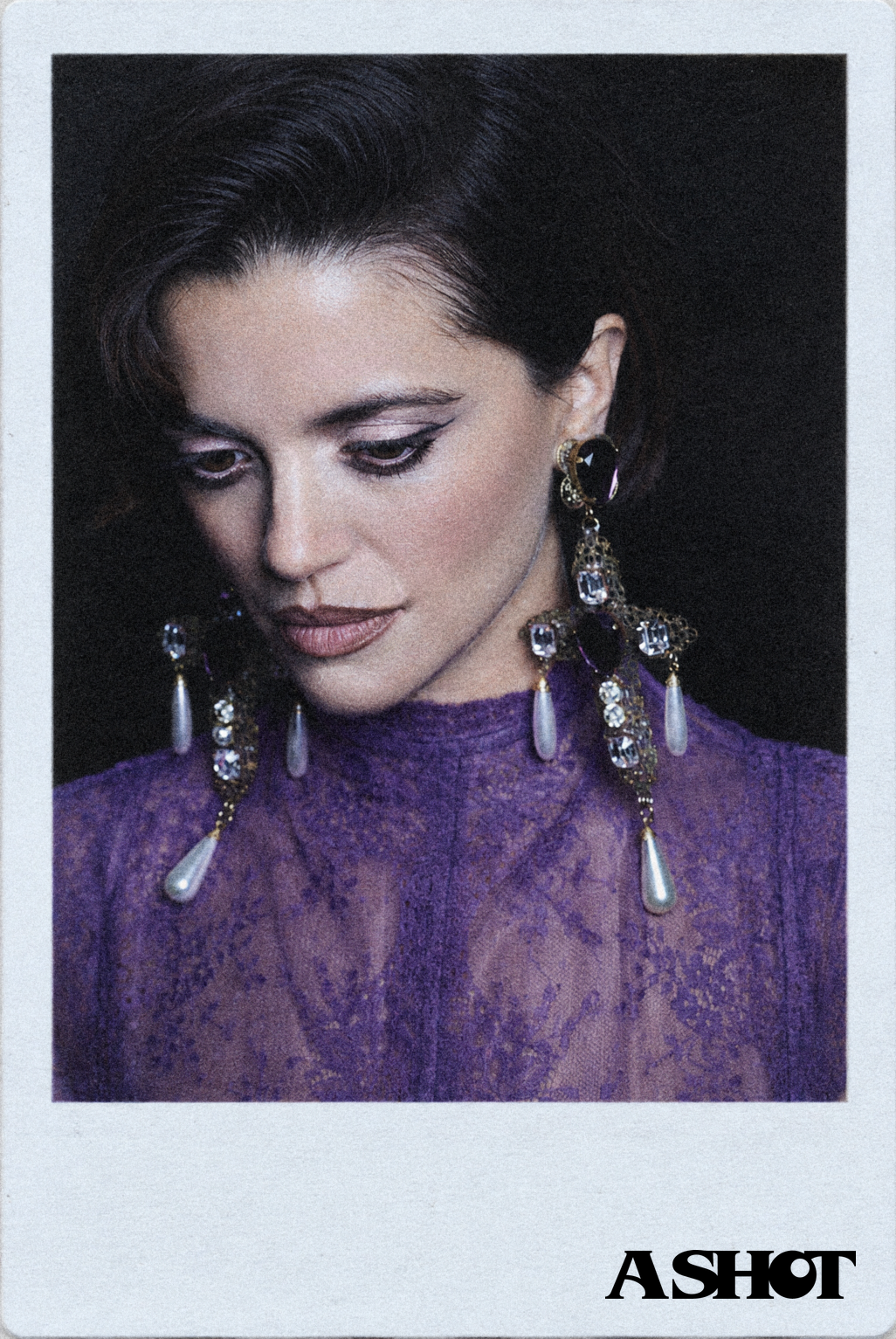
Top: TANGOLI
Earrings: ANTIC TONIC
Q: To begin, did you always know you wanted to be an actor, or is it something you discovered later in life?
Joana Ribeiro: I think I always wanted to be an actor, but I never made peace with it because, in Portugal, we don’t really have an established film industry. For me, being an actor and living in Portugal meant working exclusively on soap operas, which is actually where I eventually started my career. I never thought it would be possible to work in film or abroad, so it never felt like a real possibility.
I went to university to study architecture, but I dropped out and started pursuing acting because I was feeling very lost. My parents were actually the ones who suggested it. They said, ‘Why don’t you give it a try? You’ve always loved playing with characters and pretending to be someone else, so just give it a go’.
Then everything started happening.
Q: Was there a particular film or even actor that first sparked your love of cinema?
I’ve always enjoyed films. I remember watching Harry Potter, for example, and thinking, ‘I want to go to Hogwarts’. I wanted to be Hermione Granger.
My mum always watched European and Asian cinema much more than Hollywood films. She introduced me to Wong Kar-wai, and I remember watching his films and thinking they were incredible. She also showed me Pulp Fiction by Quentin Tarantino, as well as lots of French films by Godard and other great directors. On my dad’s side, there were films like Gladiator and Apocalypse Now, along with all the big war films. I always felt that I wanted to be part of that world.
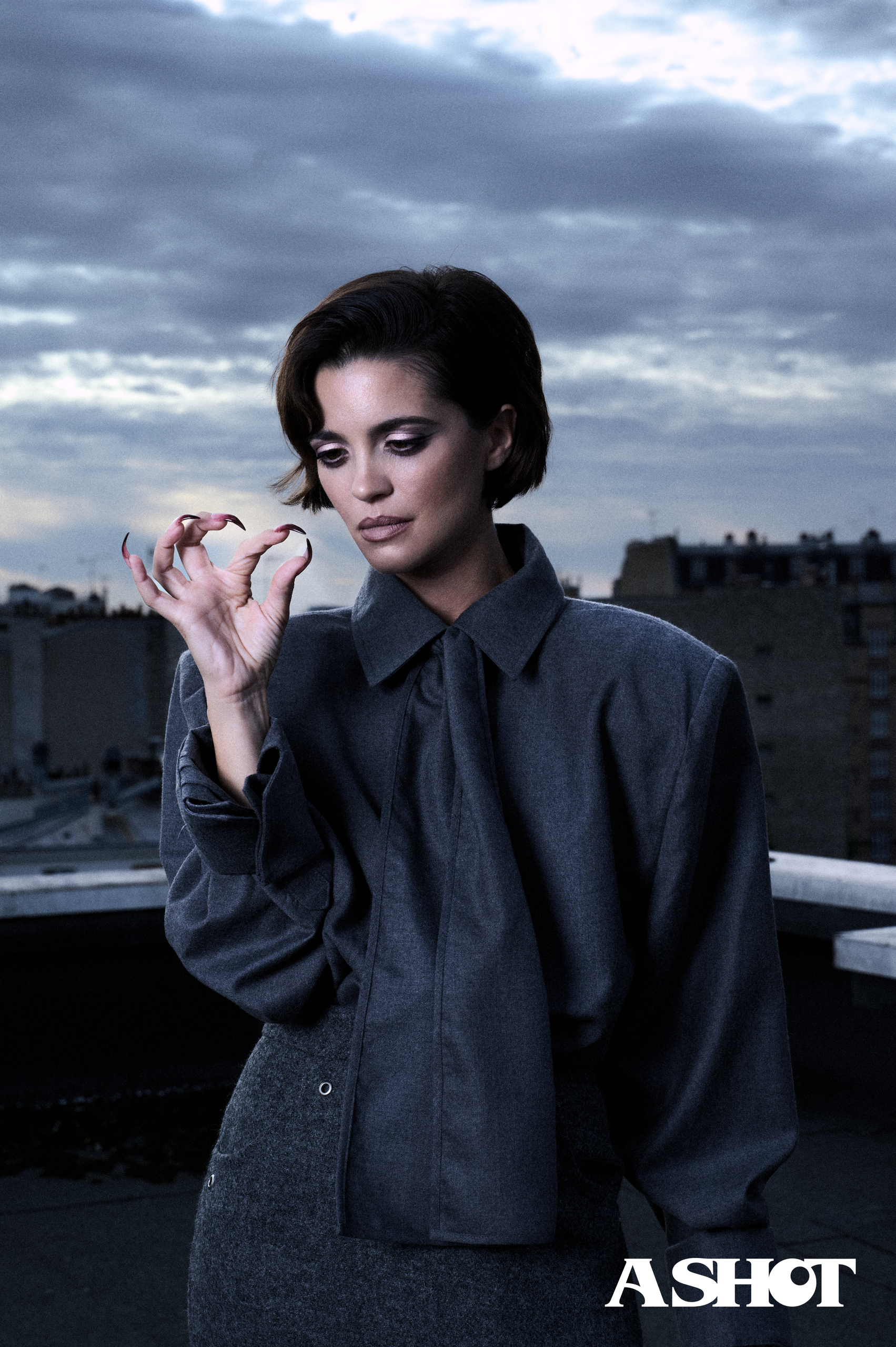
Shirt & skirt: KESTAS RIMDZIUS
Shoes: FRANCESCA BELLAVITA
Tights: FALKE
Q: When approaching a new character or role, where do you begin? Emotionally, intellectually, or instinctively?
I didn’t go to drama school, so I approach my characters intuitively. I try to pursue the truth in what I’m doing.
I also think acting and creating a character are very collaborative processes. When you start talking to the director and the costume, makeup, and hair departments, you begin to see the character come to life. For me, it’s important to build a world in which the character can move and exist. Rather than memorising lines or deciding exactly how I’m going to deliver them, I focus on questions such as: What kind of world does this person live in? What music do they listen to? What colours do they like? What do they enjoy eating? Once you’ve established all those things, you can do anything and react to whatever is thrown at you. That’s what works for me.
Q: If you could collaborate with any director, living or dead, who would it be and why?
I’d love to work with Leos Carax, I think he’s brilliant. He brings so much depth to the subjects he explores, approaching them in a fantastical and imaginative way while dealing with problems and issues we’re experiencing in real time.
I love all his films, especially Les Amants du Pont-Neuf, Holy Motors, and Mauvais Sang. They’re all among my favourites. Working with Leos Carax would be a dream, I could happily die afterwards!
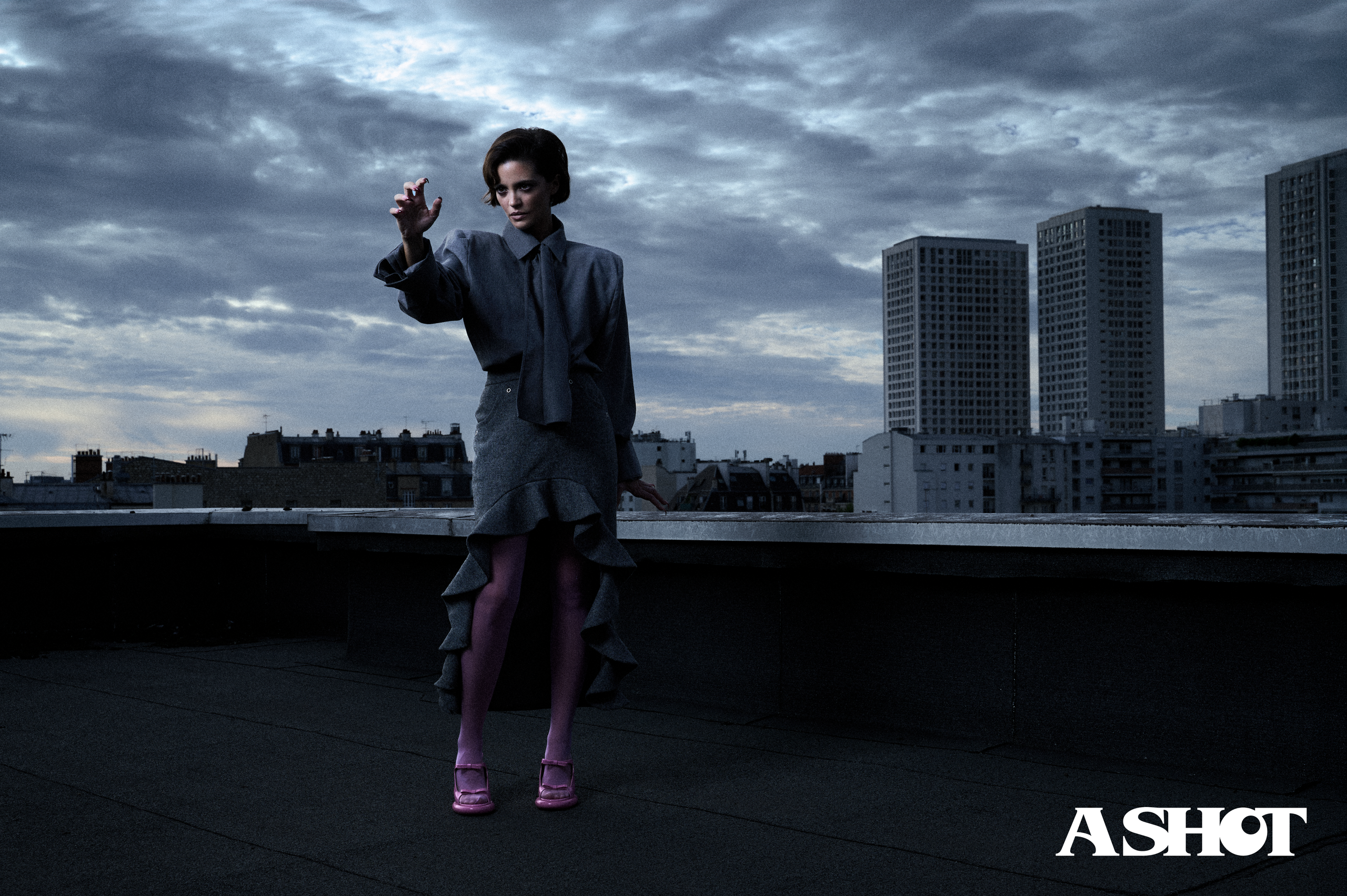
Shirt & skirt: KESTAS RIMDZIUS
Shoes: FRANCESCA BELLAVITA
Tights: FALKE
Q: Are there any genres or character types you haven’t explored yet that you’re particularly excited about?
I’ve tried comedy, and I had a lot of fun with it. I’d love to do more. I also explored horror a little bit with Clayface, but I’d really like to try psychological horror.
I watched Suspiria by Dario Argento and Possession by Andrzej Żuławski, and I loved both films. They’re mind-blowing. The possibilities that exist in our brains are incredible and never-ending, so I think exploring psychological horror would be a lot of fun.
Q: Are there any films you’ve watched at home that made you wish you’d experienced them on the big screen?
There are actually films I haven’t watched yet because I want to see them in a cinema. One is Beau Travail by Claire Denis. I don’t know if I’ll ever get the chance, and eventually I might just watch it at home because I really want to see it. But there are other films I’ve deliberately waited to see in a cinema. I only watched Les Quatre Cents Coups, for example, eight years ago because I was waiting to see it on the big screen. It was a very special experience, and I loved it.
I genuinely believe there’s nothing like going to the cinema. It’s a collective experience shared with people you don’t know and will probably never see again. You’re all experiencing something together in that moment.
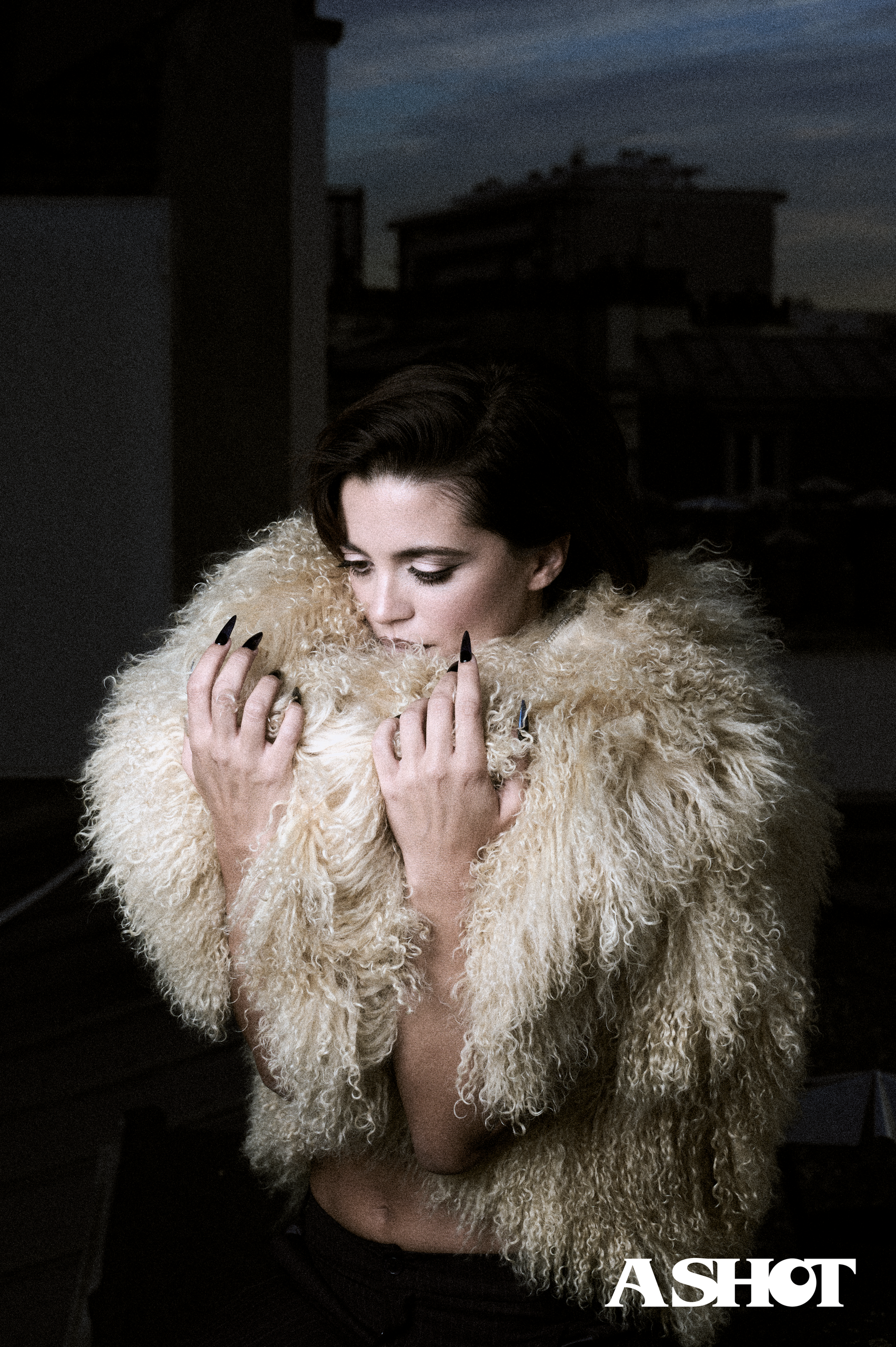
Pants & fur: MYUS
Shoes: BHIVE
Q: If you were a shot in a film, what would it look like?
That’s a very difficult question because there are so many shots I’d choose. Can I pick two?
Of course.
There’s a film by the Portuguese director Manoel de Oliveira called Vale Abraão, which I watched about eight years ago at my best friend’s house. Towards the end, there’s a shot of the main character, Ema, played by Leonor Silveira, walking through an orange grove. It’s an incredibly beautiful shot.
The ending is very tragic, and you know things aren’t going to end well. Eventually, Ema dies after that shot. But in the moment, everything is beautiful: she’s beautiful, the oranges are beautiful, the sky is beautiful, and the lighting is beautiful. The shot feels hopeful and full of life, and then she dies in the next scene. To me, it represents life. You go through life, and then, eventually, your time comes. Oranges fall, and you die. That’s life.
The lovely thing about that shot is that, years later, I visited the farm where they filmed it, Quinta do Vesúvio, and I recreated the shot. A couple of years later, I met Leonor Silveira because I worked with her, and I told her about that scene. She’s an incredible person, a talented and generous actress, and a beautiful human being inside and out. People always say you shouldn’t meet your heroes, but if your hero is Leonor Silveira, you absolutely should.
The second shot I’d choose is Denis Lavant in Mauvais Sang, when he’s listening to David Bowie’s ‘Modern Love’ on the radio. He’s walking and dancing through the streets of Paris. That shot encapsulates life, love, and everything else for me. It captures youth, desire, and frustration. Denis Lavant is such a raw actor, and the way he moves and puts everything into his performances makes him one of my favourite actors. That scene represents life to me. If I could be a shot in a film, I think I’d choose that one.

Pants & fur: MYUS
Shoes: BHIVE
Q: The Man Who Killed Don Quixote was your first international film, working with a director as distinctive as Terry Gilliam. What did that experience teach you about filmmaking, and how did it shape your perspective as an actress?
That film was incredibly important to me, not only as an actor but also as a woman. I was 25 at the time, and it feels like a lifetime ago. I was desperate to do a good job. I wanted everything to work out, and I had a bit of a good-student mentality. I wanted to do everything by the book.
There was a scene in which my character, Angelica, approaches a group of incredible actors, including Jonathan Pryce, Stellan Skarsgård, Adam Driver, Óliver Kuperhó, Jason Watkins, and Óscar Jaenada. I had to perform in front of all of them, and I was terrified. It was the scene in which Angelica tells them about Malandrino, the villain and wizard in the world of Don Quixote. I was so nervous that the following day, when I had lunch with Jonathan Pryce, I told him how worried I was about the scene. I said I hoped I hadn’t ruined it for Terry Gilliam because it was such an important moment. I felt I hadn’t done enough and should have done better.
He told me, ‘Look, there are so many things happening in that scene. It’s not about you. If you’re not good in that scene, Terry can go to me, he can go to Adam, he can go to Stellan. There’s a lot happening in that scene, and it’s not about you.’ I remember thinking, ‘Wow, yes. It’s not about me.’ That’s such a freeing way to think, and it’s part of the magic of cinema. You can make things work through editing. You can cut to someone’s reaction and then come back to you.
That was a very important lesson for me, and I still return to that conversation time and time again.
Q: You mentioned Terry Gilliam, who has such a singular visual imagination and approach to storytelling. What was it like stepping into his cinematic world, and was there anything about his directing style that surprised you?
Entering his mind was crazy. What surprised me most about Terry’s approach was how much he trusts his actors. I was 25, coming from Portugal, and I’d never worked with someone who asked me what I thought of a scene, what I wanted to do, or whether there was anything I’d like to change. I remember thinking, ‘Why does this man want to listen to me? I have nothing to add!’
But that experience was incredibly valuable, and it helped me grow. Until then, I’d thought that my job was simply to be told what to do and say the lines. Terry made me think about the character and ask myself what she was doing, why she reacted in a particular way, and what I thought about the scene. Giving actors that responsibility makes you more involved. You understand more about the work, even though the final choice and decision still belong to the director. Being invited to collaborate and participate in those decisions was very important to me.
Q: I wanted to ask you this next question because I’m French, and English is my second language too. Sometimes, when I speak English, I feel as though I have a different personality. As a Portuguese actress working on international projects, do you find that the language you speak when playing a character influences your performance? Do you become a slightly different version of yourself when acting in another language?
Definitely. I think it’s not only about the language itself but also about how you use the muscles in your face. French, for example, is very much in your mouth. Portuguese is more in your throat, and it’s not particularly musical, I must say. English is much more musical than Portuguese, so you can manipulate the way you say things more creatively.
I feel that acting in Portuguese is more linear than acting in English, and that definitely makes characters different. Speaking another language, or even using a different accent, changes the way you act and behave. It’s a very interesting thing.

Pants & fur: MYUS
Shoes: BHIVE
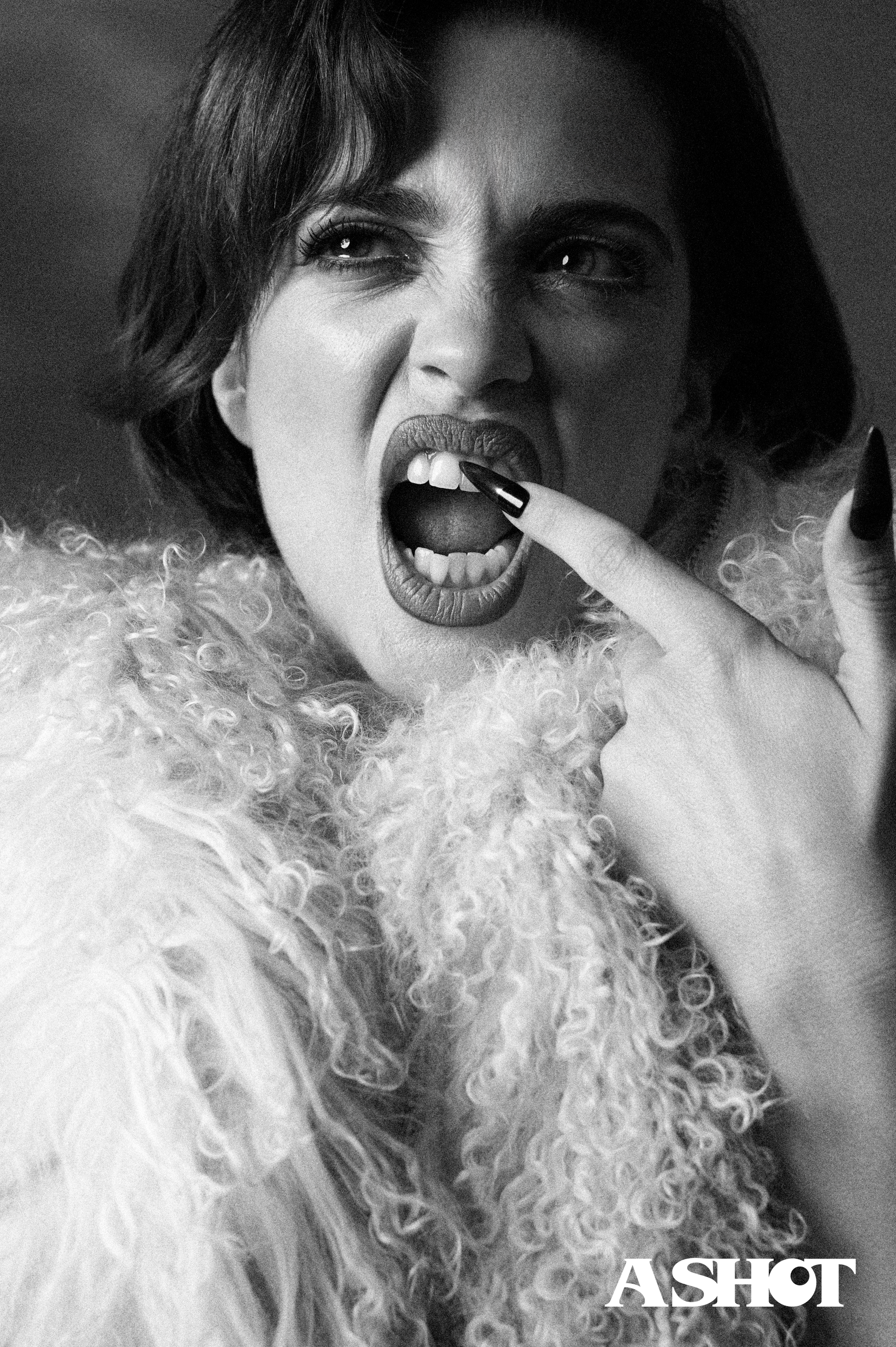
Pants & fur: MYUS
Shoes: BHIVE
Q: As a Portuguese actress working in an increasingly international industry, how do you feel about representation in Hollywood? Do you think there’s more room now for actors from different countries and cultural backgrounds to tell their stories, or does the industry still have a long way to go?
I think self-tapes have democratised casting. In the past, actors had to travel to Los Angeles for pilot season, but now, with self-tapes, there are more opportunities for someone like me, a Portuguese actress living in Lisbon. I don’t have to travel to the other side of the world just to audition.
Globalisation has also created more room for people with different backgrounds, accents, and appearances to be part of film and television. I don’t think we’re where we need to be yet, and there’s still a lot of work to do. But I think things are better than they were a few years ago.
Q: You’re also joining the DC Universe in Clayface, which brings a body-horror perspective to the comic-book world. What drew you to the project and its darker take on the character? Can you tell me about how that opportunity came about?
The opportunity came through a self-tape under the code name Corinthians. I loved the scenes because Mia was so different from me: outgoing, confident and funny.
Two weeks later, my agent told me it was a DC film about Clayface and that they wanted me to move to the next stage. I then had a call with director James Watkins and casting director Lucy Bevan, during which James directed me through the scenes. I immediately knew I wanted to work with him. His approach was so sensitive, and he was incredibly in tune with what he wanted from his actors.
At the end, he asked if I could sing, because there was a scene involving Mia singing that didn’t make it into the film. People say actors should lie about their abilities and learn later, but the film was shooting in two weeks. I thought, ‘I don’t have time to learn how to sing!’ So I told James I was a bad singer. I love music, but I just can’t hear the notes. James asked if I was being humble or genuinely couldn’t sing. I told him I really couldn’t, and I left the call thinking I definitely hadn’t got the part. Then my agent called to say they wanted me for the film. Apparently, they loved that I’d been honest, which might even have helped me get the role.
It was a great reminder of the value of the human perspective. AI might see that an actor can’t sing and immediately rule them out, whereas a person can recognise that this limitation might actually tell us something interesting about the character.
Q: How familiar were you with Clayface and the wider Batman mythology before joining the film, and what surprised you most about stepping into that world?
I loved The Penguin and Matt Reeves’ The Batman, so knowing the same team was working on Clayface made me excited.
When I read the script, I thought it was an incredible take on a villain. It explores what happens when people are cast aside because they’re different or don’t fit society’s expectations. You can go from being a famous actor to feeling like nobody, and the film looks honestly at how society, power and fame can corrupt people.
We’re living in difficult times, and I believe cinema can be a weapon against violence and intolerance. Films can make people feel seen and act as mirrors that encourage us to question ourselves and how we see the world. That’s true of independent films and big DC productions alike, and it was a major reason I wanted to be part of this project.
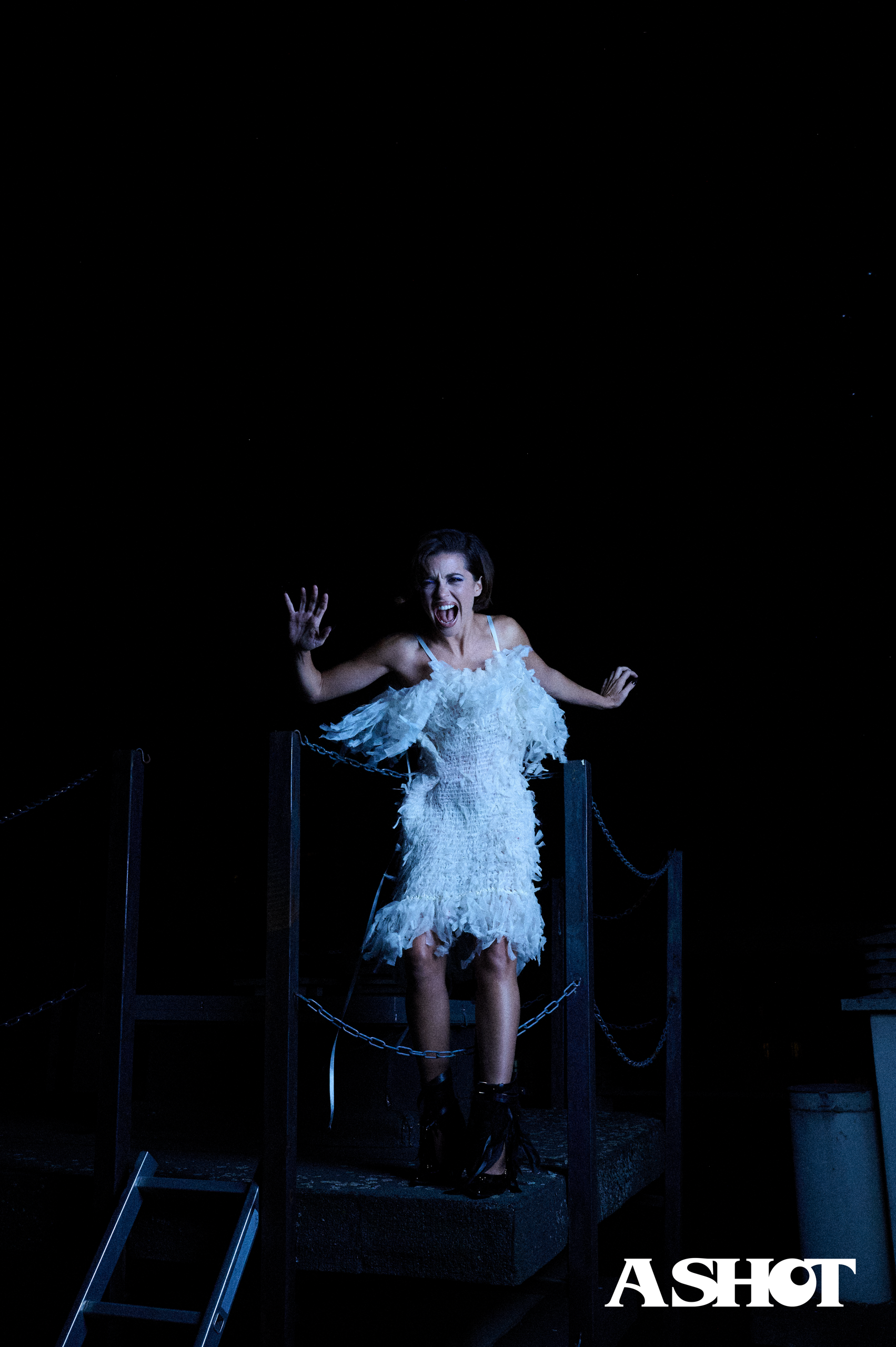
Dress: R.L.E
Shoes: LE GRAND LÜTHI
Q: Superhero stories often use fantastical characters to explore very human fears and vulnerabilities. Do you think the genre allows filmmakers to address real-world issues in ways that more grounded films sometimes can’t?
I believe you can use fantastical characters to explore real-world issues. In the DC universe, superheroes have powers that reflect qualities we can all develop, like empathy, helping others and using what we have to make a difference.
For me, Batman is one of the most realistic heroes. He’s a grounded character who uses his money and knowledge to help people. Stories like these can inspire audiences to believe they can make a difference.
Fantasy books and films featuring elves, fairies and wizards can also help us connect with ideas we might not otherwise consider. The same is true of Harry Potter, which explores being different, finding friendship and struggling to fit into society’s expectations.
Ultimately, superheroes are people who are different, and being different is a superpower. The more we embrace difference as something positive rather than negative, the better the world could be.
Q: Was there a particular horror film that inspired you while making Clayface? I’m thinking of The Substance, for example.
I watched The Substance, although the last 30 minutes were difficult for me because I’m very sensitive to horror. I also watched Possession, Suspiria, Pearl and The Fly, which was a major influence.
I watched Scarface several times, as well as all the Tim Burton Batman films, which are comfort films for me. Michelle Pfeiffer’s character in Scarface was an important reference for Mia, particularly her dresses and costumes. I had many conversations with Keith Madden, our costume designer, about how the clothes could feel like a second skin and give Mia a slightly reptilian quality. We wanted to bring out her inner snake.
Q: What can you tell us about Mia and her role in the film?
Mia is a survivor, like everyone who lives in Gotham. It’s not an easy city to live in. She’s confident about what she wants and isn’t afraid to do what she needs to get it.
She’s in a relationship with Szabo, played by David Dencik, and is almost like Gotham’s first lady. She wants to be an actress and a singer, although she isn’t particularly talented, and she pursues those ambitions through less dignified means. She’s very confident, and she is quite different from me, but she was a lot of fun to play.
Q: Did the costumes help you get into character?
Definitely. My conversations with Keith really helped me understand Mia. She doesn’t necessarily develop in a linear way throughout the film; she adapts to whatever each scene requires. She’s like a chameleon, transforming herself depending on the situation.
Keith showed me Mia’s clothes, including snake-like boots and dresses. In the courtroom scene, for example, she wants to appear fair and sweet, so she wears white. These details were things we discussed throughout the process.
The collaboration with Keith and Nicole [Stafford], was essential to creating Mia, as were my conversations with James Watkins, the director.
I also had a lovely surprise during rehearsals. David Dencik, who is Swedish-Danish, suddenly started speaking Brazilian Portuguese to me. I was shocked! We brought that into our characters, speaking Portuguese to each other during filming and in some scenes. Speaking your own language helps you connect with the heart of a character, so that was really valuable.
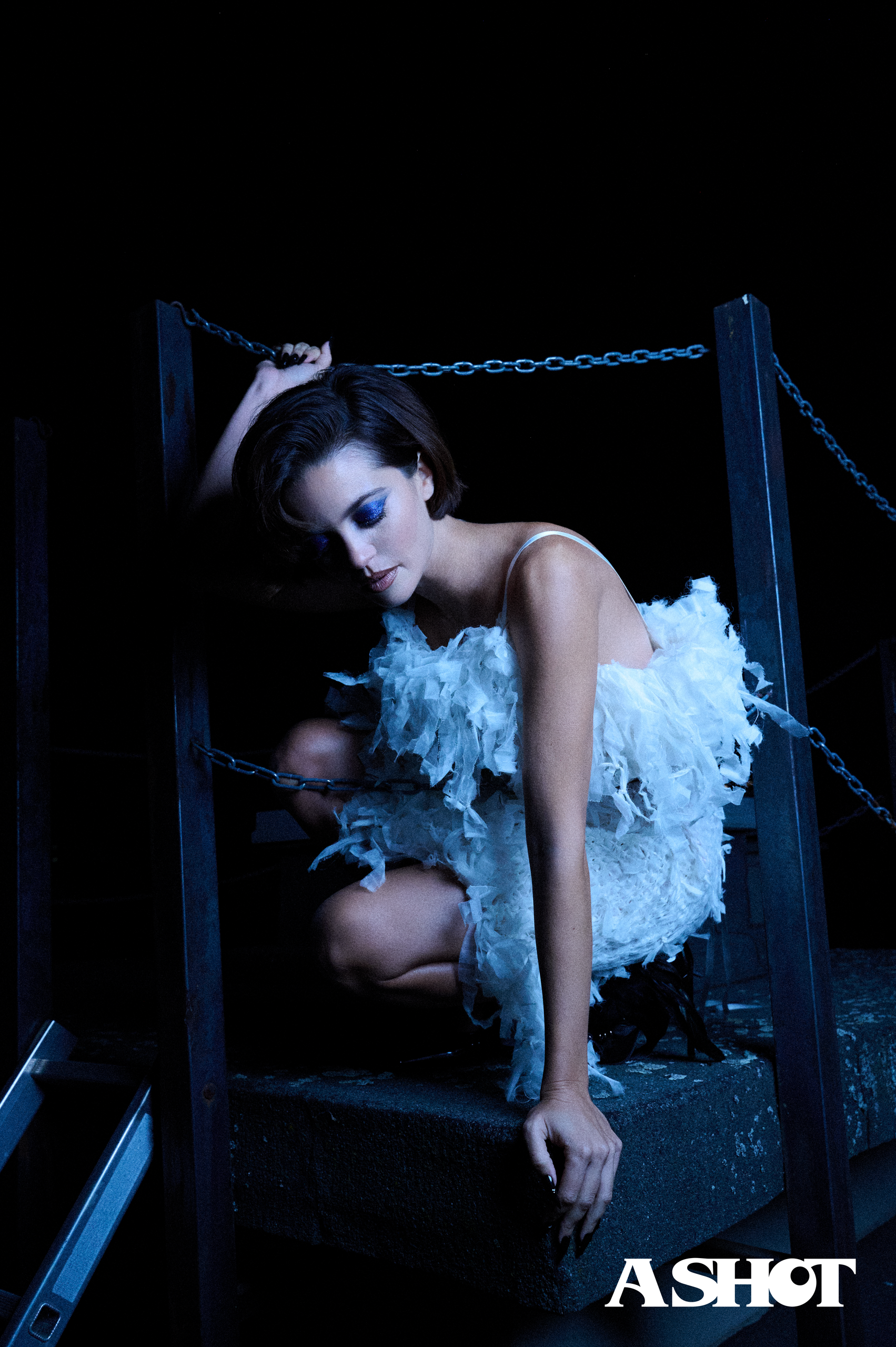
Dress: R.L.E
Shoes: LE GRAND LÜTHI
Q: Do you have a favourite character in the DC universe?
There are so many! I love the Joker, and I really like Poison Ivy, especially Uma Thurman’s performance. Catwoman is another favourite. I’m drawn to the female villains, and I think the characters across the DC universe are wonderfully layered.
Q: What advice would you give young actors trying to break into the industry, particularly those hoping to work internationally and dealing with rejection?
Trust the process and believe that what’s meant for you will come your way. When I was younger, I was eager to do everything, and every time I didn’t get a role, I was disappointed. Over time, I learned that some opportunities simply aren’t meant to happen.
You have to work hard so that when an opportunity comes, you’re ready to give your best. And always look for the truth in what you’re doing. Acting is about listening, being present in a scene and staying open to what you’re feeling and experiencing.
Q: What’s the best advice you’ve ever received?
I think the advice that Jonathan Pryce gave me while we were working on Don Quixote: ‘Don’t take yourself too seriously. It’s not about you.’
It’s easy to make everything about yourself, but making a film involves so many people and so many moving parts. You just have to show up, do your job as well as you can, and trust that things will work out.
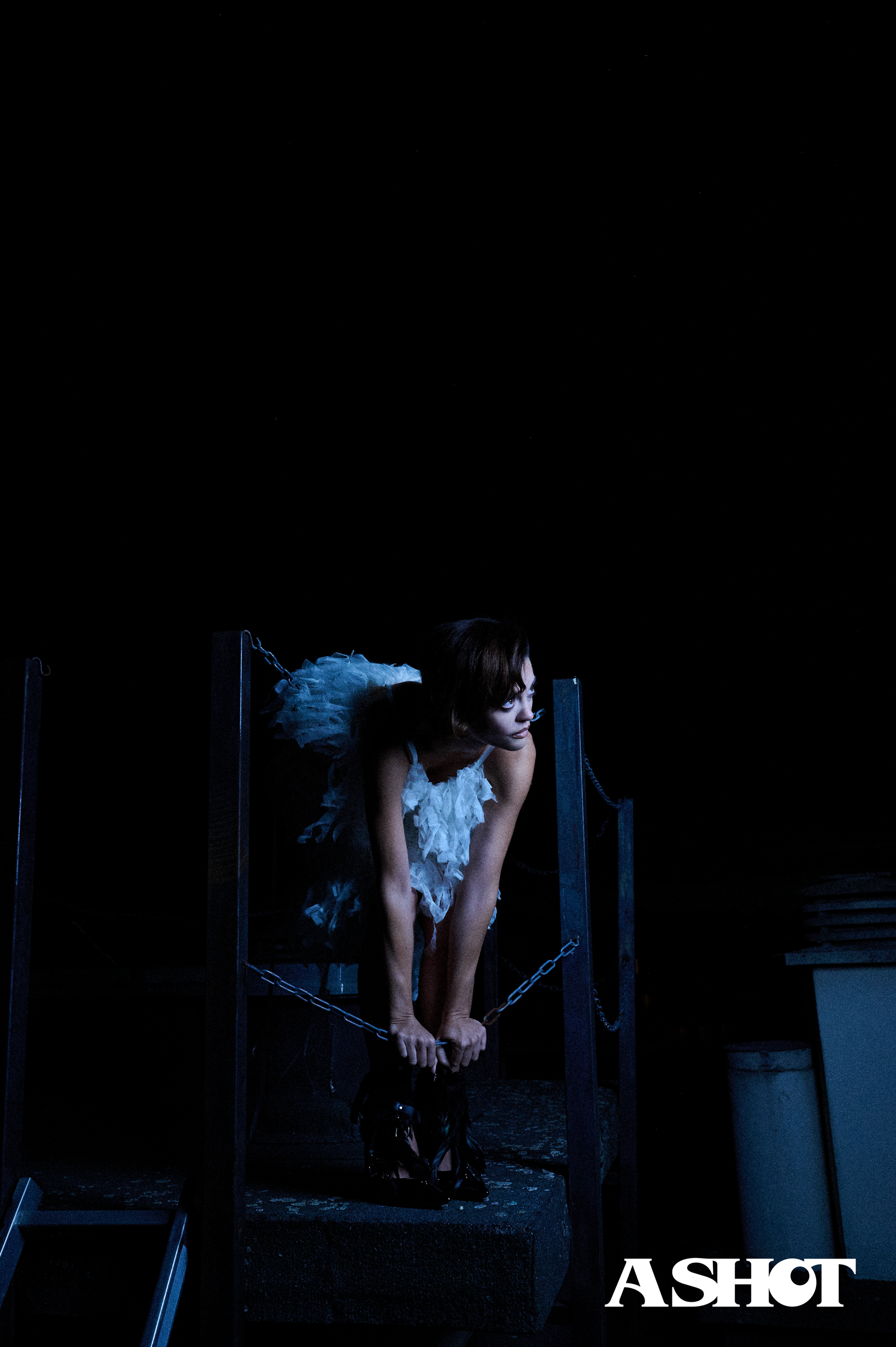
Dress: R.L.E
Shoes: LE GRAND LÜTHI
Q: What’s something people might be surprised to know you’re nerdy about?
I love Russian literature, especially Gogol and Dostoevsky, and I’m a huge Miyazaki fan. I have a Kodama tattoo on my arm because I love Princess Mononoke, which is one of my favourite films of all time.
Q: What kinds of stories do you feel are especially important to tell right now, given the world we’re living in?
Representation is important. We need people from different backgrounds, with different looks and experiences. I worry that we’re moving towards a world where we keep seeing the same actors everywhere, and I think that’s a problem internationally.
When new faces appear on screen, it can be easier to believe in the characters they play. We also need more women directors, women screenwriters and female-led films. In Portugal, for example, there are far more films led by men than by women, and I think women have so many stories worth telling. It’s important for young people to watch a film and think, ‘I see myself in this. I understand why I feel this way.’ Films can make you feel less alone, as though you’re not the only person going through something. We need more representation across the board.
I agree. Sometimes seeing the same actors in different adaptations can take you out of the story. Recent films and shows with new faces can feel really refreshing.
Exactly. Tom has been acting for a long time, but Clayface gives him a major leading role, and you can really believe him as the character. That’s powerful.
The same thing happened with Heated Rivalry, which I loved. Part of what made it work so well was that the actors were relatively unfamiliar, so audiences could really believe in their story. I think the same applies to Obsession, where the lead actress was playing her first leading role. I’d love to see more of that.

Dress: R.L.E
Shoes: LE GRAND LÜTHI
Q: If Clayface introduces more people to your work, what do you hope your future projects show them about you as an actress and as a person?
I’m not very good at dealing with expectations, so I just hope the film does well and people go see it. I think it has a lot of soul and life, and Tom [Rhys Harries] and Naomi [Ackie] are incredible leads.
For me, I hope it brings more opportunities to audition and work. My goal is to keep acting both in Portugal and internationally, choosing projects I’m proud of and can learn from, while continuing to grow as a person.
- Photographer. @oceane_auclair
- Producer. @vroomnica
- Mua. @vagueskin
- Hair stylist. @maromtw
- Stylist. @eleonoravittoriaa
- Nail artist. @sknailab