
By
Alison Thornton almost wasn’t our 21st-century rendition of Carrie’s infamous bully, Chris Hargensen. After a series of auditions and callbacks for Mike Flanagan’s new adaptation of Carrie, the actress was initially told she didn’t get the role.
“I had moved on. Then I got a call from my manager asking me to get on a call with Mike Flanagan.”
She said yes immediately and then joined a conversation that became a surprising final audition. By the end, and a few self-tapes later, the role of one of pop culture’s most iconic bullies was hers.
For Thornton, a lifelong Stephen King and Carrie fan, this was a job that was welcomed with equal parts excitement, disbelief, and daunting responsibility. Whether it be the original novel or Brian de Palma’s 1976 film, Carrie has long sat at the center of pop culture infamy. Now, Flanagan’s adaptation takes the iconic story and tells it across eight episodes of TV.
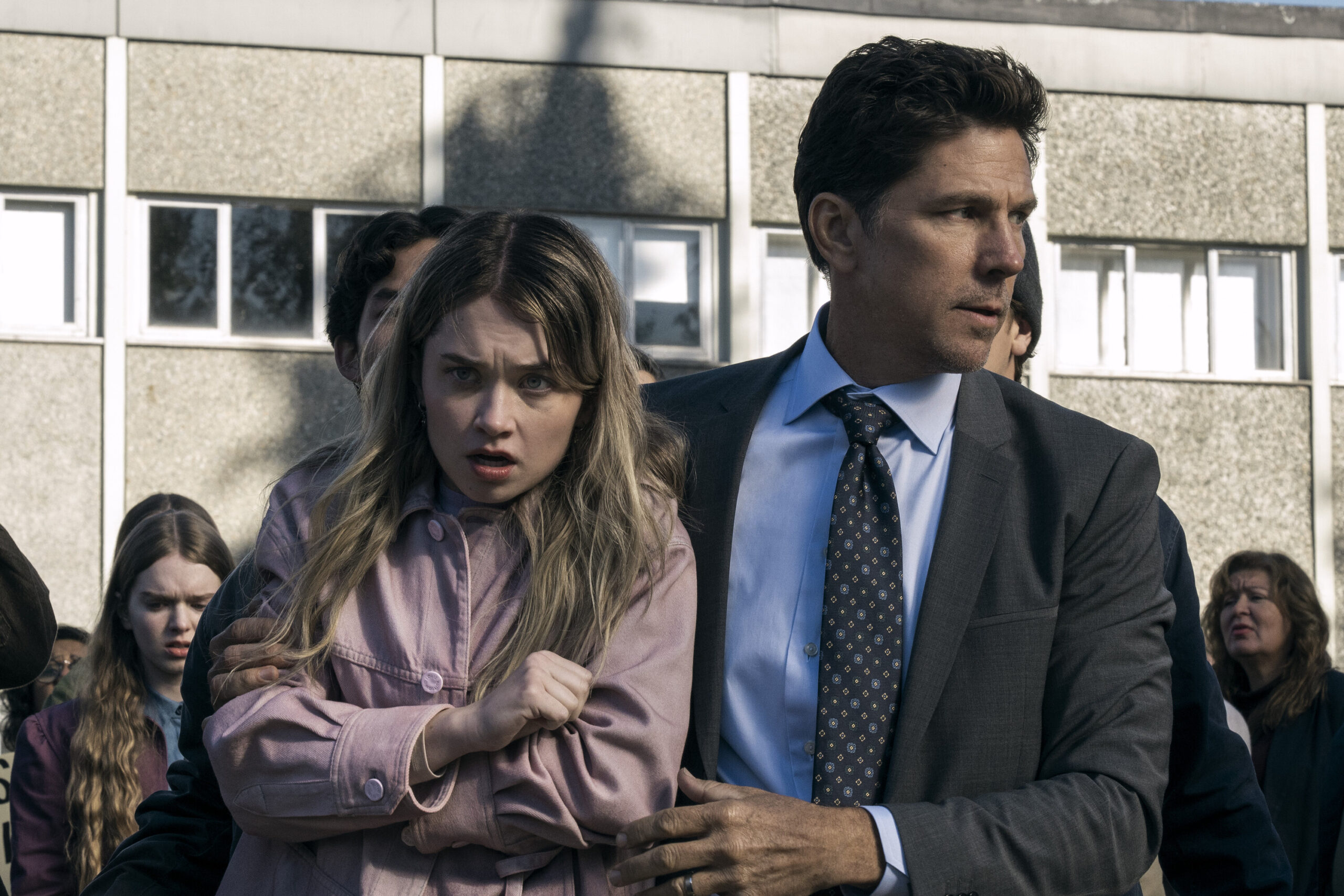
In our conversation, Thornton discusses her admiration for King’s original novel, working with Mike Flanagan, and the challenge of putting her own stamp on one of the story’s most recognisable characters. Rather than approaching Chris as a straightforward villain, Thornton’s performance was an empathetic one, an approach that was made possible by Flanagan’s willingness to delve deeper into the source material.
She reflects on the series’ modernisation of King’s story, particularly its use of social media as a new form of power, and where she feels this version might land with its 21st century audience. We also discuss what books she hopes to see adapted for the screen in future, how much she loves one shot takes, or ‘oners’, and why her dog might be the perfect future film star.
Q: To begin, I wanted to ask you about your journey to getting the role of Chris Hargensen. Carrie is so iconic in so many ways, it’s an iconic facet of pop culture. And Chris is one of the most iconic bullies of all time. Sorry, I’m probably going to say the word ‘iconic’ a lot today.
Alison Thornton: It is a great word.
Q: It’s very relevant for Carrie! What was your reaction when you found out that you’d be playing Chris?
The process was a weird one. I did a bunch of auditions and Zoom callbacks, and then I was told that I didn’t get the role at first. I was devastated. A couple days later, my manager was like, “Can you get on a call with Mike Flanagan?” We didn’t read any scenes, we just chatted about what he was trying to accomplish with this telling. Then they sent me two final scenes to tape. I had already processed the fact that I didn’t book it, so I went into it with absolutely nothing to lose. I love this writing, and I’d do anything for Mike Flanagan. When I actually got the role, I was on cloud nine. I called my parents, who are huge Stephen King and Mike Flanagan fans, and I called my sister and a bunch of my friends, who later took me out for dinner. I was celebrating for a really long time.
Q: What an achievement. What is your relationship to Carrie then, either the De Palma film or the original Stephen King novel?
I was already a fan of Stephen King. Pet Sematary is one of my favourite books of all time. I had read Carrie twice, once in high school, and again during the pandemic, and so I was really familiar with the material. I had also seen Mike’s shows, and was just so excited about that aspect of this collaboration. What’s cool about this version is that it keeps the core of Stephen King’s Carrie, while being very different, too. So, as a fan of Carrie and Mike Flanagan, I was really excited.
Q: How did you go about constructing your own version of Chris without turning her into a carbon copy of the original? Did you take inspiration from any other horror villains?
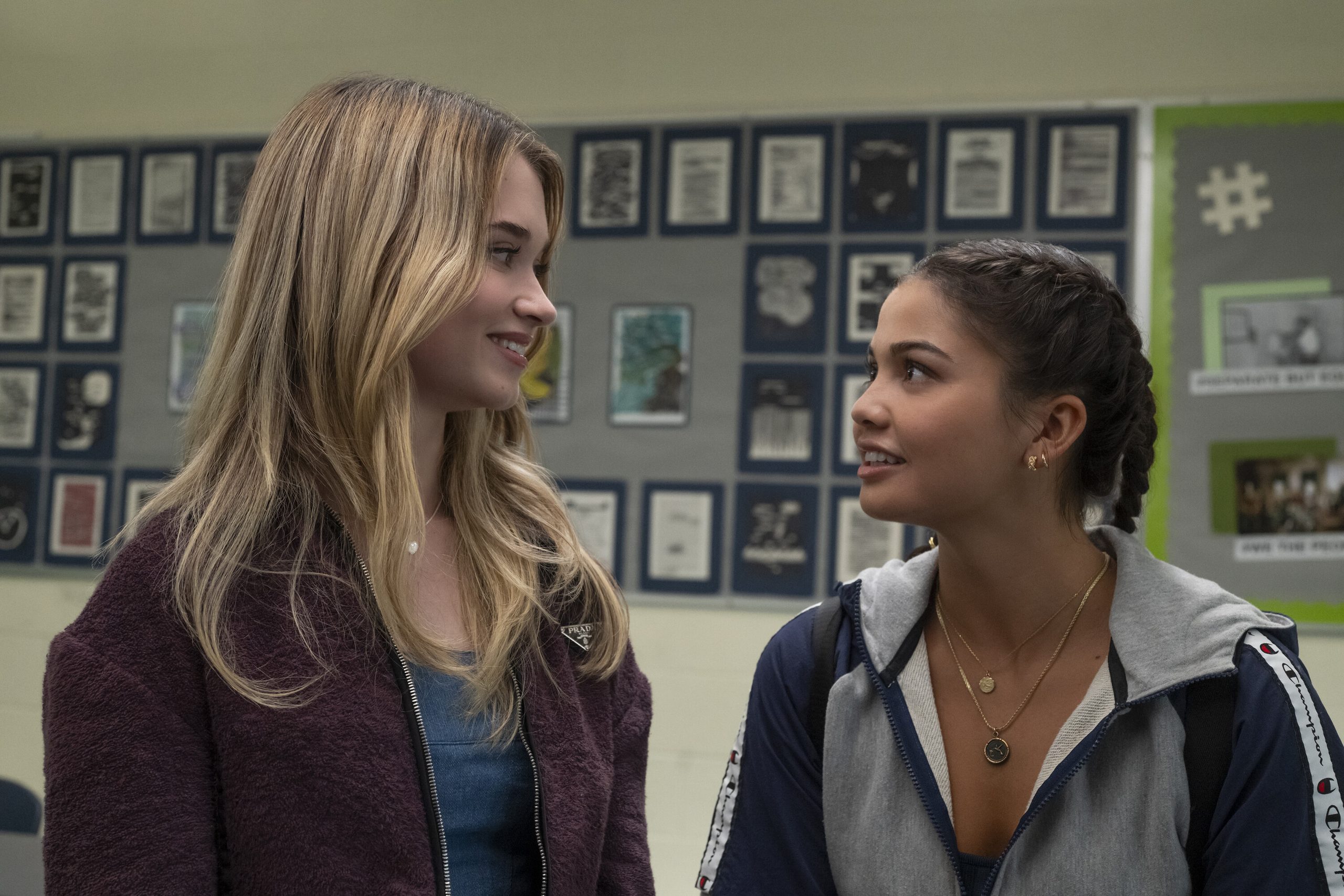
I don’t think that I took inspiration from any other horror villains. We had three weeks of rehearsal and it was really important to have that time with the rest of the cast and Mike, to talk about all of the characters. I approached this version of Chris with a lot of empathy, because what we really see in this version is that she’s in so much pain. That’s where her bullying and her cruelty is coming from. A lot of that is in the writing, but a lot of it also stemmed from conversations with Mike Flanagan, and Michael Truco, who plays Chris’ dad. We talked a lot about the home dynamic and their father-daughter relationship, or lack thereof.
Everything that Chris does is a cry for help. She’s doing things to get Sue’s attention, to get her father’s attention. She’s just a really lost kid, which I thought was sad. This is a version of her that we haven’t seen before. I don’t think that people just wake up and decide to be assholes. It comes from somewhere.
Q: By approaching Chris with that empathy then, rather than totally leaning into a villain arc, did it change how you played her?
The empathetic approach was a huge anchor for me. Every time that Chris lashes out or crosses a line, it directly follows her being hurt in some way. So much of her arc comes from the fear of losing her best friend Sue Snell as well, and that happens pretty early on.
I also thought a lot about how Chris doesn’t really have any role models. Her parents are both quite absent, and Sue is really the only person that has been able to parent Chris. When we first meet her, her dad doesn’t give her breakfast, and then she gets the burrito from Sue. Sue has always been her support system, and then when Carrie comes in and threatens that for Chris, it’s completely destabilising for her. She does cross some really hard lines, and she does some really unforgivable things, but she’s also a kid.
Q: Did you enjoy playing that more evil side of her? What is that like to take on as an actor? Is it fun?
It was fun for sure. This cast is so lovely, and there were certain sequences, like the trench and the locker room scene for example, that I was quite nervous about. Summer Howell, who plays Carrie, is so professional and talented, and we’d just hug and giggle after those particularly hard scenes, and we were able to come out of Chris and Carrie’s dynamic really easily.
There’s also a weird enjoyment in doing things in a scene that you would never do in real life. I got to explore things and emotions in a safe way with no repercussions, and there is definitely something really interesting about that. I think a lot of actors are drawn to roles like this because we know that it’s all pretend. It’s all fun and a little disturbing, but you get to shake it off after. It’s exciting.
Q: I can imagine. This is a modern, 21st century adaptation, and so much of what happens to Carrie happens through social media. How did having that as a tool change the way that you approached Chris?
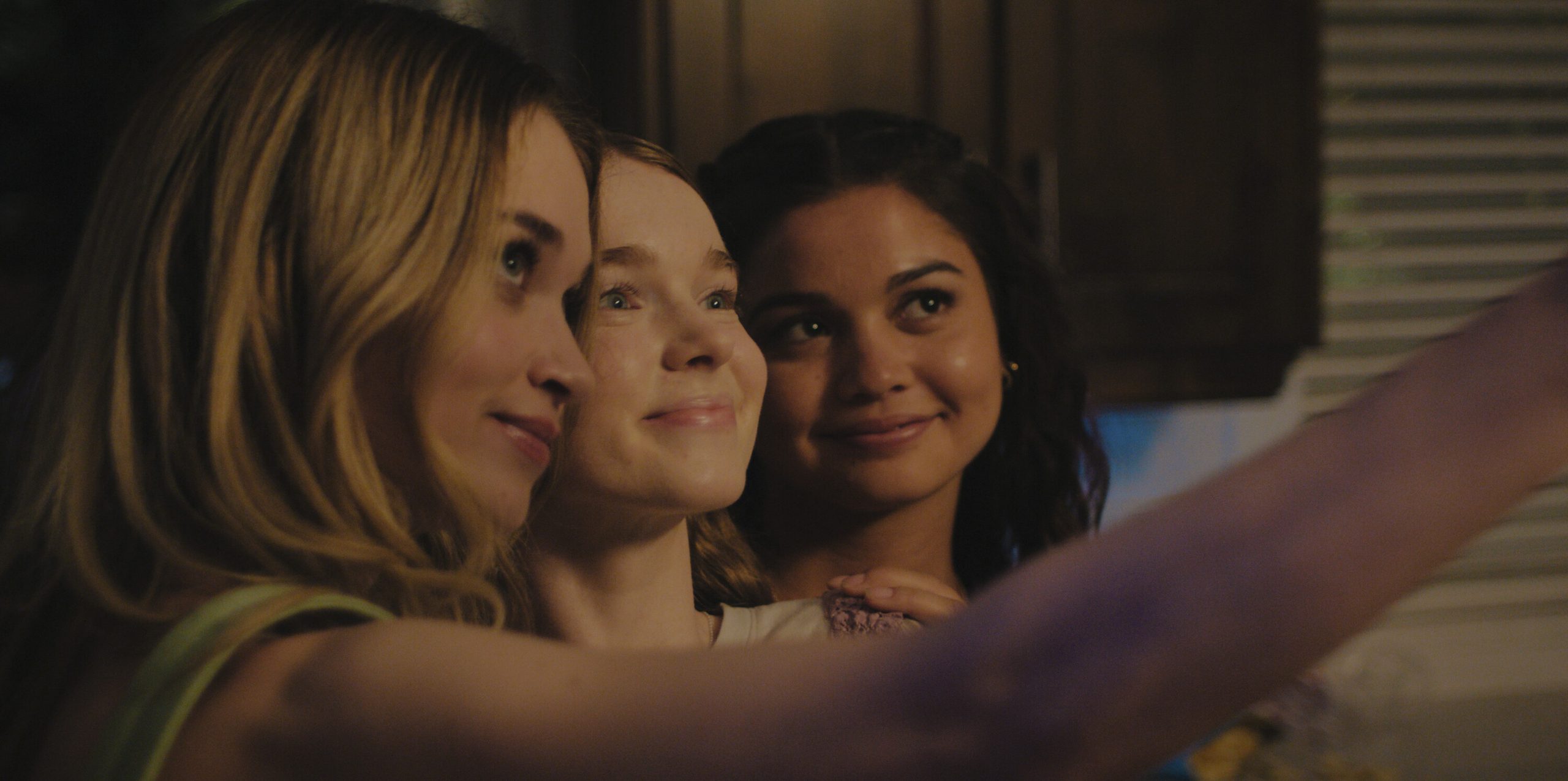
I feel like social media in the show is its own character. This depiction of Chris is so interesting because she’s really going through a parallel journey to Carrie, and social media plays a huge part in that.
There’s a beautiful, parallel scene of Summer and Chris in the car in episode three that sums up their dynamic really well.
Yeah, for sure. Early on, we learn that neither of them have good home lives or good support systems, and then they both discover that they have power. For Carrie, that’s telekinesis, and for Chris, that’s social media. Then we explore the question of using your power for good, or evil. And social media, I think, is so scary. It really gives people license to be crueler because they’re not actually seeing the person that they’re targeting. They’re not actually dealing with those repercussions in real time. I think that makes people more cruel, and Chris is included in that. That was a really interesting tool, especially for a character like Chris, who has completely lost control of her life. The influence that she has always had is being taken from her, and then she discovers that she can get that kick and that high from social media, and that becomes her only method of control.
Q: You’ve mentioned him a few times already, but what was it like to work with the great Mike Flanagan?
He is amazing to work with. He’s a dream director, and such an incredible collaborator. He really empowered us all in a way that I’ve never felt on a set. He really wanted us to feel ownership over these characters, and he would tell us that these characters belong to us as much as they belong to Stephen King. We had so much time to rehearse with him, and I actually shadowed him because I’m interested in directing. He develops a specific language with every actor and runs such an organised, professional set.
He also wanted us to have fun, so he would get us Labubus and joke around. Our Director of Photography, Michael Fimognari, had a fart machine that Mike would use to get us out of the darker scenes. He’s just a lovely person to work with, and to know. Working with him made it very obvious why he is who he is.
Q: Mike has said that he wasn’t interested in making this a purely faithful adaptation to the book. Did that give you more freedom?
Definitely. I mean, we’ve never seen Chris’ home life before. We’ve never seen the relationship between Chris and Sue before Carrie enters the equation. Having eight episodes meant we had so much more room and time to properly explore the characters. We got to ask, “How did we get here?” We got into what happened before Carrie, what happened before the locker room scene, what happened in between meeting Carrie and the prom. It was so fun to explore all of these different facets of the story that no one has delved into before.
Q. I was wondering how you felt, as an actor, coming onto a project that has such weighty referential material behind it. Does that benefit you? Or does it put more pressure on you to deliver? Do you prefer working from something completely original, or something like this that has lots of reference points?
I think there’s pros and cons to both. I was so excited to work on this as a Carrie fan. But I also felt the weight of responsibility because it’s such an iconic story. I remember going in and being like, I do not want to be the one slowing this down. I really wanted to rise to the occasion.
There were also some amazing moments in filming where I just had to stop and take stock. When I was holding the bucket of blood, I just took a moment and thought, “I am dumping the pig’s blood. This is an iconic moment.” Even filming the locker room scene, I had multiple moments of internal fangirling, thinking we are really in Carrie’s world right now, in Stephen King’s world, being led by Mike Flanagan. As exciting as that was, it was also daunting. So I think I felt a mixture of pressure, and sheer disbelief that I was there.
Q. Carrie, as a story, has resonated with audiences across generations. Now this version is full of modern day issues: social media, school shootings, surveillance state anxieties. What do you think it is about this adaptation that’s going to resonate with audiences the way that the novel and movie did, and still do?
I think its use of social media is going to be a huge pull. We’ve become desensitised to a lot of what’s going on in the world because it’s constant and we always have access to news and information. In this show, audiences are going to see the world through Carrie’s eyes, through the eyes of someone who hasn’t become desensitised to these things. She’s never seen them before. They’re not normal to her.
I think it will stir conversations about the dangers of social media, and hopefully lead people to think about what power actually is. Is it socioeconomic power? Popularity at school? Having friends? Is it social media, or is it more obvious things like Carrie’s telekinesis? I think it’s a very relevant, necessary conversation.
Q. No spoilers obviously, but are there any changes in this version that you think might surprise audiences?
Oh my gosh, there are a few things. Keeping it vague, there’s something that happens in episode six with Mr. Peist, one of the girls’ teachers. I didn’t see it coming when I read it. I was completely shocked. It’s an incredibly rewatchable moment.
But also the level of empathy for all of the characters in this version, even the villains like Chris and Margaret. They’re presented as real humans who are having a hard time. Seeing Chris get more and more broken, it makes what she does make more sense to me. Not that it’s justified, but it allowed me to better understand where she’s coming from. I think that will surprise people.
Q. The story of Carrie obviously stems from Stephen King’s novel. Are you a big reader?
I am a big reader, and a big audio book listener.
Q: This is a book to screen adaptation, which seems to be incredibly popular at the moment. Are there any books or any other Stephen King novels that you would love to see adapted, or any planned adaptations that you’re particularly excited for?
Oh, I’m looking at my bookshelf right now. In terms of Stephen King, I know it’s been done before, but I would love to have another Pet Semetary. Non Stephen King, I think this would be hard to adapt, but one of my favourite books is Fifteen Dogs by André Alexis. It’s a great, very philosophical book. It’s about fifteen dogs that get gifted human consciousness and language by the gods Hermes and Apollo. It explores whether it’s better to have human awareness or not. But I have no idea how they’d adapt that.
Q: It could be animated?
Yeah, or CGI. Or just fifteen amazing actor dogs.
Q: Who would you like to see star in that adaptation?
I think my dog would do a beautiful job. She’s a great performer.
Q: Is there anything else you’d love to see adapted?
Tenth of December by George Saunders, there are a lot of really good short stories in there that are also really relevant today. But right now, I’m reading Throne of Glass by Sarah J. Maas. I’ve read the entirety of A Court of Thorns and Roses, too. I cannot wait for A Court of Splintered Harmony to come out this year. It’s so exciting. Either of those would be such a fun adaptation, but again, I don’t know how they’d do it.
I say this to people all the time. I would love to see ACOTAR adapted, but I have no idea how they’d pull it off.
I think it would be difficult because of its world building and how many different worlds there are. It would be very expensive to make. But it would be sick.
Q: I have one final question for you. If you were a shot in a film, what would it look like?
The first thing that came to mind is the one shot, or oner, of George MacKay’s character running through the battlefield in Sam Mendes’ 1917. I think that’s one of the most beautiful shots of all time. Whenever I watch it, I’m like “how did they do that?” It’s such a cool shot. That might be quite an intense answer to your question, but I’d love to think that that shot could represent me.
I know exactly what you’re talking about. I can imagine it in my brain right now. Maybe we’ll get an ACOTAR or Throne of Glass adaptation with a great oner in it, and have you right in the middle.
Absolutely. That would be the dream.