
By
Orlando Norman discusses his performance as Steven Maxwell in Netflix’s The Body, the complicated relationship between Steven and Anya, working with Kristina Bogic and creator Quinn Shephard, his journey from Australia to the UK and his upcoming collaboration with Anya Taylor-Joy.
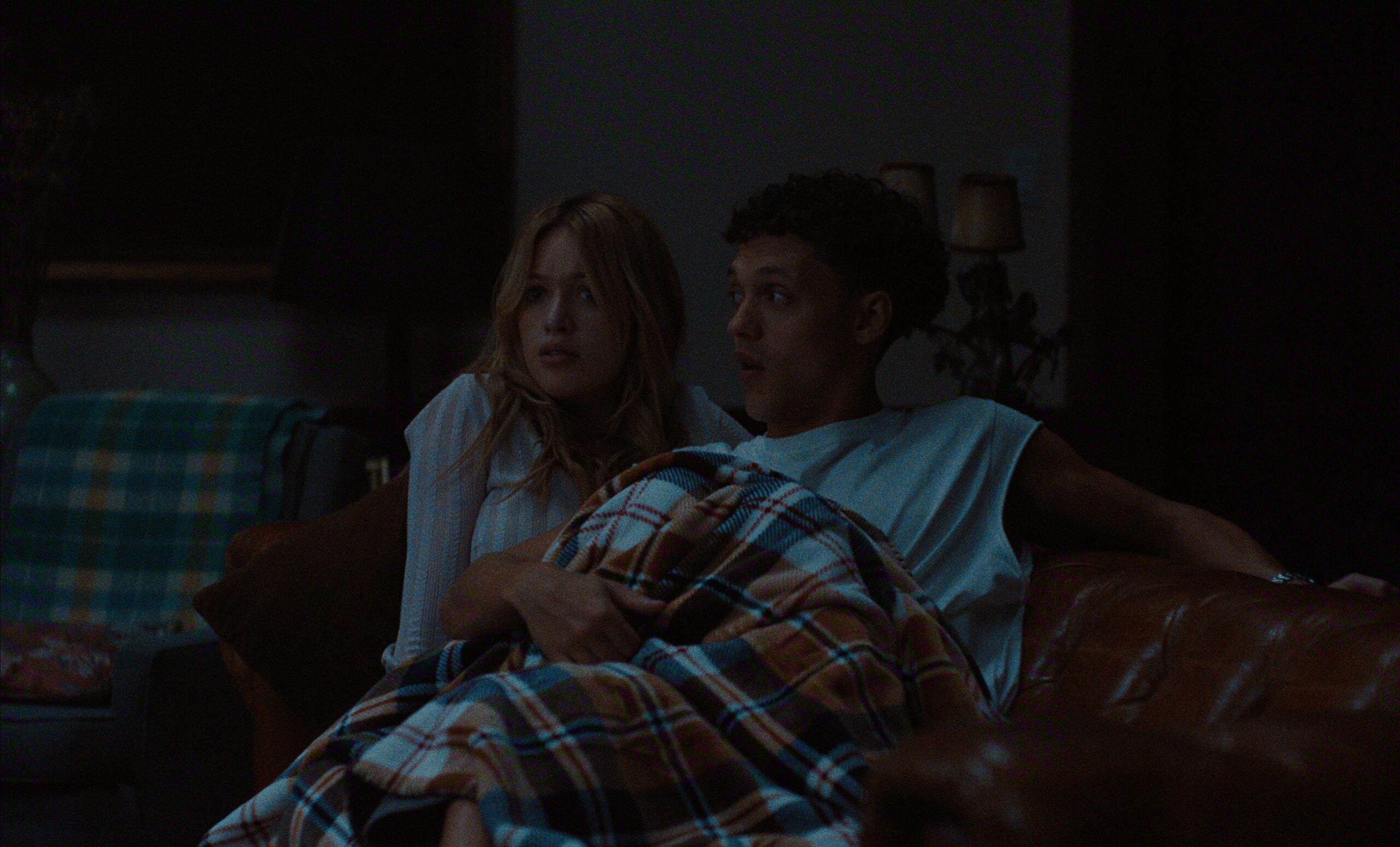
There are plenty of reasons to fall in love with Quinn Shephard’s extraordinary new Netflix series The Body, a wickedly funny, thrilling and surprisingly heartbreaking exploration of teenage girlhood, queer desire and religious repression that features one of the most exciting young ensembles in recent memory. Set in 2004, the eight-part psychological drama follows a group of Catholic schoolgirls whose lives are thrown into disarray after a disastrous dance-team initiation leaves one of their classmates in a coma, setting off a wave of religious hysteria that gradually consumes their community. But while much of the series revolves around the increasingly complicated relationships between its female protagonists, some of its most interesting character work comes from the people on the periphery of their lives, including Steven Maxwell, the seemingly perfect high school boyfriend played by Australian actor Orlando Norman.
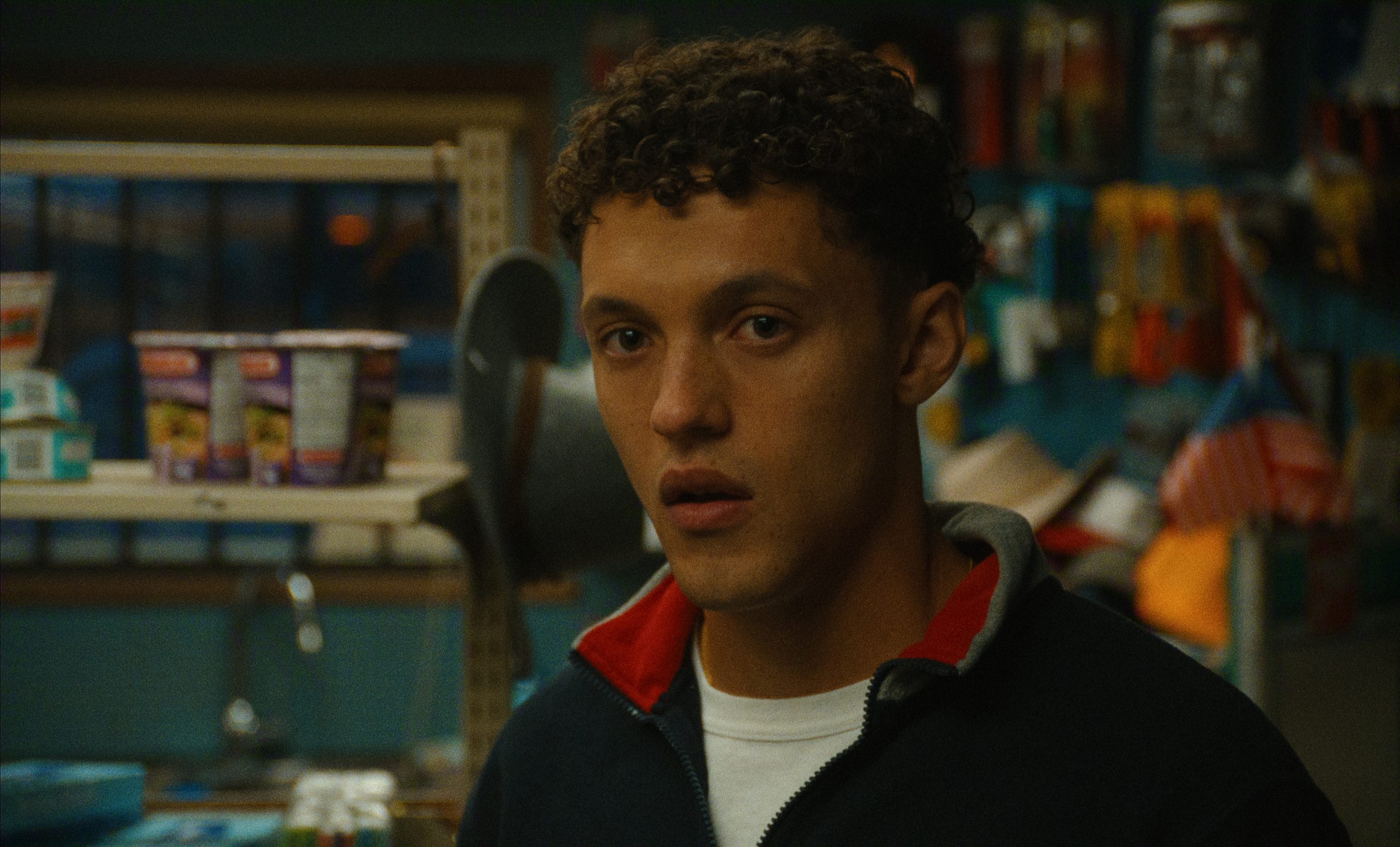
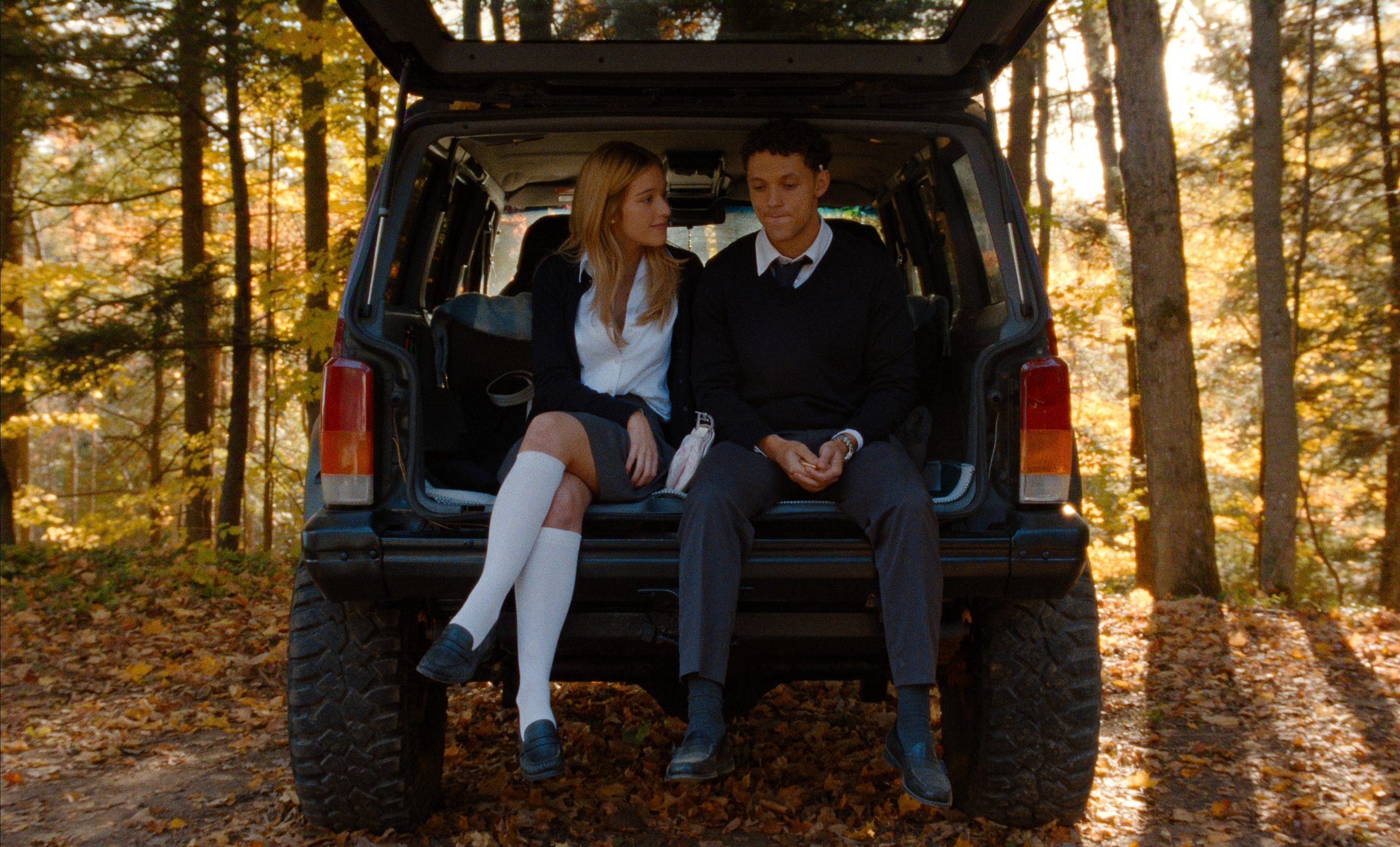
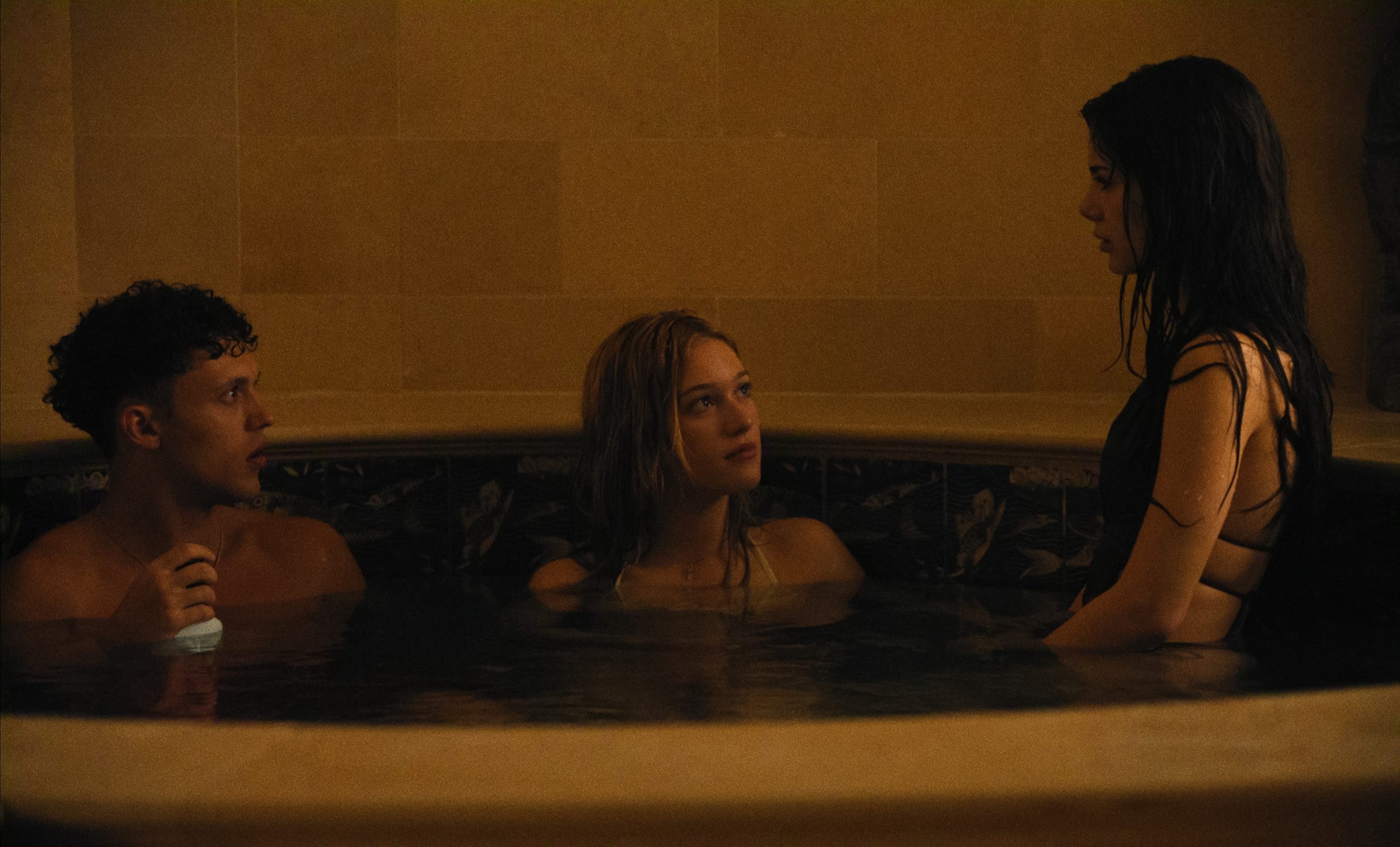
On paper, Steven is precisely the kind of character audiences have encountered countless times before. He’s handsome, popular, the captain of the swim team and dating Anya Butler (Kristina Bogic), one of the most admired girls at school. In another teen drama, he’d probably be an arrogant, insufferable jock, the sort of boy who maintains his position in the school’s social hierarchy by intimidating anyone unfortunate enough to get in his way. But Steven is nothing like that. He’s genuinely kind, remarkably considerate and hopelessly devoted to his girlfriend, whose increasingly complicated feelings for her best friend Elise (Sara Boustany) threaten to unravel a relationship that, from his perspective, appears to be perfectly happy.
Norman is wonderful in the role, bringing an enormous amount of warmth and sincerity to a character who could have very easily been reduced to little more than an obstacle in Anya’s journey of self-discovery. Instead, Steven emerges as one of the show’s most unexpectedly sympathetic figures, a young man whose greatest strength, his seemingly unwavering belief in the goodness of the people around him, is also what makes him so vulnerable. His scenes with Anya are particularly affecting, especially as it becomes increasingly clear that her feelings for him aren’t quite what he believes them to be. Norman plays that growing disconnect beautifully, with Steven’s genuine affection for Anya making his attempts to salvage their relationship all the more painful to watch.
For Norman, it was precisely that contradiction that made Steven such an appealing character to play.
“I just really, really loved him from the outset through reading the scripts,” says Norman. “Normally the most popular guy in high school, captain of the swim team, dating the it girl, per se, is ruling through dominance and intimidation, whereas he does it through earnestness, kindness and love, and just making sure everyone’s having a good time and is safe and happy around him.”
“I thought that was a beautiful paradox to what I’ve seen before with this kind of character trope,” he continues. “And I thought it’d be really, really fun to try and embody that contradiction.”
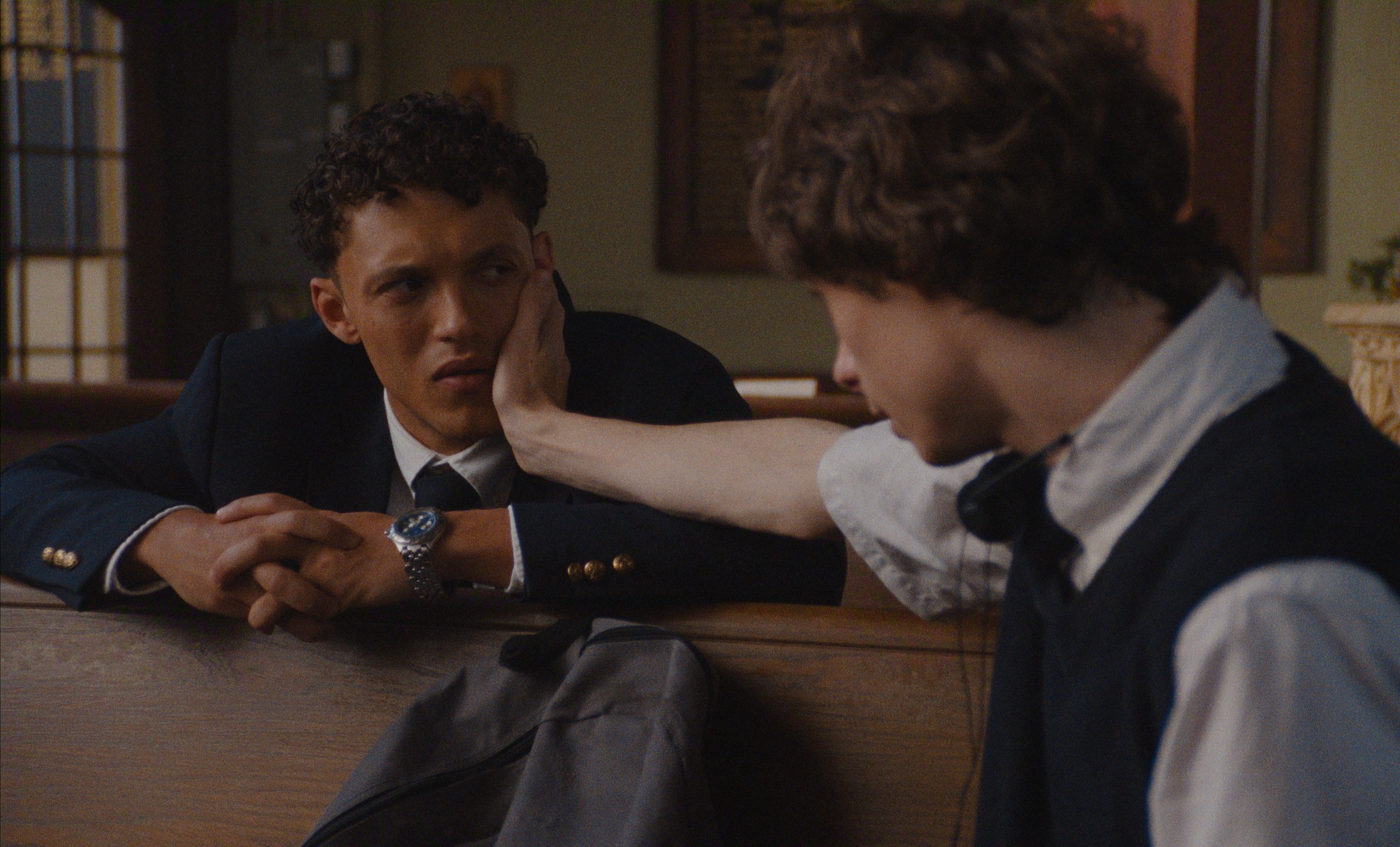
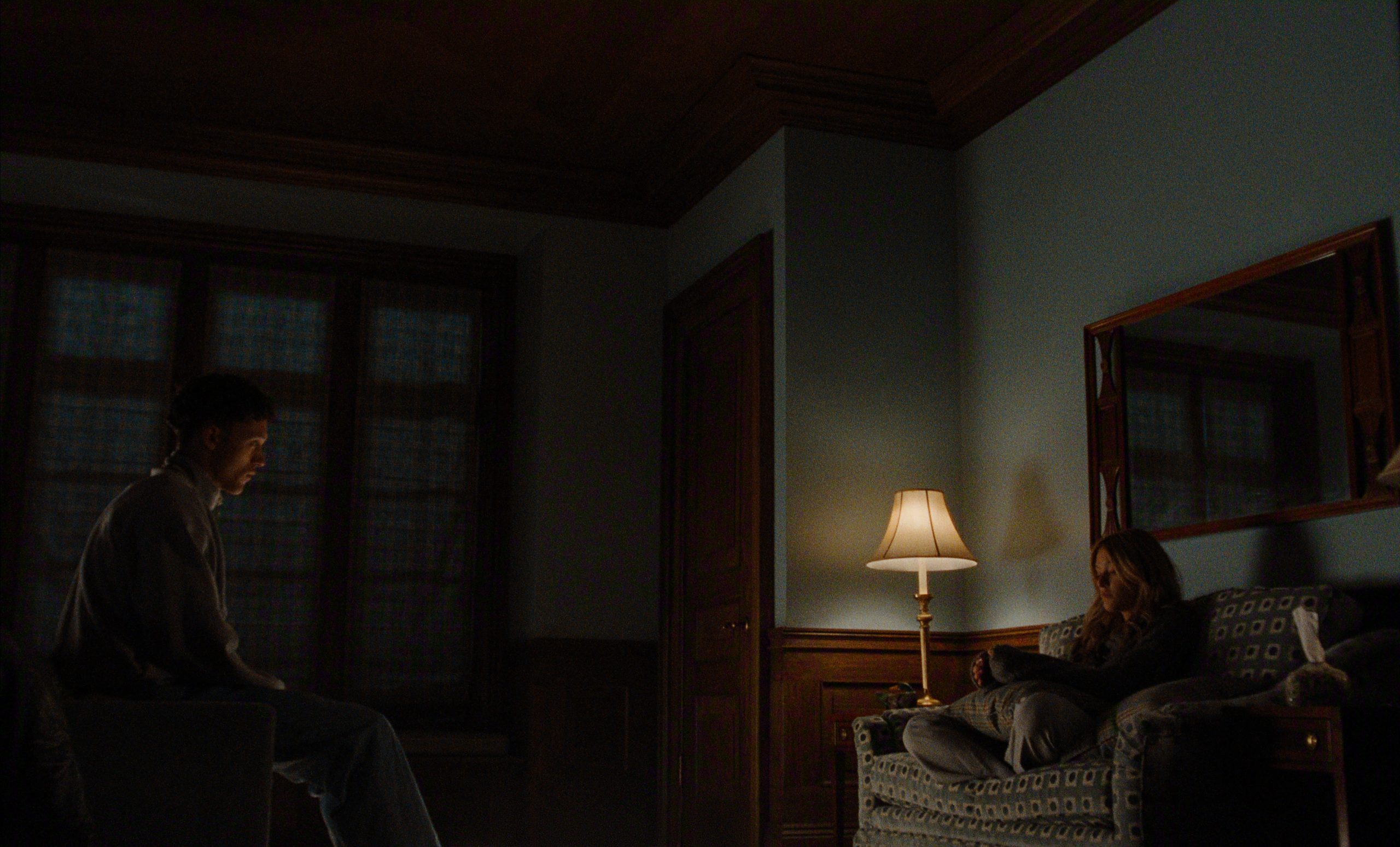
It’s an interesting choice, particularly for an actor who has spent much of his career gravitating towards characters who are considerably more morally ambiguous. But The Body is full of characters who aren’t quite what they initially appear to be, and Steven is no exception. As the series progresses, his confidence gradually gives way to confusion and insecurity, particularly as Anya becomes increasingly withdrawn and he begins to suspect that something is wrong between them.
What makes those scenes so affecting is the sincerity with which Steven approaches his relationship. He adores Anya, and while audiences are aware of the feelings she’s struggling to reconcile, he’s left attempting to understand a situation that he doesn’t have the information to comprehend. The resulting disconnect is frequently painful to watch, especially because Norman never allows Steven’s confusion to turn into the kind of resentment or possessiveness that might be expected from a character in his position.
Interestingly, Norman approached those early scenes without allowing Steven to fully entertain the possibility that Anya might not love him in the way he loves her.
“I don’t think I necessarily ever gave Steven the opportunity to be like, ‘Oh, I don’t think she loves me,'” he explains. “I just sort of really gave Steven the thought and the idea that everything will be okay if he’s the perfect boyfriend.”
For Steven, the solution to almost any problem is to try harder, to be more attentive and to make sure that the people he cares about are happy. It’s an admirable quality, although one that becomes increasingly difficult to maintain when confronted with circumstances entirely beyond his control.
“With that relationship with Anya, he is trying to figure out what’s going on, but he really, really, really believes that he just has to put more effort in to solve it, and it can be solved,” Norman says. “And obviously, I won’t go into it, but he can’t solve that problem.”

It’s a surprisingly poignant interpretation of a character who might initially seem fairly uncomplicated, and one that speaks to the care Norman brings to his performance. Steven isn’t particularly good at recognizing what’s happening around him, and there’s an almost tragic innocence to his conviction that everything can be fixed through sheer effort. Even when the situation begins to spiral beyond anything he could reasonably anticipate, his instinct is to keep trying to make things better.
That dynamic also depends enormously on Norman’s chemistry with Bogic, who delivers a phenomenal, star-making performance as Anya, a young woman whose seemingly charmed existence conceals an increasingly desperate struggle with her sexuality, religious guilt and the expectations of the people around her. The two actors share some wonderful scenes together, with Norman’s earnestness providing a particularly effective contrast to the growing anxiety that Bogic brings to her character.
As it turns out, the actors also had something in common that helped establish their relationship almost immediately.
“Kristina’s from Australia, I’m from Australia,” Norman explains. “We have a shared cultural history.”
That familiarity made it easier for the two to develop the sense of shared history between their characters, whose relationship is already firmly established when the series begins. And while Steven and Anya’s increasingly troubled romance provides some of the show’s more affecting moments, Norman also enjoyed the opportunity to explore Steven’s friendship with Tyler, played by Marcel Ruiz.
“Marcel, that’s my guy. That’s my boy,” he says enthusiastically.
For Norman, the atmosphere on set was particularly rewarding, with the young ensemble bringing a variety of different approaches to their performances and constantly challenging one another to make their scenes better.
“Everyone brought such interesting perspectives and had a lot of different processes with how they work,” he explains. “I was really, really impressed with everyone’s performances and commitment they brought to the craft.”
“We just all continuously inspired each other and rallied the troops,” he continues, before adding something that perhaps best captures the experience. “This is work for sure, but we get to play at work, which is really, really fun.”
That sense of creative freedom was particularly encouraged by Shephard, whose previous work includes the acclaimed drama Blame and the Hulu limited series Under the Bridge. Having developed The Body over several years, drawing from her own experiences and an enduring fascination with the relationship between religion, sexuality and teenage girlhood, Shephard approached the project with a deeply personal understanding of its characters and the complicated emotions informing their behavior.
For Norman, one of the most rewarding aspects of working with her was the freedom she afforded her actors, particularly when it came to exploring different interpretations of their characters.
“It was just extremely collaborative, actually,” he says. “I think that’s the thing I appreciate about Quinn the most. She’s always asking us what our ideas are about the characters and different ways to interpret things and working on scenes with us. She’s really a very actor-first director.”
But Norman was equally struck by how emotionally invested Shephard was in the material, recalling moments during production when the performances would move her to tears.
“There are certain scenes that are very personal for her, I won’t go into what, but she’d just start welling up and crying and be like, ‘Guys, you made me cry. This is so special.'”
“It’s wonderful to help support someone’s vision who’s extremely passionate about it and extremely collaborative,” Norman says. “She’s really funny and really sweet.”
Norman’s appreciation for that kind of artistic collaboration makes a great deal of sense when considering his own experiences behind the camera. Although he’s increasingly establishing himself as a compelling performer through projects such as The Body, Silo, Sebastian and the wonderfully strange psychological thriller Tummy Monster, his ambitions have never been limited to acting.
Early in his career, Norman wrote, directed, produced and starred in the short film Dipsomaniac, a project that earned him a Best Actor award at the Boden International Film Festival. It’s an impressive achievement for an actor who was still finding his footing in the industry, although the circumstances that prompted him to make the film were rather less glamorous than one might expect.
“I think it came out of necessity, purely because when I started out, I grew up in Adelaide in Australia, and Sydney for a bit as well, but I just was not really getting that many roles,” he explains.
Part of the problem, Norman believes, was the limited range of opportunities available to actors of mixed backgrounds in the Australian industry at the time. Rather than continue waiting for a suitable role to come along, he decided to create one for himself.
“There weren’t that many mixed-race characters that I could play,” he says. “So I was like, ‘I’m just going to have to try and do something myself.'”
The experience proved to be both incredibly rewarding and considerably more difficult than he’d anticipated, particularly when it came to balancing the creative ambitions of the project with the practical realities of making a film.
“With the initial film, there was a lot of youthful hubris to be like, ‘I could do this. It’s fine,'” he recalls. “You get there and you’re pulling your hair out and you’re over budget and you just freak the fuck out.”
Norman laughs about the experience now, describing it as an important lesson in just how much work goes into directing and producing, and one that has made him considerably more appreciative of the filmmakers he works with as an actor.
“It was a very, very humbling experience,” he admits.
Nevertheless, he’s determined to return to filmmaking, with plans to develop both short and feature-length projects over the coming years. For now, however, he’s focused on gaining as much experience as possible across different aspects of production before attempting another project of his own.
That desire to challenge himself also played a significant role in his decision to leave Australia and pursue opportunities in the United Kingdom. Having spent several years struggling to establish himself in the Australian industry, Norman had become increasingly frustrated by the limited range of parts he was being considered for.
“That was just pure frustration of five years of being really, really poor and unsuccessful as an actor in Australia,” he says.
He recalls repeatedly auditioning for roles written around a very specific idea of what a conventional leading man should look like, only to find himself excluded even when the casting calls were supposedly open to actors of any ethnicity.
“I would always go up for the roles that were the leading sort of blonde beach boy, but were accepting any ethnicity, and obviously would never get the part because I’m not a blonde beach boy,” he explains.
And when opportunities arose for actors from more diverse backgrounds, Norman often found himself facing a different set of limitations.
“If there were any characters of diversity, I wasn’t Black enough and wasn’t white enough.”
It was a discouraging experience, particularly for someone whose interest in acting had always been rooted in the possibility of inhabiting lives and perspectives entirely different from his own. But while opportunities in Australia remained limited, he began attracting interest from casting directors in London, eventually deciding that the UK might offer him a more promising path forward.
One particularly useful skill was his ability to pick up accents, something he’d developed through years of watching British television.
“I would just watch Top Boy for hours and hours and learn the accent through that, or any kind of British TV show,” he recalls.
Norman was also drawn to the opportunities available within Britain’s independent filmmaking scene, believing that even smaller roles could provide him with the chance to work with strong material and develop his abilities as a performer.
“The better the writing, the more fun I’m going to have and the better actor I’ll become as I gain experience through doing the job,” he explains.
It’s a philosophy that has served him rather well. Since relocating, Norman has built an increasingly varied filmography, appearing in projects as different as Mikko Mäkelä’s acclaimed queer drama Sebastian, Ciaran Lyons’ darkly comic Tummy Monster and Apple TV+’s ambitious science-fiction series Silo. There’s little obvious similarity between those projects, but that’s precisely what interests him.

When asked what tends to attract him to a character, Norman doesn’t hesitate.
“I’m really kind of attracted to the outsiders, the drifters, the outlaws, people and characters with ambiguous morals that have their own philosophies that go throughout their story or their journey,” he says.
For Norman, those characters are particularly interesting because they frequently exist outside the expectations imposed upon them by society, often developing their own understanding of how the world works.
“I feel like those are the people I see within my own life that I enjoy being around the most,” he explains. “They’re just very entertaining, and I love embodying those people.”
It’s perhaps unsurprising, then, that one of his earliest inspirations was Daniel Day-Lewis, whose extraordinary performance as Daniel Plainview in Paul Thomas Anderson’s There Will Be Blood left an enormous impression on Norman when he was still a child.
“I think after watching that, I watched an interview of him and realized he was British, and I was just kind of floored,” Norman recalls, explaining that he’d been completely convinced he was watching a real person rather than an actor delivering a performance.
“At the time, the movie felt like a complete documentary,” he continues. “That someone could disappear completely and have this opportunity to not be themselves and be such a big, larger-than-life character.”
For Norman, who describes himself as an Australian kid from a farm, the possibility of disappearing so completely into another person’s life was particularly exciting.
That fascination with transformation has continued to inform his career, although some of his most rewarding experiences have come from projects whose enormous scale initially left him feeling rather overwhelmed.
One of those was Silo, Apple TV+’s acclaimed science-fiction drama starring Rebecca Ferguson, in which Norman appeared during the second season as Rick, one of the inhabitants of the mysterious Silo 17.
The series, with its enormous underground environments and extraordinarily detailed production design, was unlike anything Norman had previously experienced. He recalls visiting the set during a fitting, accompanied by a fellow cast member, and being warned by the director that they were about to be astonished by what they saw.
Norman was initially skeptical.
“I was like, ‘Absolutely not,'” he recalls, laughing.
But the moment he stepped inside, he understood exactly what the director had meant. The scale of the production was extraordinary, with seemingly every corner of the set filled with details that suggested a fully realized world extending far beyond the scenes being filmed.
“Every single drawer that we had within the set had notes that had been completely filled in, or little trinkets and knickknacks,” he remembers. “The attention to detail within that series was extremely prevalent.”
The opportunity to work opposite Ferguson was another highlight, with Norman describing the actress in particularly glowing terms.
“She’s probably the coolest actor, and certainly one of the most talented, that I’ve ever worked with,” he says. “Really sweet, really down to earth and just really, really supportive.”
And while The Body is introducing Norman to a considerably wider audience, he’s already preparing for another exciting television project. He has joined the cast of Netflix’s upcoming adaptation of Bella Mackie’s bestselling novel How to Kill Your Family, starring Anya Taylor-Joy as Grace Bernard, a young woman determined to exact revenge on the wealthy family that abandoned her.
Norman, who will portray Jimmy in the series, is understandably reluctant to reveal much about the project, although he’s full of praise for his collaborators.
“It’s being worked on, and everyone is really talented and lovely,” he says.
Asked specifically about working with Taylor-Joy, he’s similarly enthusiastic.
“She is amazing and very talented, and I feel very grateful to be a part of the show and help them create the best show we can possibly do.”
Beyond that, however, he’s keeping his mouth shut.
“I don’t want to say anymore because I don’t want to get sniped from a distance or whatever,” he jokes.
For now, Norman is enjoying the opportunity to see audiences respond to The Body.
And while Steven may not be at the center of its most explosive developments, Norman’s performance is an important part of what makes the show so effective. But Norman isn’t particularly interested in telling audiences how they should interpret Steven, or what conclusions they ought to draw from the series as a whole.
“I think there’s an interesting thing about once an artistic piece of work is out there in the world,” he explains. “I try and do the utmost best whilst making it and creating it, but ultimately, it’s the audience’s show now.”
“It’s not mine to tell you what to think about it,” he continues. “I just hope they have fun, it makes them think, and they have a good time watching it.”
Before wrapping up the conversation, Norman is asked A Shot’s signature question: if he could exist within any shot from a film, which one would he choose?
His answer is a particularly lovely one.
There’s a sequence in Kogonada’s extraordinary science-fiction drama After Yang in which Colin Farrell’s character, Jake, discovers the memories of Yang, an android who has been living with his family. What initially appears to be a collection of seemingly insignificant moments gradually becomes something considerably more profound, revealing the beauty Yang found in the ordinary, everyday experiences that most people barely notice.
Norman, who loved the film so much that he went to see it five times in theaters, chooses those memories as the images he’d most like to inhabit.
“It’s just very simple, very sweet things about what’s really important in life,” he explains, recalling images of clothes hanging in the sunlight, the changing colors of trees and the laughter of a child.
“Just the very, very simple, sweet things that we don’t put any value on at the time,” he continues.
“But looking back on our lives, I feel like those are the most important moments.”
THE BODY is now streaming on Netflix.