

The Soul and the Shadows of Joe Bird
Joe Bird on artistic authenticity, finding fear in Leviticus, and building a career on his own terms.
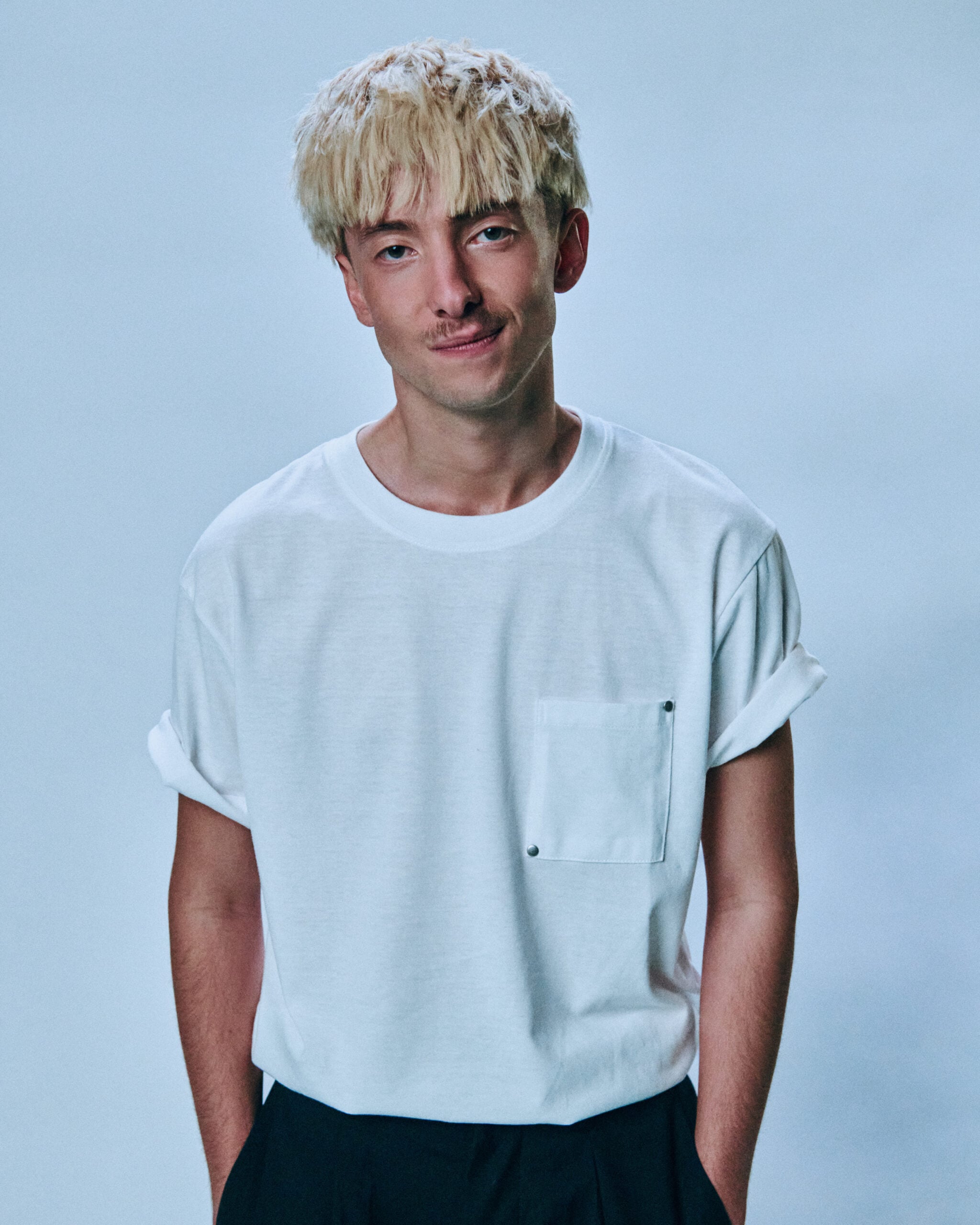
To look at Joe Bird is to see the face of international horror’s thrilling new wave. At just 19 years old, Bird possesses a magnetic, crackling charisma that practically hums through the room.
Most audiences recognise him from his breakout role as Riley in A24's smash-hit Talk to Me. Bird delivered a physically bruising, emotionally raw performance that haunted audiences long after the credits rolled. Today, he’s re-teaming with Adelaide production powerhouse Causeway Films (The Babadook, Talk to Me) for a lead role in Leviticus, a queer genre-bender directed by Adrian Chiarella in his feature debut—a deeply atmospheric, metaphor-heavy exploration of a gay teenager fighting a literal and psychological monster.
Bird’s journey with the craft began much earlier. Not many know that he was born in Leeds, England, before his family moved to Adelaide when he was just a toddler. By the age of six, he was begging his parents for acting classes, which he eventually received as a ninth birthday gift and dedicated his time to until he was sixteen.
Adelaide, South Australia, is famously nicknamed the "City of Churches." However, the moniker comes with an unsettling historical myth: the former murder capital of the world.
"It’s very Leviticus-coded, in a way," Bird says with a knowing, razor-thin smile.
Sitting down with Bird, he speaks with an open, unchecked passion—sentences tumble out of him fueled by a deep, soulful artistic fire.
"I think like an artist would," Bird explains, citing some of his biggest inspirations: Madonna's shocking swerve from pop royalty to a jazz album for Dick Tracy; Janet Jackson taking absolute agency on Control; the unapologetic self-actualisation of Charli XCX and Addison Rae.
"I love when artists are always doing different things, whether or not it gets the response they wanted, because it’s all about challenging yourself. It’s about staying authentic to yourself—and the public catches up and appreciates it eventually.”
For Bird, acting isn't just about executing lines on a page. It’s an exercise in pure, spiritual expression. He views acting and music as deeply intertwined, almost identical mediums of connected storytelling.
"I see music as the exact same thing as film," Bird says, his voice bright with intensity. "You're evoking an emotion. An instrumental track is like a silent film—there’s no sound, but you still get emotion from it. Songs tell stories like films tell stories. Creativity all intersects at one point, and that point is just expression. You're hopefully connecting to someone."
That unwavering dedication to connection is what drives him. Upon first reading the script for Leviticus, Bird was so struck by its vulnerability and raw power that he refused to let his audition speak for itself. In a move that highlights his fearless approach to the industry, he tracked down writer-director Adrian Chiarella’s email address and sent him a deeply personal letter.
"I sent him songs and colors and all these influences, things I responded to in the script," Bird explains. "Why would I want to work with someone who isn't excited that I'm passionate about the script? I thought, what's the worst that happens? I wanted to work with someone who knew exactly how passionate I was about the project."
The gamble worked. The letter laid the foundation for a “beautiful working friendship” between the 44-year-old first-time feature director and his 19-year-old lead.
That creative connection had begun even earlier. The first time Bird read the full script, he was on a bus heading to Bondi Beach to meet a friend. Completely absorbed by Chiarella's writing, he missed multiple stops and nearly forgot about the plans he'd made. "I started reading and got so lost I missed all my stops," he recalls. "I forgot I was meeting my friend."
For Bird, that reaction was a sign. Great scripts don't simply tell stories; they pull you into an entirely different world.
Once on set, Chiarella utilised unique methods to foster authentic intimacy among his young cast. In a brilliant move to build genuine trust, vulnerability, and a shared vocabulary of fear, Chiarella sent Bird and his co-star, Stacy Clausen, into a local escape room together during pre-production.
"Adrian wanted us scared around each other," Bird smiles." So, we could be vulnerable and build that connection."
Again and again throughout our conversation, Bird returns to one word: authenticity. It is this uncompromising authenticity that Bird pours into Leviticus. The film follows teenage protagonist Naim as he battles a terrifying monster that serves as a literalized metaphor for homophobia within a deeply religious community.
"What stuck out on the first read was that this monster is a metaphor for homophobia."
Drawing from his own high school experiences in a Catholic environment where homophobia was quietly prevalent, Bird sought to build a performance around the subtle, devastating nuances of internalised fear and self-preservation.
At nineteen, Joe Bird may already be one of horror's most exciting young performers. But speaking with him, it quickly becomes clear that acting is only one part of the story. What drives him is something larger: a relentless desire to connect, to create, and to remain unapologetically himself while doing it.
Below, Bird discusses Leviticus, fear, filmmaking, and why art is ultimately about connection.
Q: What was your inspiration for playing Naim?
Joe Bird: A big inspiration came from watching Mikey Madison in Anora. She was just so incredible, and what I loved about her performance was that she had this guard up. In everyday life, everybody has a guard up subconsciously, whether they're close with someone or not. You could tell the vibe of what she was feeling, but not exactly what she was thinking — and that's how humans are. It comes down to keeping everything really simple and authentic and grounded, because that's where the magic comes from.
Q: What was the process like for booking this role?
I remember getting the synopsis through my email, I was at school with my friends, it was lunchtime, and I wasn't allowed on my phone, so I snuck it out of my pocket. I was reading it, thinking, “I've never seen anything like this done before.” It really stuck out. As an actor, you're always excited, and it's really good when you connect to a project.
I auditioned, and it turned into an in-person callback, kind of a workshop with Stacy and Jeremy and a couple of other actors. Stacy was going for all three roles, and Jeremy was going for two, and I was only going for Naim, so — kudos to them, they had to learn so many lines. It's a real testament to Nikki Barrett, who cast this film, and to the way Adrian and Causeway Films work, because instead of having one person come in, do their thing, and shuffle out, we played all these different dynamics. I think that works because you can see how someone actually works on a set.
“I've never seen anything like this done before.”
Q: Did the callback include you and Stacy having scenes together?
The interesting thing was that Stacy was going for Naim, Ryan, and Hunter — the three characters in the workshop — so I acted alongside him while he was Hunter, and again while he was Ryan. What a lot of actors need to understand about casting is that you're not a bad actor if you don't get a role, it just doesn't fit you. You don't want to be miscast in something because that's not going to work for you. It was interesting because I'm from Adelaide, so I'd never really met anyone in my age range going up for the same roles. When I met Jeremy and Stacy for the first time — they'd been auditioning for the same stuff as me, I remember one night watching an audition Jeremy had done that I'd also done, and it was just so different. Everyone is so unique.