

‘The Assessment’ director Fleur Fortuné on the Film’s Minimalist Design, Motherhood, and Sci-Fi as Social Commentary
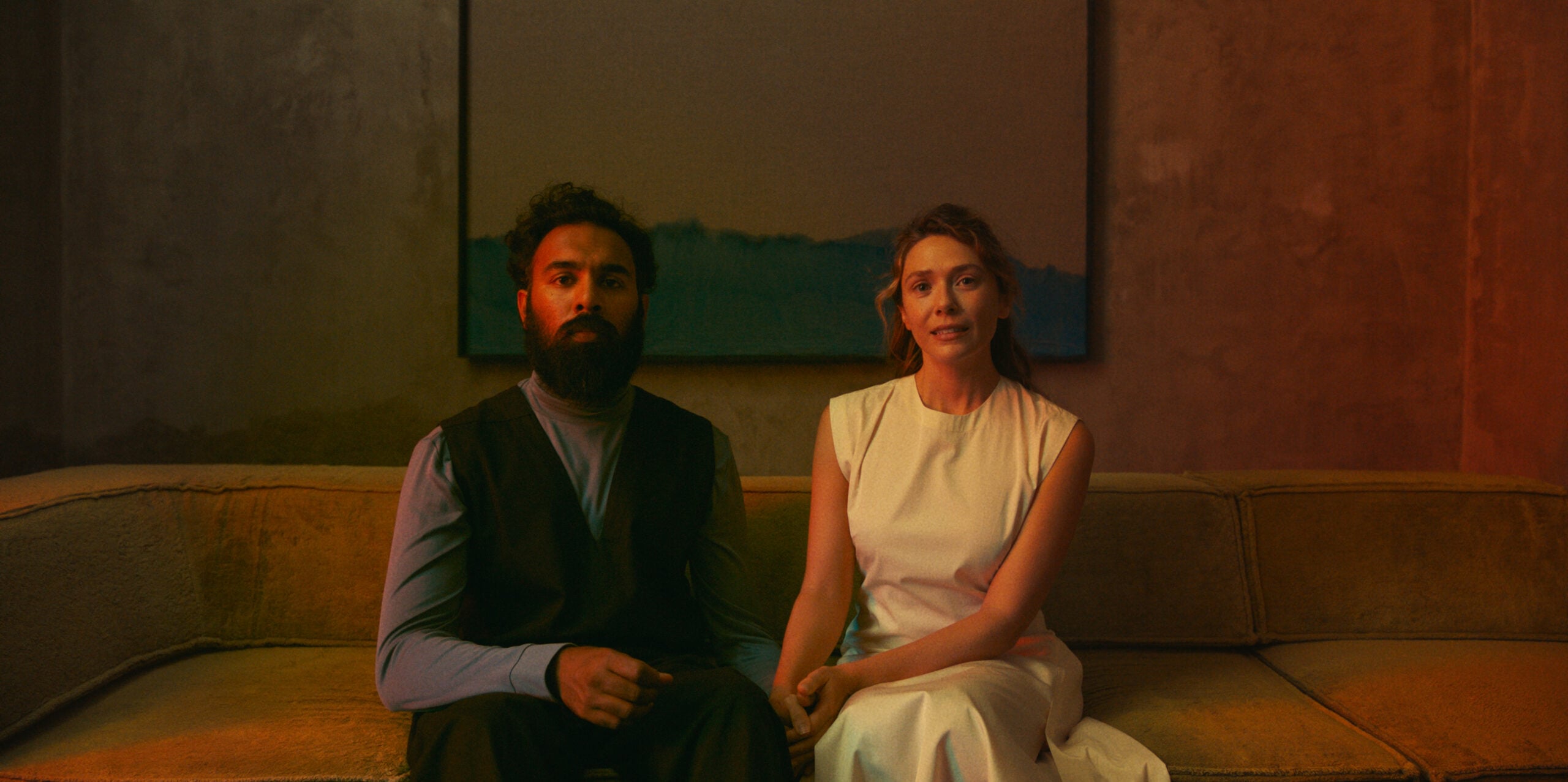
Following its acclaimed premiere at TIFF and ahead of its international digital release on Amazon Prime Video, we spoke with director Fleur Fortuné about her powerful feature debut, starring Elizabeth Olsen, Himesh Patel, and Alicia Vikander. In this conversation, Fortuné discusses the film’s minimalist design, the influence of her music video background, and how her personal experience with motherhood shaped its emotional depth.
FARAH: It was fascinating to watch the movie and take away what you know. As a theater fan, I immediately connected the simplistic production design to Jamie Lloyd’s theater productions, which I love because of how they strip everything back and focus solely on the people. So, I want to know: how did you create a world that feels so sterile? Was any of it inspired by your music video directing days?
FLEUR: It’s funny that you mention theater. I always thought this film was a big challenge for me because it's my first feature, and also, English is not my native language. There’s so much dialogue in the film that I was like, “Oh geez, it’s like I’m directing a theater piece as my first feature,” because almost all of it is filmed on one set. So it's like a chamber piece. I knew the story wasn’t about the sci-fi elements, so I didn’t want the technology to be in the forefront.
I think my music video background helped because I had the freedom to explore everything—there are no narrative rules like in a traditional script. I didn’t study cinema, so I learned everything on set. That widened my scope and allowed me to be inspired by many things like, contemporary art books, an art piece in an exhibition, or sculptures. Music videos are all about the concept, not narrative, and it always goes back to what you want to say.
So, when we were digging into the story and the location, everything had to make sense. For example, [in this post-dystopian reality] there’s no wood anymore because there are no forests. That shapes your idea of what materials you’re going to use for the production design. I was using some references from retro sci-fi films of the '70s. I guess it helped me look outside the box and not do what I was “expected” to do. In that way, the freedom of music videos helped create this universe.
FARAH: I especially love the scenes with Mia and Aaryan, when they're just together and get enveloped in a sea of red.
FLEUR: That was the code of the assessment. I thought using a primary color was good to evoke the feeling and simplicity of childhood. They were sort of trapped in certain ways.