

Noomi Rapace Is Closer to the Soil Than to the Machine
The star of Agnieszka Smoczyńska's "Hot Spot" on playing a survivor who barely speaks, why the film got more relevant with time, and the one frame she'd want to be.
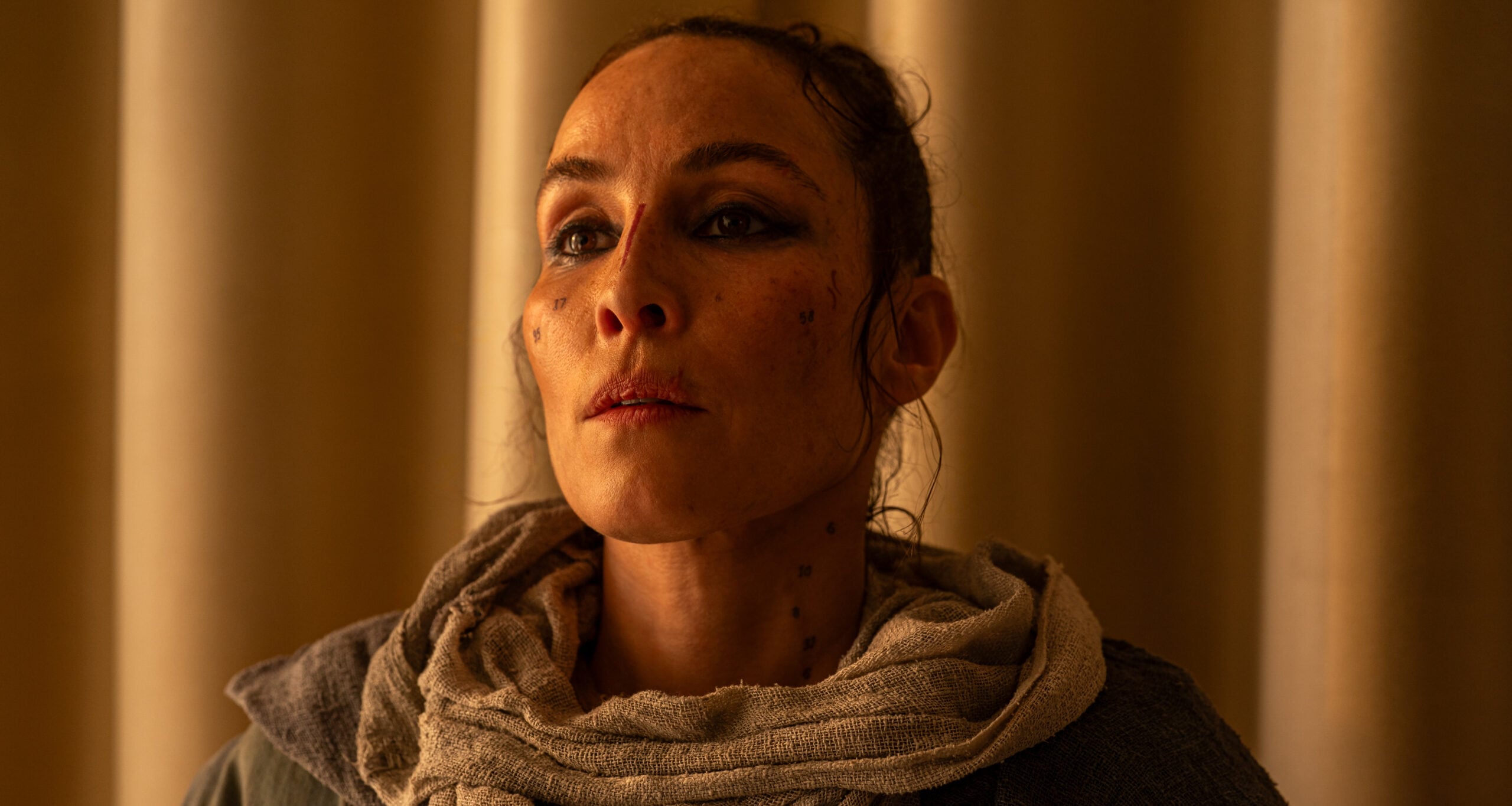
Some scripts arrive before their moment. When Noomi Rapace first read Hot Spot, ChatGPT didn't exist yet. By the time Agnieszka Smoczyńska's sci-fi thriller reaches theaters — Focus Features releases it in the US on August 21 — the world has caught up with it. Set in a near future ruled by sentient AI, the film throws an investigator and a member of a feared religious sect together over a murder in a refugee camp and lets the questions hang in the air unanswered.
Rapace plays Rana, a woman who has survived wars and arrived, somehow, at faith. She spends most of the film in silence- hiding, watching, communicating with everything except dialogue. It's a performance built by studying documentaries and real refugee testimonies, and it belongs to a filmmaker who, in Rapace's words, treats everything on screen as a character: the set, the costumes, everybody in the room.
We spoke with Rapace ahead of the film's release about intuition, privacy, human error, and growing up on a farm.
Q: What was your first reaction when you read the script? It was written before ChatGPT even came out, a long time ago now.
I was confused and mesmerized and intrigued. I was just like, "This is wild! I've never seen this. I've never read this." And knowing Agnieszka Smoczyńska's work, I don't know if you saw The Lure, which is just incredible, so original and fun and violent, I thought, this is the perfect director for this. The combination of her and the script was just, okay, I've got to do this. It's a no-brainer.
Q: Watching the film, I felt like I was watching Cronenberg, Kogonada's After Yang, and Alex Garland all at once. What were your own inspirations for Rana?
Oh wow! I did a lot of research on refugees, on people surviving wars. I almost saw her like a soldier who's lived through a lot of wars and survived a lot of violence. I didn't really look at other movies or other performances, I looked at real-life stories, reading a lot and watching documentaries. Just: how did she become the person she is when we meet her in the movie?
I think she lived through a lot of violence and a lot of destruction, and when we meet her, she's arrived at this place where she's a believer in love and forgiveness. That journey to find that place was so powerful. I started with something chaotic and brutal; I built a library within myself where she carried memories of something very brutal, and then when we meet her, she is a believer of love.