

How 'Together' Director Michael Shanks Made an Indie Horror Look Like a Blockbuster
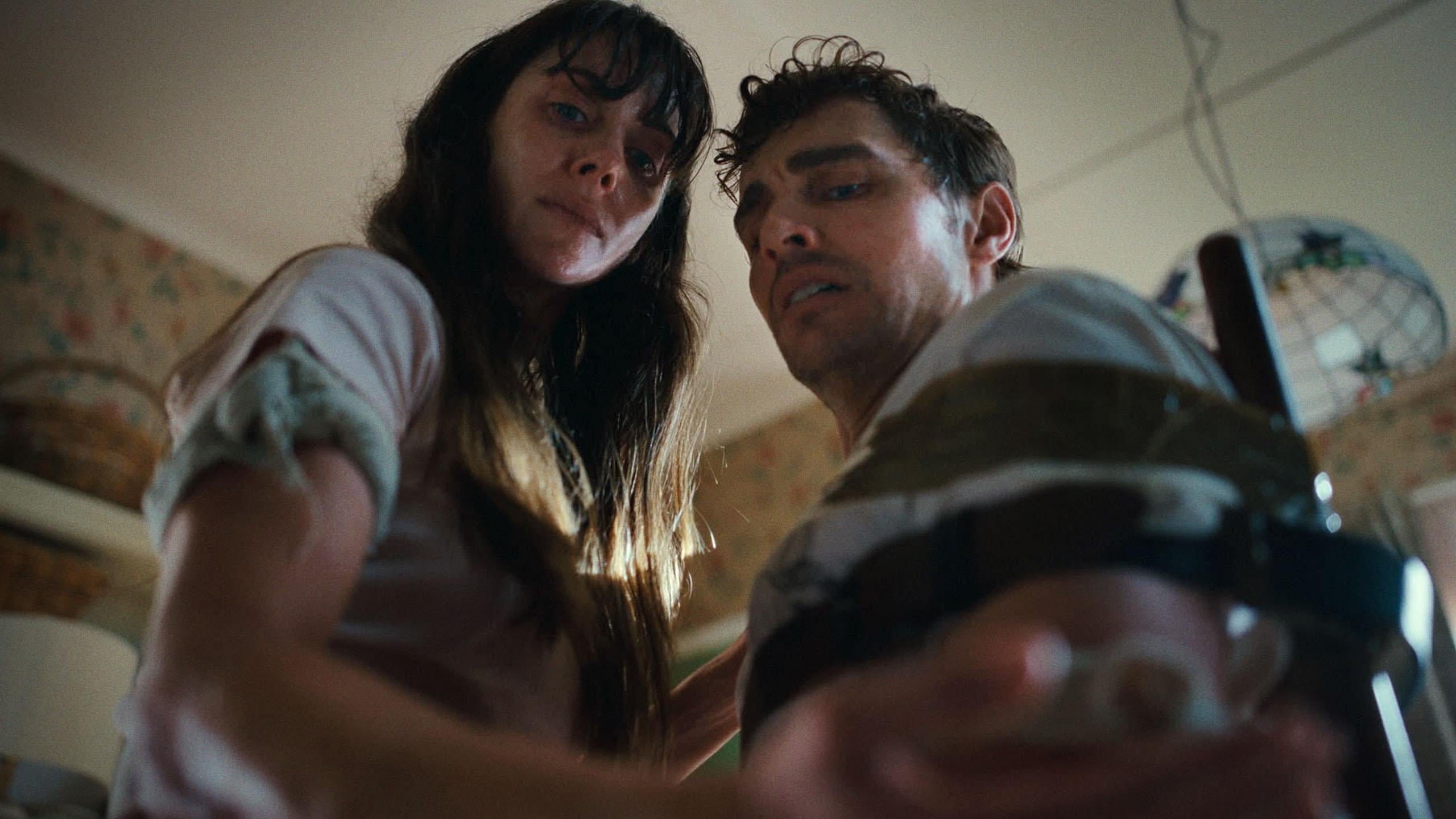
Australian filmmaker Michael Shanks has always lived by “going big or going home”. He’s built his career on squeezing the most spectacle out of any budget, from his comedy work and early YouTube days to his heartfelt short Rebooted and his Blacklist–topping script Hotel Hotel Hotel Hotel. Now he’s gone larger than ever with his feature film debut TOGETHER, the funniest, most romantic body-horror you’ll see this year.
Starring the real-life wedded Dave Franco and Alison Brie, the film explores the idea of two people becoming inseparable and takes it to its most extreme and literal conclusion. But for all its gory, grotesque set pieces, Shanks insists that TOGETHER is, at its core, a love story.
Ahead of its release on VOD, we sat down with Shanks on zoom to talk about creating a blockbuster on an indie budget, drawing inspiration from comedy classics, and why some couples had mixed reactions to the movie.
FARAH SADEK: I can't believe that this movie was made on a low budget, because it feels very massive. How did you manage to make it look so large on screen?
MICHAEL SHANKS: Thank you. That’s always been the goal with everything I've ever made, going back to my YouTube days. I was always aiming to enhance my technical skills as a filmmaker, as well as tell a story. I grew up loving spectacle movies, and not just the ones with big fight sequences, but films that give you unique visuals, where the filmmakers really squeeze every drop of juice from the premise. I get frustrated sometimes with horror films that don’t have enough set pieces that I think you could get out of the idea.
To me, Together was a one-and-done premise, so I didn’t want it to just be two characters in a house going through this. I wanted as many set pieces as possible. One thing that’s helped me with that, as a writer, is that I usually do my own visual effects, and I did a lot of them in this film out of necessity. I was teaching myself visual effects at the same time I was learning how to write and making sketches with friends.
I wasn’t necessarily trying to become a VFX artist, it was more about freeing up my writing. Indie filmmakers often don’t have the budget to go to extreme, crazy places with their stories, and I thought: if writing something crazy only costs me weeks of my own time, then I have the freedom to write whatever I want. I never worry about a producer telling me we can’t afford something, because I’ll just figure it out.
On this film, I did about 170 VFX shots, not the big, flashy ones, but the kind of work you might not even notice, like painting out wires. In indie productions, that can cost around a thousand dollars per shot, so if you do that 130 times, you’ve saved at least $130,000 out of the budget. When you’re working with slim margins, that goes a long way. The alternative would have been to cut shots and sequences, and I never wanted to do that.